Copyright © 2026 Yorke Antique Textiles
.avif)

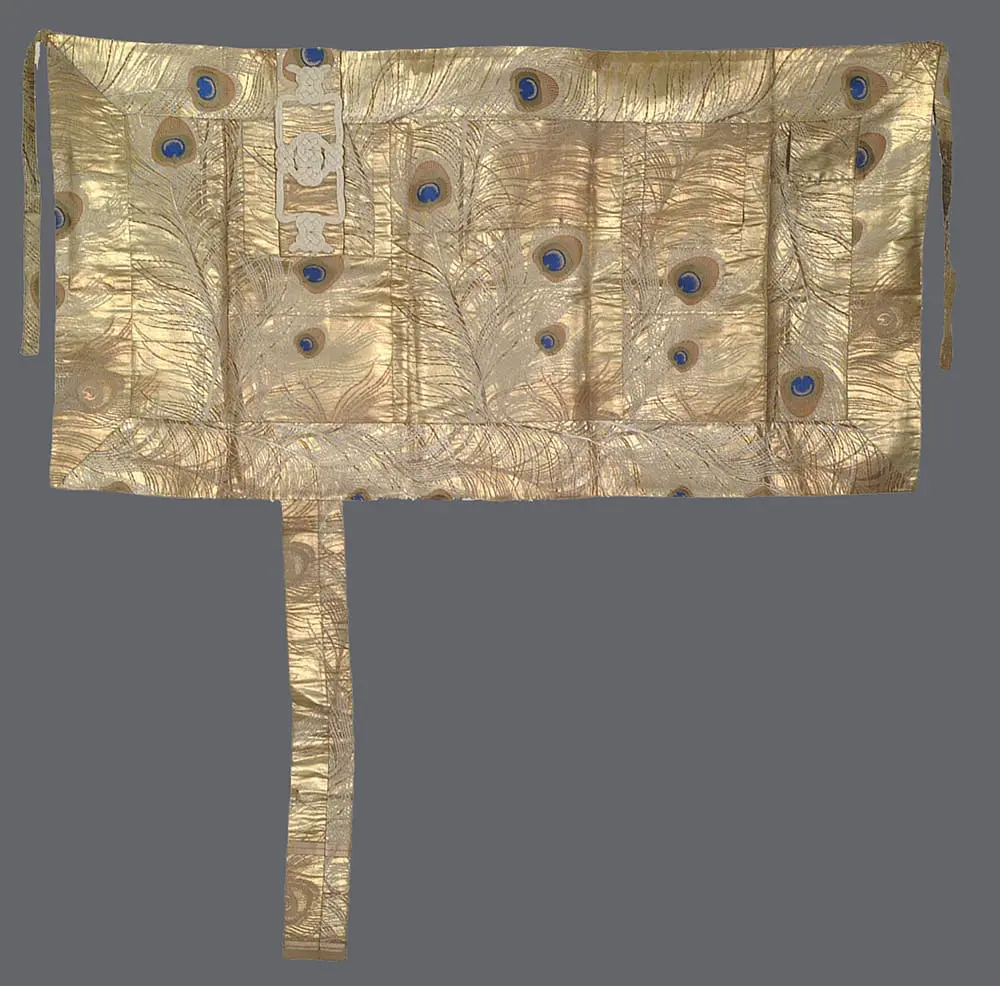
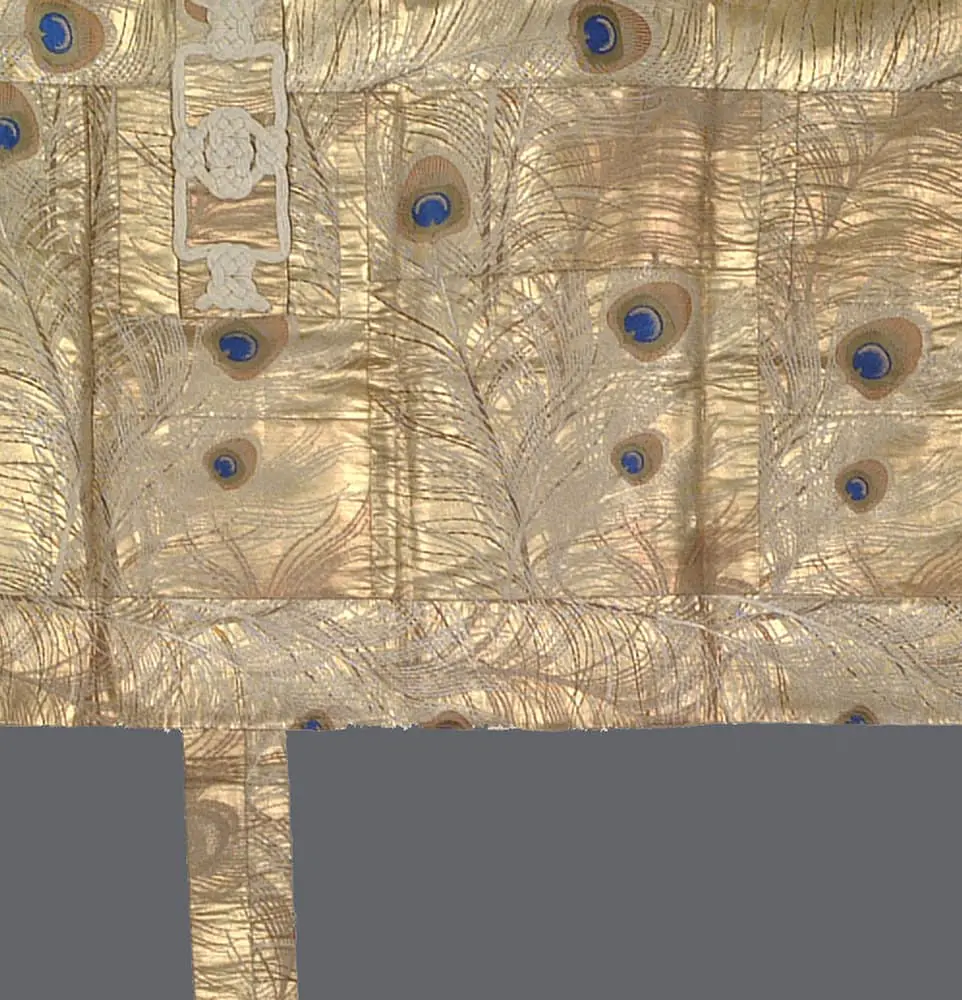
This remarkably petite and rare silk kesa (Buddhist monk’s vestment) from Japan dates to the Taisho period (1912–1926). Measuring 46 inches by 23 inches (117 cm x 58 cm), its unusually small dimensions suggest it may have been designed for a specialized ritual or a smaller-statured practitioner. The textile is a masterwork of complex silk brocade, featuring a brilliant golden-metallic ground that mimics the lustrous sheen of real feathers.
The primary motif consists of large-scale peacock feathers, rendered with exceptional detail. Each feather "eye" is highlighted with a vibrant blue silk, surrounded by golden and bronze-toned threads that create a realistic, iridescent effect. In Buddhist iconography, the peacock is a significant symbol of wisdom and the transformation of "poison" (ignorance and desire) into enlightenment, as the bird is legendary for its ability to consume poisonous snakes without harm. The garment retains its traditional patchwork construction, representing the "rice field" pattern common in liturgical cloths, and is in very good condition.

Payment Options: We primarily accept PayPal for all transactions. Credit and debit cards are not accepted. If you prefer to pay by personal check instead of PayPal, please note this preference in the "Additional comments" field when placing your order.Ordering Process
To receive your PayPal invoice, simply fill out the form.
Shipping Details: We ship all orders to the address associated with your PayPal payment. Please ensure your PayPal shipping address is current and accurate.A phone number is required during checkout, as our shipping carrier may need to contact you regarding delivery questions.Shipping RatesUnited States and Canada: $20International destinations (air mail): $40
