Copyright © 2026 Yorke Antique Textiles
.avif)

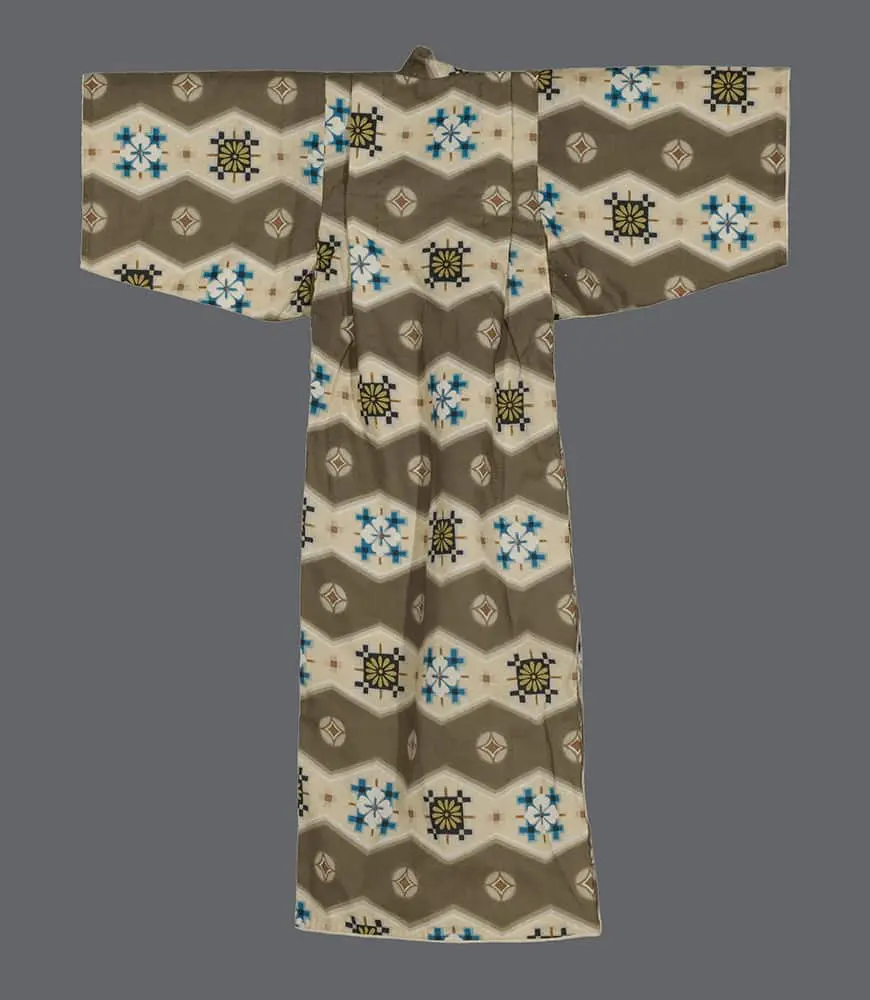
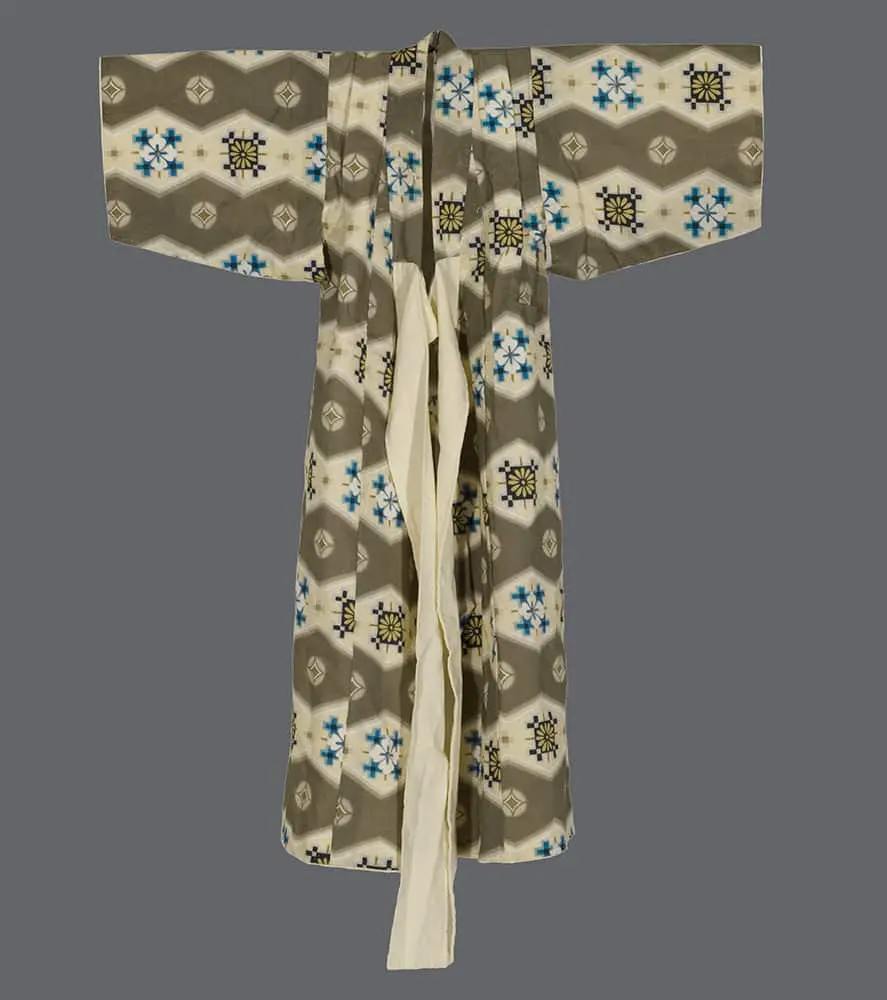
This cotton kimono for a young boy demonstrates the graphic appeal of kasuri (ikat) weaving, where threads are resist-dyed before weaving to create patterns with the technique's characteristic softly blurred edges. The result achieves bold geometric impact while retaining the organic quality that distinguishes handcrafted ikat from mechanically printed designs.
The composition features horizontal bands of interlocking chevrons alternating between warm olive-tan and cream, creating a dynamic zigzag framework across the garment. Within the cream diamond shapes, various geometric motifs appear: bold turquoise-blue cross forms, circular flower patterns in olive-yellow with black outlines suggesting stylized kiku (chrysanthemums), and radiating star or snowflake designs. Smaller diamond shapes punctuate the olive bands, maintaining visual rhythm throughout.
The color palette—combining earthy olive-brown with bright turquoise accents—creates a lively yet grounded effect appropriate for a boy's garment. The geometric vocabulary, while abstract, carries echoes of traditional Japanese patterns: the zigzag bands recall lightning bolt or wave motifs, while the contained medallions suggest simplified versions of formal crests or stylized flowers.
Cotton kasuri represented accessible artistry for everyday clothing, particularly for children whose garments required durability for active wear. The technique's inherent slight irregularities—visible in the gentle feathering where colors meet—provided visual interest and evidence of handcraft, qualities valued in Japanese textile traditions that celebrate the human touch over mechanical perfection.
It measures approximately 25 inches from sleeve-end to sleeve-end and stands 30 inches tall (64 cm x 76 cm).

Payment Options: We primarily accept PayPal for all transactions. Credit and debit cards are not accepted. If you prefer to pay by personal check instead of PayPal, please note this preference in the "Additional comments" field when placing your order.Ordering Process
To receive your PayPal invoice, simply fill out the form.
Shipping Details: We ship all orders to the address associated with your PayPal payment. Please ensure your PayPal shipping address is current and accurate.A phone number is required during checkout, as our shipping carrier may need to contact you regarding delivery questions.Shipping RatesUnited States and Canada: $20International destinations (air mail): $40
