Copyright © 2026 Yorke Antique Textiles
.avif)


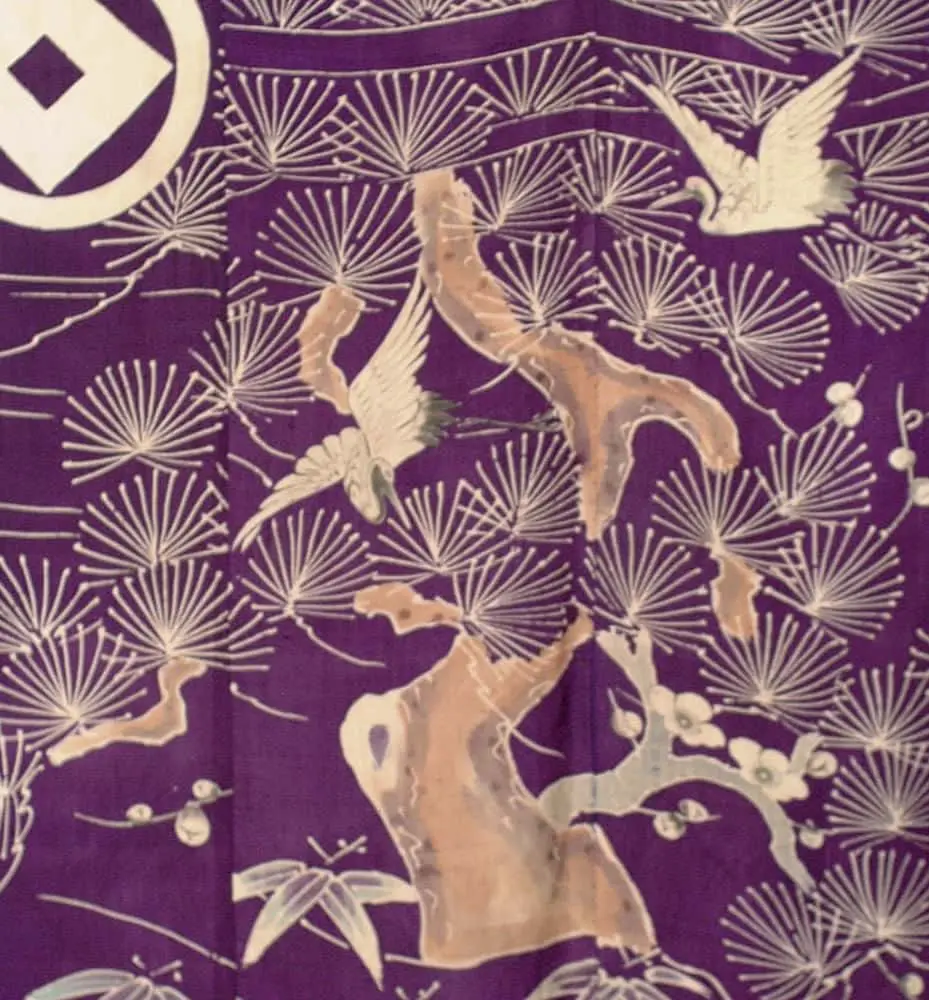
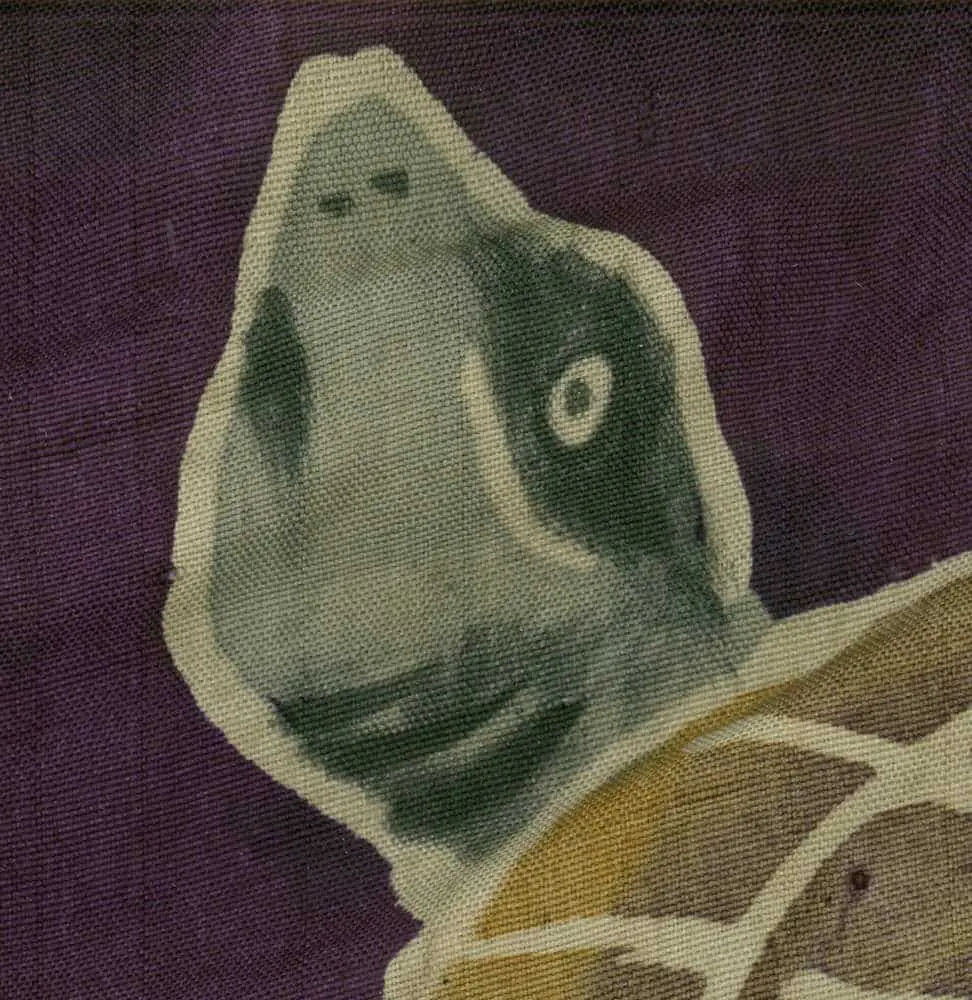

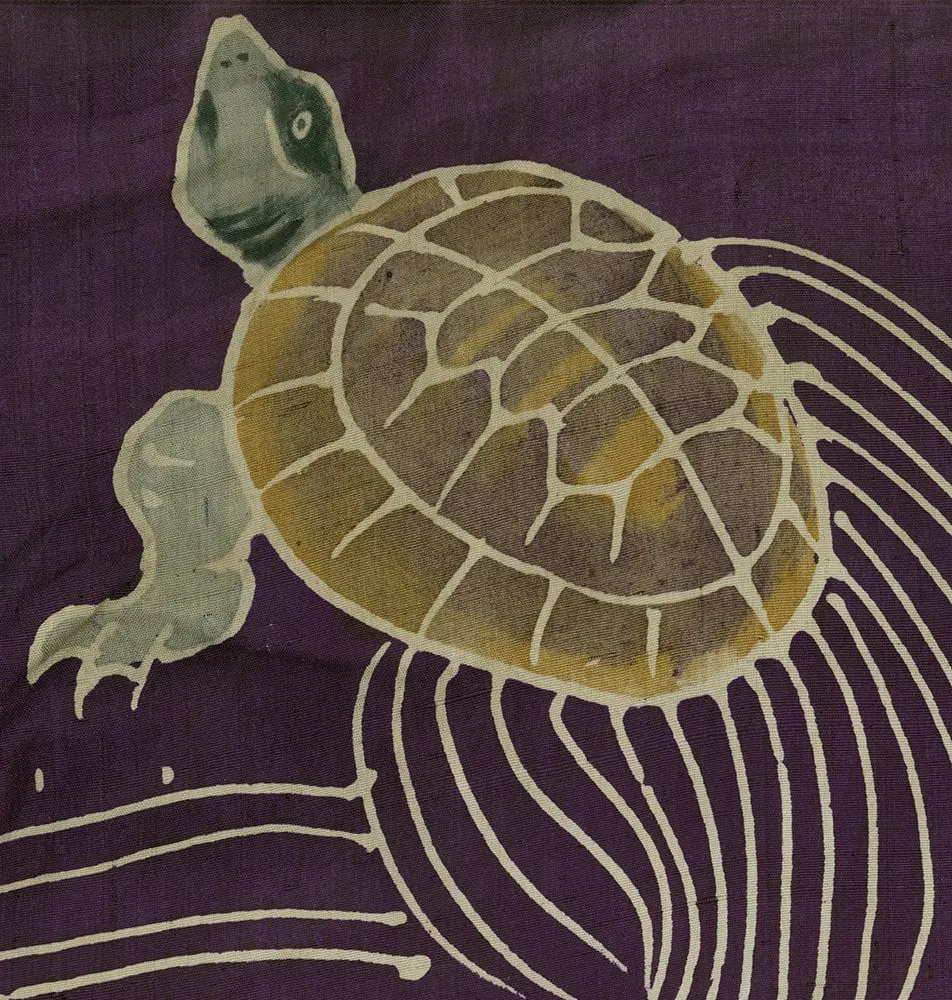

This atypical tsutsugaki (paste-resist dyed) futon cover, dating to the Taisho period (1912–1926), is a rare example of the technique applied to fine silk rather than the traditional cotton. Measuring 53 inches by 61 inches (135 cm x 155 cm), the textile features a vibrant purple ground adorned with a complex landscape of auspicious symbols.
The central composition includes a sprawling pine tree, two cranes in flight, and a long-tailed turtle (minogame) near a flowing stream—all traditional Japanese emblems of longevity and enduring fortune. At each of the four corners is a prominent family crest (mon) depicting a square within a circle, representing a nail extractor (kuginuki). This specific motif was highly regarded by warrior families as a symbol of immense strength and the ability to overcome great obstacles, signifying power derived from humble origins. While the original red border has been removed in the past, the silk remains in very good condition.

Payment Options: We primarily accept PayPal for all transactions. Credit and debit cards are not accepted. If you prefer to pay by personal check instead of PayPal, please note this preference in the "Additional comments" field when placing your order.Ordering Process
To receive your PayPal invoice, simply fill out the form.
Shipping Details: We ship all orders to the address associated with your PayPal payment. Please ensure your PayPal shipping address is current and accurate.A phone number is required during checkout, as our shipping carrier may need to contact you regarding delivery questions.Shipping RatesUnited States and Canada: $20International destinations (air mail): $40
