Copyright © 2026 Yorke Antique Textiles
.avif)

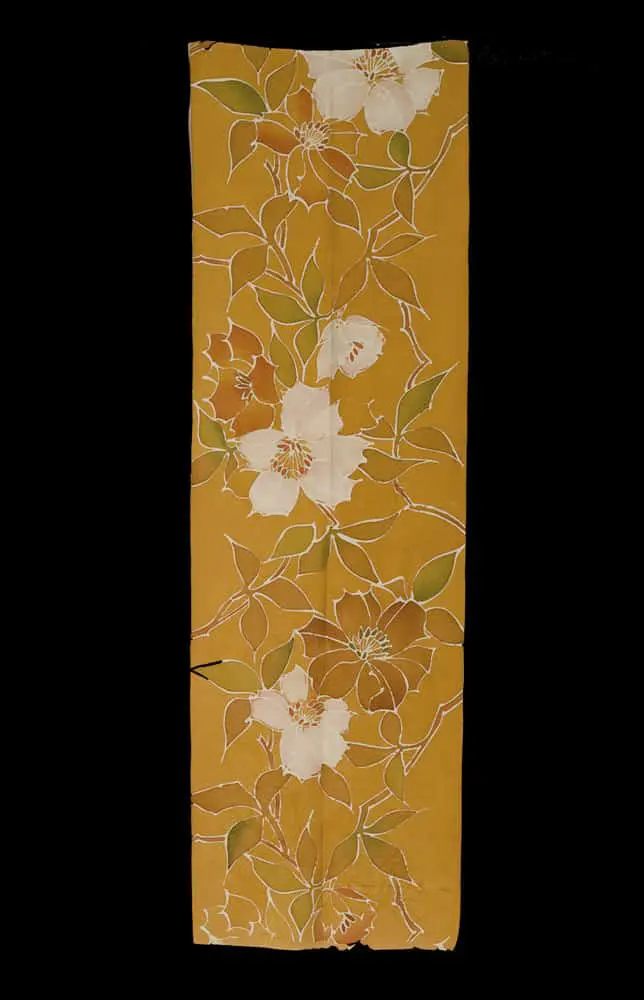
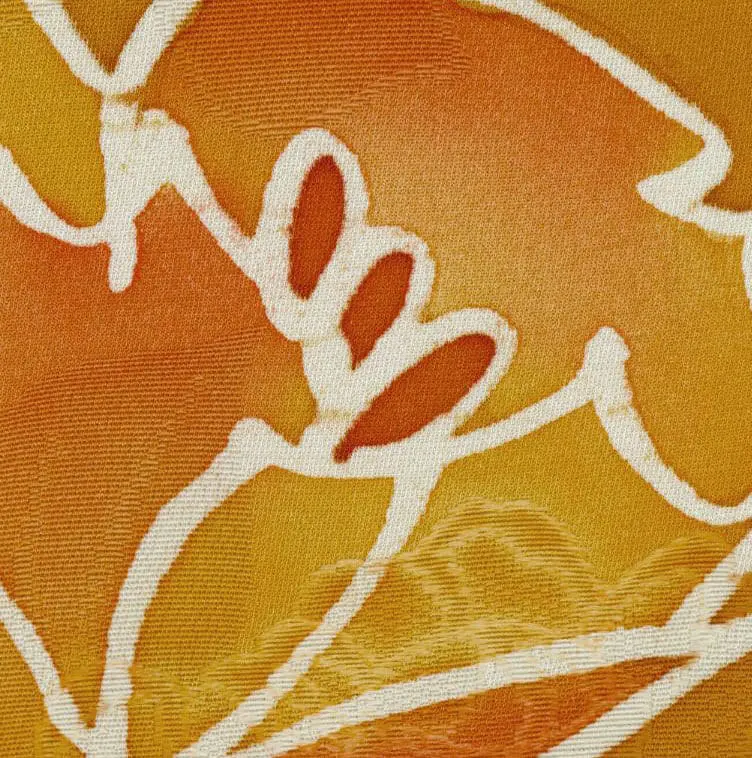
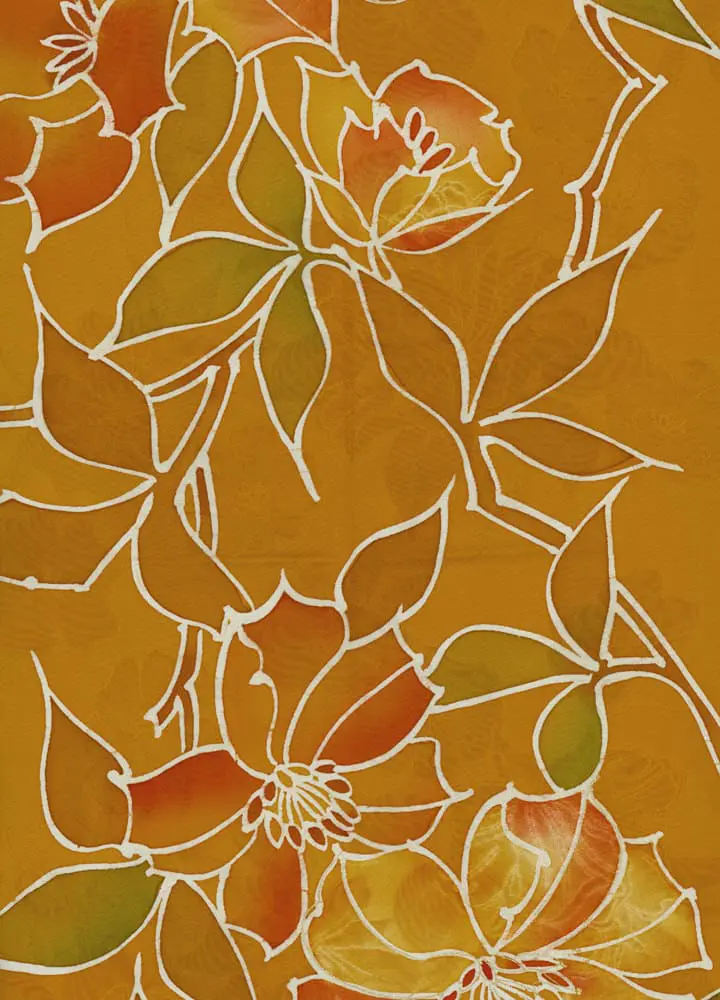
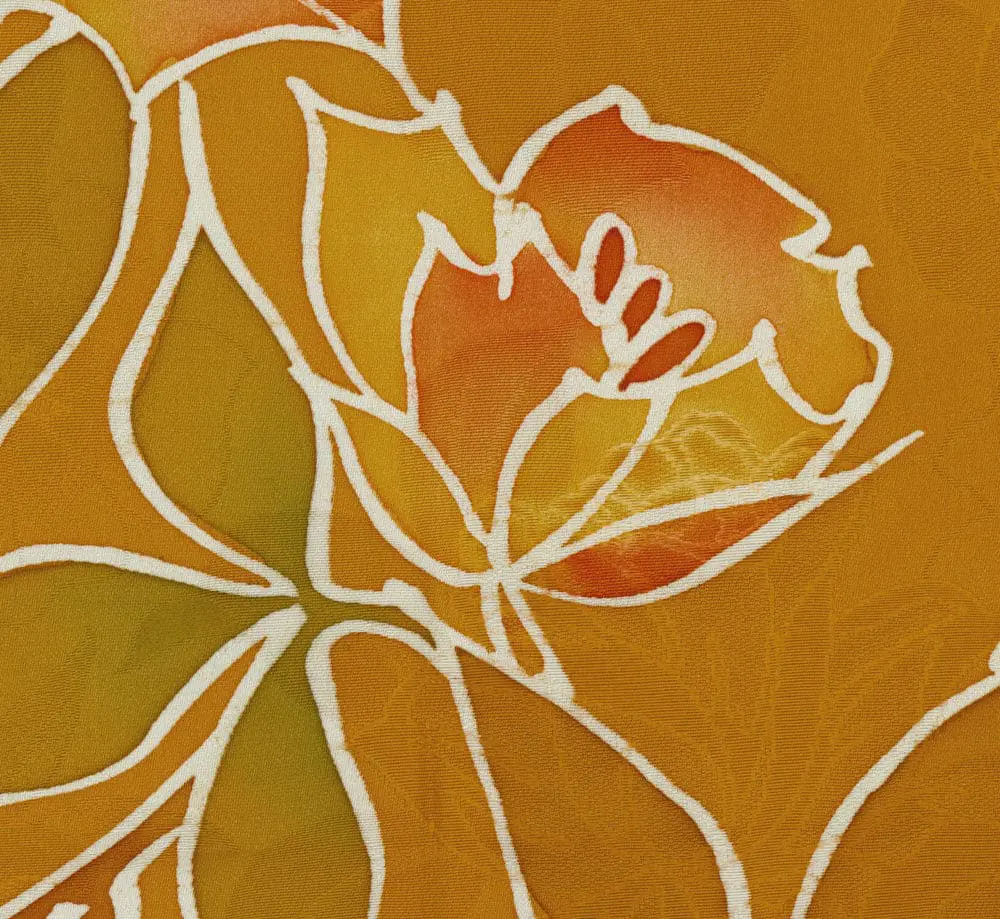
This radiant textile originates from Japan’s late Showa period (1970–1980), representing a singular panel from a disassembled kimono. Measuring 15 inches by 46 inches (38 cm x 117 cm), the piece is crafted from premium rinzu silk, a damask weave known for its directional sheen and luxurious handle. The base fabric is dyed a vibrant golden ochre, providing a warm and energetic foundation for the large-scale botanical composition. The silk is in excellent condition, showcasing the high-quality textile production of the late 20th century.
The visual narrative features an expansive floral motif, likely created using a wax-resist dyeing technique (rozome) to achieve the soft, painterly transitions within the petals and leaves. The design showcases large white and amber-toned blossoms, possibly camellias or wild roses, with delicate green-to-brown gradations in the surrounding foliage. Fine white resist-lines define the edges of the flora, adding a graphic clarity that contrasts with the fluid, blended colors within the shapes. This scholarly example of late Showa design reflects a move toward bold, nature-inspired patterns that utilize traditional resist methods in a modern, expressive way.

Payment Options: We primarily accept PayPal for all transactions. Credit and debit cards are not accepted. If you prefer to pay by personal check instead of PayPal, please note this preference in the "Additional comments" field when placing your order.Ordering Process
To receive your PayPal invoice, simply fill out the form.
Shipping Details: We ship all orders to the address associated with your PayPal payment. Please ensure your PayPal shipping address is current and accurate.A phone number is required during checkout, as our shipping carrier may need to contact you regarding delivery questions.Shipping RatesUnited States and Canada: $20International destinations (air mail): $40
