Copyright © 2026 Yorke Antique Textiles
.avif)

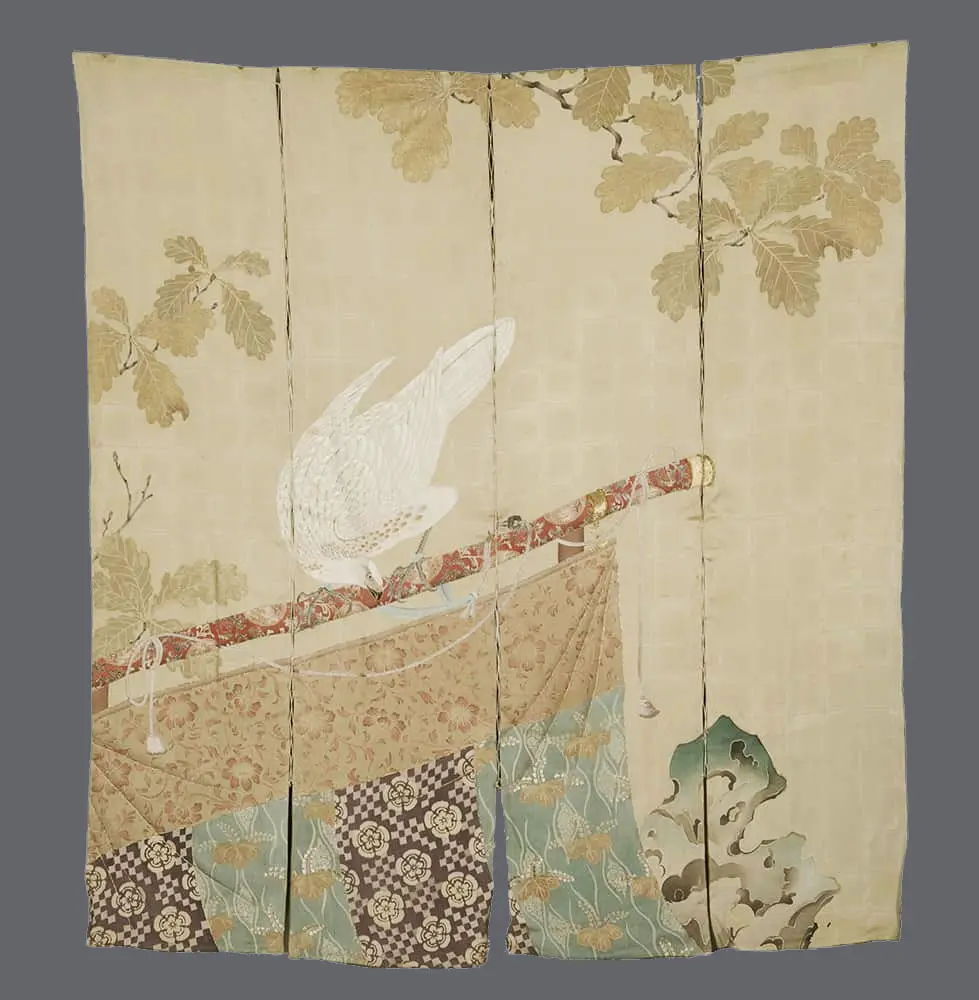



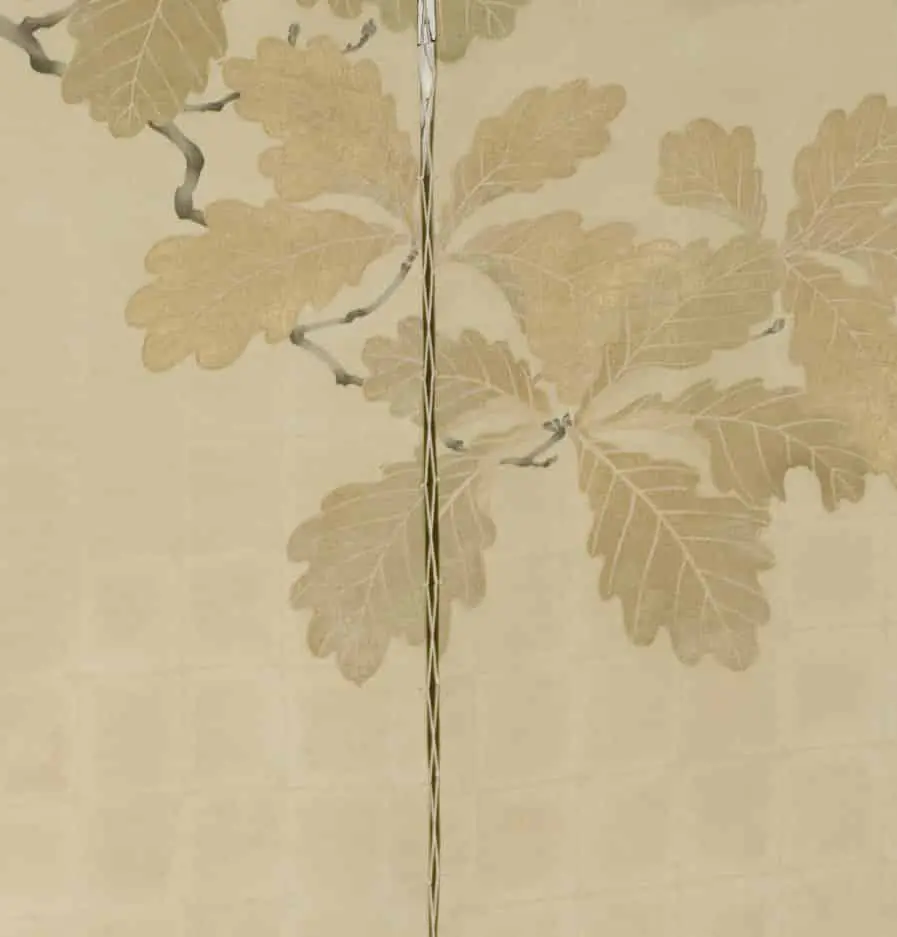


This exceedingly rare silk curtain, or kicho ("curtain of state"), dates to the late Edo period (1800–1868) and represents a peak of Japanese textile sophistication. Measuring 53 inches by 56 inches (135 cm x 142 cm), the screen consists of four silk panels joined by finely braided rope and supported by wooden sticks with brass eyelets. Historically, kicho were used by Heian-era nobility to partition rooms and provide privacy for high-ranking women, though this specific piece is likely a 19th-century "revival" work commissioned by a wealthy family to evoke Japan’s "Golden Age".
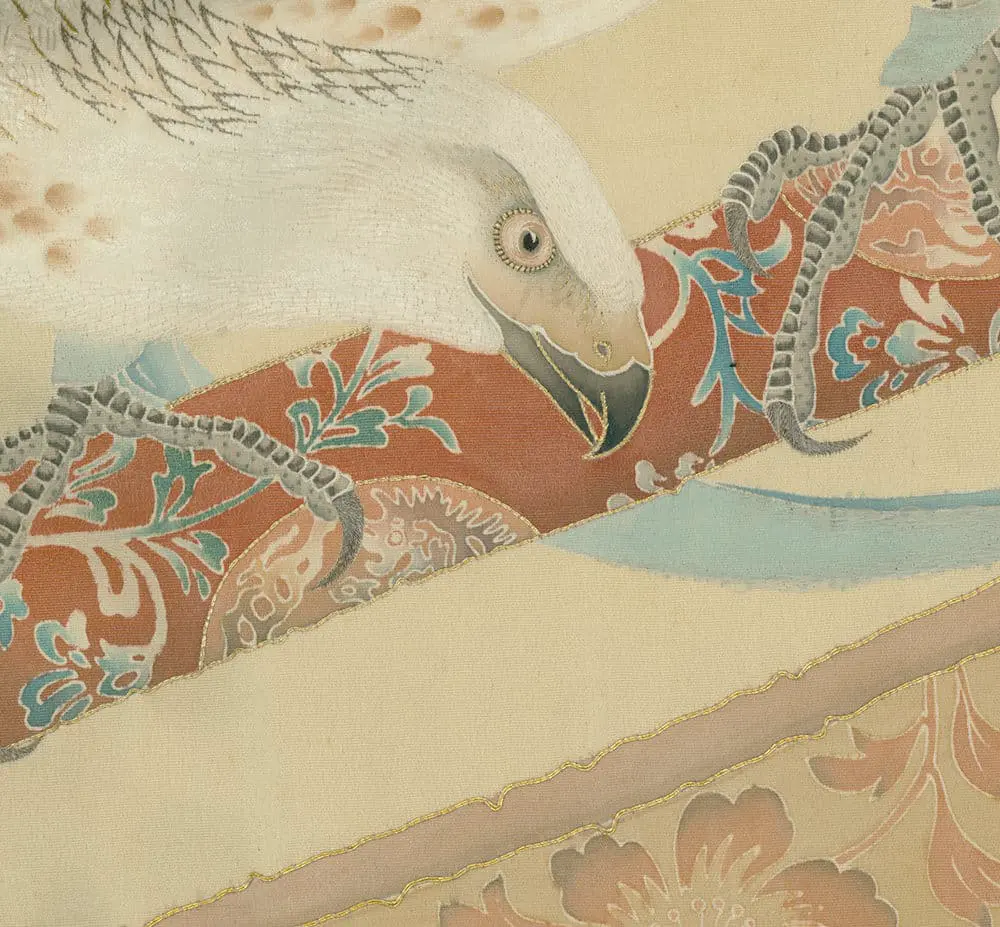
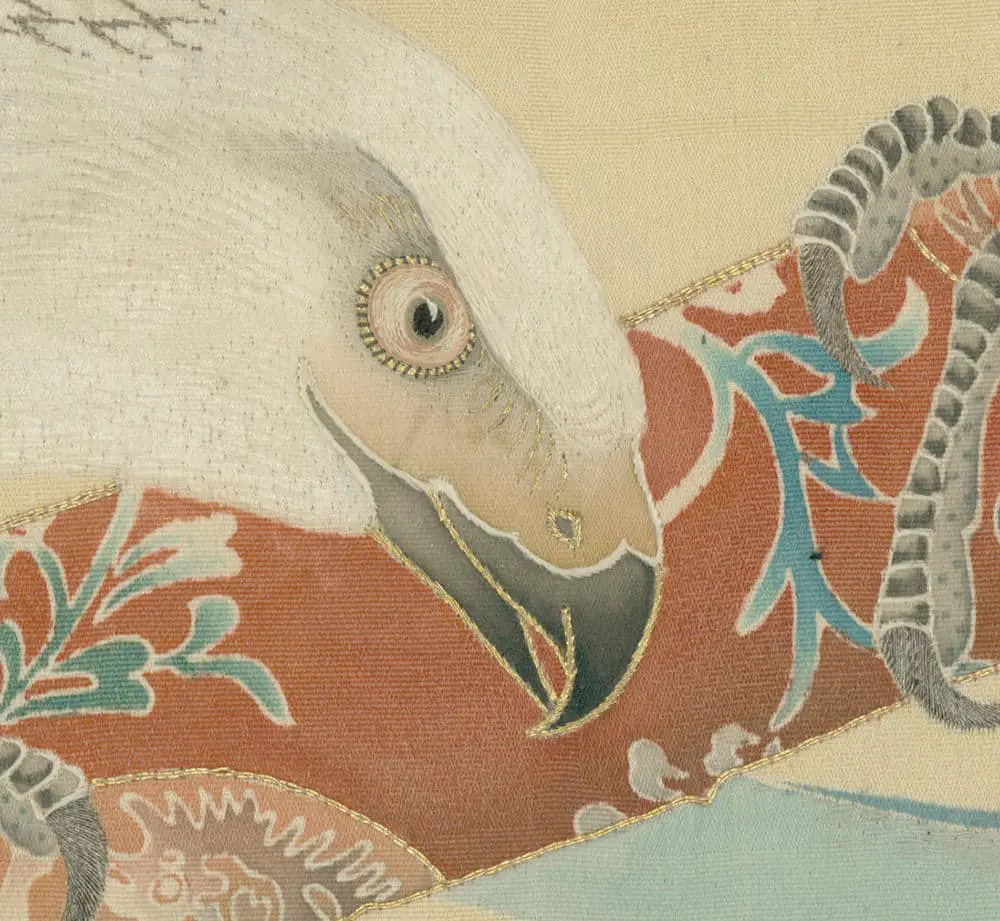
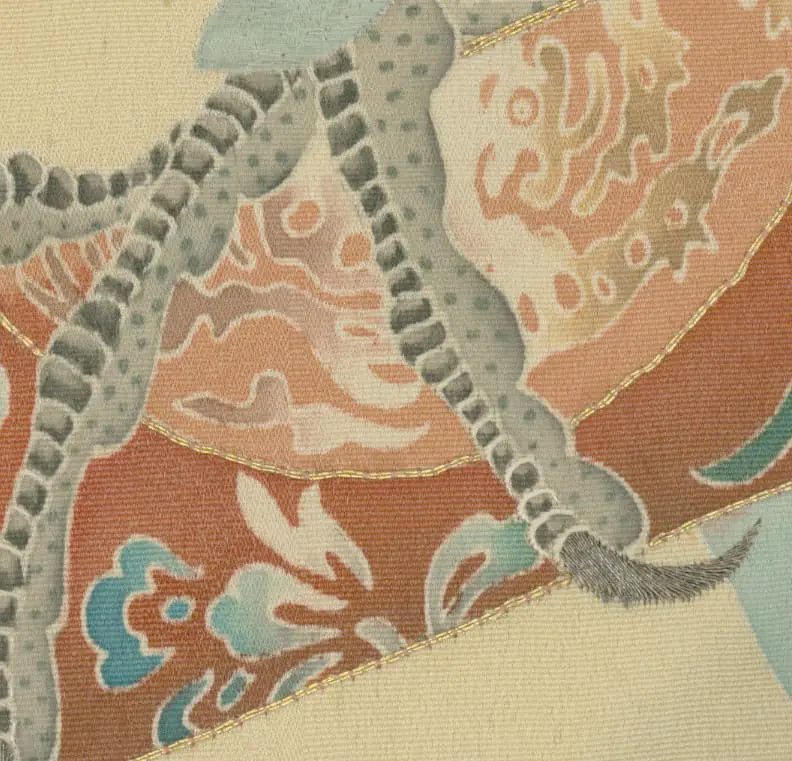
The central imagery features a magnificent white falcon perched upon a lavish ceremonial stand known as a daiboko. Falconry was a prestigious pursuit for the samurai and nobility, with birds symbolizing the soul's fierce and regal nature. The falcon is meticulously hand-painted and detailed with fine embroidery, including a deer-skin strap (ashikawa) around its legs. Surrounding the bird are large branches of oak (kashiwa), rendered in paint and gold foil, which signify the presence of protective forest deities. The screen itself is decorated with yuzen-painting, metallic couching, and sagara embroidery, creating a work of profound artistry and historical weight.
This artwork is featured on pages 430-433 of Ceremonial Textiles of Japan, 18th to 20th Centuries. This book, published by Yorke Antique Textiles, can be previewed or purchased on our website here.

Payment Options: We primarily accept PayPal for all transactions. Credit and debit cards are not accepted. If you prefer to pay by personal check instead of PayPal, please note this preference in the "Additional comments" field when placing your order.Ordering Process
To receive your PayPal invoice, simply fill out the form.
Shipping Details: We ship all orders to the address associated with your PayPal payment. Please ensure your PayPal shipping address is current and accurate.A phone number is required during checkout, as our shipping carrier may need to contact you regarding delivery questions.Shipping RatesUnited States and Canada: $20International destinations (air mail): $40
