Copyright © 2026 Yorke Antique Textiles
.avif)

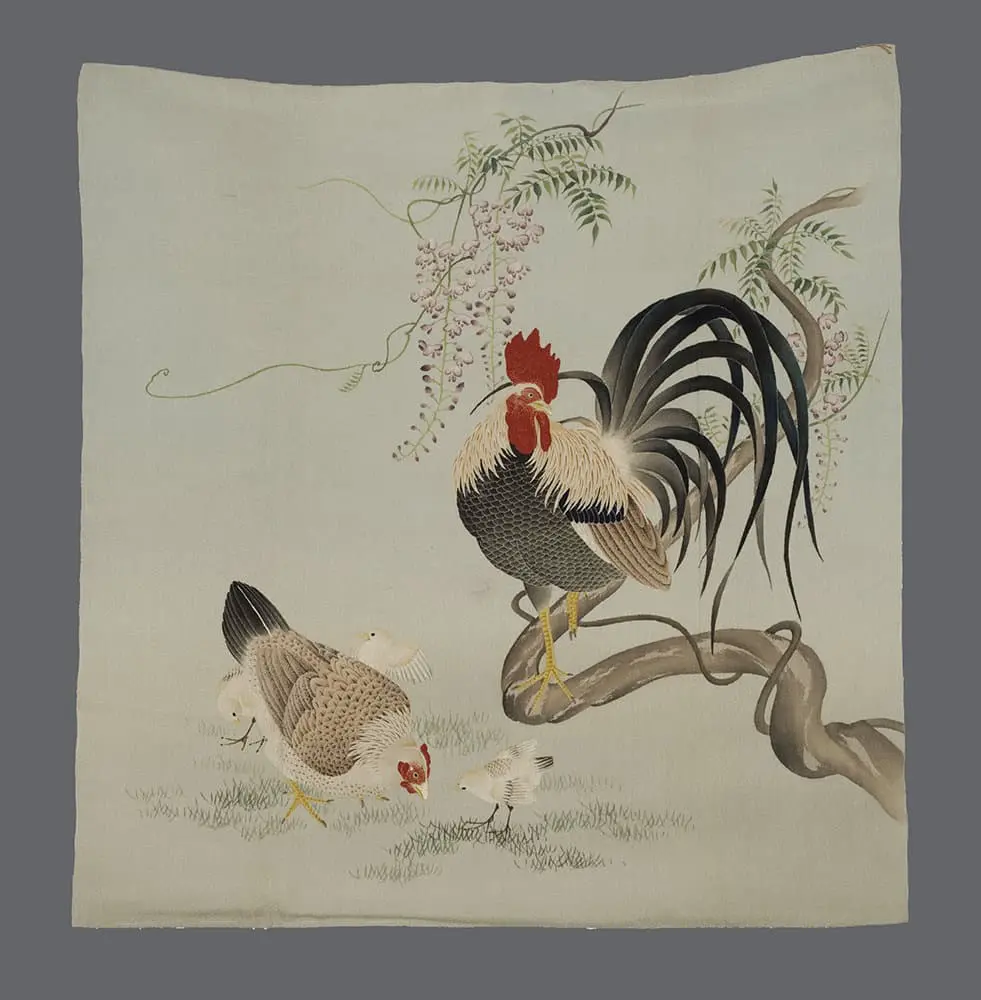


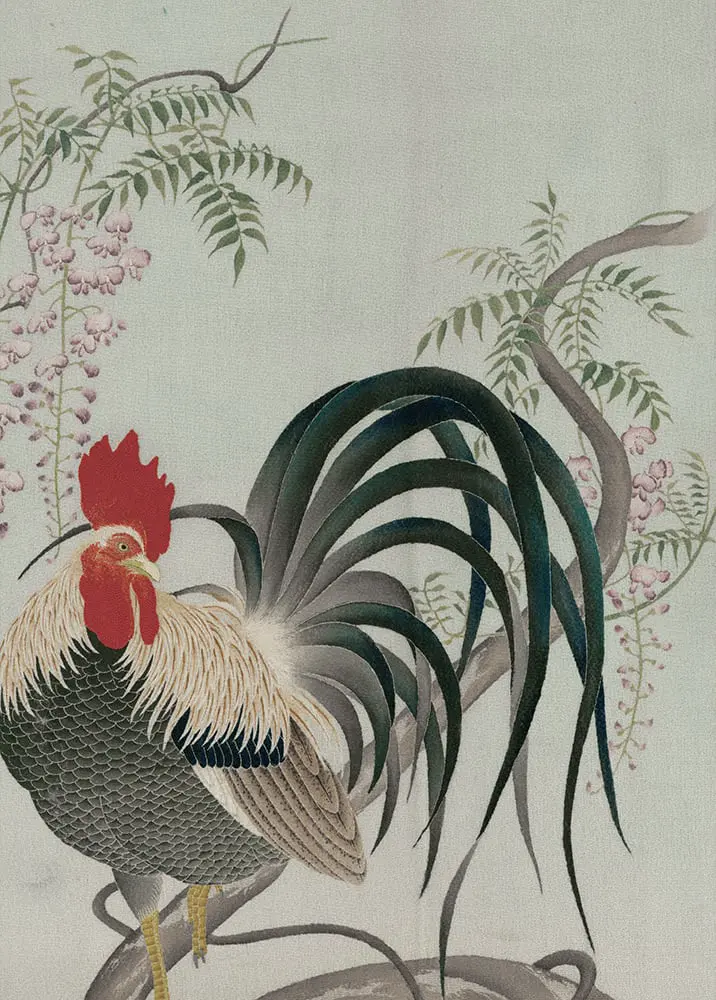

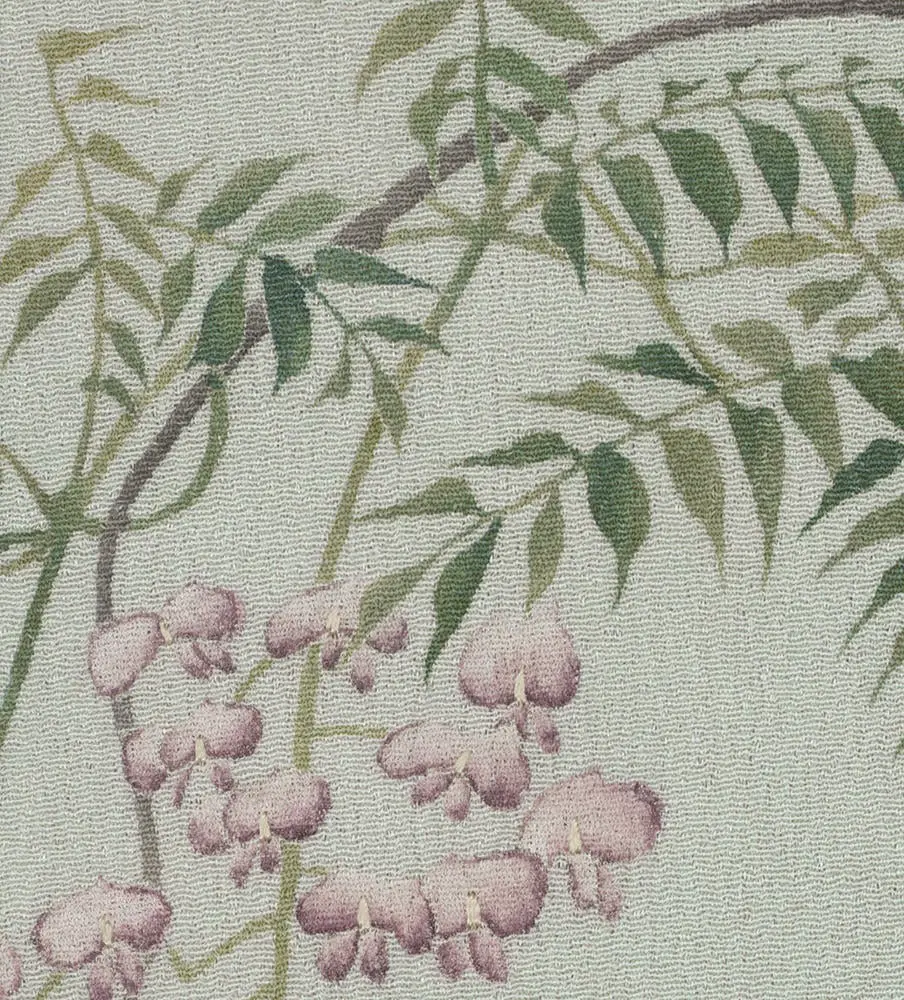

This exceptional chirimen (silk crepe) fukusa, dating from the late Edo to early Meiji period (1840–1880), is a masterful display of traditional Japanese textile artistry. Measuring 28 inches by 31 inches (71.1 cm x 78.7 cm), the piece depicts a serene family scene featuring a cock, a hen, and their chicks foraging beneath cascading wisteria blossoms. In Japanese culture, the rooster and hen often symbolize martial courage and maternal protection, while the wisteria (fuji) represents elegance and a long-lived lineage.
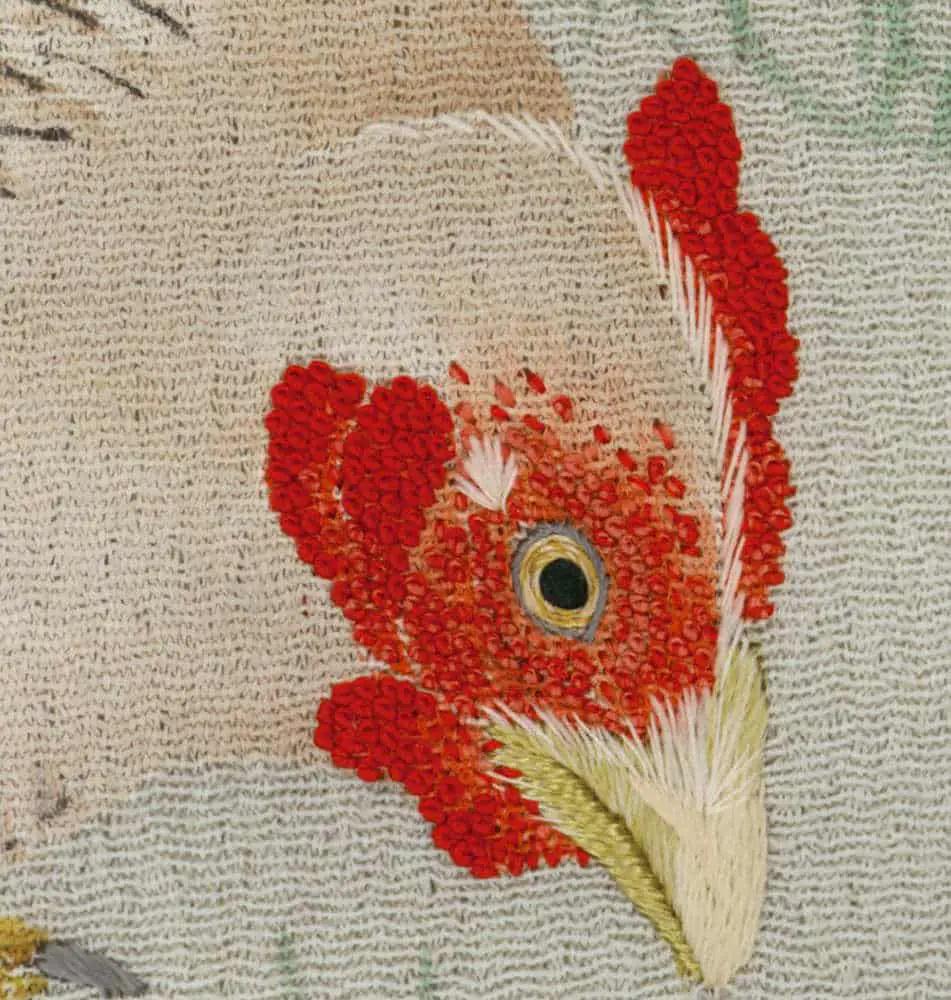
The technical execution is top-tier, utilizing refined yuzen-dyeing for the delicate color gradients in the wisteria and the soft down of the chicks. The rooster is particularly striking, accented with sagara (knot) embroidery to provide a three-dimensional, "bumpy" texture to his plumage. Fine embroidery is also used throughout to define the sharp curves of the rooster's long tail feathers and the gnarled bark of the vine. This piece remains in very good condition with only minor imperfections.
This artwork is featured on pages 164-167 of Ceremonial Textiles of Japan, 18th to 20th Centuries. This book, published by Yorke Antique Textiles, can be previewed or purchased on our website here.

Payment Options: We primarily accept PayPal for all transactions. Credit and debit cards are not accepted. If you prefer to pay by personal check instead of PayPal, please note this preference in the "Additional comments" field when placing your order.Ordering Process
To receive your PayPal invoice, simply fill out the form.
Shipping Details: We ship all orders to the address associated with your PayPal payment. Please ensure your PayPal shipping address is current and accurate.A phone number is required during checkout, as our shipping carrier may need to contact you regarding delivery questions.Shipping RatesUnited States and Canada: $20International destinations (air mail): $40
