Copyright © 2026 Yorke Antique Textiles
.avif)

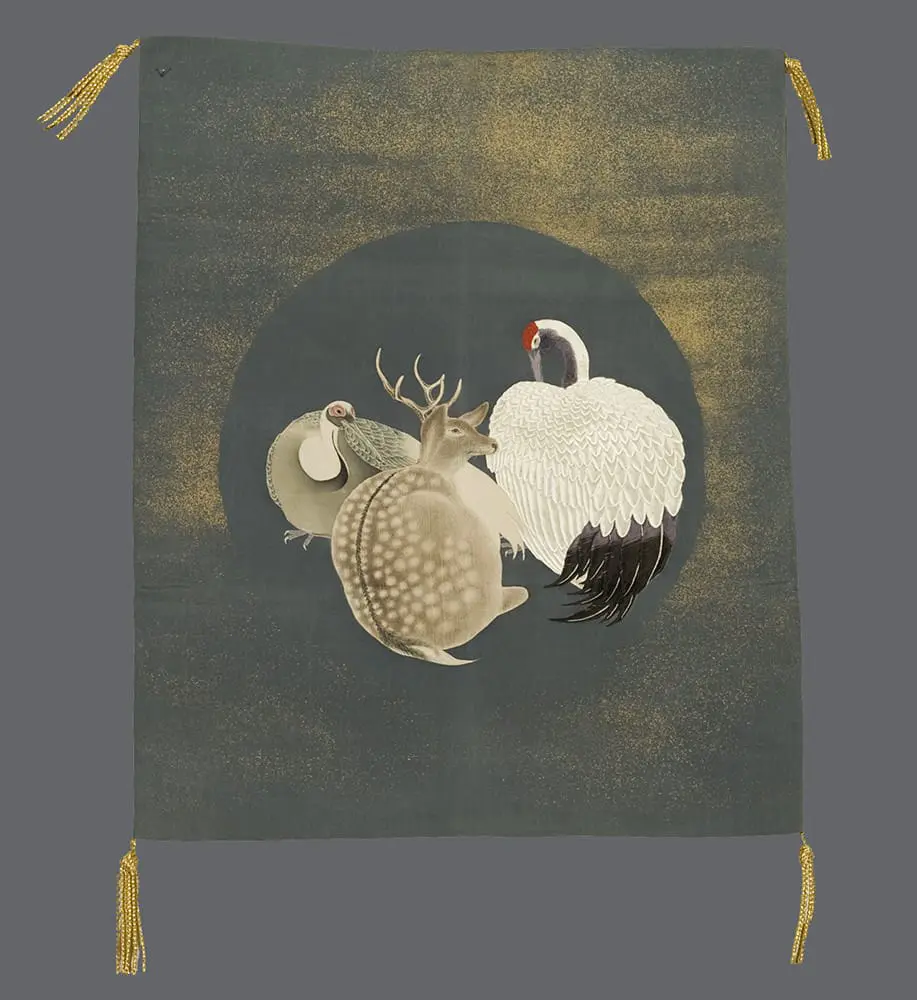
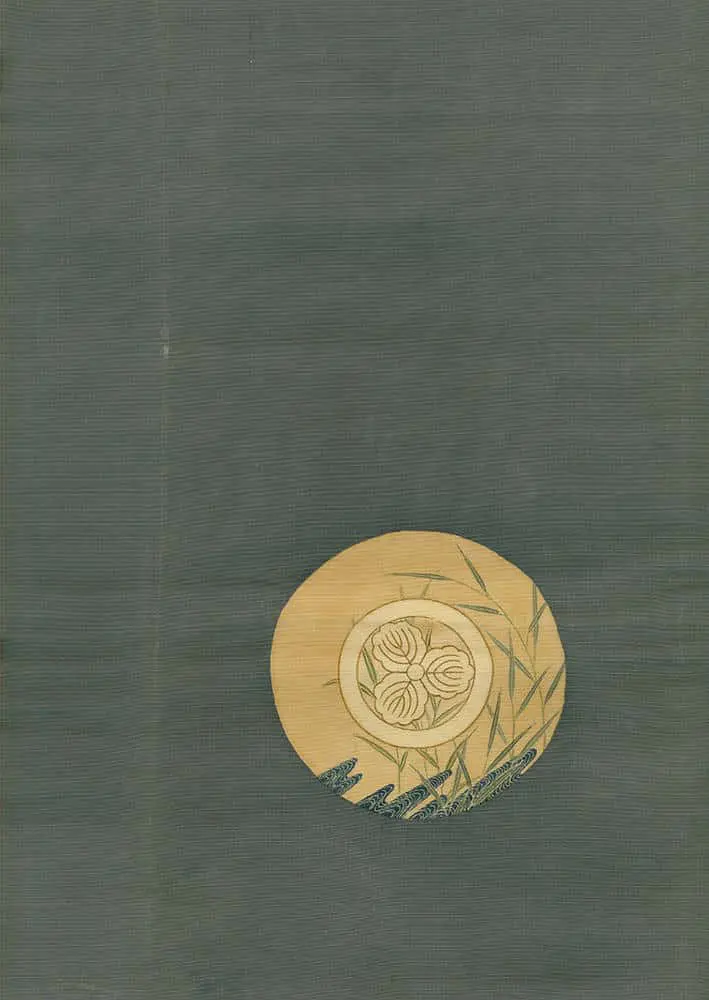

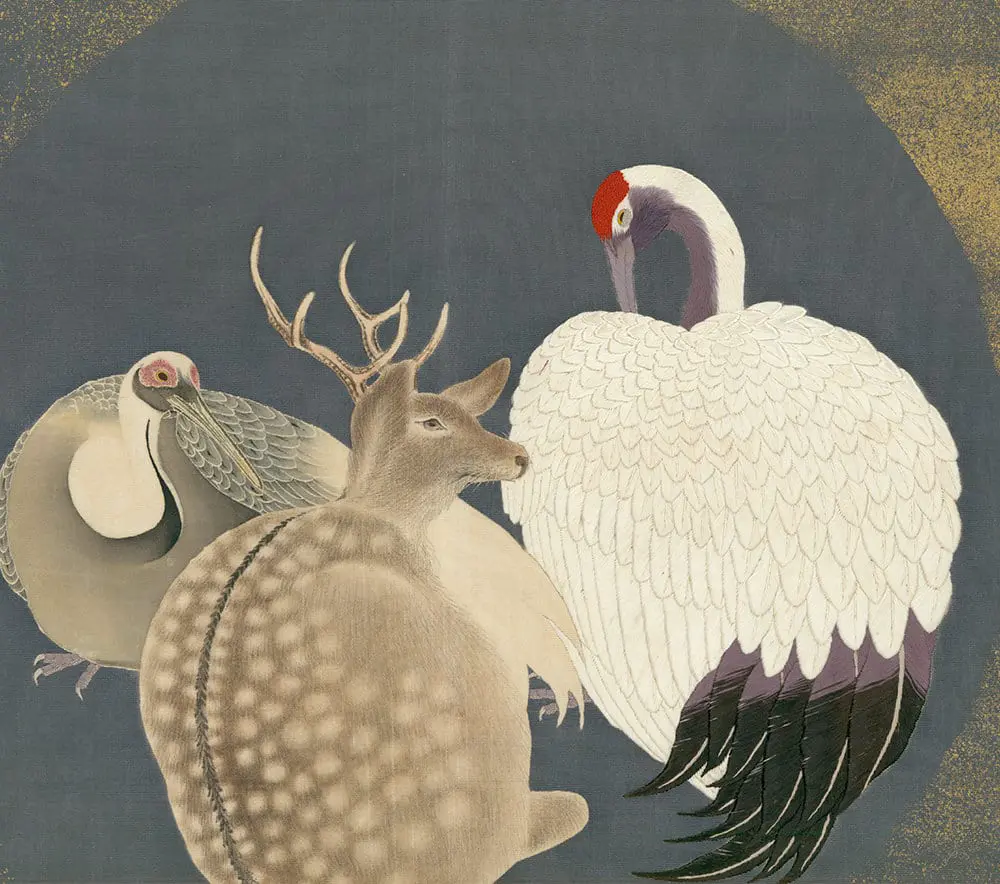
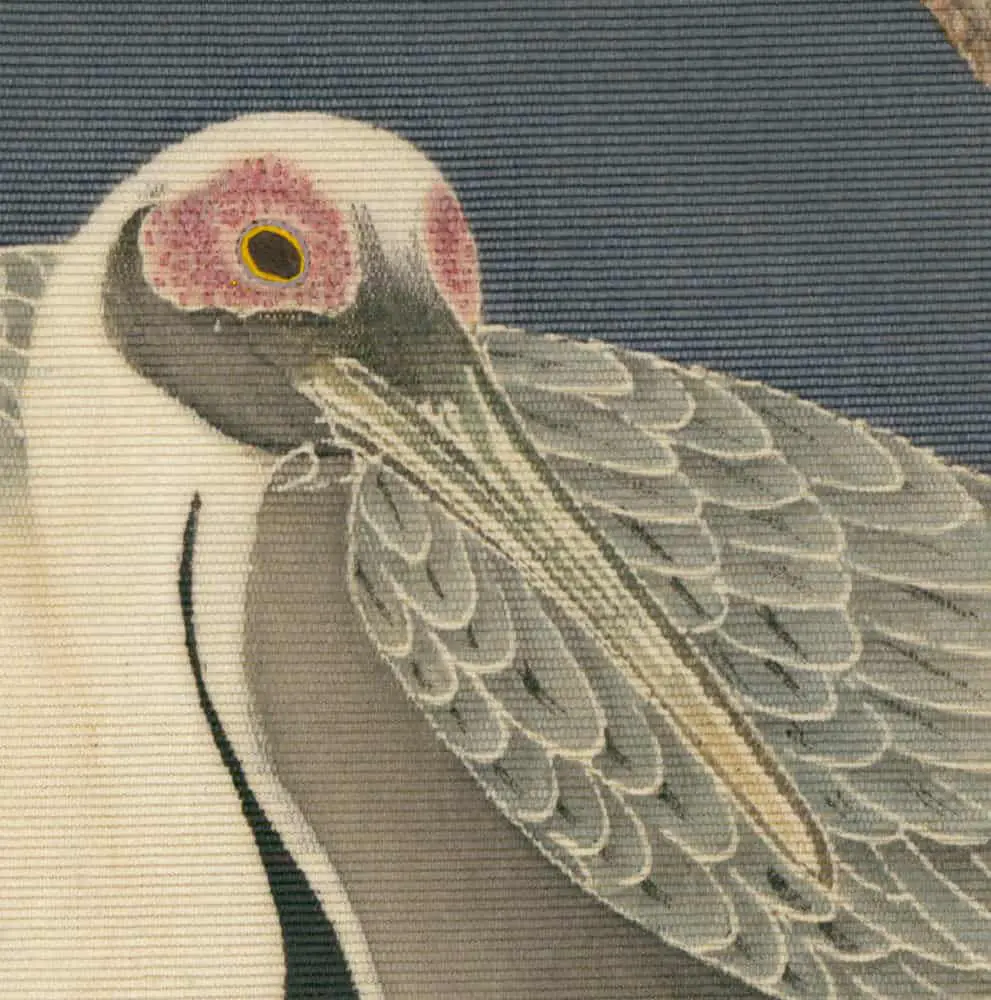

This elegant silk fukusa (gift cover), dating to the Meiji period (1868–1912), features a sophisticated composition of three classic symbols of longevity and grace. Measuring approximately the standard gift-cover size, the central scene depicts a spotted deer flanked by two cranes, all gathered within a large circular frame that suggests a glowing full moon.
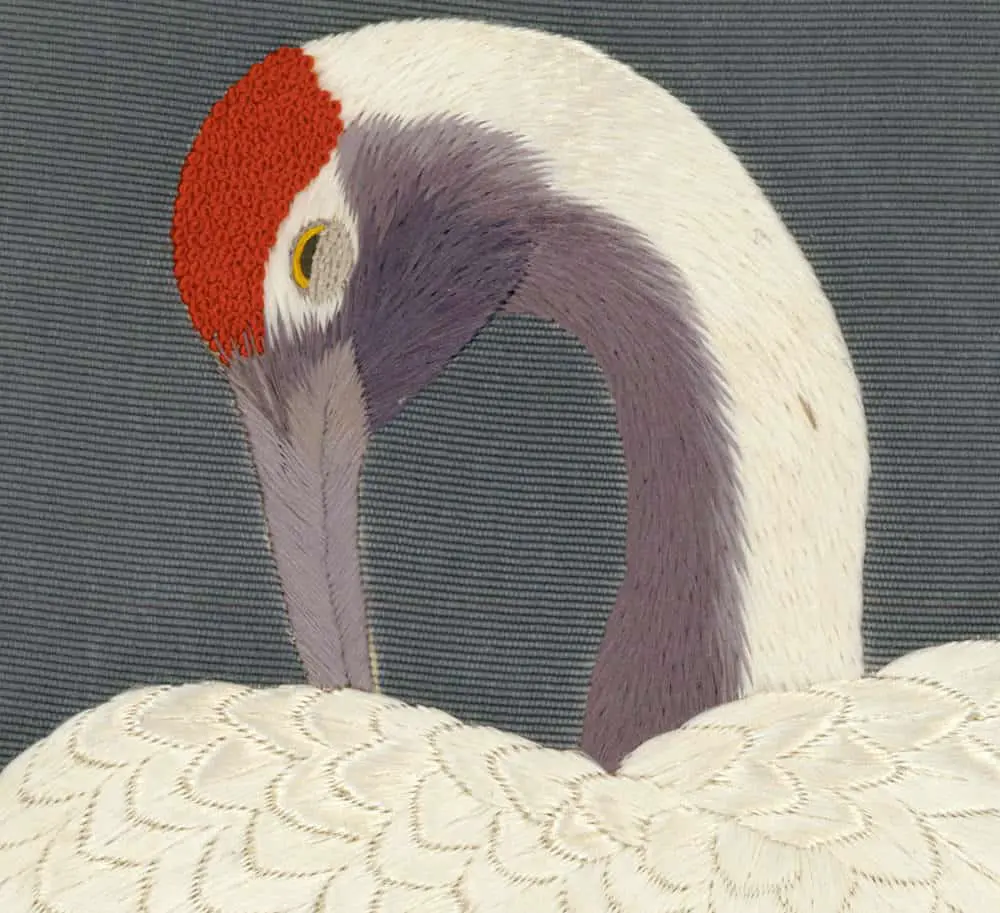
The technical execution of this piece highlights the transition of styles during the Meiji era. The crane on the right is fully rendered in dense, white floss embroidery, creating a textured, three-dimensional effect for its plumage. In contrast, the deer and the crane on the left are primarily yuzen-dyed with fine embroidery highlights to define their features. The background is a deep charcoal silk, accented by a delicate gold stippling that mimics celestial mist or the shimmering light of the moon. While the corner tassels are no longer present, the textile and its intricate hand-work remain in very good condition.
This artwork is featured on pages 144-145 of Ceremonial Textiles of Japan, 18th to 20th Centuries. This book, published by Yorke Antique Textiles, can be previewed or purchased on our website here.

Payment Options: We primarily accept PayPal for all transactions. Credit and debit cards are not accepted. If you prefer to pay by personal check instead of PayPal, please note this preference in the "Additional comments" field when placing your order.Ordering Process
To receive your PayPal invoice, simply fill out the form.
Shipping Details: We ship all orders to the address associated with your PayPal payment. Please ensure your PayPal shipping address is current and accurate.A phone number is required during checkout, as our shipping carrier may need to contact you regarding delivery questions.Shipping RatesUnited States and Canada: $20International destinations (air mail): $40
