Copyright © 2026 Yorke Antique Textiles
.avif)

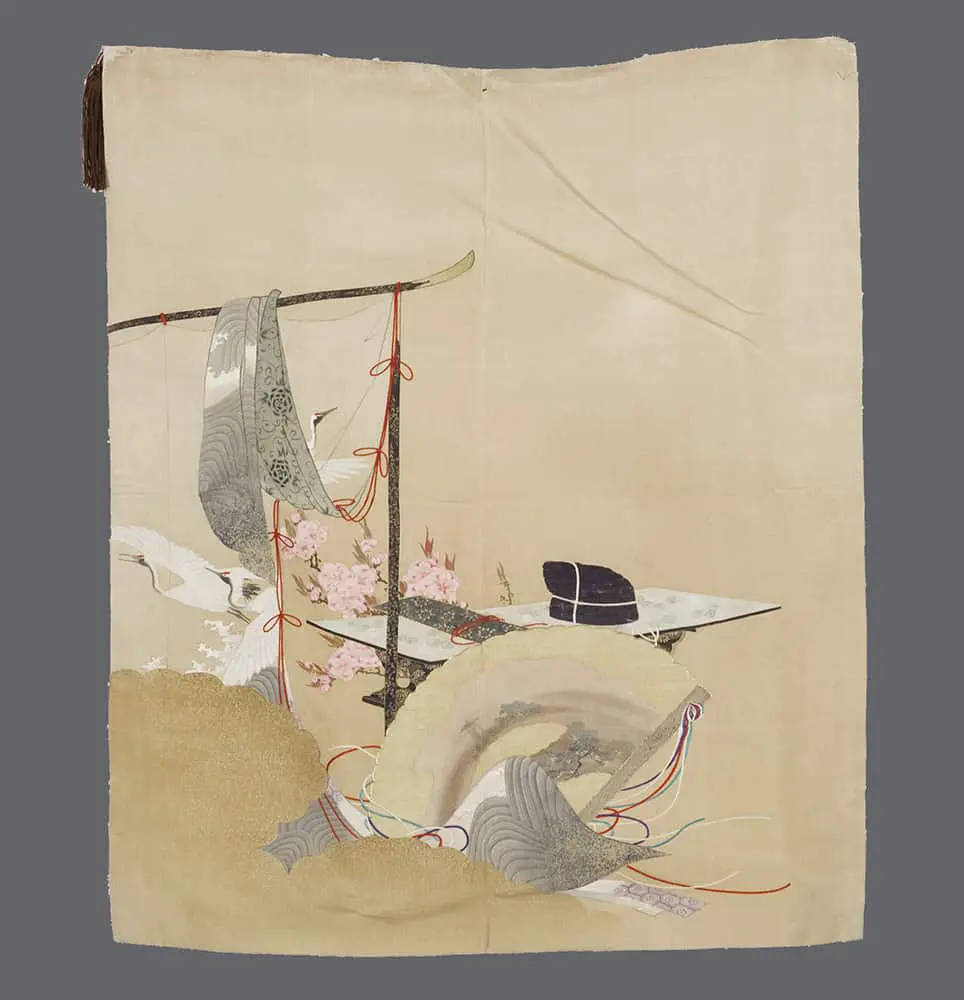

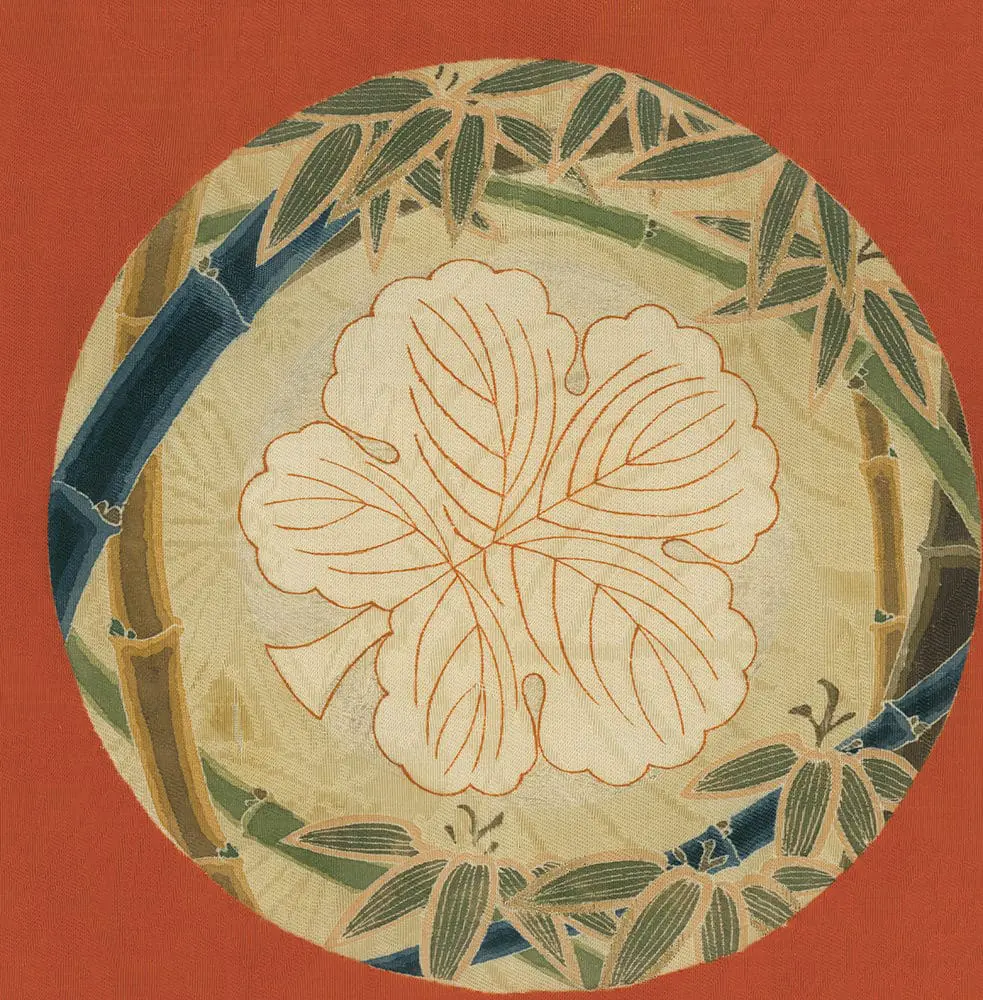
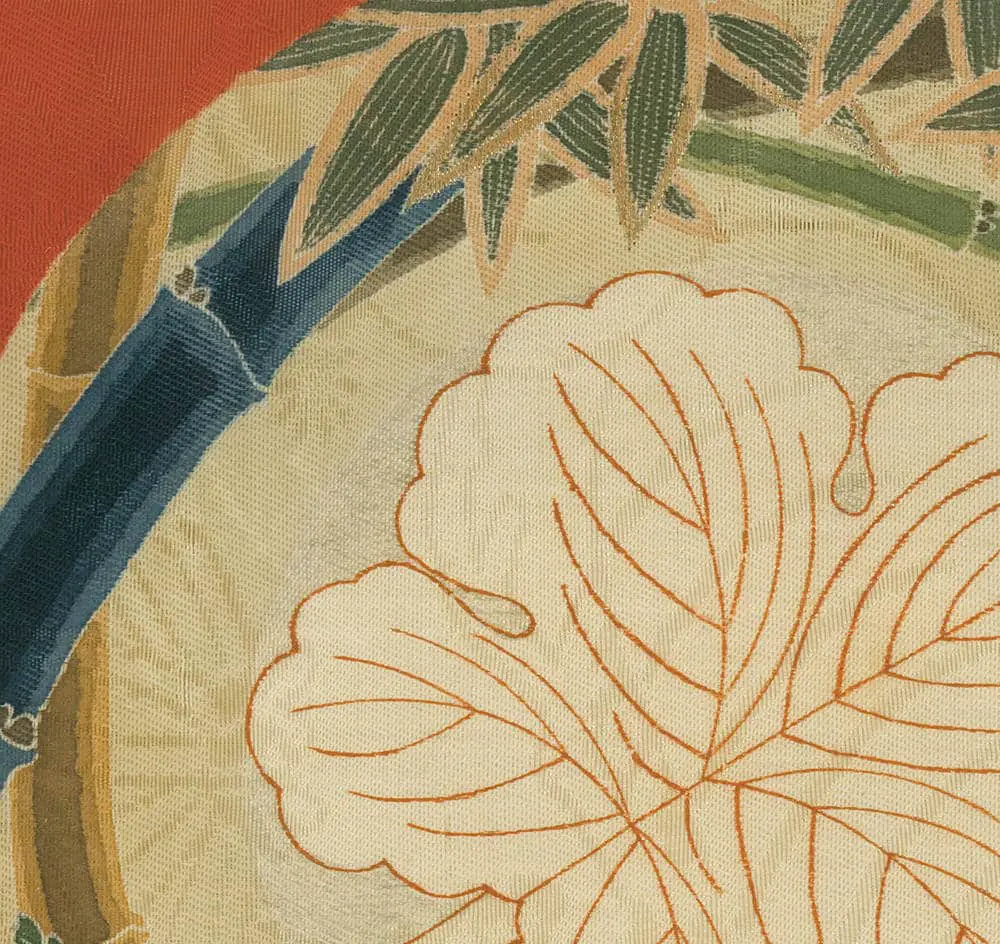
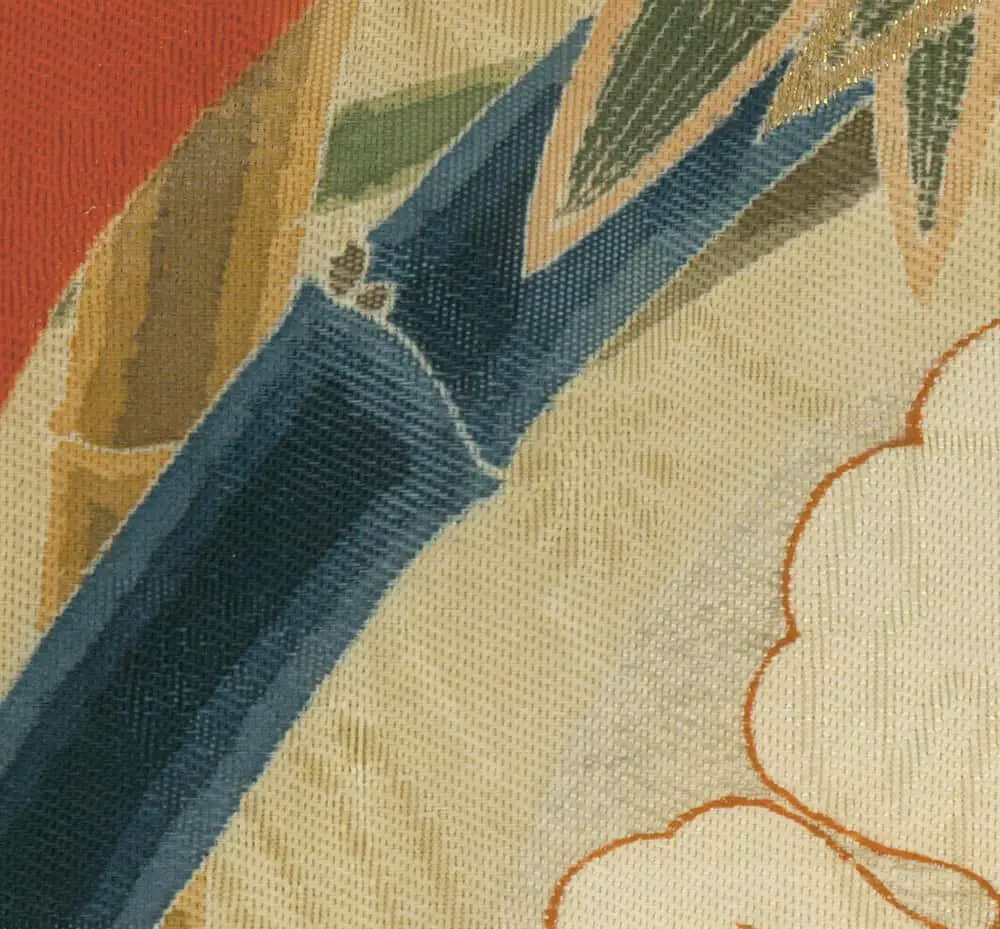
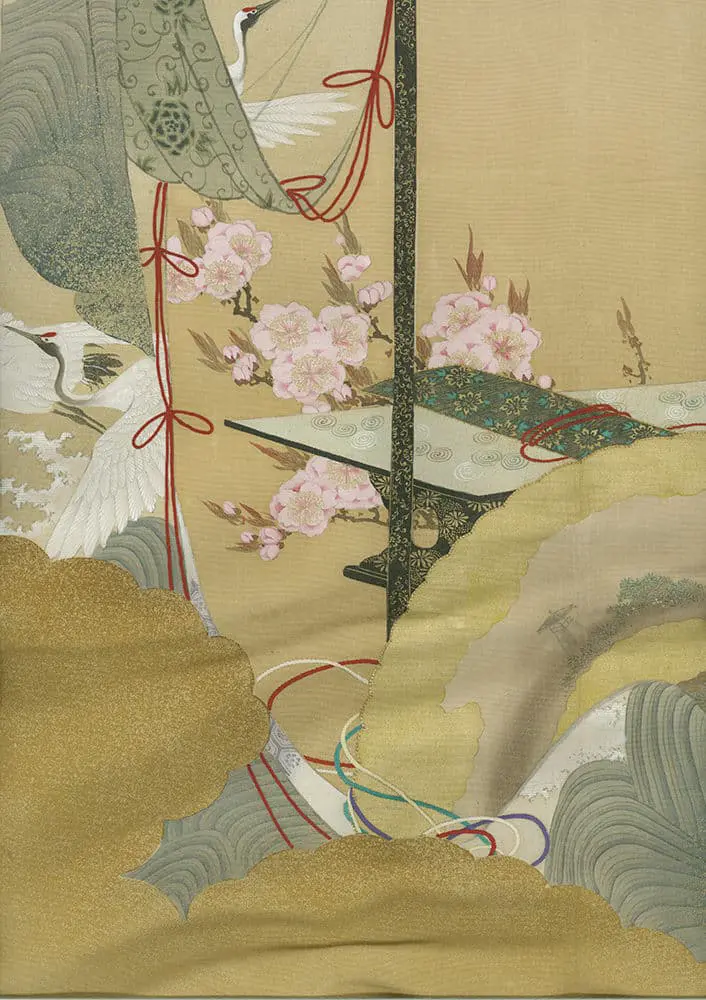

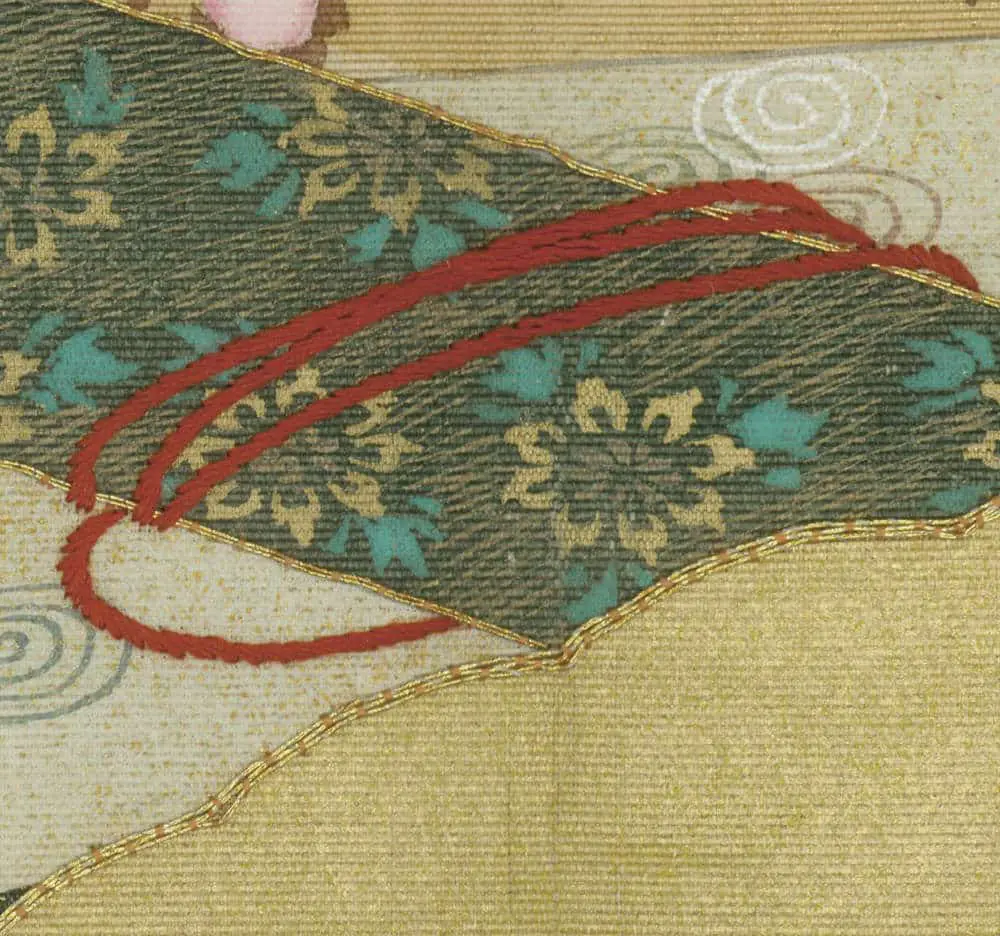
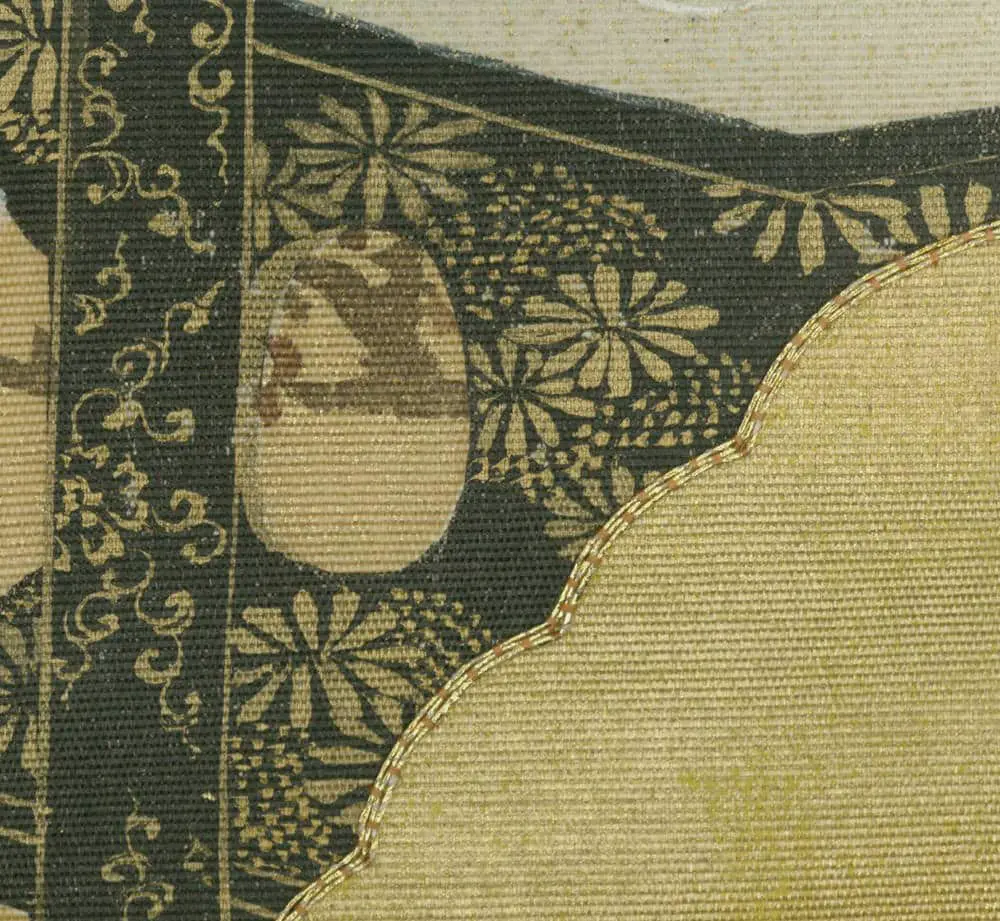
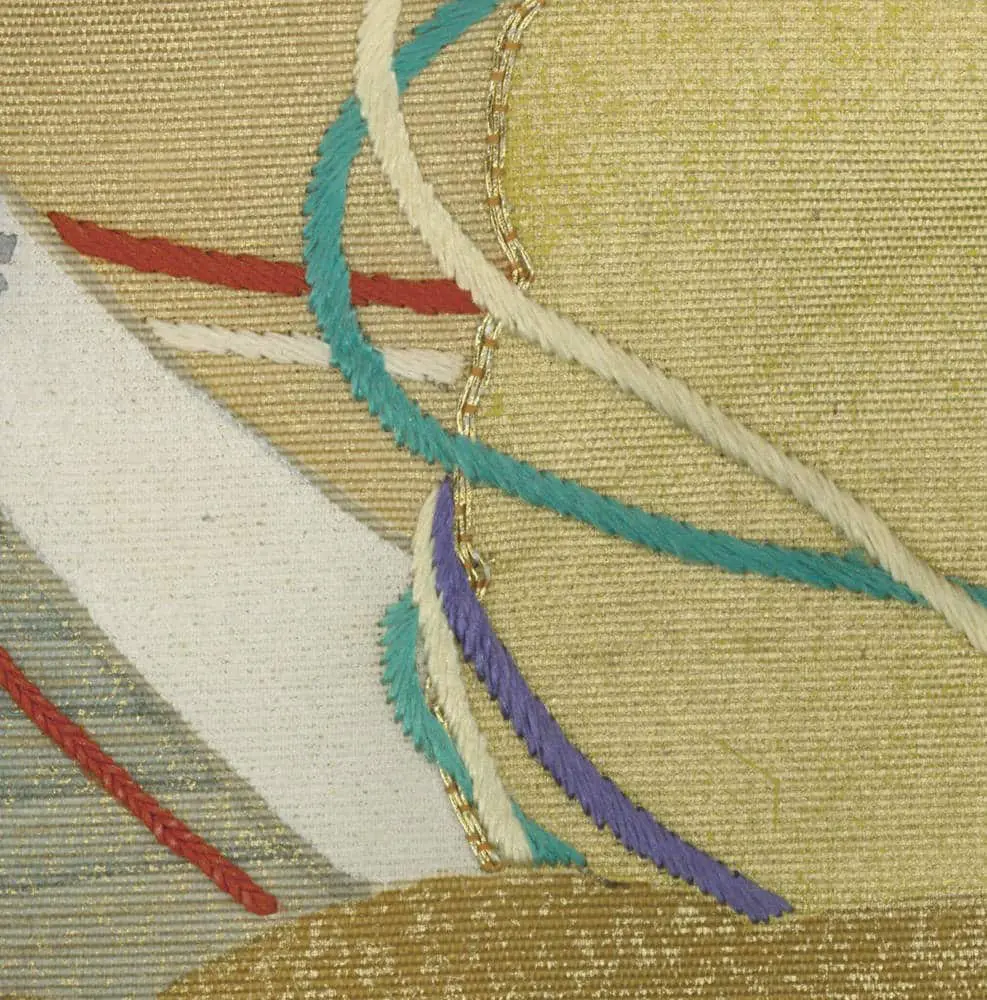
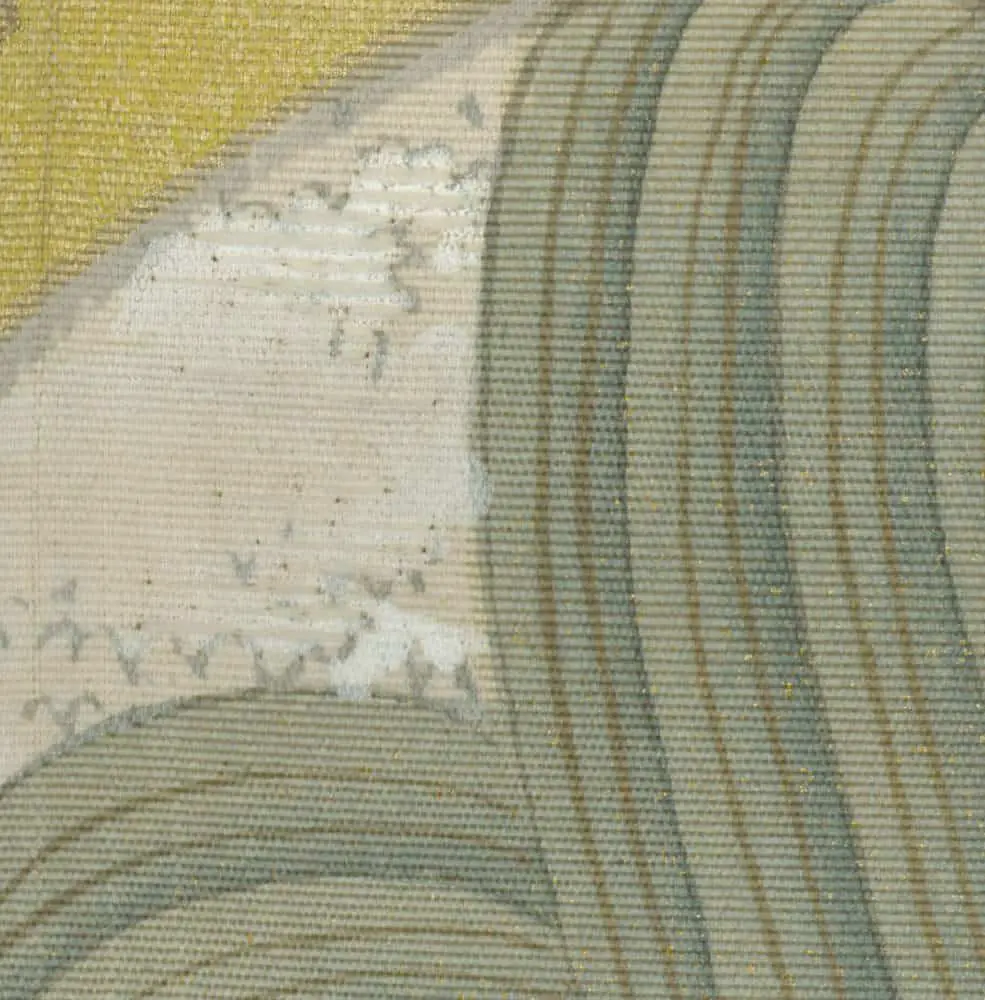
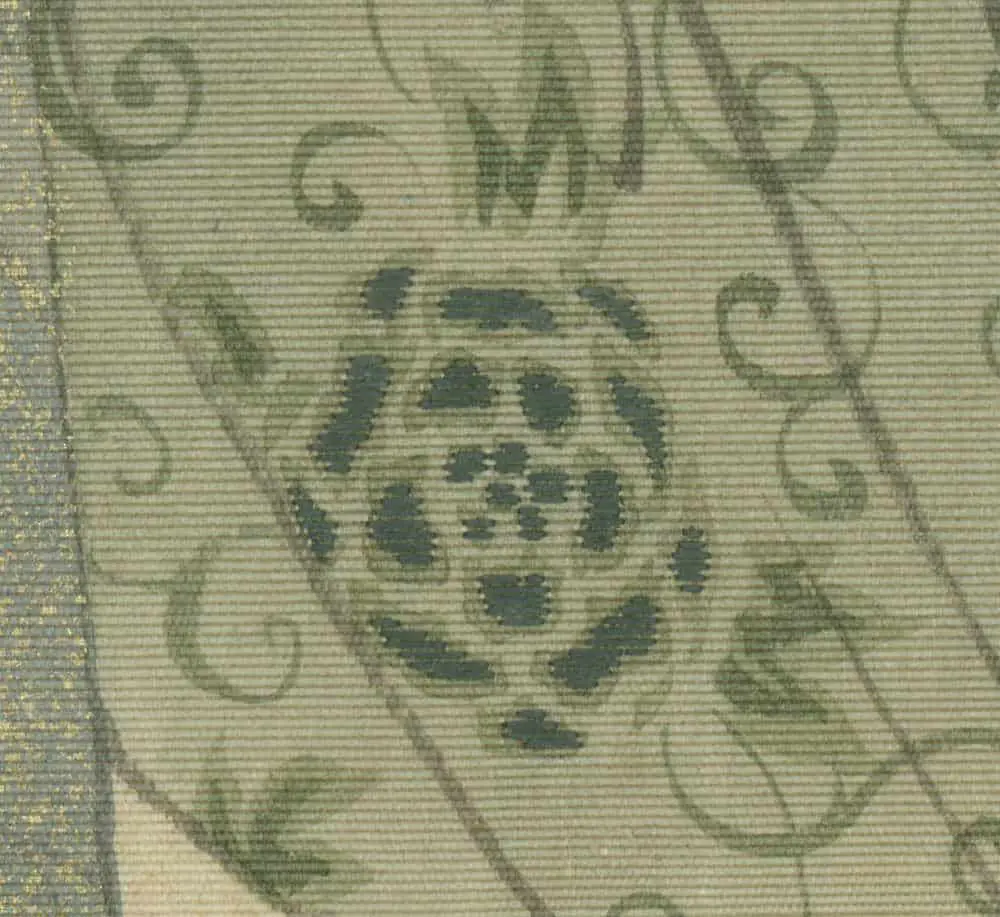
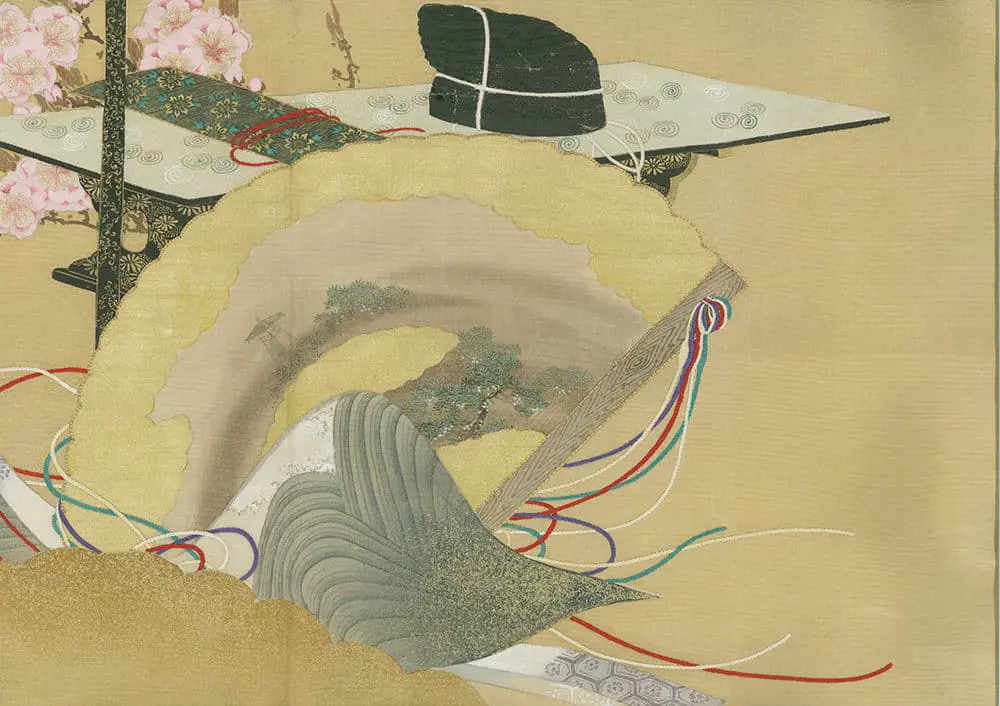
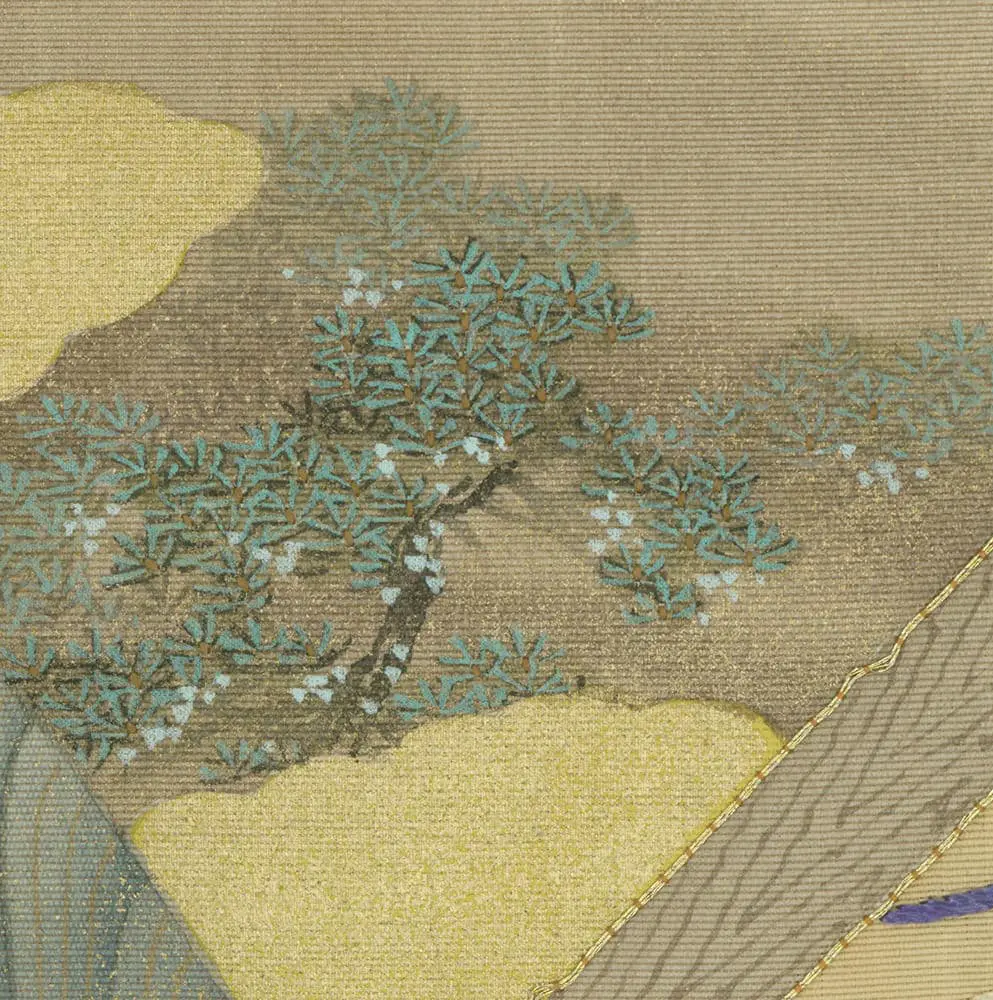
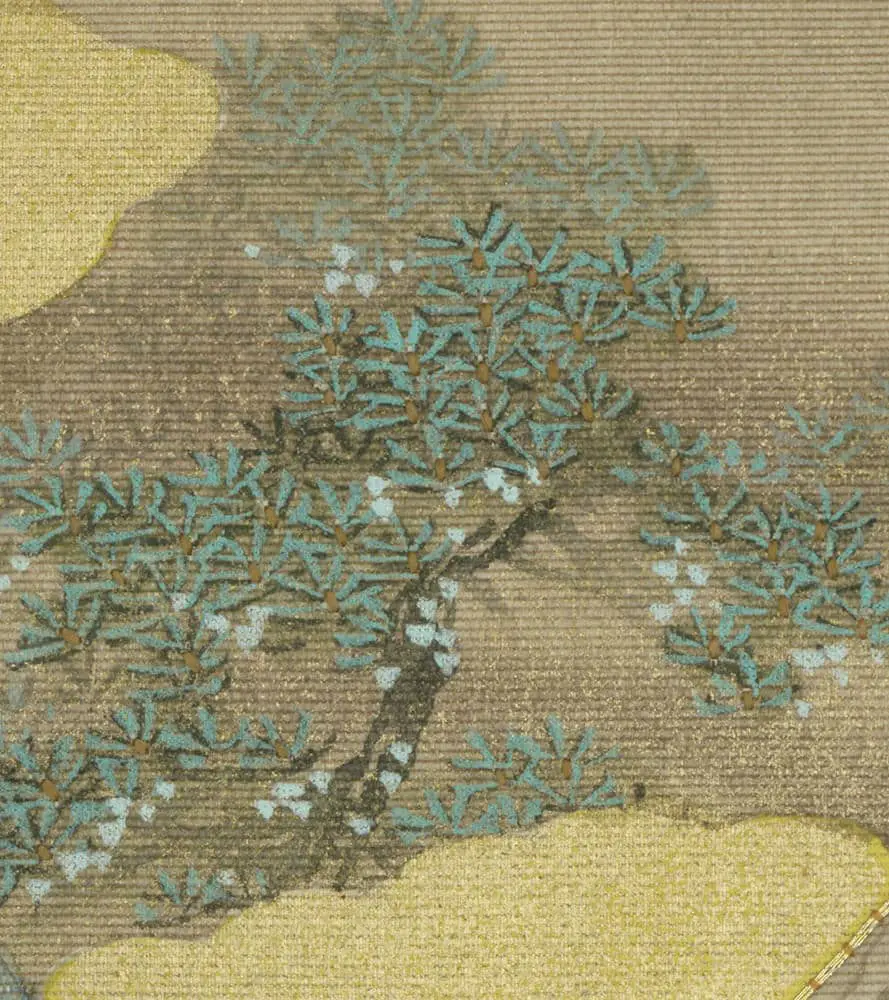
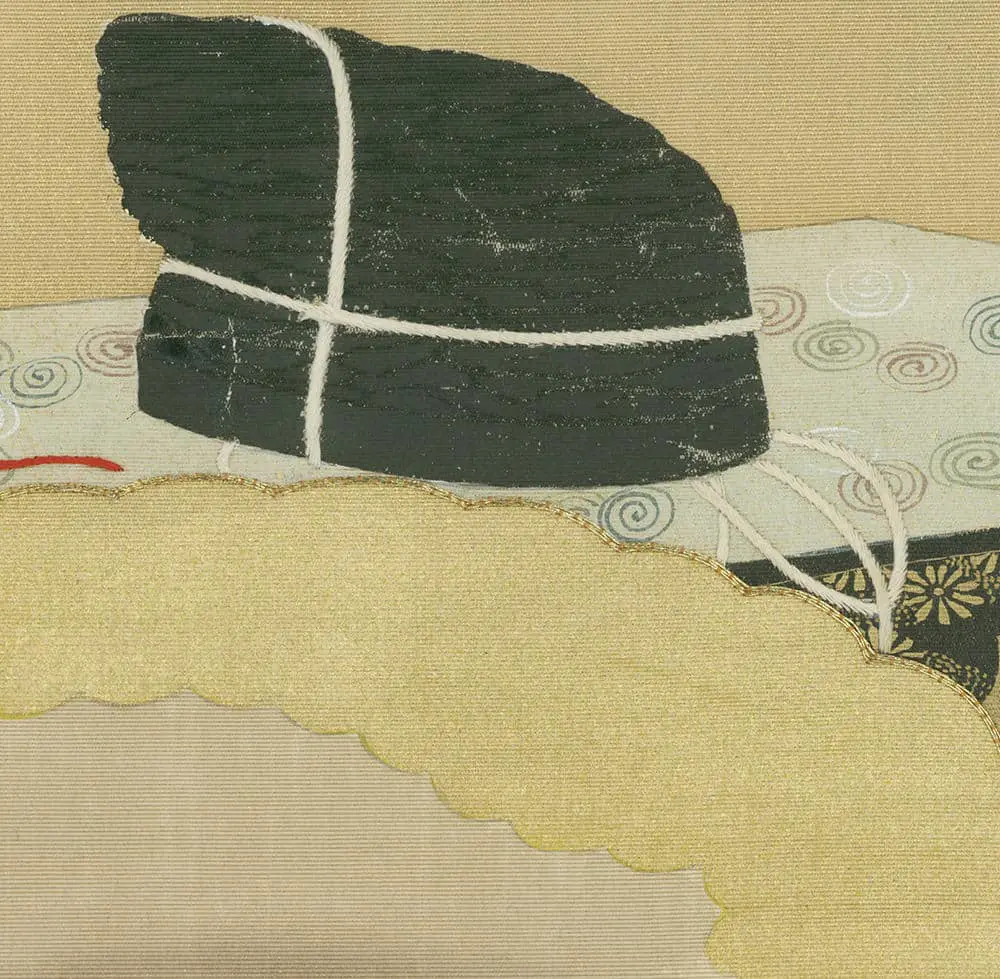
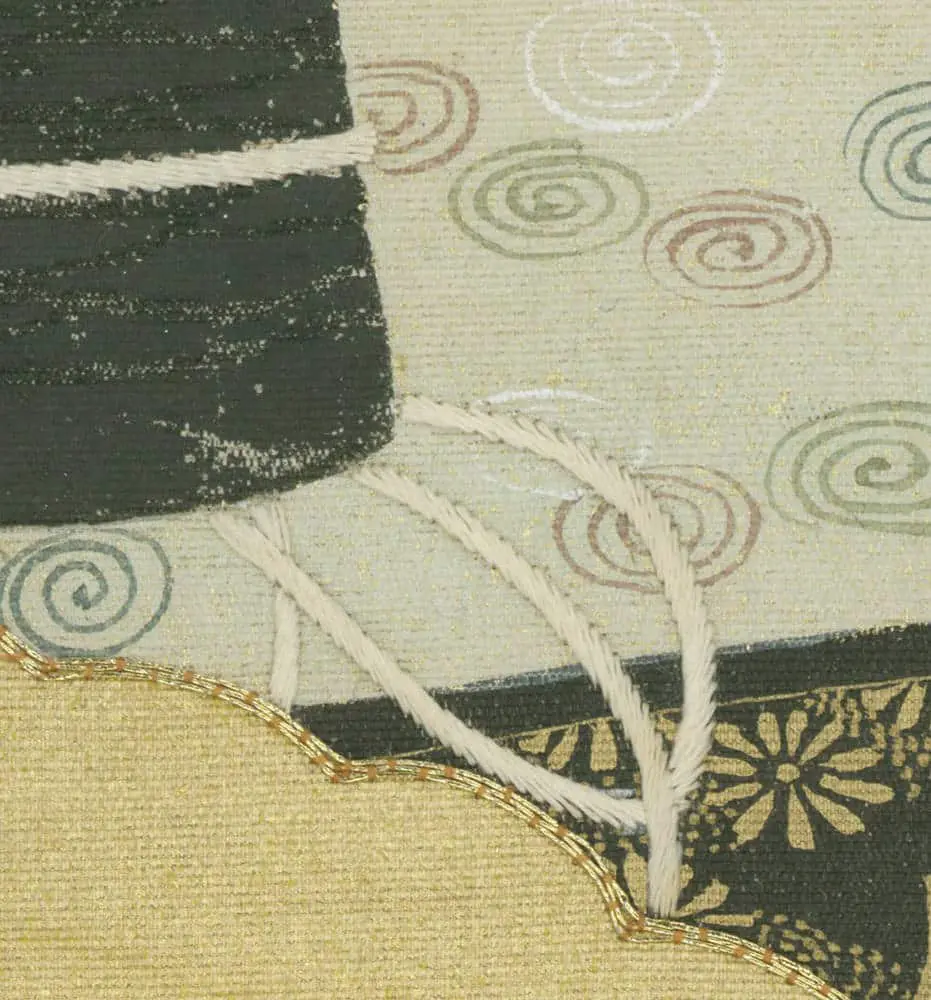
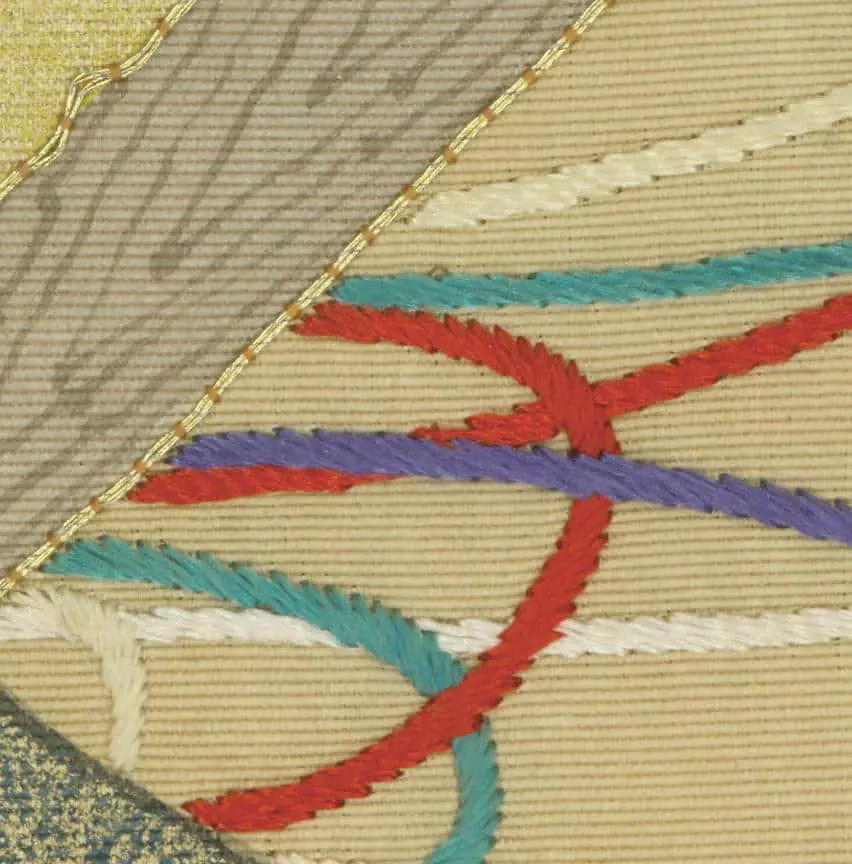
This expansive silk fukusa (gift cover), dating from the late Edo to early mid-Meiji period (1850–1875), is a sophisticated example of classical Japanese iconography. Measuring 26 inches by 31 inches (66 cm x 79 cm), the textile features a soft cream silk ground decorated with a complex array of yuzen-dyed motifs associated with the refined life of the imperial court.
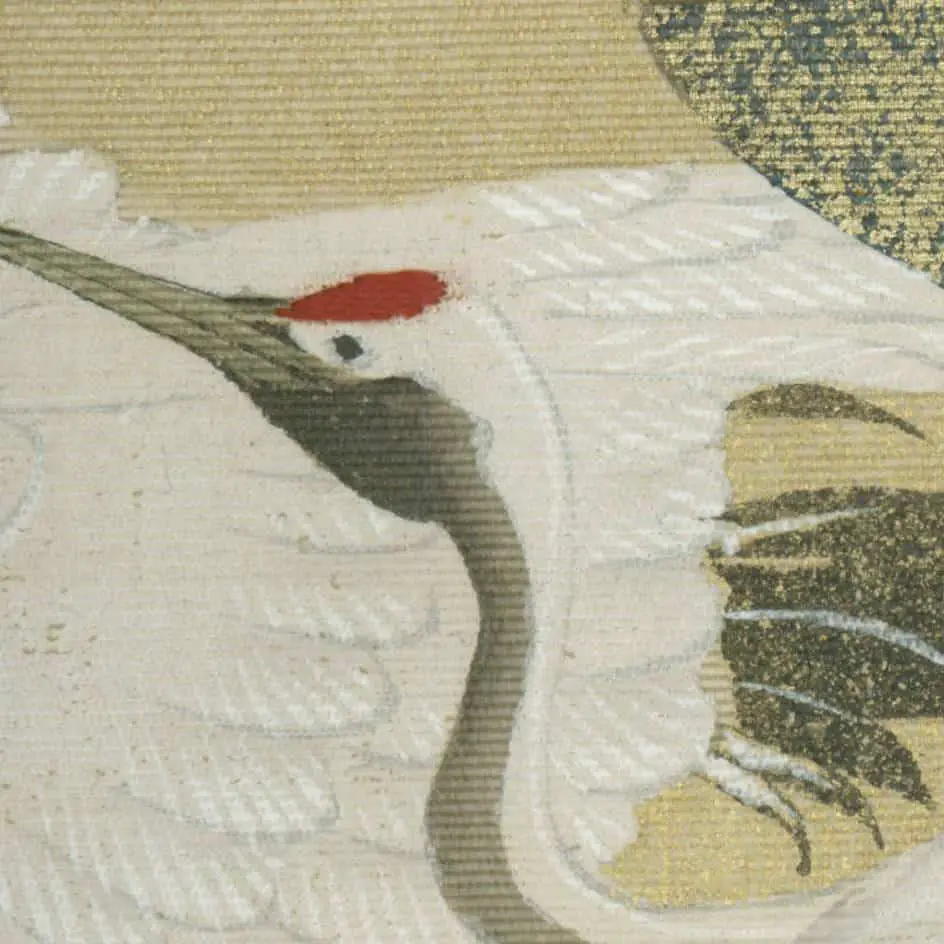
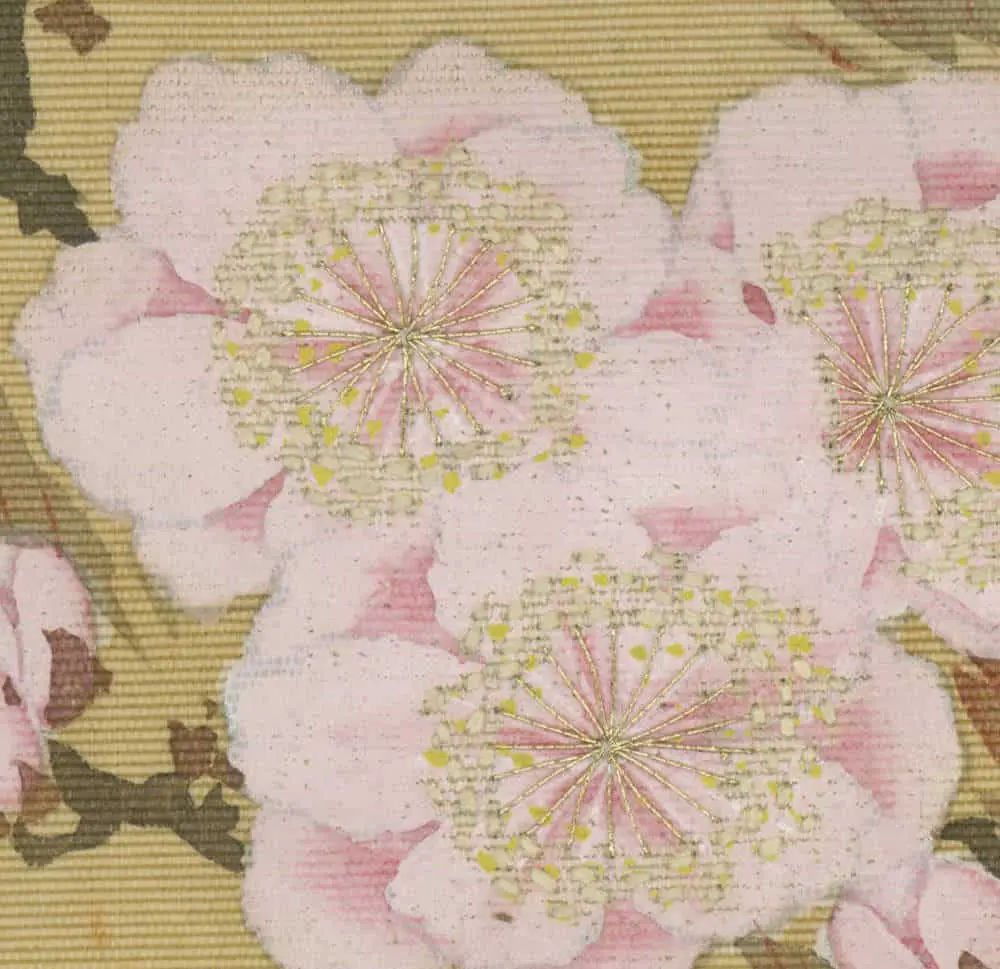
The composition includes a kicho (portable silk partition) draped over a stand, a scholar's desk, and a low table holding a black courtier's cap. These elements are surrounded by auspicious symbols: cranes in flight represent longevity, while blossoming camellias symbolize the yearning for spring, love bonds, and a happy marriage. The scene is further enriched with embroidery highlights and gold-painted clouds that add a sense of luxury and depth. While the piece remains in good condition, it displays authentic signs of age, including tears in the upper hem and corners, missing tassels, and several small stains on both the front and the reverse lining.

Payment Options: We primarily accept PayPal for all transactions. Credit and debit cards are not accepted. If you prefer to pay by personal check instead of PayPal, please note this preference in the "Additional comments" field when placing your order.Ordering Process
To receive your PayPal invoice, simply fill out the form.
Shipping Details: We ship all orders to the address associated with your PayPal payment. Please ensure your PayPal shipping address is current and accurate.A phone number is required during checkout, as our shipping carrier may need to contact you regarding delivery questions.Shipping RatesUnited States and Canada: $20International destinations (air mail): $40
