Copyright © 2026 Yorke Antique Textiles
.avif)


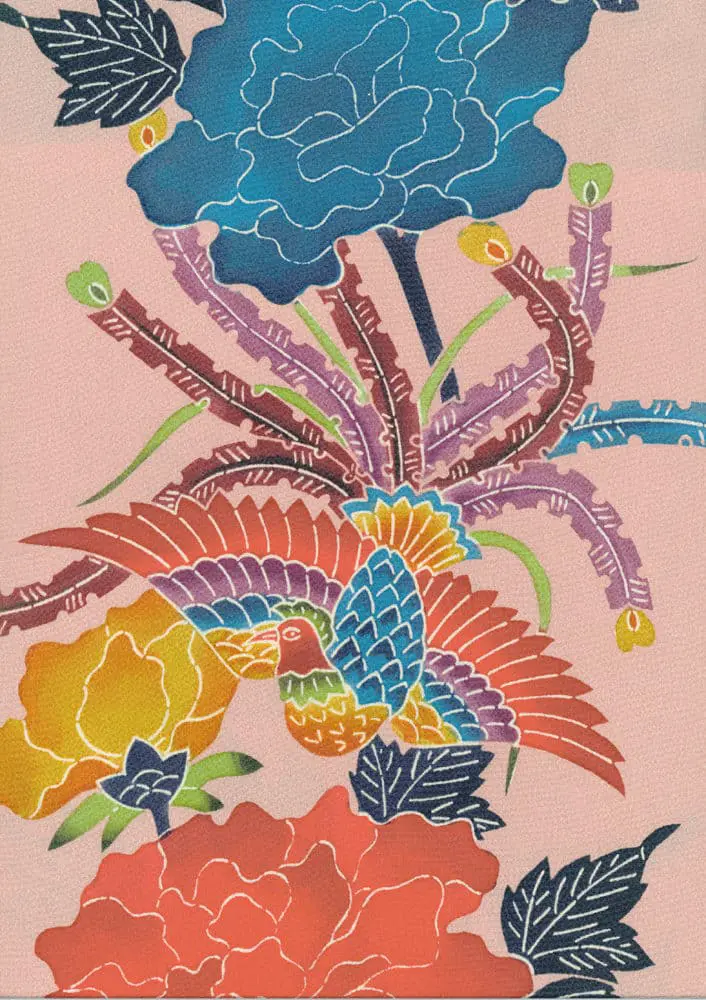
This vibrant textile originates from Japan’s early Heisei period (1990–2000) and is a scholarly example of the revival of Okinawan-inspired aesthetics in formal mainland fashion. Measuring 14 inches by 48 inches (36 cm x 122 cm), the piece is a complete panel extracted from a furisode, the most formal style of kimono for unmarried women. The silk is in very good condition and serves as a luminous substrate for the complex, multi-colored surface design.
The visual narrative is executed in the Bingata style, a traditional Okinawan stencil-dyeing technique known for its use of bold, saturated pigments and naturalistic motifs. Set against a soft powder-pink ground, the composition features a vertical arrangement of oversized botan (peony) blossoms in shades of coral red, deep sapphire blue, and golden yellow. Nestled among the flowers is a brilliantly plumed pheasant or long-tailed bird, rendered with emerald green and violet accents. The design is anchored at the base by a traditional bamboo fence motif (take-gaki), while various seasonal flora, including wisteria-like racemes and fern fronds, cascade from the top. This dense, joyful arrangement reflects the era's appreciation for artisanal heritage and the "tropical" color palettes traditionally associated with Ryukyuan artistry.

Payment Options: We primarily accept PayPal for all transactions. Credit and debit cards are not accepted. If you prefer to pay by personal check instead of PayPal, please note this preference in the "Additional comments" field when placing your order.Ordering Process
To receive your PayPal invoice, simply fill out the form.
Shipping Details: We ship all orders to the address associated with your PayPal payment. Please ensure your PayPal shipping address is current and accurate.A phone number is required during checkout, as our shipping carrier may need to contact you regarding delivery questions.Shipping RatesUnited States and Canada: $20International destinations (air mail): $40
