Copyright © 2026 Yorke Antique Textiles
.avif)


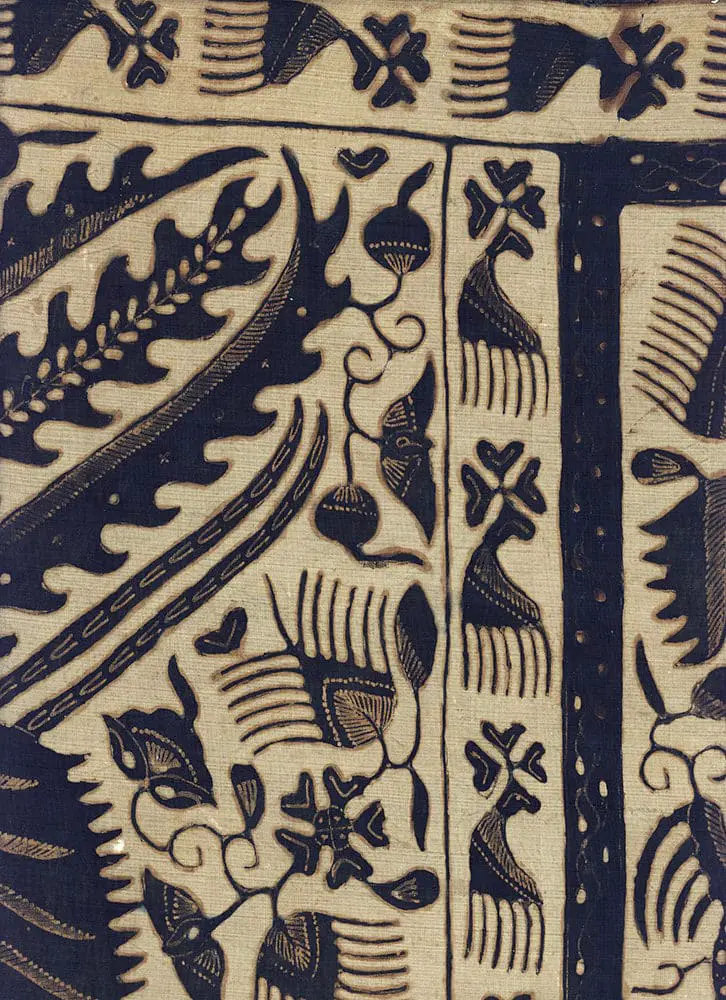

This rare, hand-drawn silk batik sarong originates from the coastal workshops of Juana or Rembang, East Java, between 1890 and 1920. The textile is a premier example of the lokcan genre, favored by the Peranakan Chinese communities for its refinement and symbolic depth. The central motif is the majestic lokcan bird, a Javanese adaptation of the Chinese phoenix, rendered in deep indigo blue top-dyed with reddish-brown kayu tinggi. These large birds feature three sweeping tails, broad wings, and intricate crests, surrounded by a lush garden of carnations, passion fruit, and diverse floral motifs.
The sarong is constructed from two pieces of heavy, soft silk joined along the selvedge before the batik process began. It is divided by a traditional kepala (head panel) composed of alternating short and tall triangles arranged around a central column of diamonds. A sharp, striking character is added to the design by the ren (thorn) motifs, which provide a rhythmic contrast to the fluid curves of the birds. This specific piece includes a unique personal touch: tiny Arabic script penned by a former owner near a carnation motif. Despite silk's natural fragility, this textile remains in excellent condition, retaining a smooth, cool texture and a liquid drape across its 59-inch by 37-inch (150 cm x 94 cm) surface.

Payment Options: We primarily accept PayPal for all transactions. Credit and debit cards are not accepted. If you prefer to pay by personal check instead of PayPal, please note this preference in the "Additional comments" field when placing your order.Ordering Process
To receive your PayPal invoice, simply fill out the form.
Shipping Details: We ship all orders to the address associated with your PayPal payment. Please ensure your PayPal shipping address is current and accurate.A phone number is required during checkout, as our shipping carrier may need to contact you regarding delivery questions.Shipping RatesUnited States and Canada: $20International destinations (air mail): $40
