Copyright © 2026 Yorke Antique Textiles
.avif)

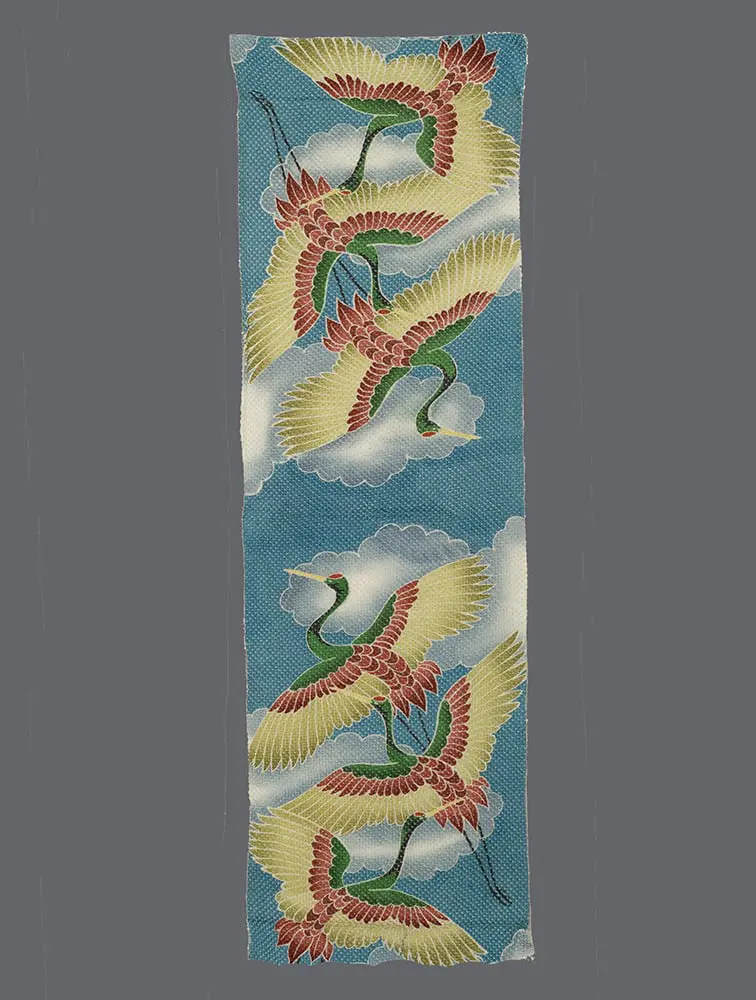


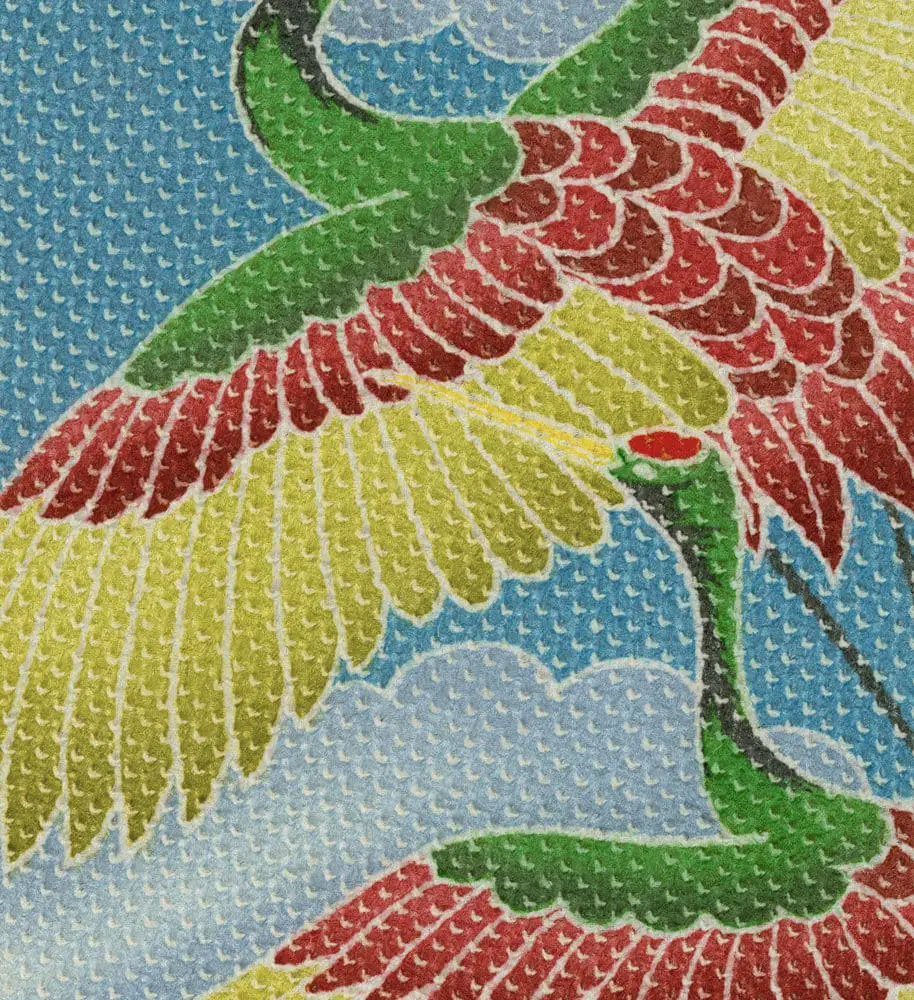
This striking textile originates from Japan’s mid-Showa period (1940–1960) and represents a significant section of a disassembled silk kimono. Measuring 14 inches by 43 inches (36 cm x 109 cm), the panel is crafted from high-quality silk featuring a vibrant turquoise-blue ground. The entire surface is characterized by a dense, pebbled texture created through shibori (tie-dyeing), which provides a tactile and visually rich foundation for the decorative narrative. This vintage piece remains in excellent condition, showcasing the precise craftsmanship required to execute complex figurative patterns using resist-dyeing methods.
The visual narrative is dominated by tsuru (cranes), a revered symbol in Japanese culture representing longevity, fidelity, and good fortune. These majestic birds are rendered in soaring flight against a backdrop of soft white clouds. The cranes are depicted with vibrant green bodies and wings tipped in deep red and cream, achieved through a combination of meticulous tie-dyeing and hand-tinting. The rhythmic arrangement of the birds, with their wings outstretched and long necks extended, creates a sense of dynamic energy across the panel. This scholarly composition reflects the mid-century preference for bold, auspicious motifs that utilize traditional techniques in a vivid, modern color palette.

Payment Options: We primarily accept PayPal for all transactions. Credit and debit cards are not accepted. If you prefer to pay by personal check instead of PayPal, please note this preference in the "Additional comments" field when placing your order.Ordering Process
To receive your PayPal invoice, simply fill out the form.
Shipping Details: We ship all orders to the address associated with your PayPal payment. Please ensure your PayPal shipping address is current and accurate.A phone number is required during checkout, as our shipping carrier may need to contact you regarding delivery questions.Shipping RatesUnited States and Canada: $20International destinations (air mail): $40
