Copyright © 2026 Yorke Antique Textiles
.avif)

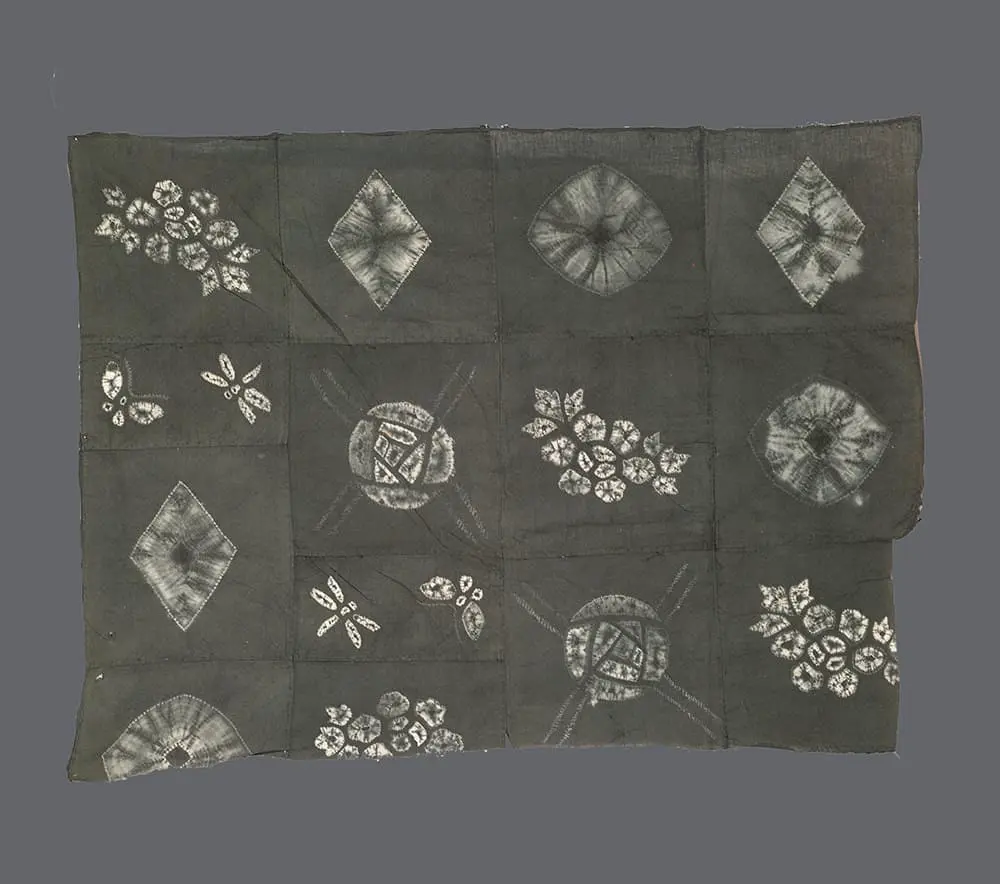
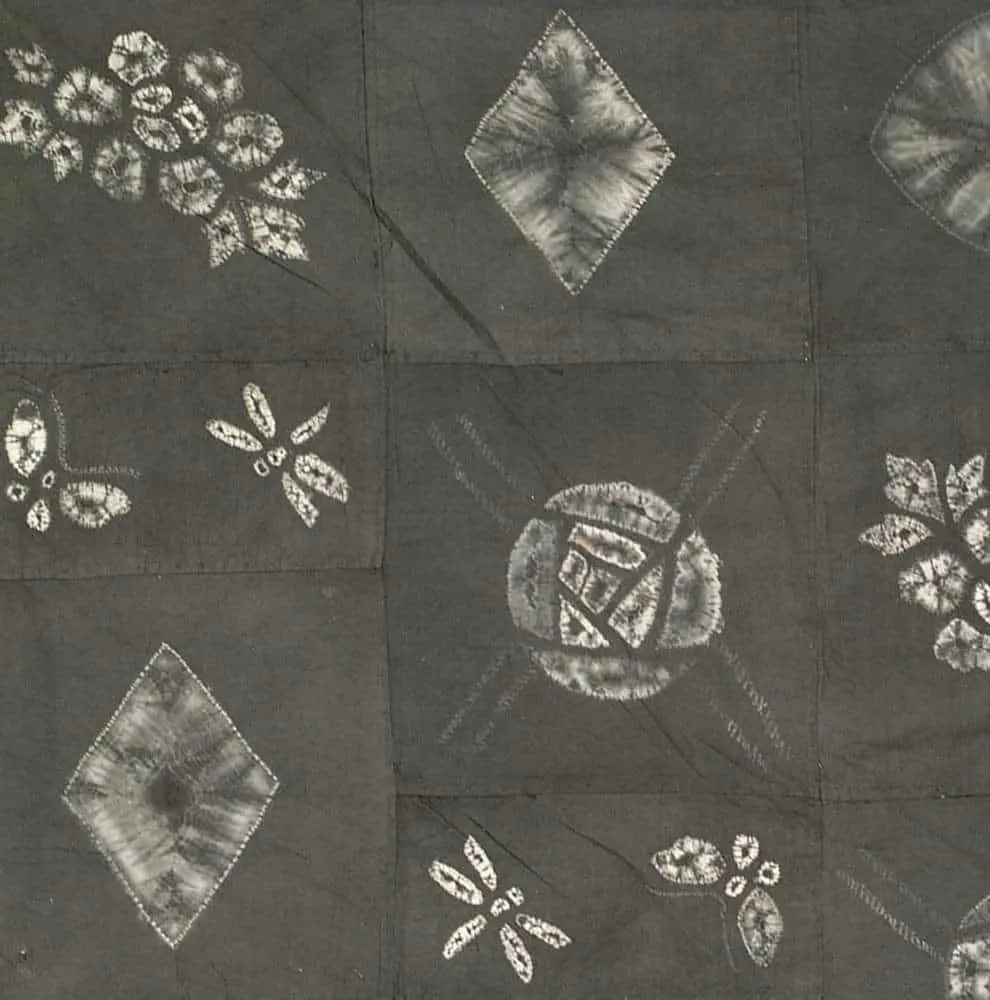
This unique cotton textile from Japan dates to the Taisho period (1912–1926). Measuring approximately 40 inches by 54 inches (102 cm x 137 cm), the cloth is a patchwork construction composed of 14 individual squares stitched together. The piece is in good condition overall, though it displays several small holes consistent with its age and use.
Each square serves as a canvas for a single, distinct motif created using various shibori (resist-dyeing) techniques. The cloth features a dark, charcoal-grey ground with white resist patterns that include dragonflies (tonbo)—symbols of courage and victory—as well as diamonds, floral clusters, and abstract geometric circles. The variety of shibori methods shown, from bound kanoko to stitched nui, suggests this may have been a sampler or a utilitarian piece repurposed from smaller high-quality fragments.

Payment Options: We primarily accept PayPal for all transactions. Credit and debit cards are not accepted. If you prefer to pay by personal check instead of PayPal, please note this preference in the "Additional comments" field when placing your order.Ordering Process
To receive your PayPal invoice, simply fill out the form.
Shipping Details: We ship all orders to the address associated with your PayPal payment. Please ensure your PayPal shipping address is current and accurate.A phone number is required during checkout, as our shipping carrier may need to contact you regarding delivery questions.Shipping RatesUnited States and Canada: $20International destinations (air mail): $40
