Copyright © 2026 Yorke Antique Textiles
.avif)

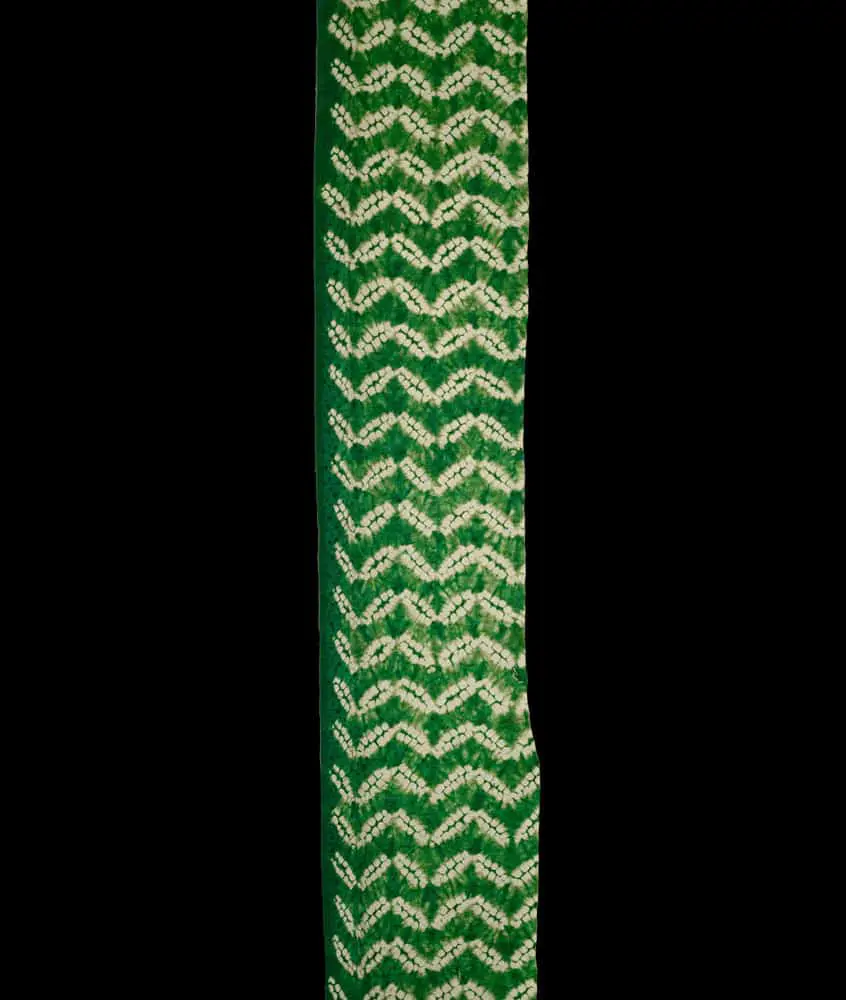
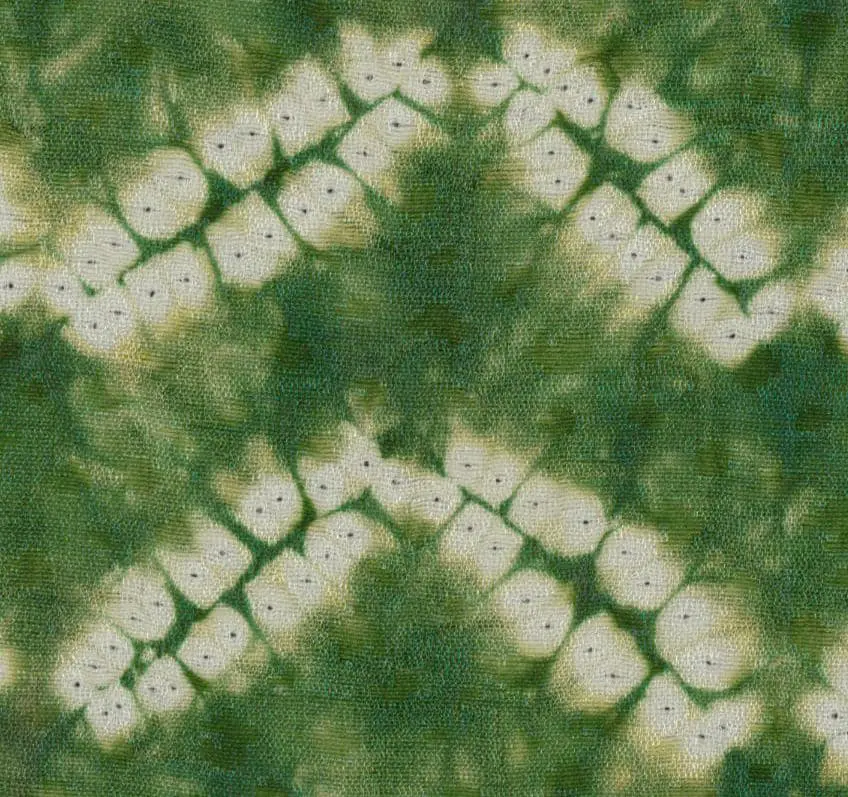
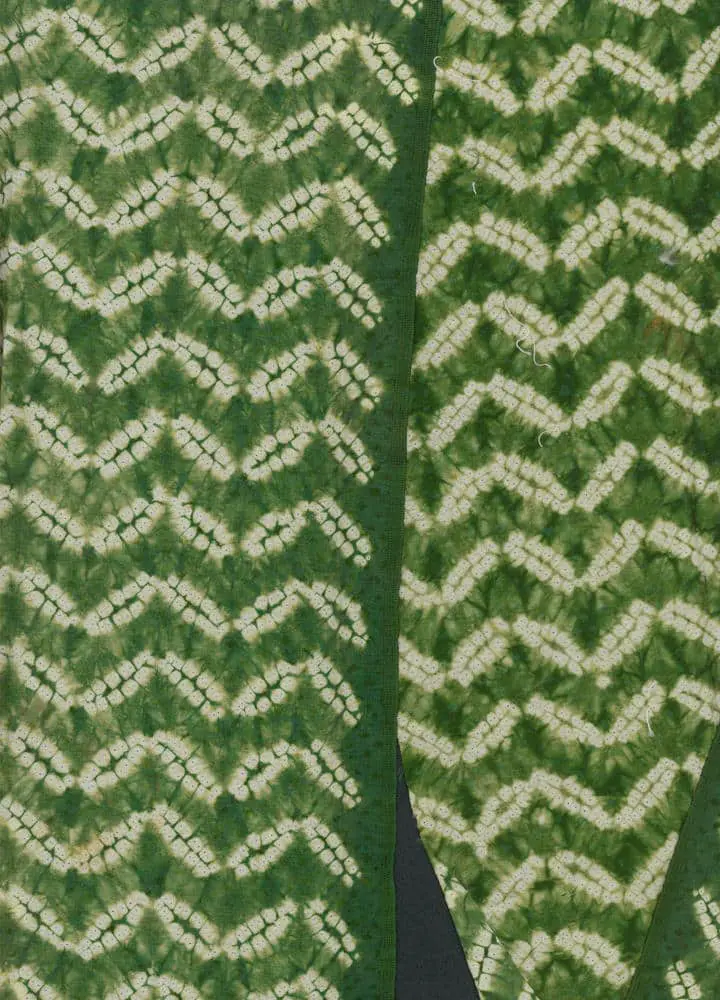
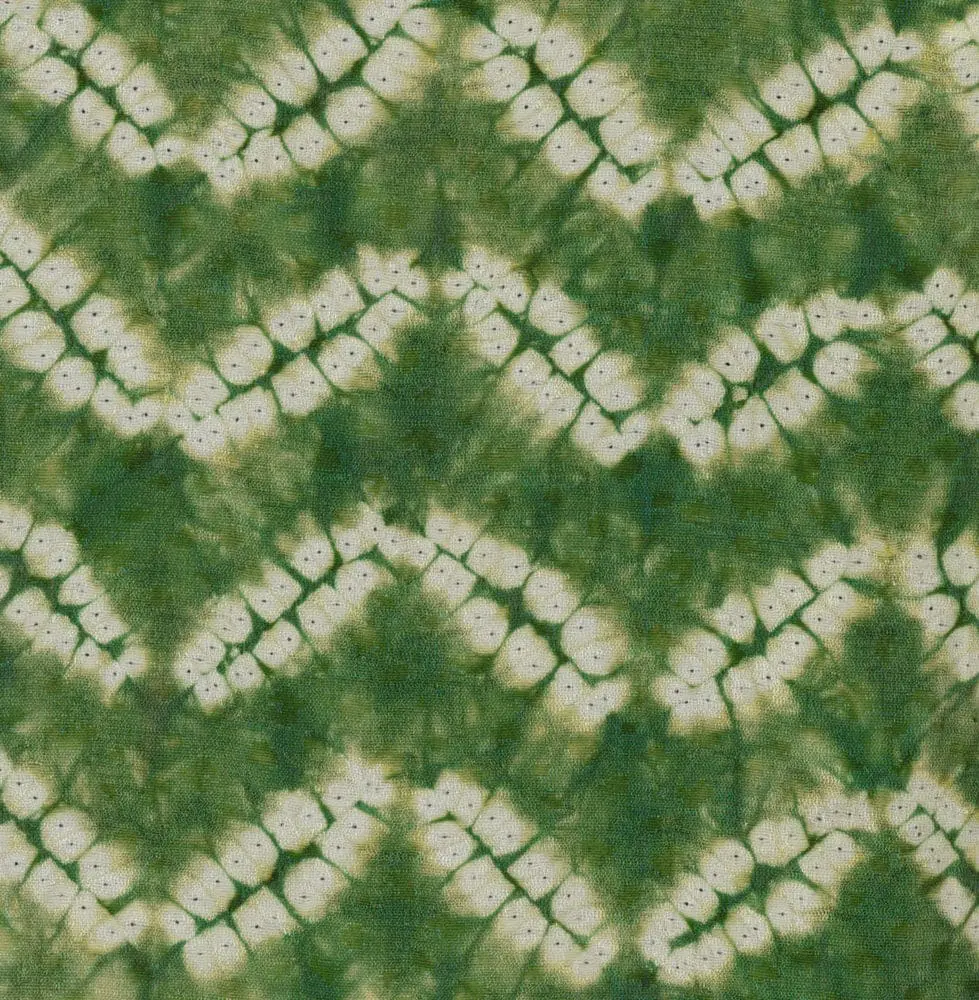
This vibrant silk panel originates from Japan and dates to the mid-Showa period (1940–1960). Measuring 6.5 inches by 55 inches (16.5 cm x 139.7 cm), the textile is a narrow section extracted from a kimono and is in very good condition, possessing only minor imperfections consistent with its age. The panel is crafted from high-quality silk that has been decorated using the traditional shibori (tie-dye) technique, a labor-intensive process where the fabric is bound, stitched, or folded before dyeing to create intricate resisted patterns.
The visual aesthetic is defined by a rhythmic, repeating chevron or "V" shaped pattern that spans the entire length of the emerald green ground. These patterns are composed of thousands of tiny, undyed white dots, likely achieved through the kanoko shibori method, which mimics the dappled spots of a fawn. The precision of the resist dyeing creates a soft, textured appearance that is a hallmark of mid-century Japanese textile design. This specific shade of green was particularly popular during the mid-Showa era for casual and semi-formal kimono accessories, symbolizing vitality and the natural world.

Payment Options: We primarily accept PayPal for all transactions. Credit and debit cards are not accepted. If you prefer to pay by personal check instead of PayPal, please note this preference in the "Additional comments" field when placing your order.Ordering Process
To receive your PayPal invoice, simply fill out the form.
Shipping Details: We ship all orders to the address associated with your PayPal payment. Please ensure your PayPal shipping address is current and accurate.A phone number is required during checkout, as our shipping carrier may need to contact you regarding delivery questions.Shipping RatesUnited States and Canada: $20International destinations (air mail): $40
