Copyright © 2026 Yorke Antique Textiles
.avif)

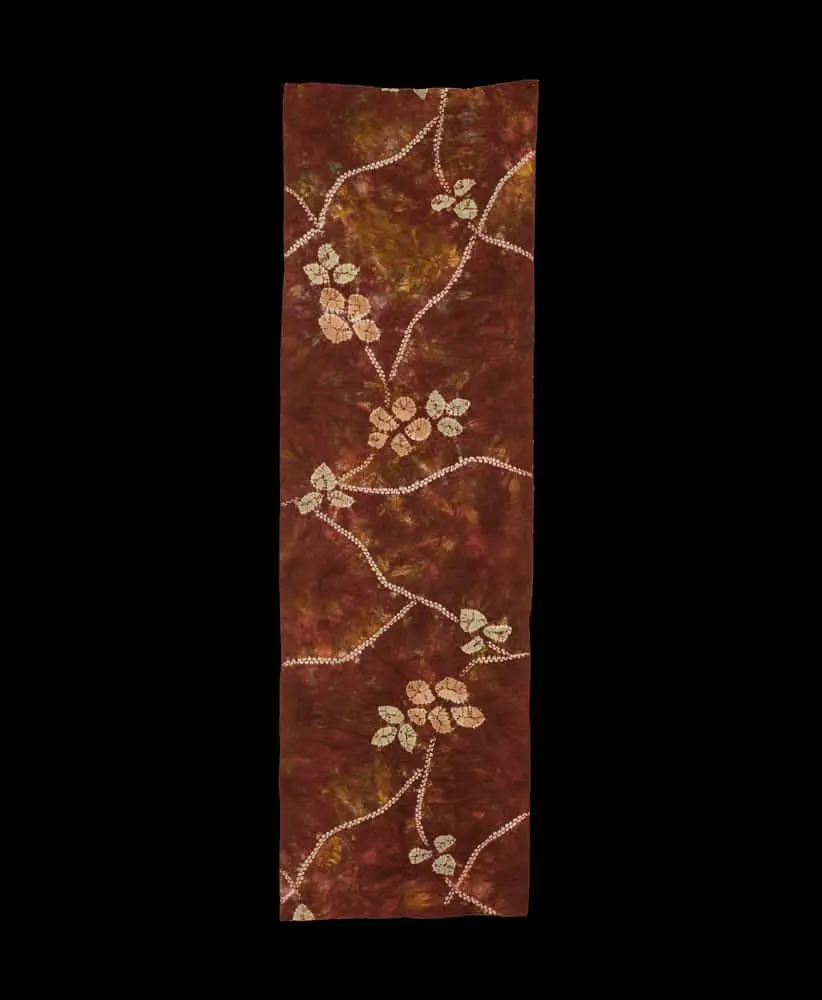
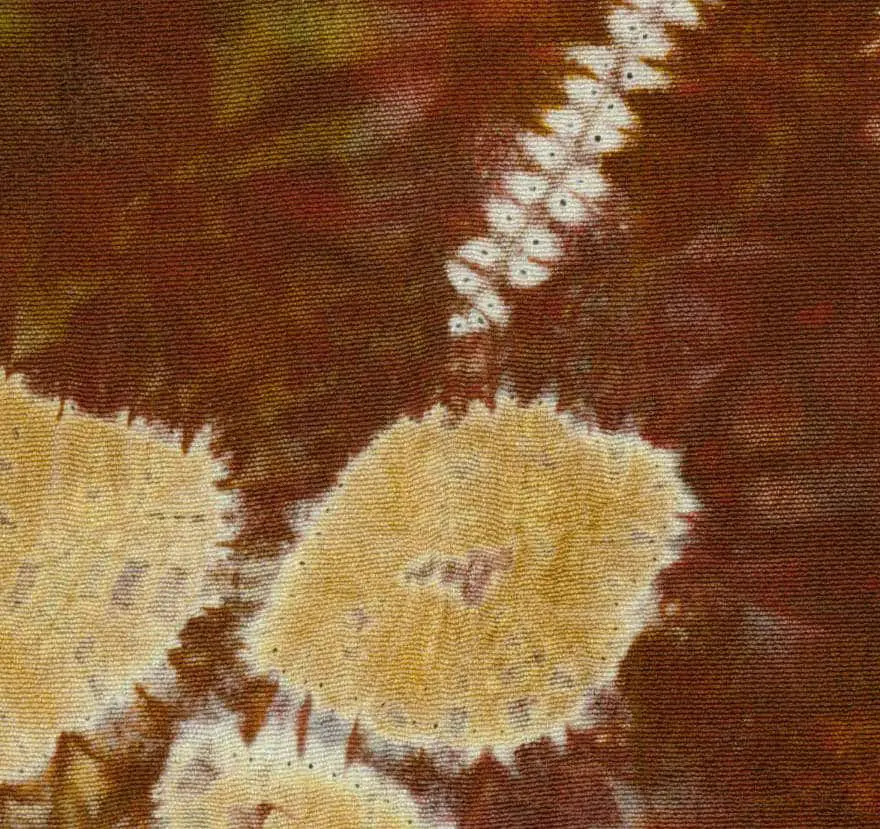
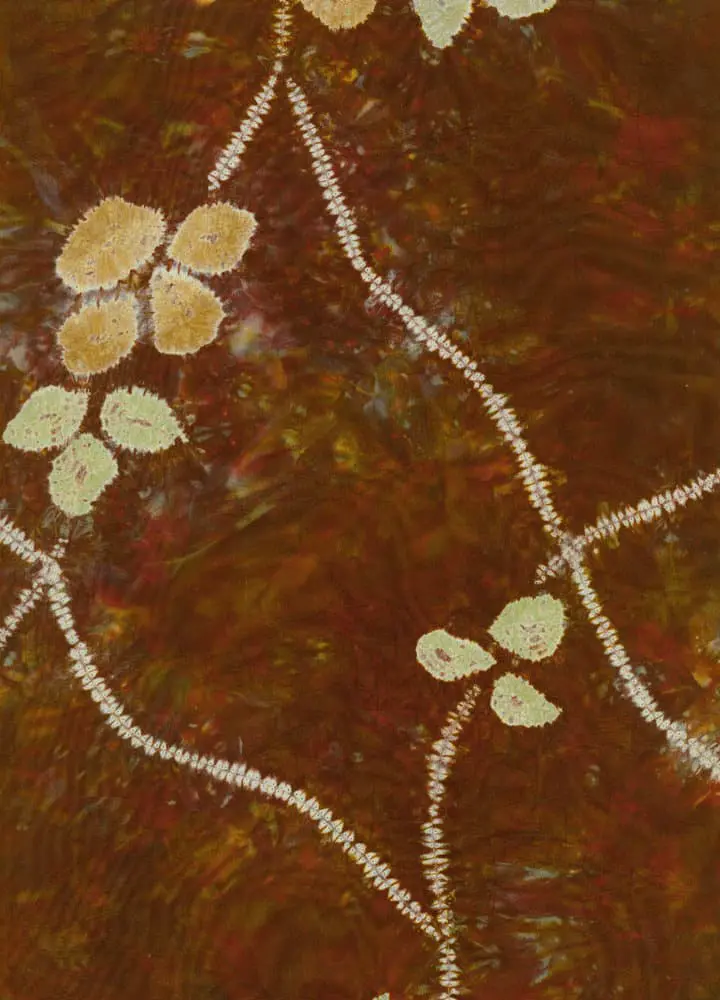
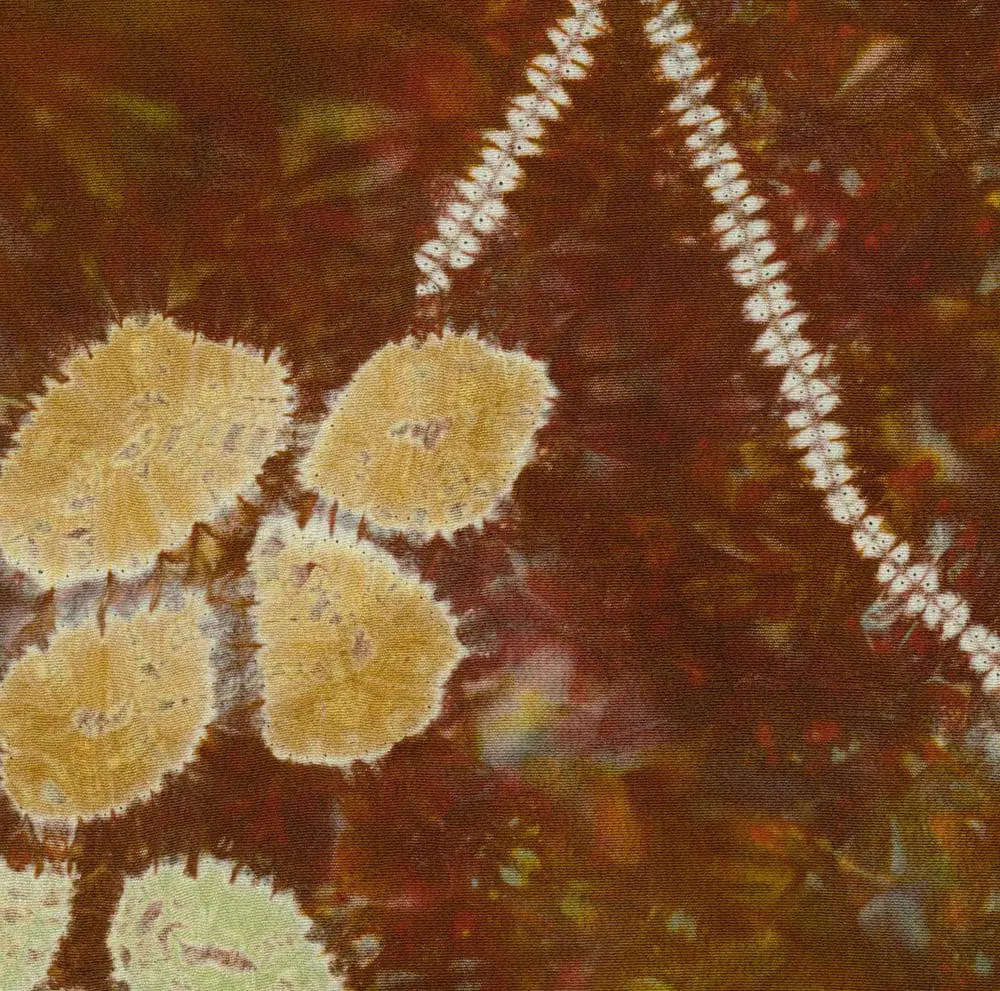
This rustic yet refined textile originates from Japan’s mid-Showa period (1940–1960) and is a scholarly example of the organic, texture-driven aesthetics that characterized mid-century informal luxury. Measuring 14 inches by 43 inches (35.5 cm x 109 cm), the piece represents a complete panel from a disassembled kimono. Crafted from a high-quality silk, the substrate features a complex, variegated ground of deep mahogany, burnt sienna, and olive green, achieved through sophisticated immersion dyeing that creates a mottled, forest-floor effect.
The visual narrative is defined by a rhythmic, climbing vine motif executed in shibori (resist-dyeing). The delicate white and pale apricot vines are composed of hundreds of tiny, hand-tied points, a technique known as hitta shibori, which gives the botanical imagery a unique tactile dimension and a soft, diffused glow against the dark field. Small, three-leaved clusters emerge from the meandering lines, creating a balanced, vertical composition that reflects the era's mastery of using labor-intensive traditional resists to create minimalist, nature-inspired patterns.

Payment Options: We primarily accept PayPal for all transactions. Credit and debit cards are not accepted. If you prefer to pay by personal check instead of PayPal, please note this preference in the "Additional comments" field when placing your order.Ordering Process
To receive your PayPal invoice, simply fill out the form.
Shipping Details: We ship all orders to the address associated with your PayPal payment. Please ensure your PayPal shipping address is current and accurate.A phone number is required during checkout, as our shipping carrier may need to contact you regarding delivery questions.Shipping RatesUnited States and Canada: $20International destinations (air mail): $40
