Copyright © 2026 Yorke Antique Textiles
.avif)


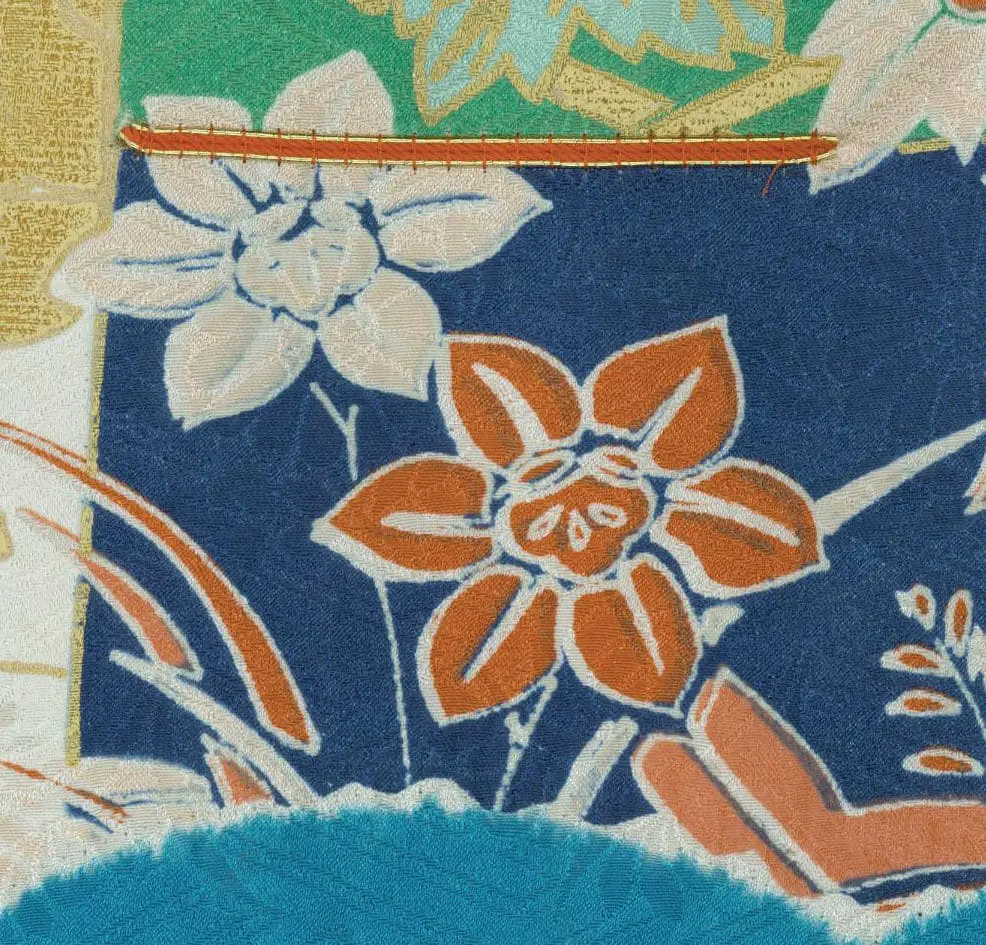
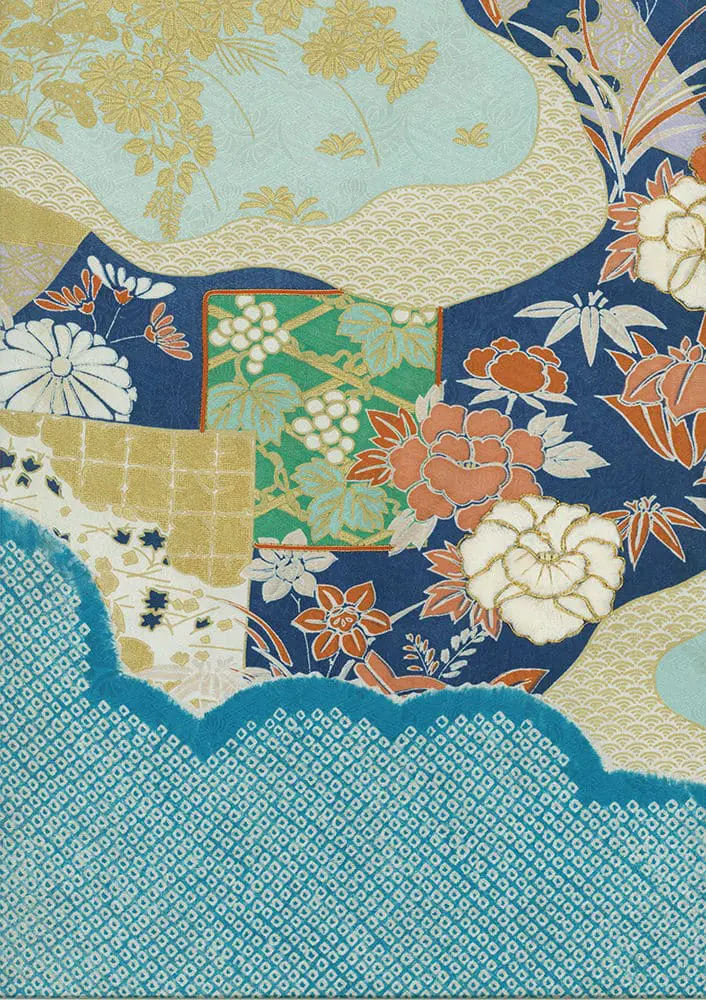
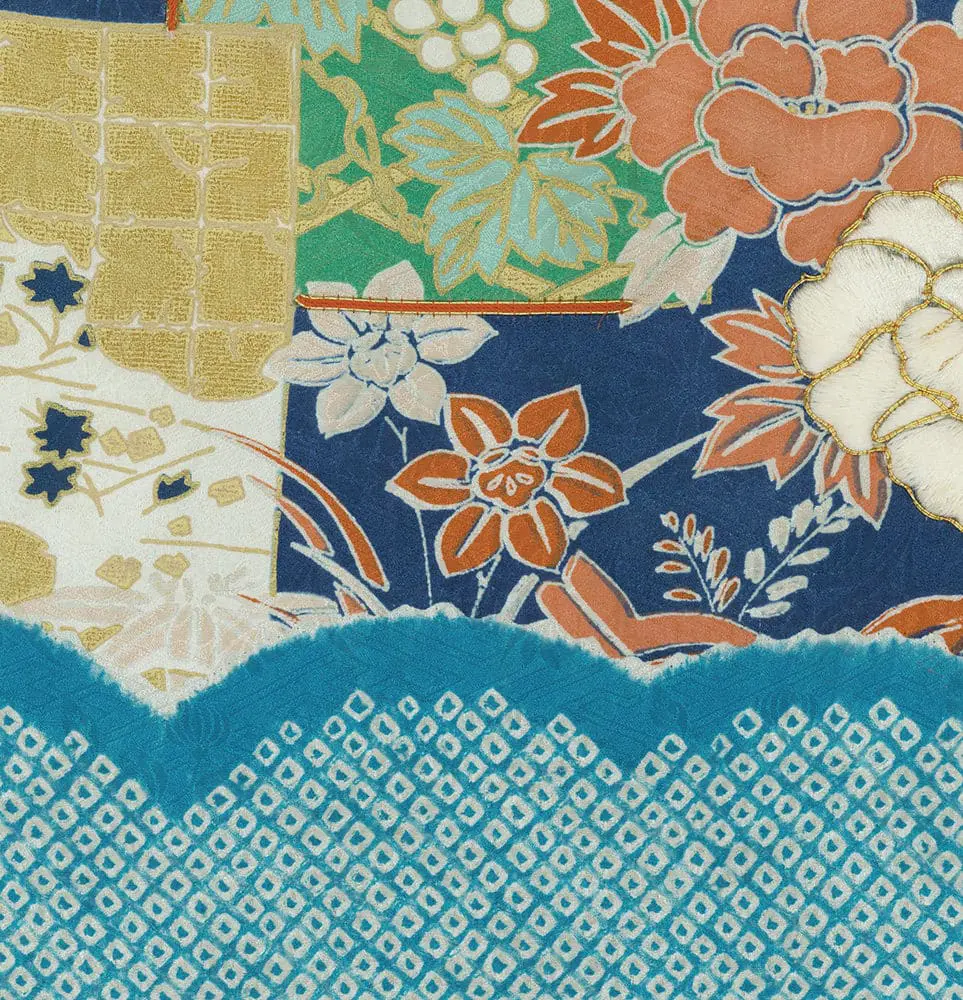
This opulent textile originates from Japan’s mid-Showa period (1940–1970) and is a scholarly example of the high-level collaborative craftsmanship required for formal silk production. Measuring 15 inches by 71 inches (38 cm x 180 cm), the piece represents a significant panel extracted from a disassembled kimono and is preserved in excellent condition. The substrate is a premium rinzu (silk damask), dyed in a vibrant teal blue, which provides a lustrous and textured foundation for the complex decorative layers.
The visual narrative is a masterclass in mixed-media textile art, featuring large, cloud-like shibori (resist-dyeing) sections that create a granular, pebbled texture across the teal field. Within and around these forms are dense clusters of seasonal flora, including maples and chrysanthemums, rendered against dark navy and cream backdrops. Many of these floral elements are entirely hand-embroidered, providing a raised, tactile quality that contrasts with the flat dye. The composition is further elevated by metallic thread couching, where shimmering gold threads are meticulously stitched to the surface to define the architectural edges of the motifs. This intricate layering of damask, resist-dyeing, painting, and embroidery reflects a mid-century commitment to preserving the most luxurious aspects of traditional Japanese garment artistry.

Payment Options: We primarily accept PayPal for all transactions. Credit and debit cards are not accepted. If you prefer to pay by personal check instead of PayPal, please note this preference in the "Additional comments" field when placing your order.Ordering Process
To receive your PayPal invoice, simply fill out the form.
Shipping Details: We ship all orders to the address associated with your PayPal payment. Please ensure your PayPal shipping address is current and accurate.A phone number is required during checkout, as our shipping carrier may need to contact you regarding delivery questions.Shipping RatesUnited States and Canada: $20International destinations (air mail): $40
