Copyright © 2026 Yorke Antique Textiles
.avif)

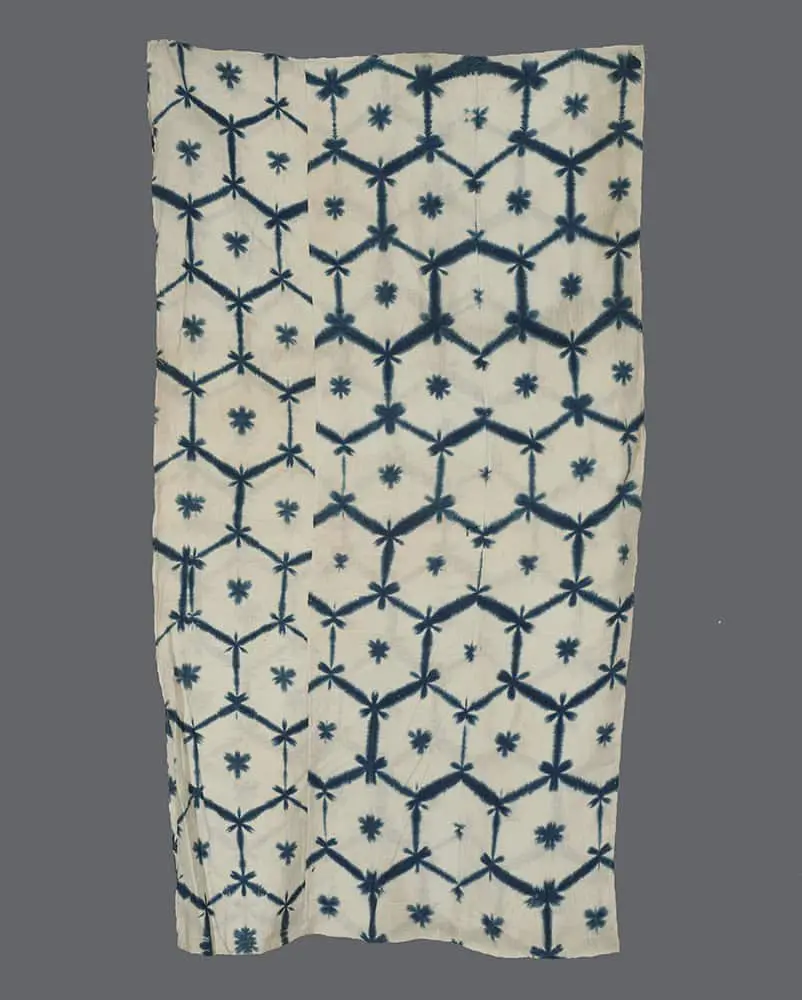
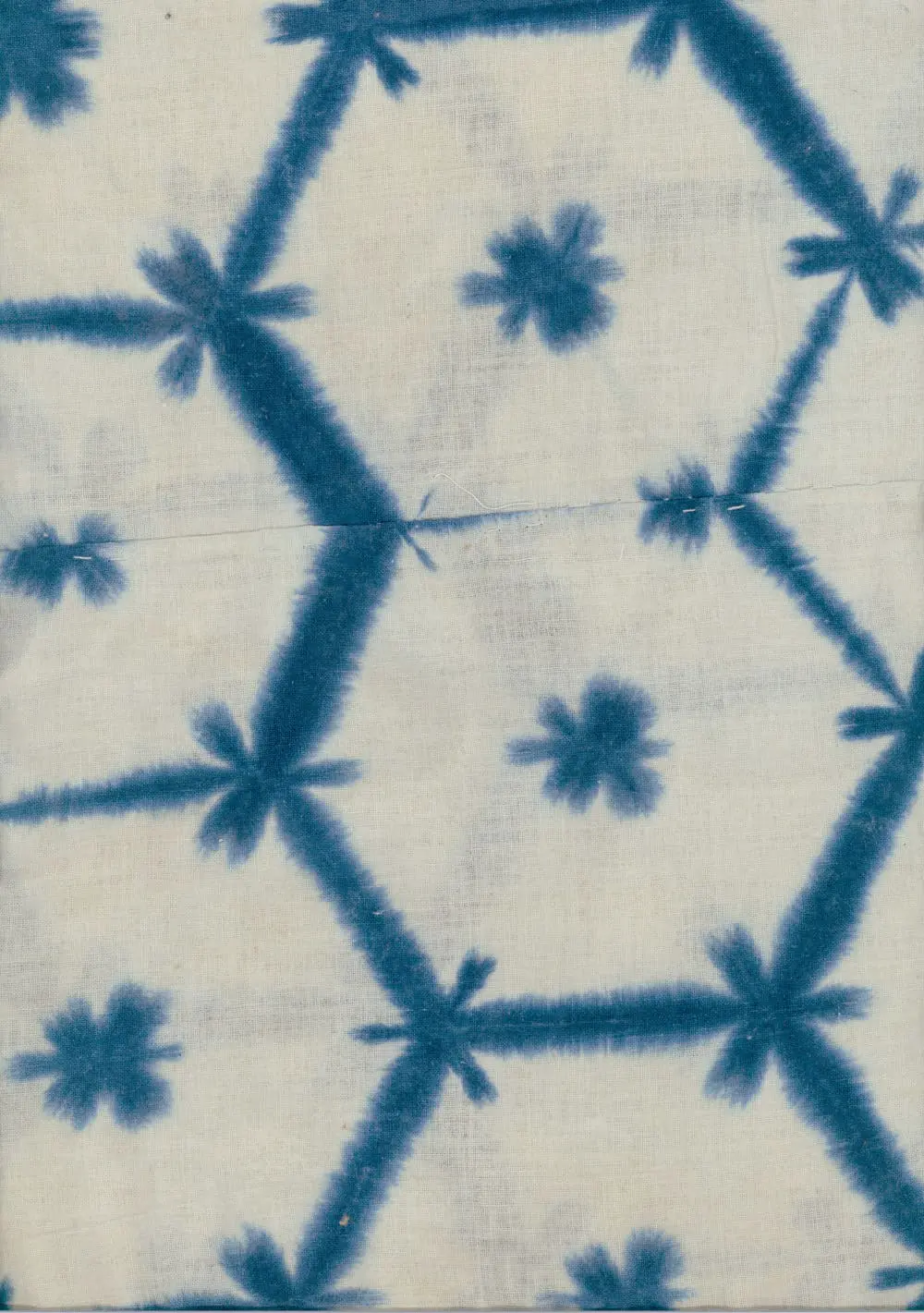
This traditional shibori-dyed cotton futonji (bedding panel), dating to the Meiji period (1868–1912), is a striking example of Japanese folk textile art. Measuring 36 inches by 66 inches (91 cm x 168 cm), the piece is constructed from three vertical panels of hand-woven cotton joined together. The entire surface is decorated with a rhythmic, geometric pattern of indigo hexagons containing central star or floral motifs. This effect was achieved through a manual resist-dyeing process where the fabric was intricately folded, tied, or clamped before being submerged in an indigo vat, resulting in the characteristic soft, blurred edges seen in the deep blue lines.
The repeating hexagonal design, often associated with the tortoise shell (kikkō), is a traditional symbol of longevity and protection in Japanese culture. The use of durable cotton and natural indigo dye made these panels practical for daily household use while providing a sophisticated aesthetic for the domestic environment. While the bedding panel remains in good condition overall, it does exhibit several visible stains across its surface, which reflect its history as a functional textile used within a home during the late 19th or early 20th century.

Payment Options: We primarily accept PayPal for all transactions. Credit and debit cards are not accepted. If you prefer to pay by personal check instead of PayPal, please note this preference in the "Additional comments" field when placing your order.Ordering Process
To receive your PayPal invoice, simply fill out the form.
Shipping Details: We ship all orders to the address associated with your PayPal payment. Please ensure your PayPal shipping address is current and accurate.A phone number is required during checkout, as our shipping carrier may need to contact you regarding delivery questions.Shipping RatesUnited States and Canada: $20International destinations (air mail): $40
