Copyright © 2026 Yorke Antique Textiles
.avif)


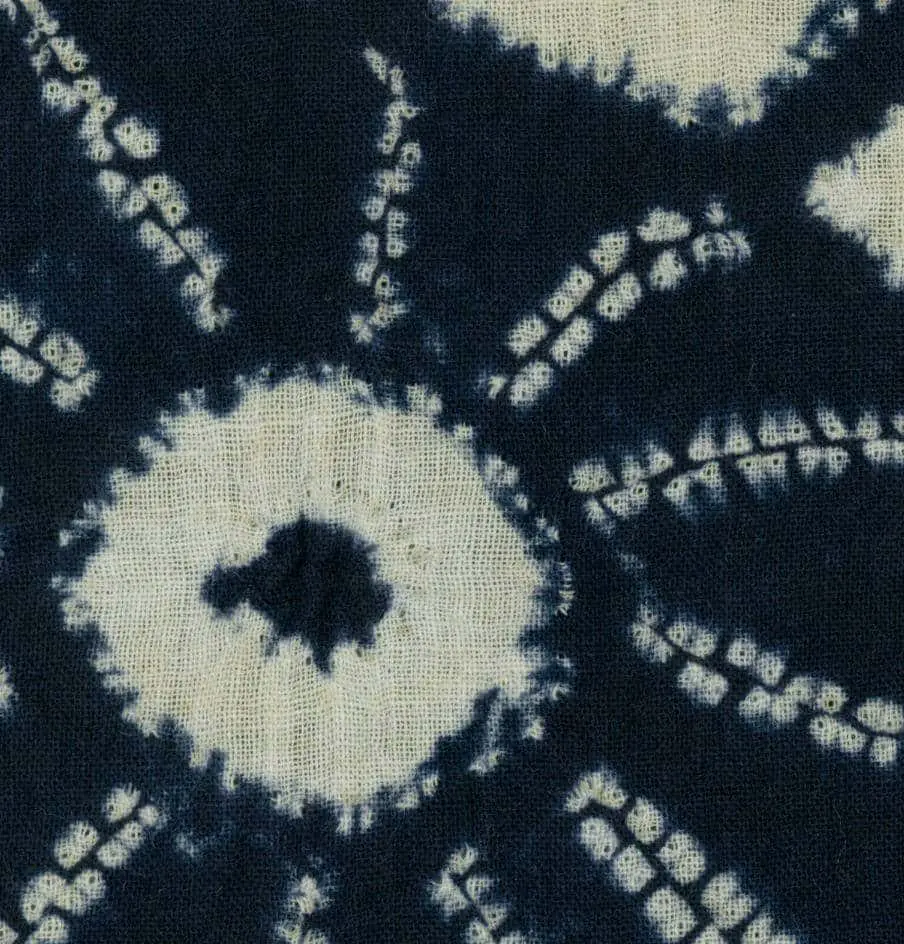
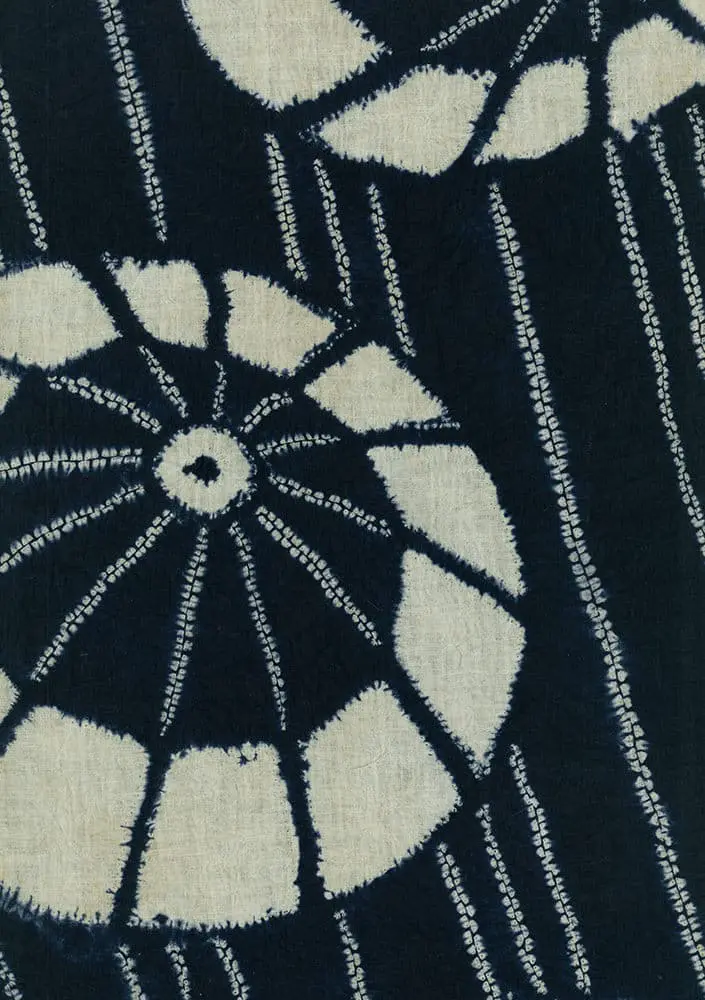
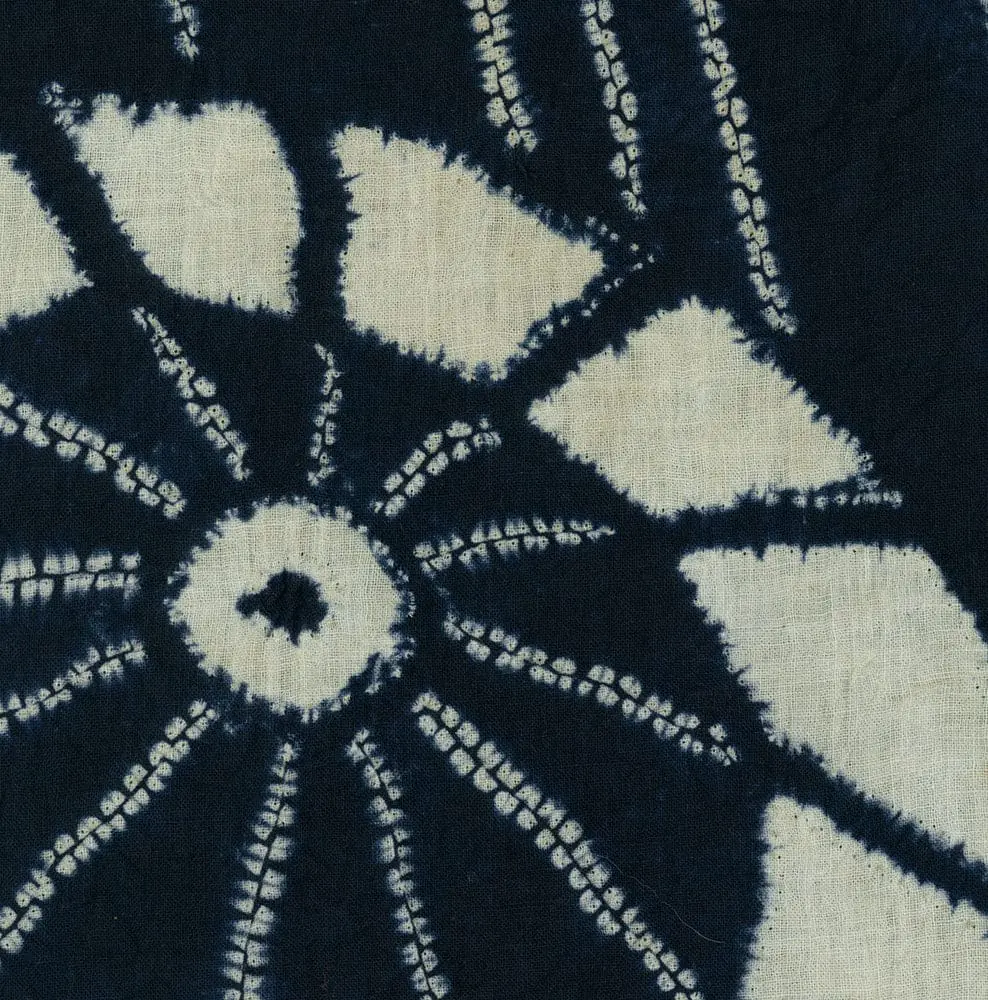
This authentic textile originates from Japan’s Early Showa period (1926–1940) and is a superb example of traditional folk-art craftsmanship. Measuring approximately 13 inches by 44 inches (33 cm x 112 cm), the panel is crafted from sturdy, hand-loomed cotton and features the intricate shibori (tie-dye) technique. The fabric remains in very good condition, though it displays minor imperfections and subtle tonal variations that attest to its age and the manual nature of the indigo dyeing process.
The visual narrative is dominated by large-scale, stylized parasols (wagasa) that repeat across the deep indigo field. These motifs are created using a combination of binding and capping techniques to prevent the dye from reaching the white sections of the cotton. The parasols feature detailed "ribs" and decorative circular centers, interspersed with vertical dashed lines that suggest falling rain or rhythmic movement. This specific design reflects the Early Showa era's transition toward bolder, more graphic interpretations of everyday objects, rendered with the high-contrast clarity of the shibori process.

Payment Options: We primarily accept PayPal for all transactions. Credit and debit cards are not accepted. If you prefer to pay by personal check instead of PayPal, please note this preference in the "Additional comments" field when placing your order.Ordering Process
To receive your PayPal invoice, simply fill out the form.
Shipping Details: We ship all orders to the address associated with your PayPal payment. Please ensure your PayPal shipping address is current and accurate.A phone number is required during checkout, as our shipping carrier may need to contact you regarding delivery questions.Shipping RatesUnited States and Canada: $20International destinations (air mail): $40
