Copyright © 2026 Yorke Antique Textiles
.avif)

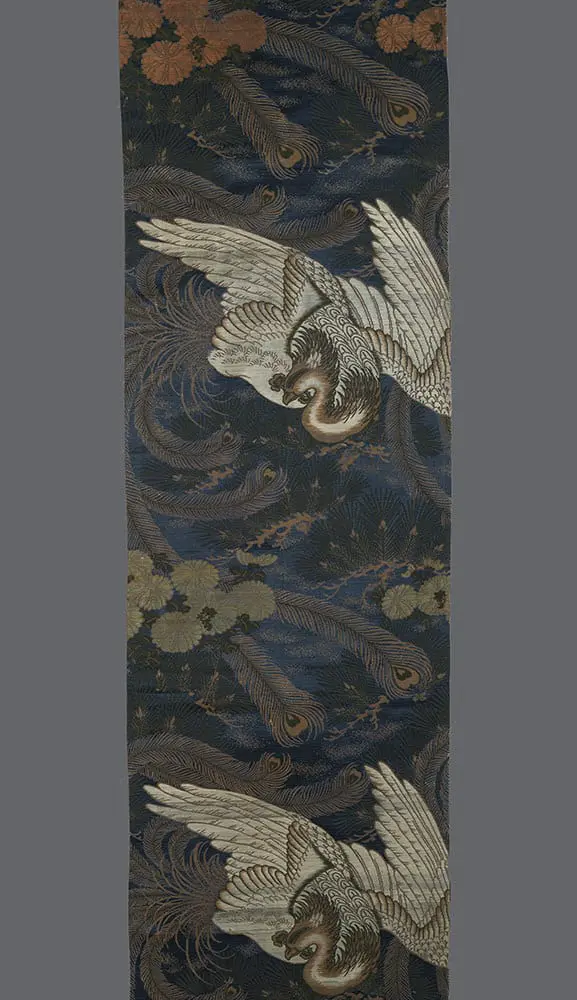
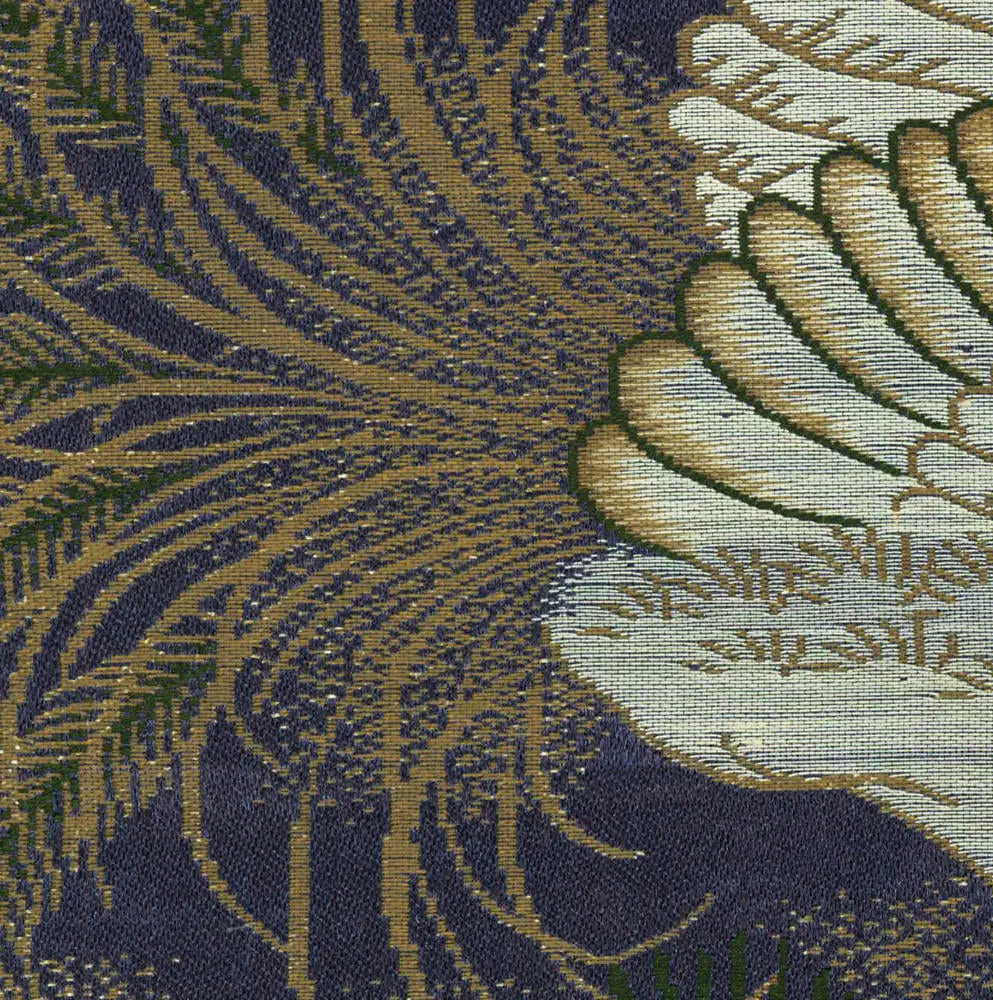
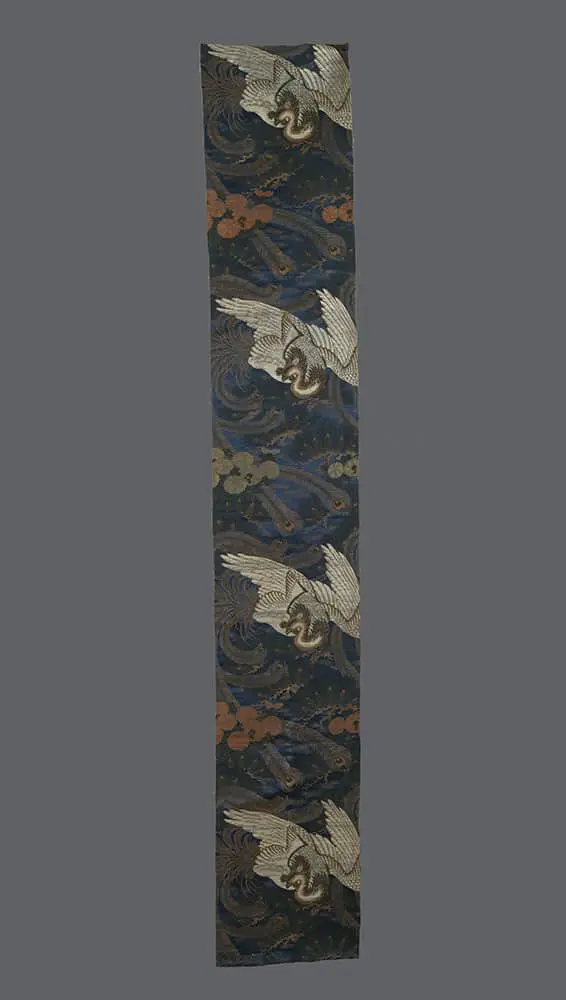
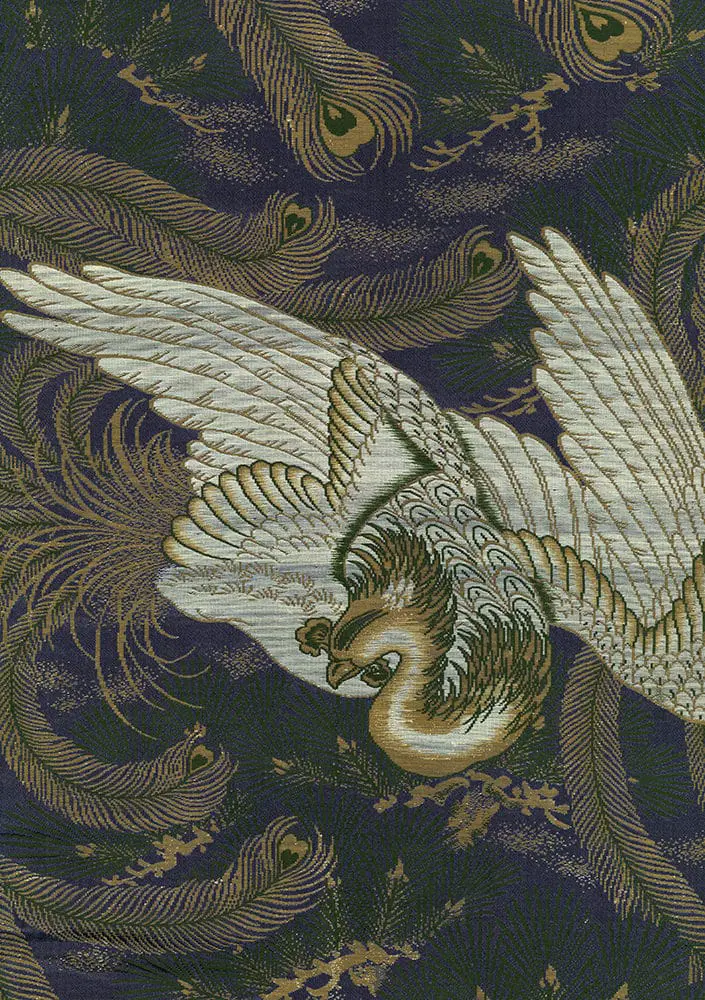

This opulent textile originates from Japan’s Early Showa period (1926–1940) and represents a significant section of a disassembled maru obi, the most formal and luxurious type of Japanese sash. Measuring 12 inches by 77 inches (30.5 cm x 195.5 cm), the panel is crafted from heavy silk featuring intricate brocade patterns. The base fabric is a deep, atmospheric blue, providing a regal foundation for the complex decorative narrative. This antique piece remains in very good condition, though it displays minor imperfections and signs of wear consistent with its age and history as a ceremonial garment.
The visual narrative is dominated by the hou-ou (Chinese phoenix), a mythological creature symbolizing high virtue, grace, and the empress. These majestic birds are rendered in a combination of cream, silver, and muted gold threads, appearing to soar amidst a swirling landscape of stylized clouds and pine boughs. The phoenixes are depicted with sweeping, multi-layered tail feathers that create a sense of rhythmic flow across the nearly six-and-a-half-foot length of the silk. Sprays of rust-colored chrysanthemums and pine needles further enrich the composition, reflecting a scholarly commitment to classical auspicious motifs popular during the pre-war era.

Payment Options: We primarily accept PayPal for all transactions. Credit and debit cards are not accepted. If you prefer to pay by personal check instead of PayPal, please note this preference in the "Additional comments" field when placing your order.Ordering Process
To receive your PayPal invoice, simply fill out the form.
Shipping Details: We ship all orders to the address associated with your PayPal payment. Please ensure your PayPal shipping address is current and accurate.A phone number is required during checkout, as our shipping carrier may need to contact you regarding delivery questions.Shipping RatesUnited States and Canada: $20International destinations (air mail): $40
