Copyright © 2026 Yorke Antique Textiles
.avif)

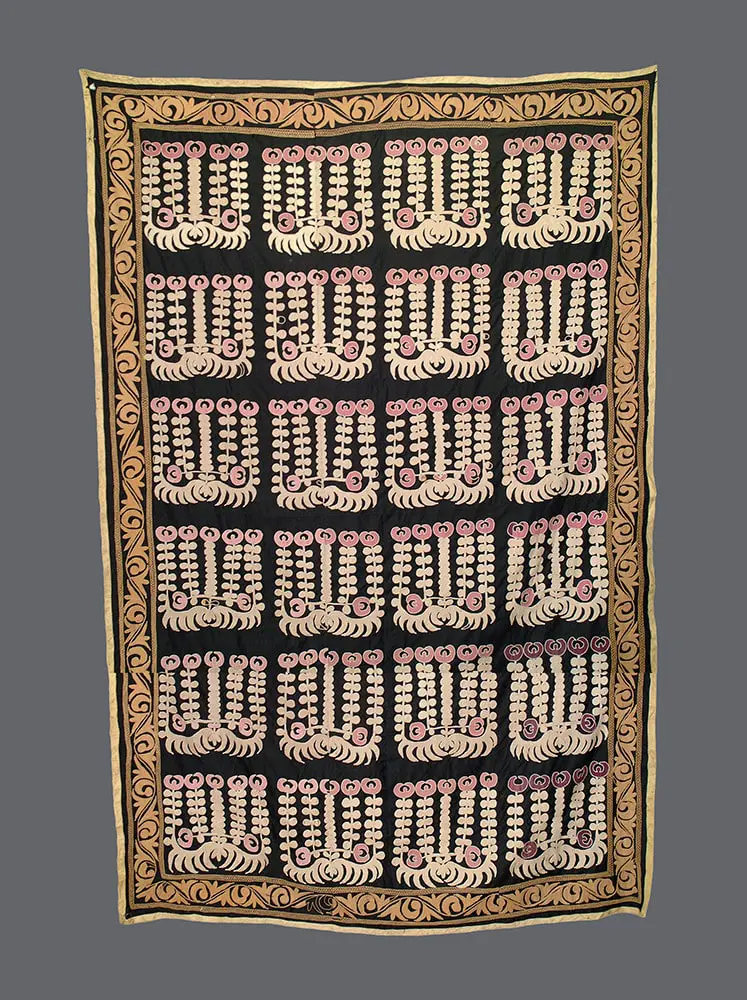
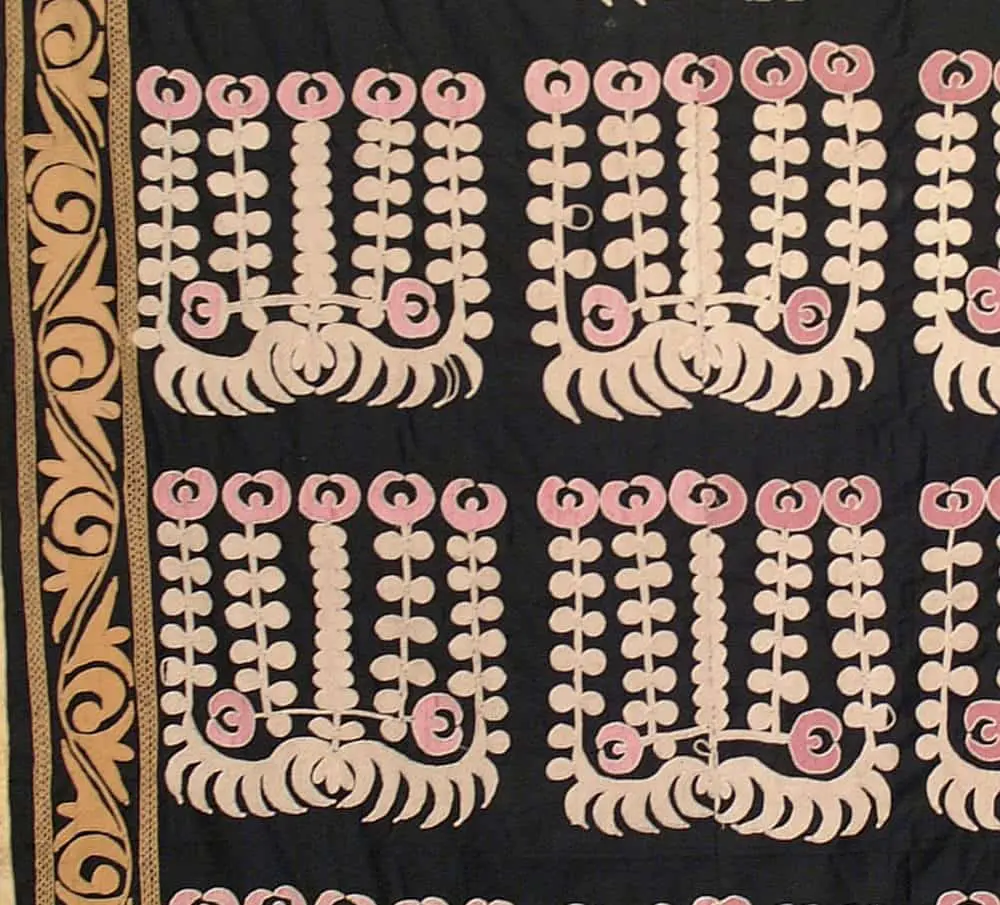
This monumental cotton suzani originates from the Samarkand region of Uzbekistan and dates to probably the 1970s. Measuring approximately 74 inches by 112 inches (188 cm x 284 cm), the textile is in very good condition, though it contains a few unobtrusive holes primarily located in the corners of the dark field. The piece is composed of dense hand-embroidery on a deep black cotton base, providing a high-contrast foundation for the rhythmic botanical design.
The central field features a disciplined repetitive shrub pattern arranged in five horizontal rows. Each individual shrub consists of five vertical stems topped with pink and cream floral buds, anchored by a stylized, cream-colored root or leaf base. This specific botanical arrangement is a hallmark of the Samarkand embroidery school, often representing the "Tree of Life" or a flourishing garden, symbols of fertility and prosperity. The entire field is enclosed by a wide, elegant scrolling vine border in a warm ochre and gold palette, which serves to frame the internal repetition with a fluid, continuous movement.

Payment Options: We primarily accept PayPal for all transactions. Credit and debit cards are not accepted. If you prefer to pay by personal check instead of PayPal, please note this preference in the "Additional comments" field when placing your order.Ordering Process
To receive your PayPal invoice, simply fill out the form.
Shipping Details: We ship all orders to the address associated with your PayPal payment. Please ensure your PayPal shipping address is current and accurate.A phone number is required during checkout, as our shipping carrier may need to contact you regarding delivery questions.Shipping RatesUnited States and Canada: $20International destinations (air mail): $40
