Copyright © 2026 Yorke Antique Textiles
.avif)

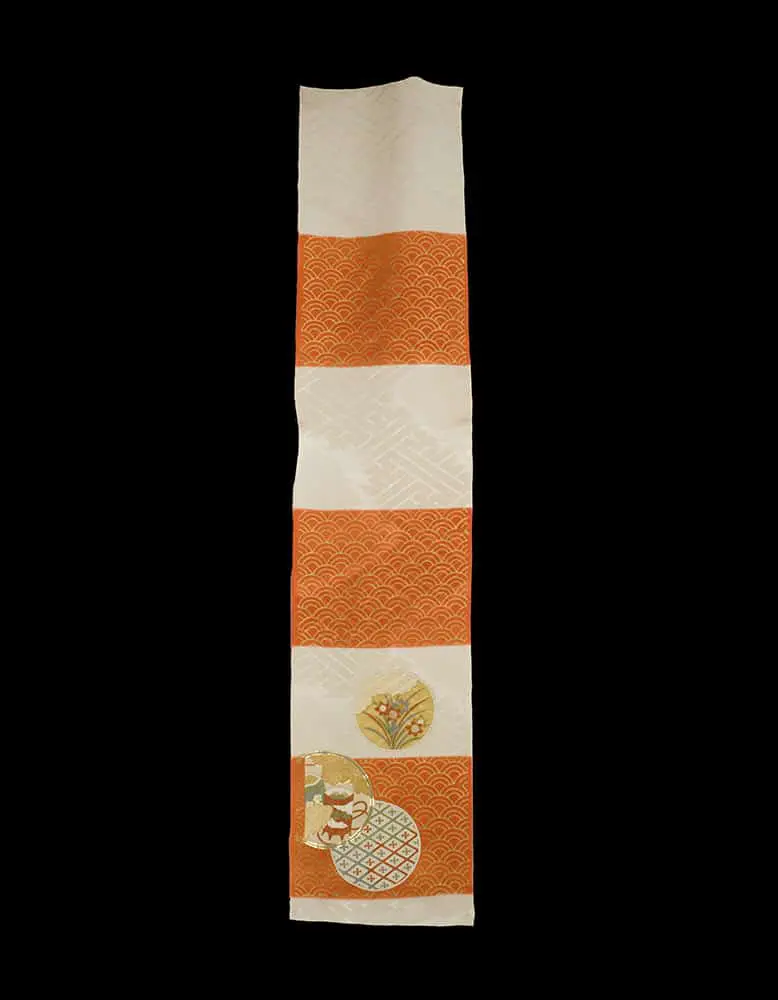
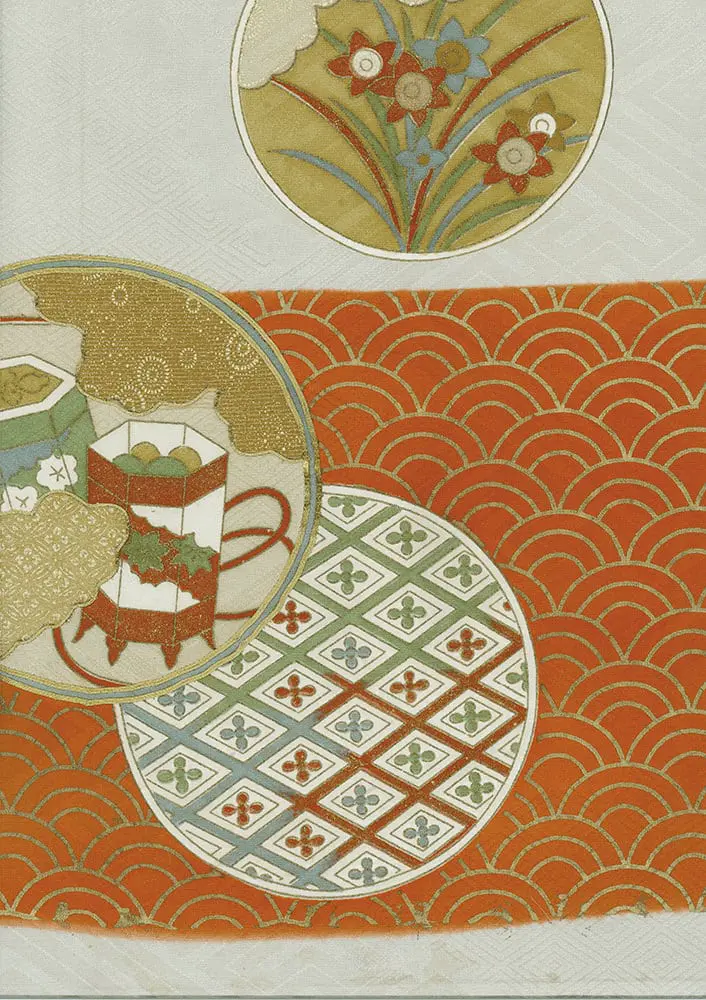
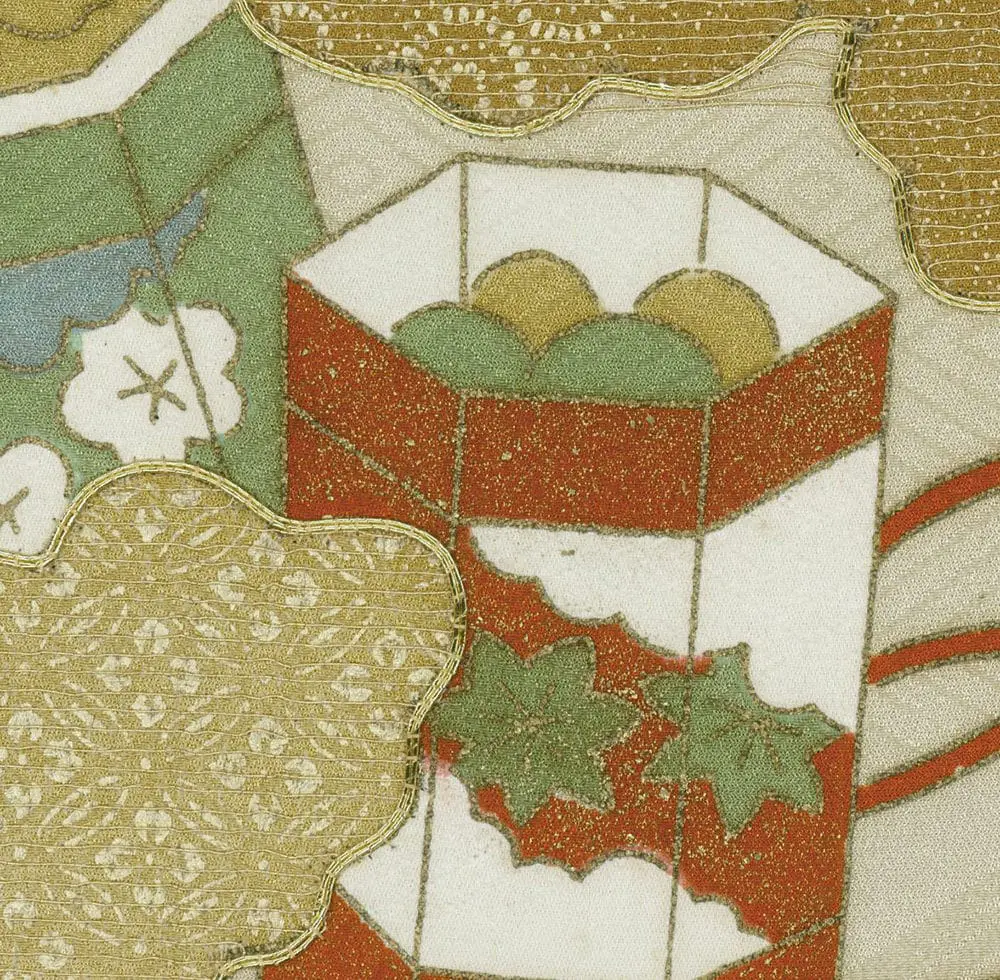
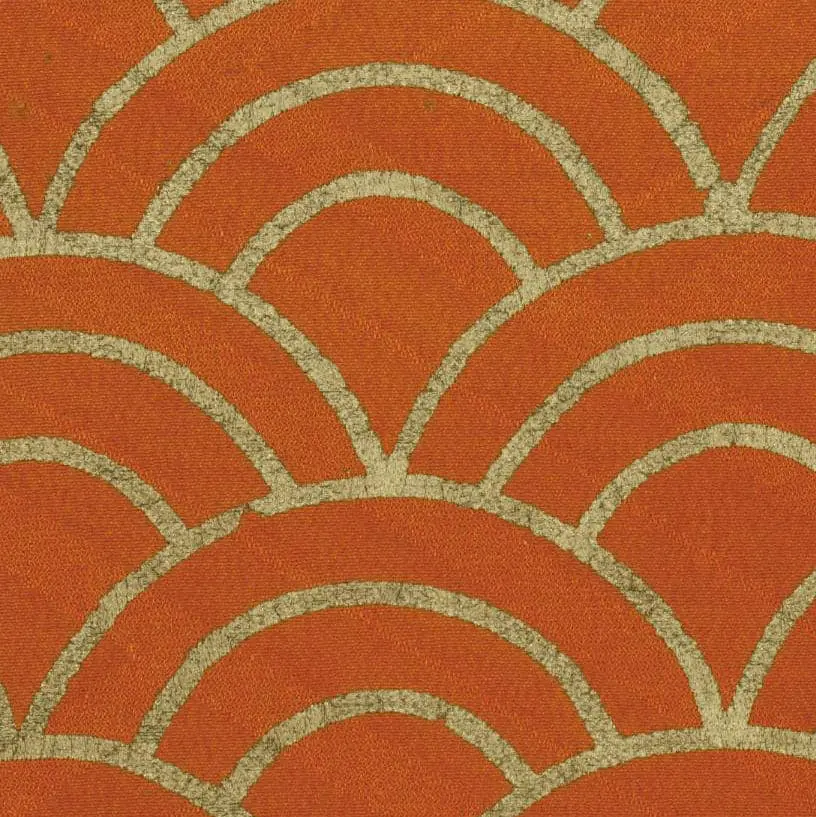
This elegant textile originates from Japan’s mid-Showa period (1940–1970) and is a scholarly example of the refined rinzu (silk damask) weaving technique. Measuring 15 inches by 69 inches (38 cm x 175 cm), the panel is in excellent condition and features a sophisticated white-on-white figured ground with a subtle sayagata (interlocking key) pattern woven into the substrate. This luminous foundation is punctuated by horizontal bands of vibrant orange, which are meticulously woven with the seigaiha (blue sea wave) motif, a classical symbol representing surges of good fortune.
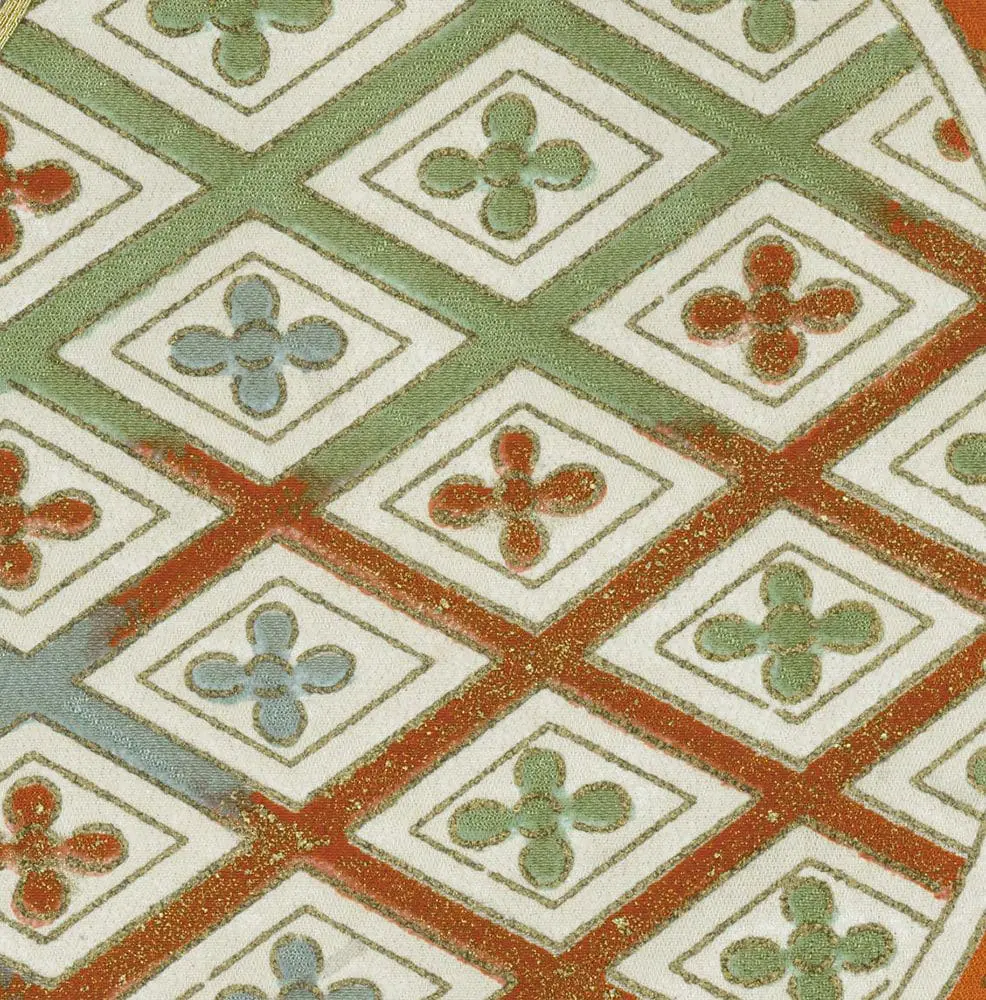
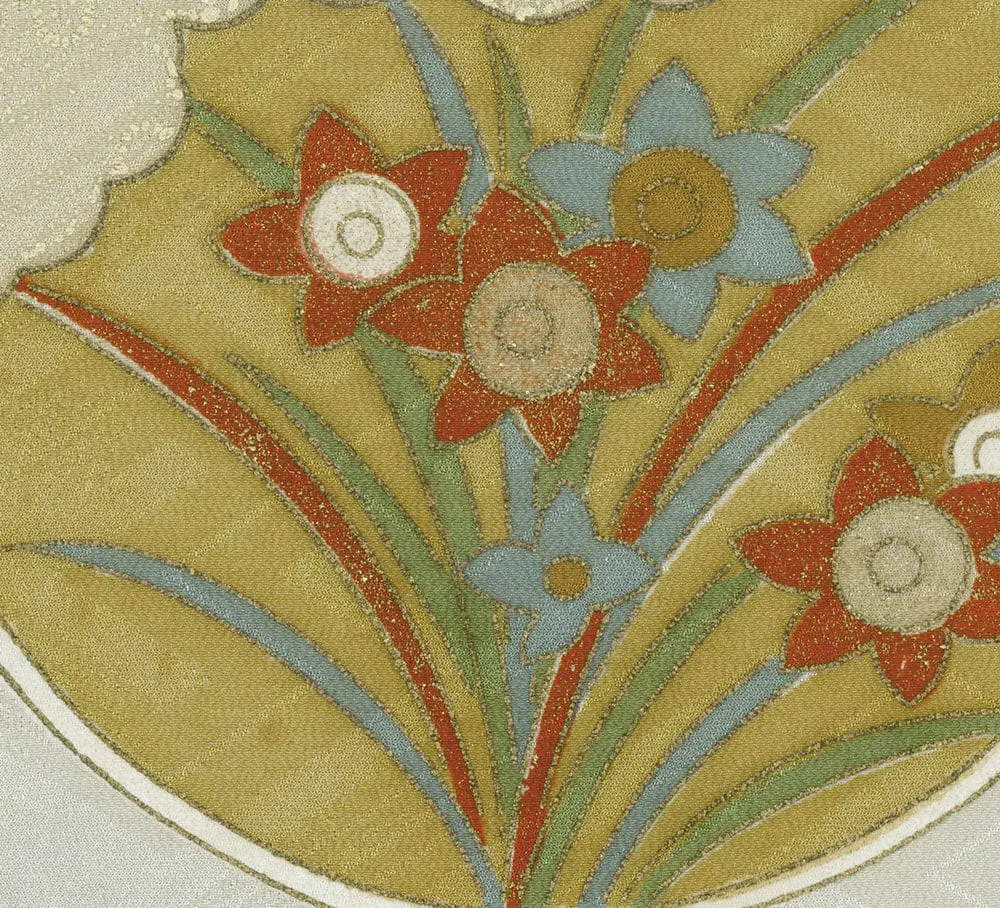
The visual narrative is further elevated by three distinct, circular roundels positioned near the base of the panel. These medallions feature intricate botanical and geometric designs, including small floral sprays and checkered patterns, rendered in a palette of soft gold, green, and red. To emphasize their aristocratic quality, the roundels are highlighted with gold metallic couching, where shimmering threads are hand-stitched onto the surface to define the borders and internal details. This combination of structured wave patterns and delicate hand-embellishment reflects the era's dedication to preserving high-status decorative traditions within mid-20th-century formal attire.

Payment Options: We primarily accept PayPal for all transactions. Credit and debit cards are not accepted. If you prefer to pay by personal check instead of PayPal, please note this preference in the "Additional comments" field when placing your order.Ordering Process
To receive your PayPal invoice, simply fill out the form.
Shipping Details: We ship all orders to the address associated with your PayPal payment. Please ensure your PayPal shipping address is current and accurate.A phone number is required during checkout, as our shipping carrier may need to contact you regarding delivery questions.Shipping RatesUnited States and Canada: $20International destinations (air mail): $40
