Copyright © 2026 Yorke Antique Textiles
.avif)

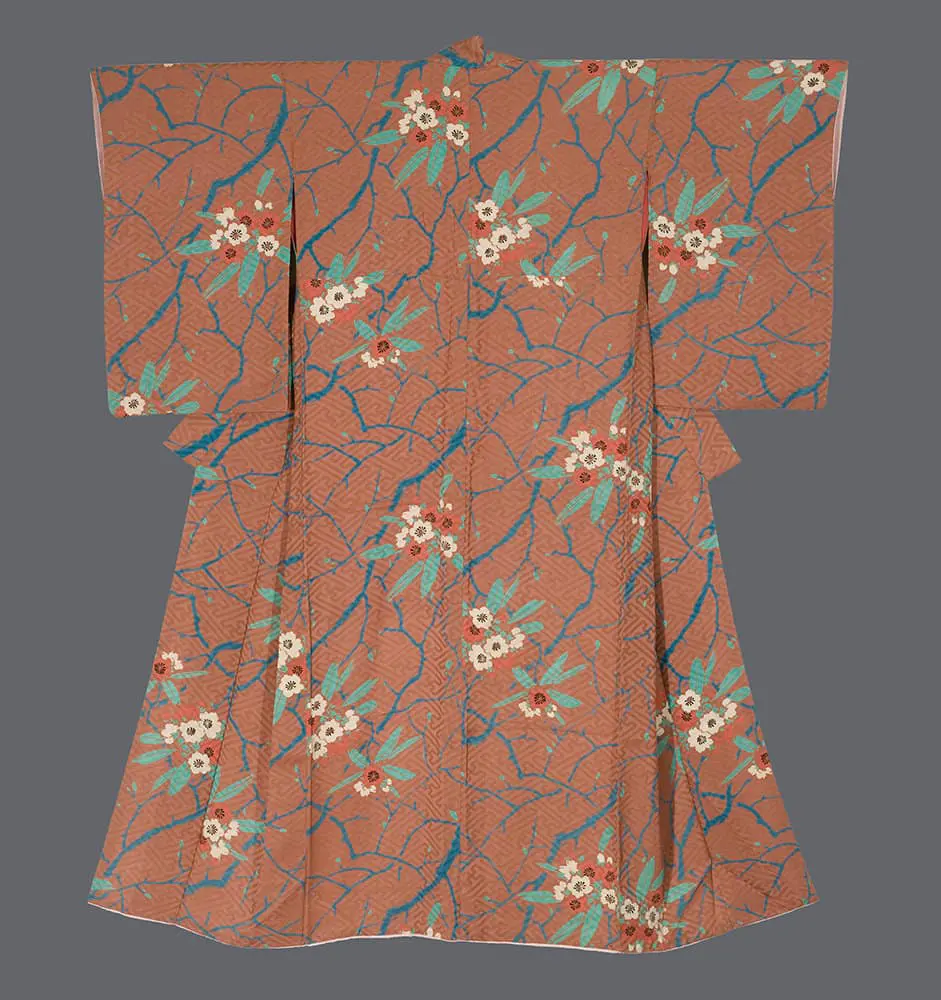
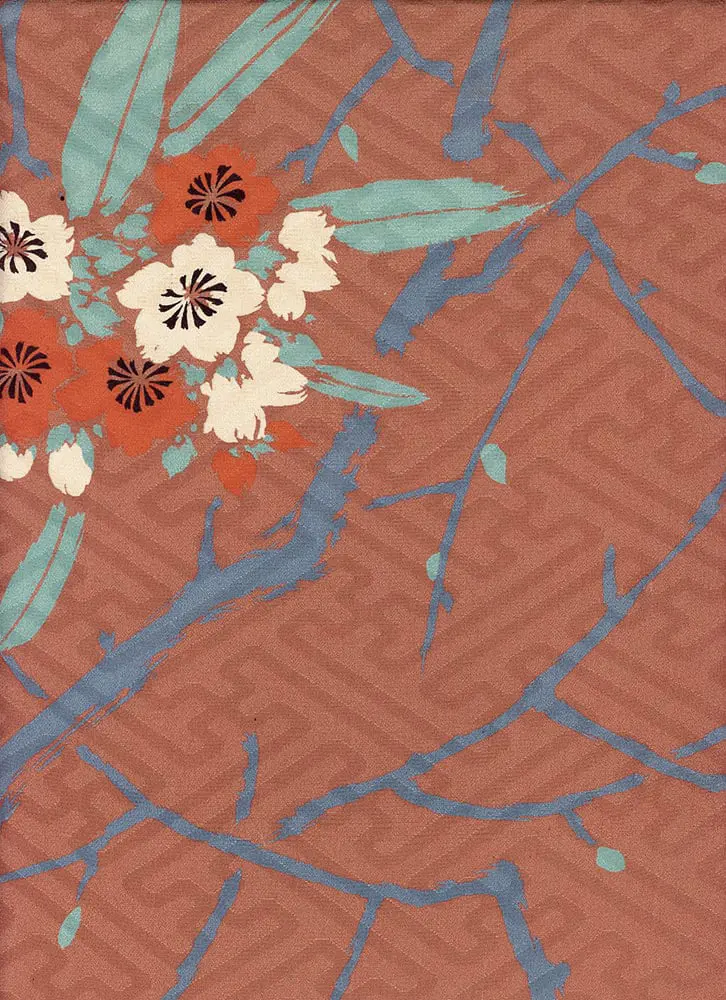
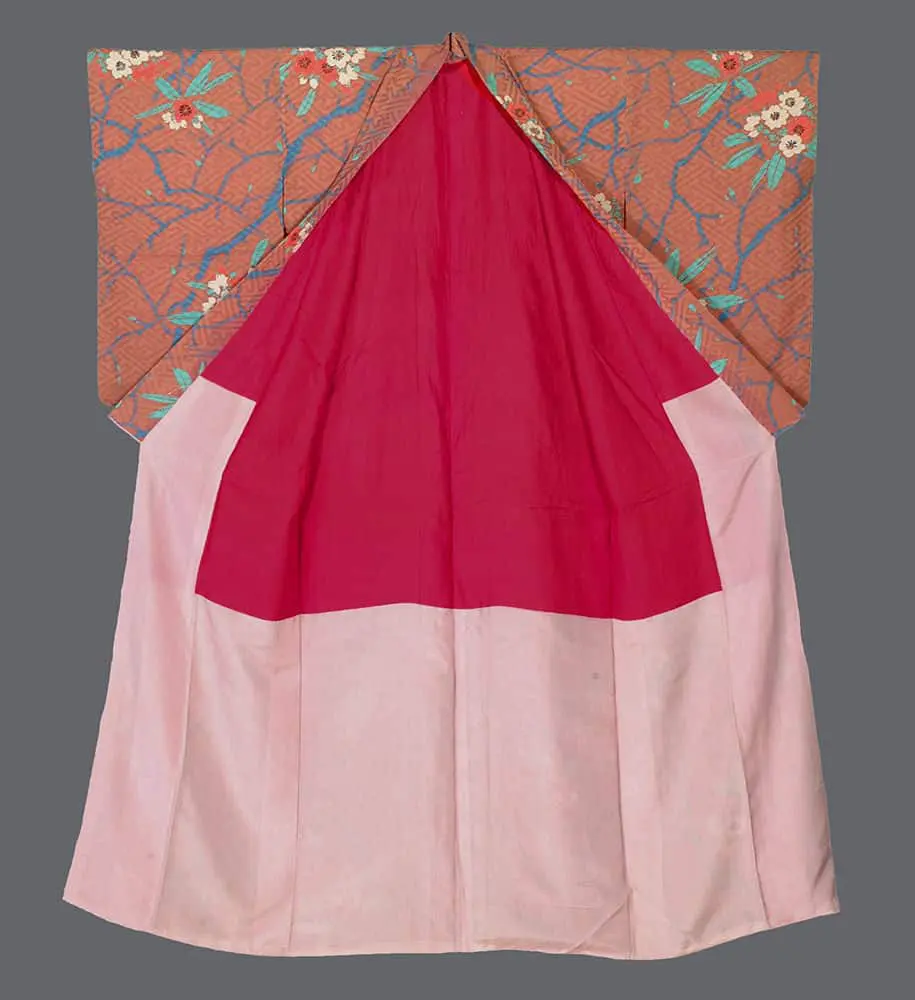
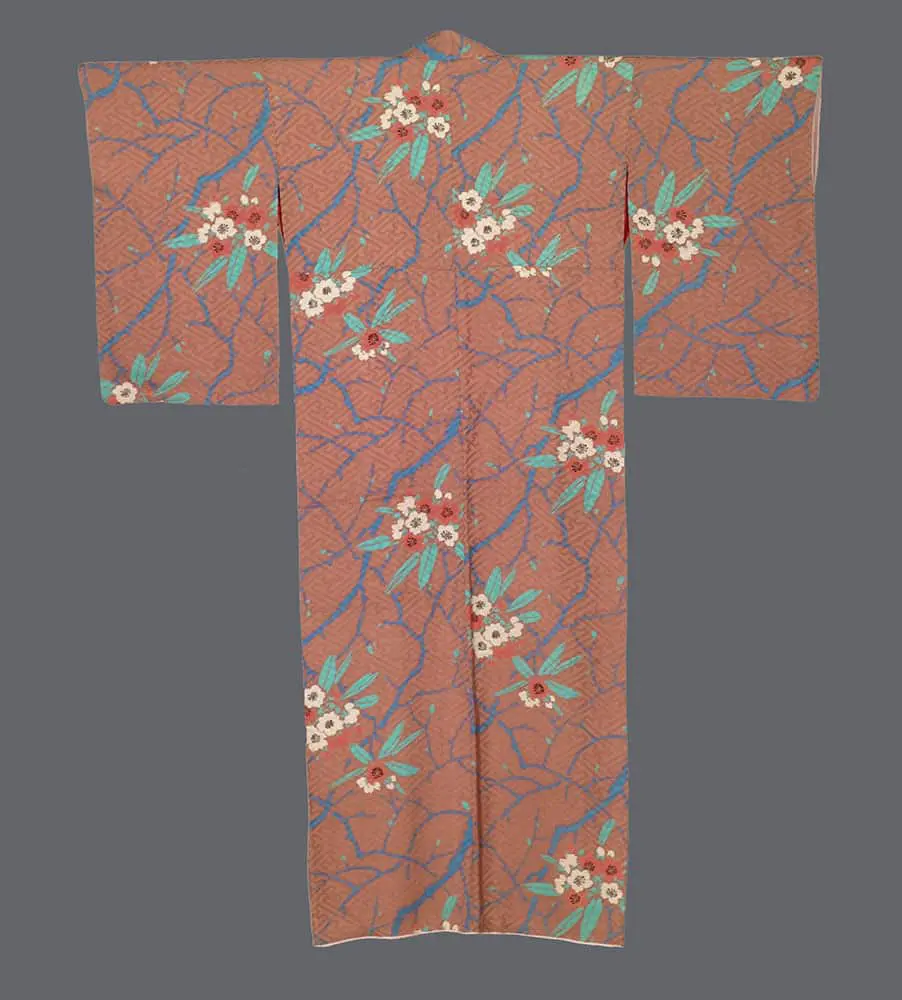
This silk kimono is a masterful example of the Showa era's technical diversity, featuring a sophisticated combination of katazome (stencil-dyeing) on a rich rinzu (figured silk damask) base. The garment's surface is defined by a rhythmic, all-over woven fretwork pattern (sayagata) in a warm terracotta-orange, which creates a lustrous architectural foundation. Overlaid on this damask ground is a dense, hand-stenciled network of teal-blue branches that wind across the entire piece, supporting clusters of white and russet-red plum blossoms (ume).
The plum blossom is a revered symbol of resilience and hope, as it is the first flower to bloom in late winter, signaling the coming of spring. The use of the katazome technique allows for sharp, precise transitions between the vibrant teal branches and the warm orange ground, creating a high-contrast visual energy. This piece reflects a modern synthesis of traditional botanical imagery and bold color palettes, resulting in a garment that is both deeply symbolic and graphically striking.
It measures 47 inches (119 cm) from sleeve-end to sleeve-end and stands at 59 inches (150 cm) in height.

Payment Options: We primarily accept PayPal for all transactions. Credit and debit cards are not accepted. If you prefer to pay by personal check instead of PayPal, please note this preference in the "Additional comments" field when placing your order.Ordering Process
To receive your PayPal invoice, simply fill out the form.
Shipping Details: We ship all orders to the address associated with your PayPal payment. Please ensure your PayPal shipping address is current and accurate.A phone number is required during checkout, as our shipping carrier may need to contact you regarding delivery questions.Shipping RatesUnited States and Canada: $20International destinations (air mail): $40
