Copyright © 2026 Yorke Antique Textiles
.avif)

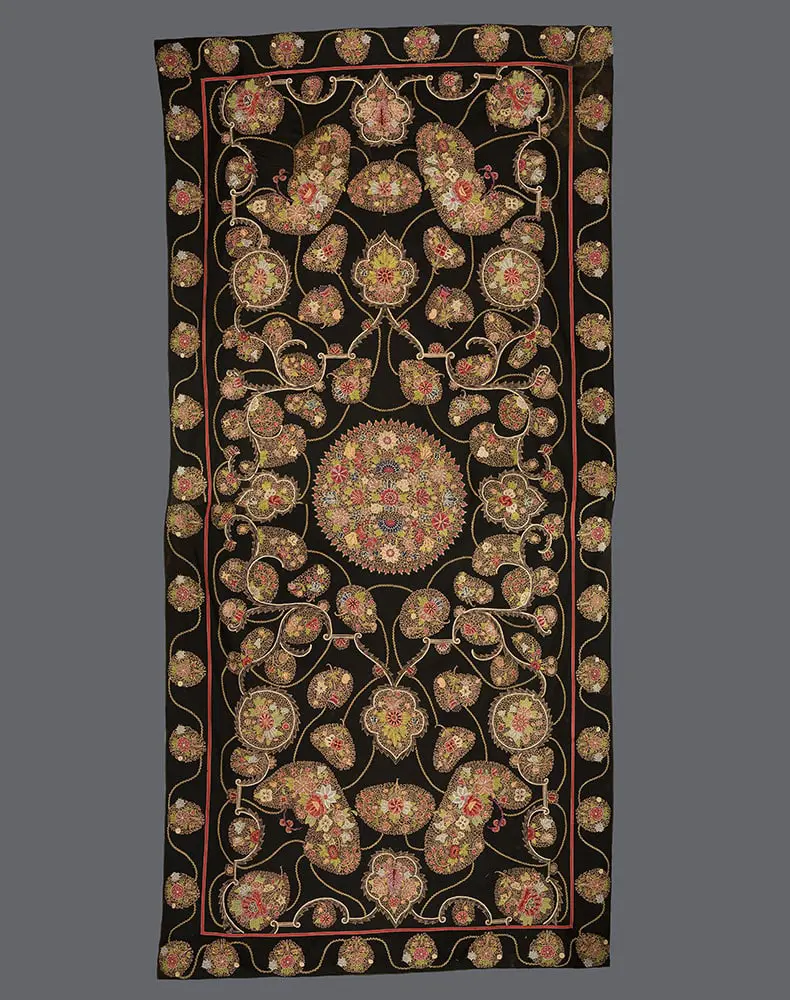
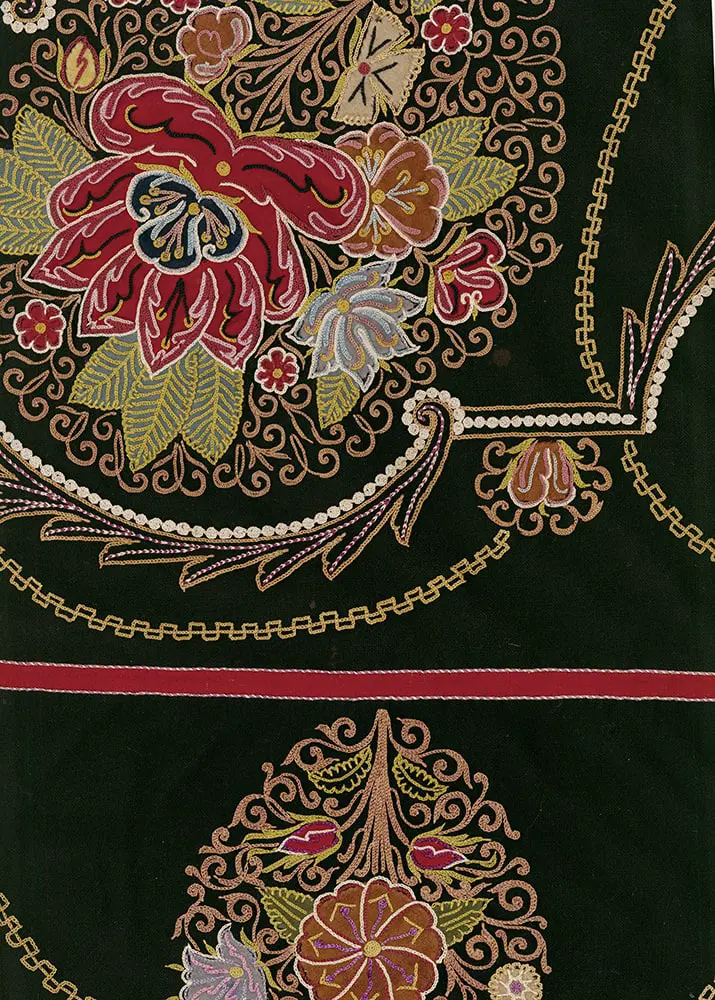

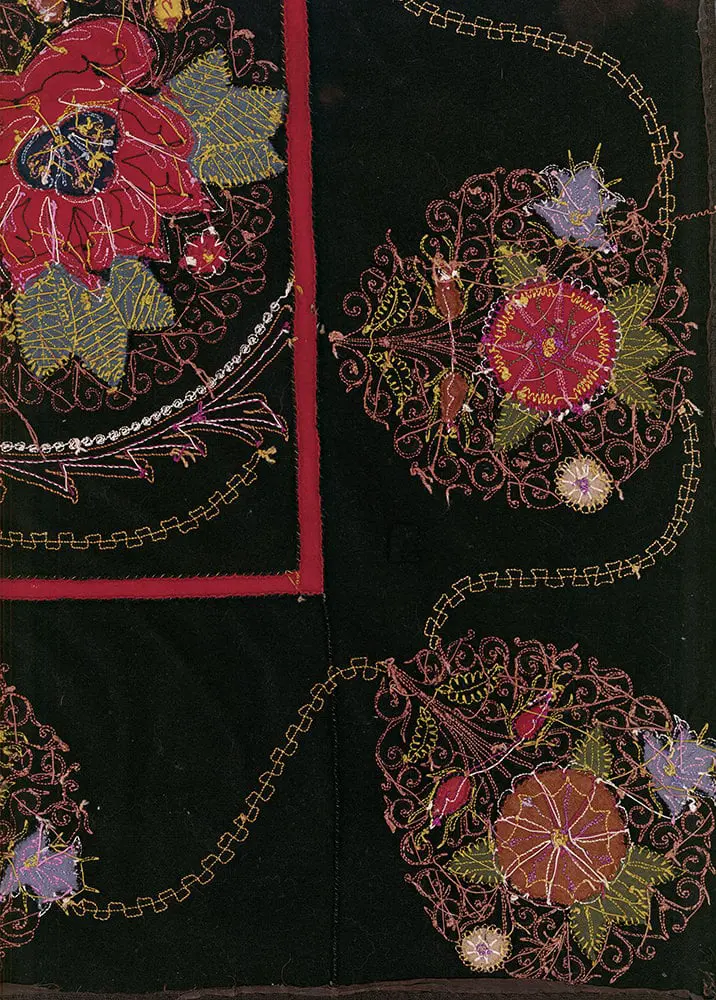
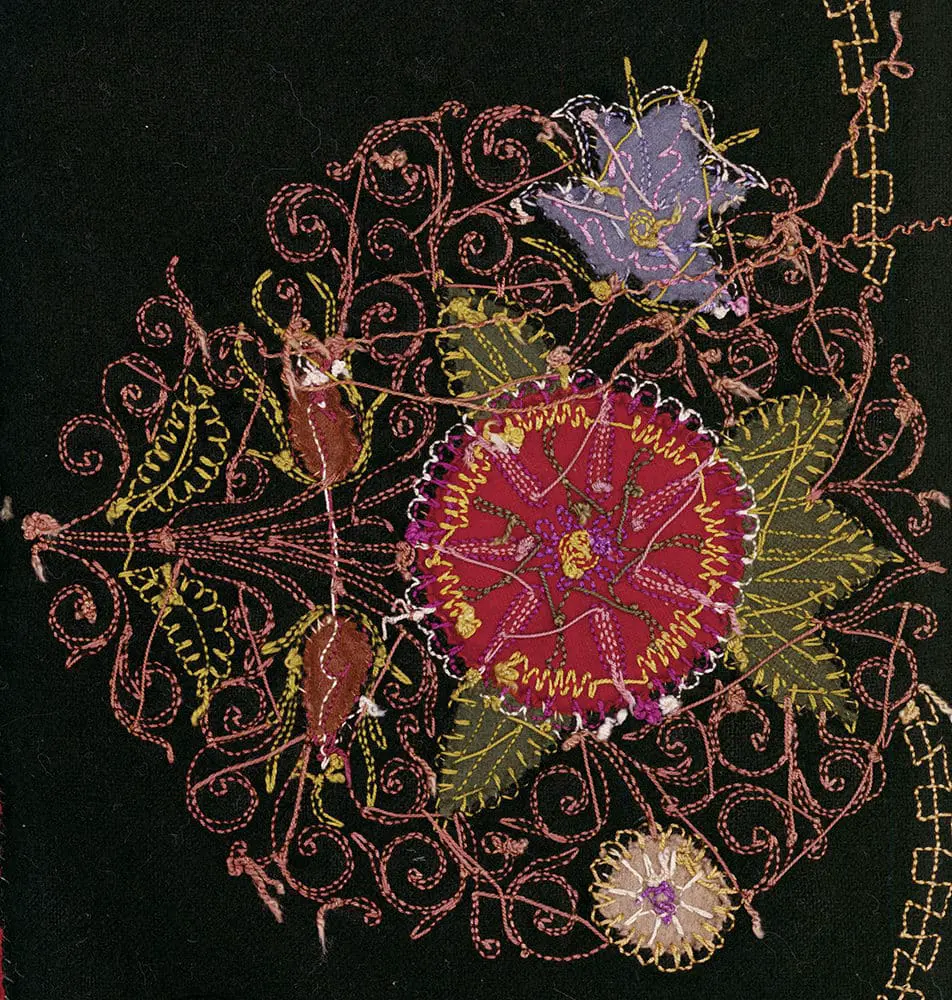
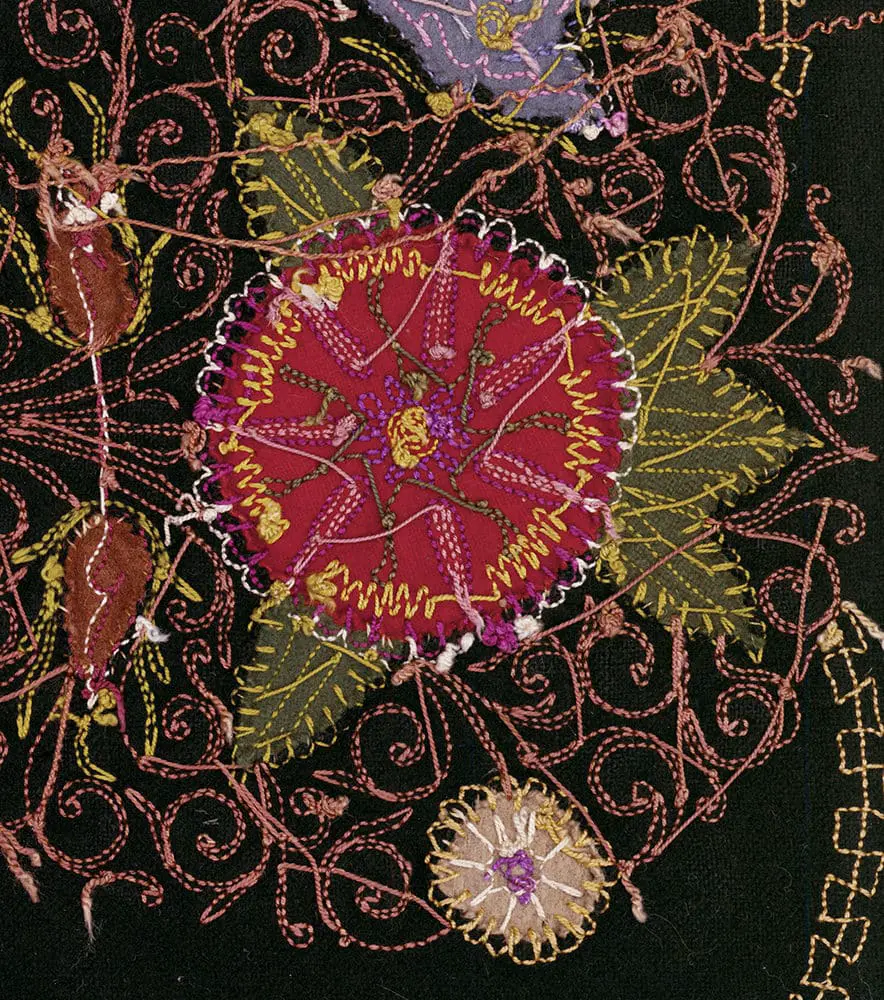
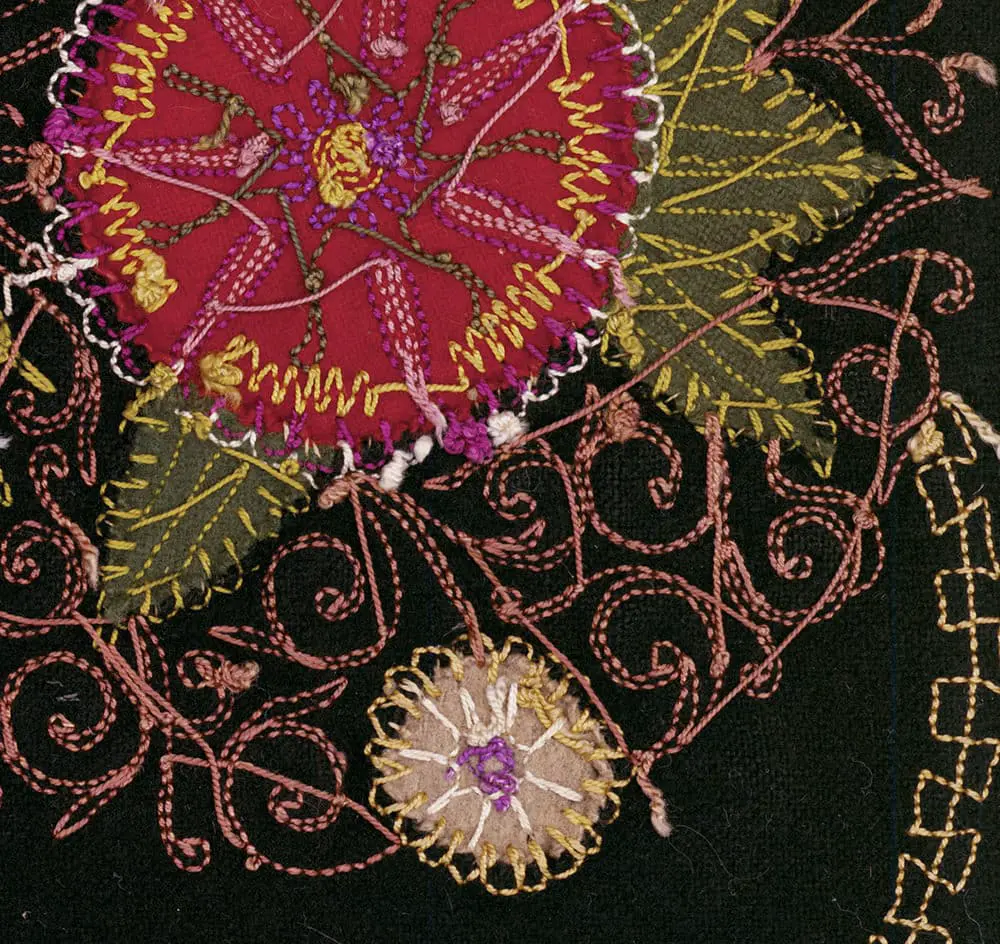
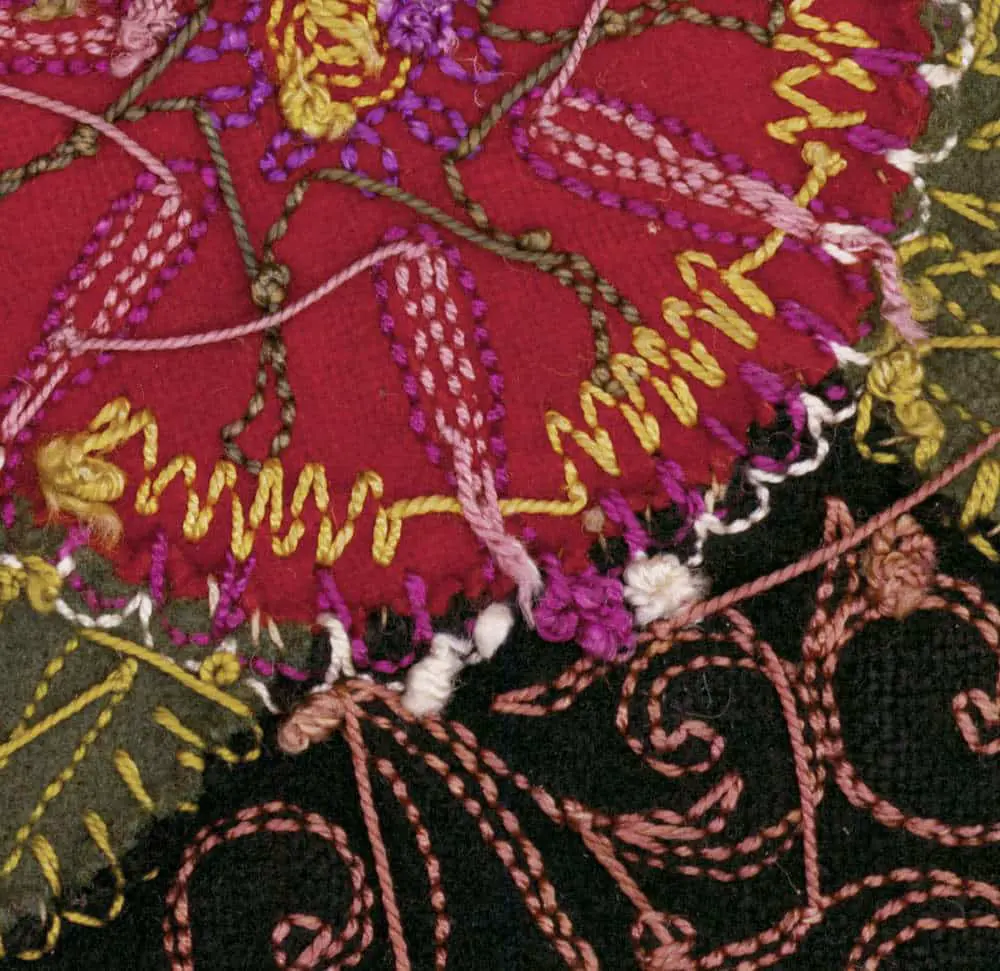
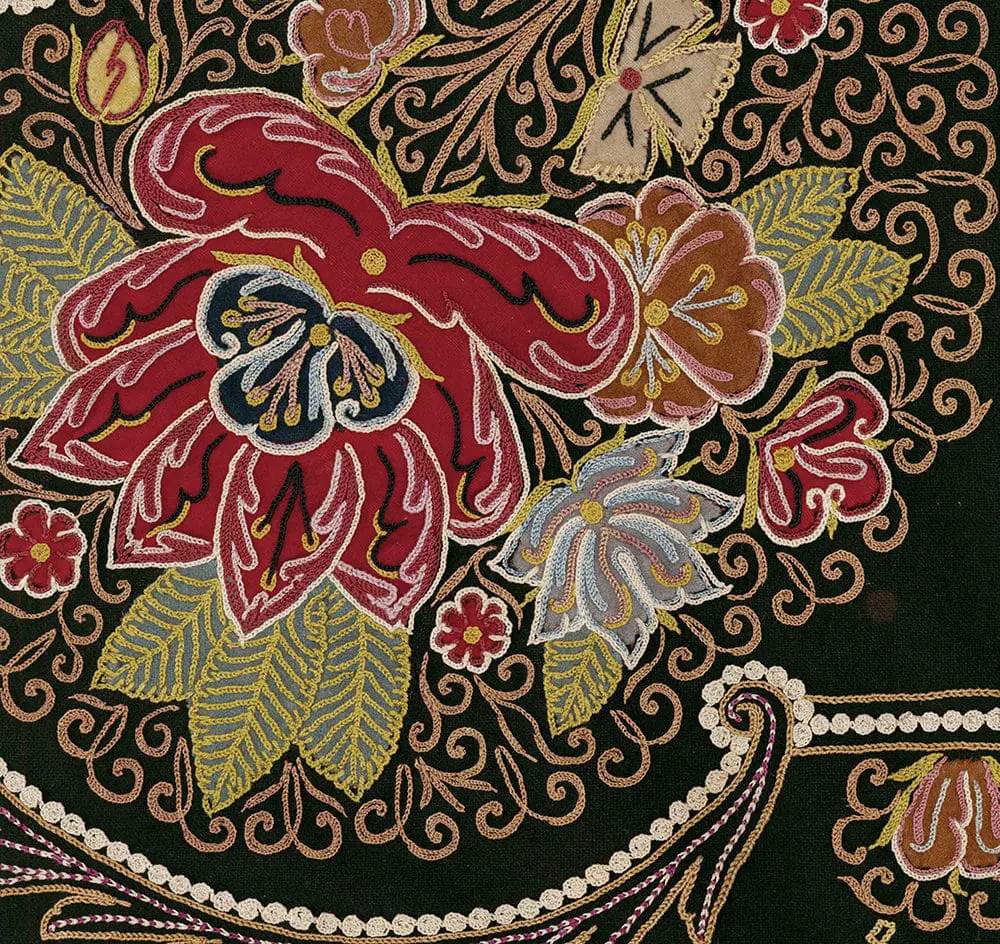
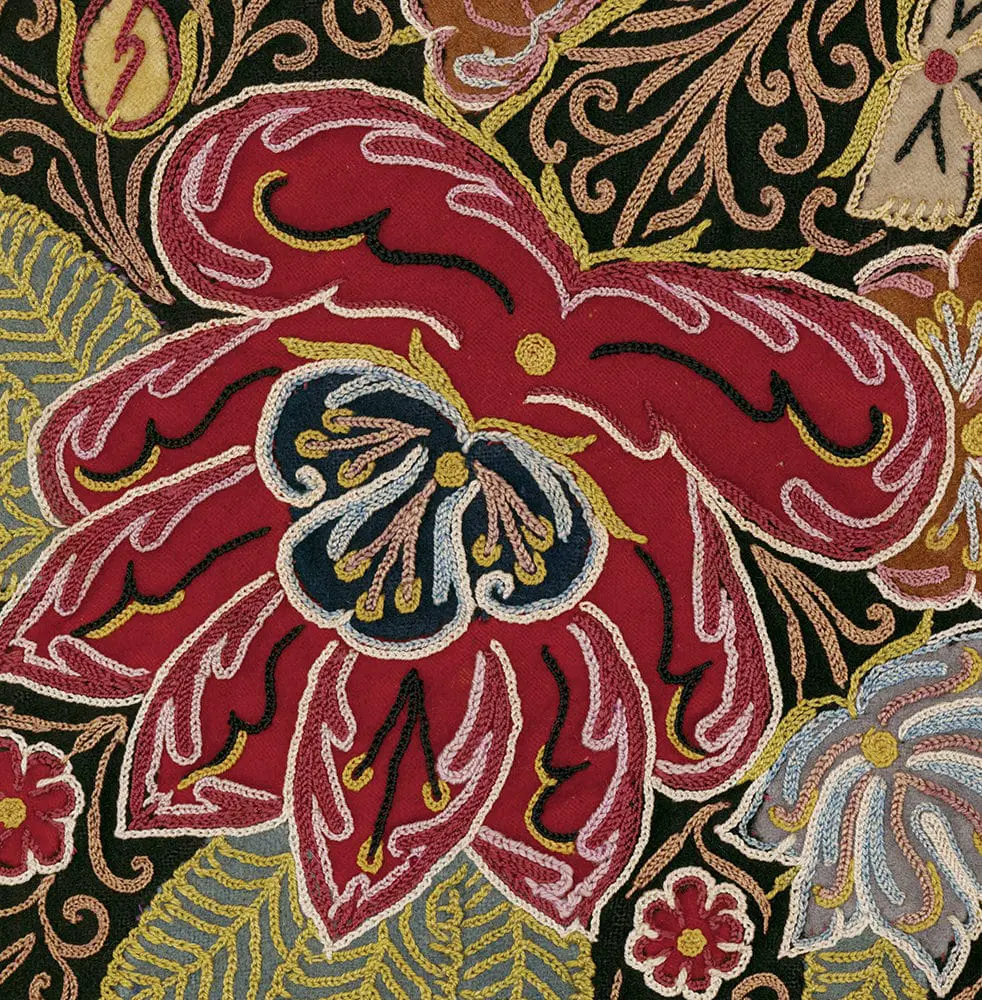
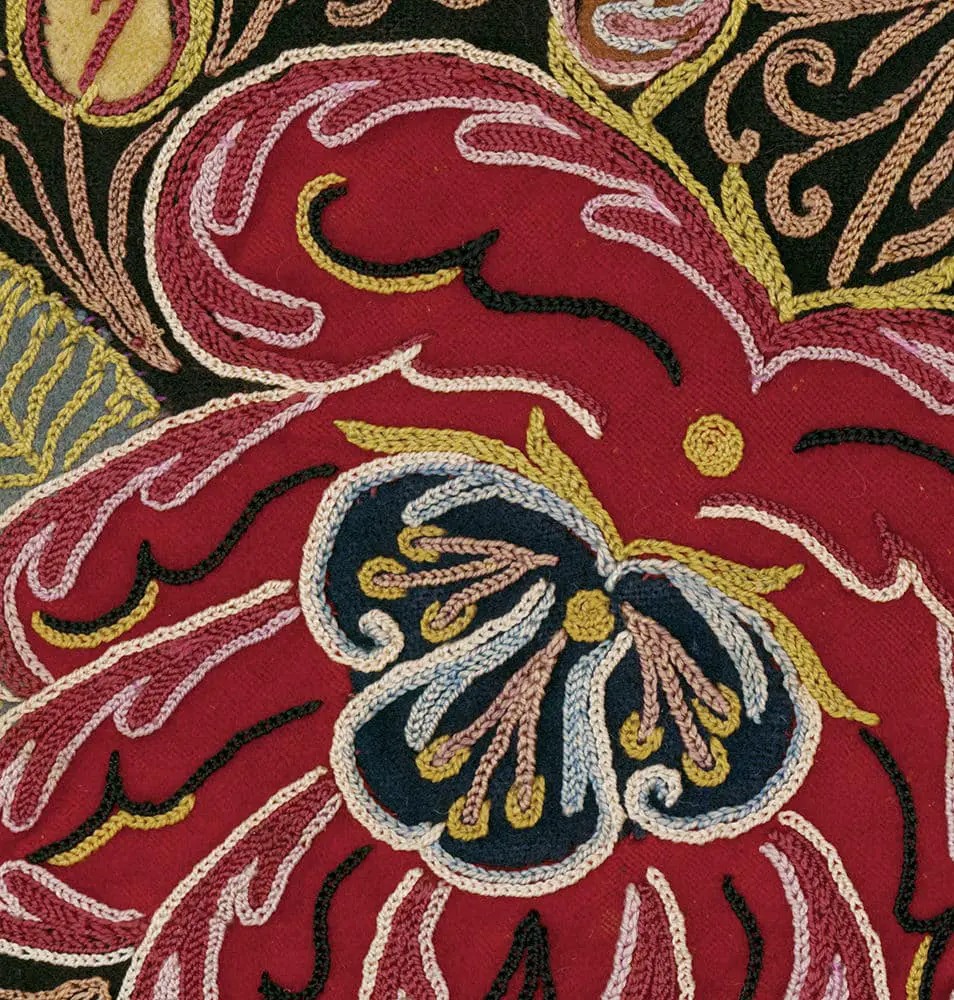
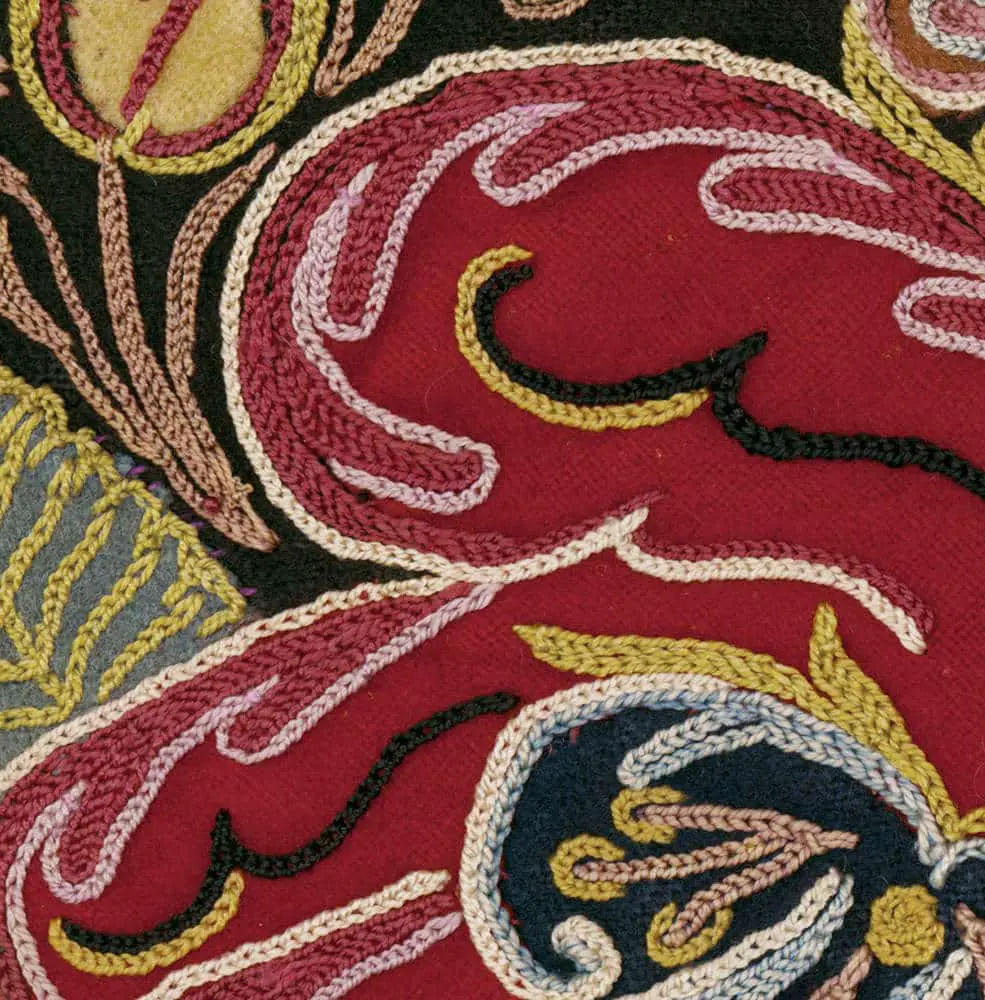
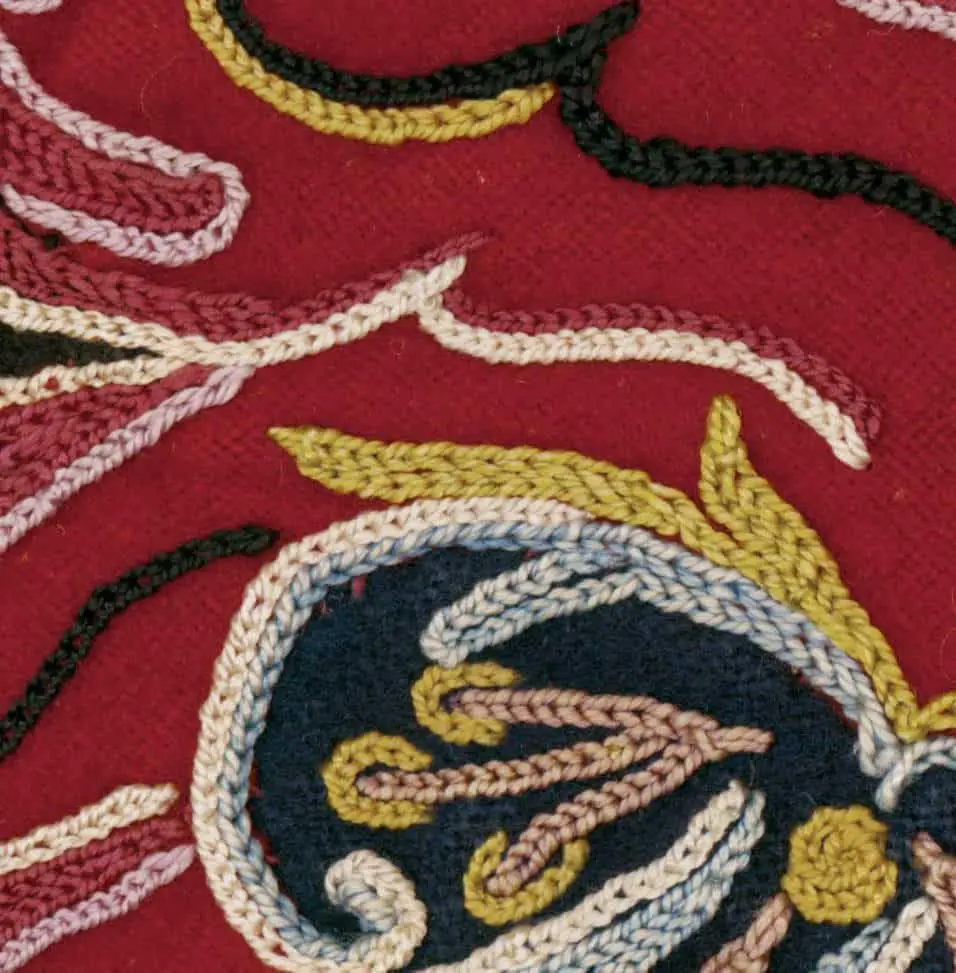
This remarkable and notably large Rescht (or Rasht) panel, originating from Persia (Iran) during the second half of the 19th century (1850–1900), is a monumental example of Qajar-era textile art. Measuring an impressive 156 inches by 76 inches (396 cm x 193 cm), the panel is composed of a black wool felt ground. This type of work, known as Rashti-duzi, traditionally utilized mill-made broadcloth or flannel, which was favored because its edges do not fray when cut for inlay.
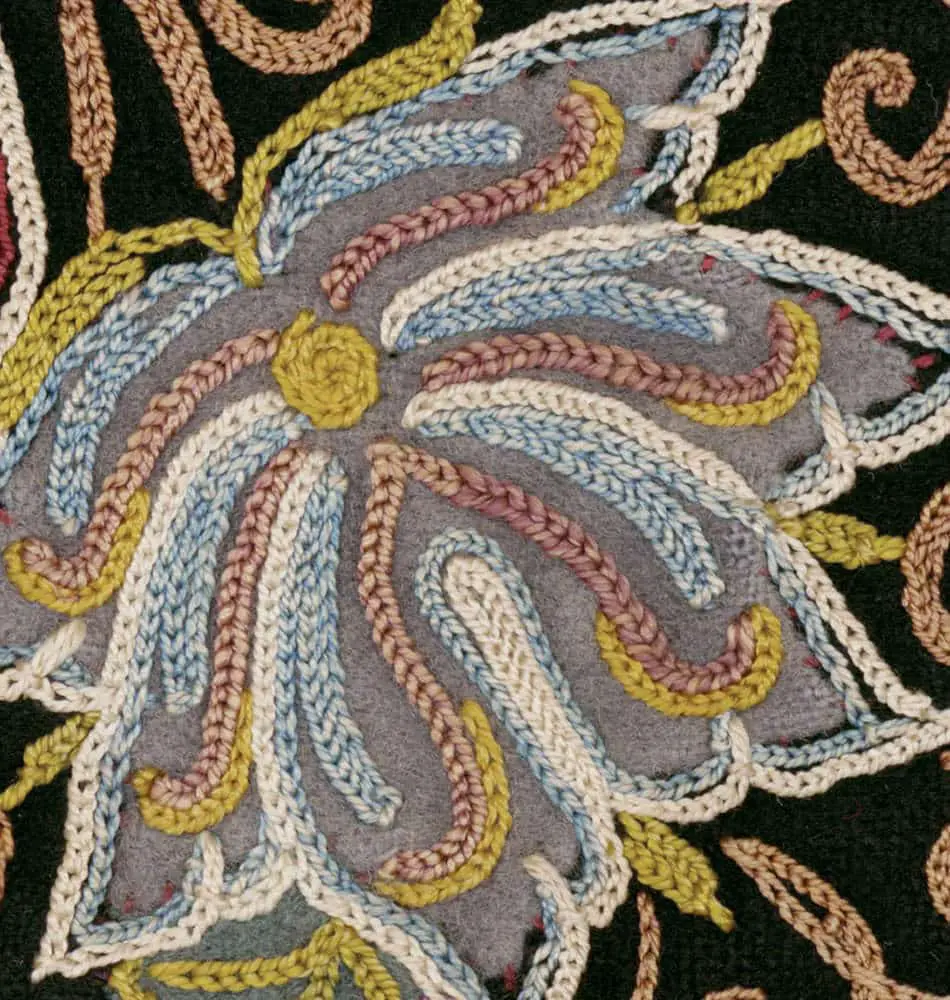
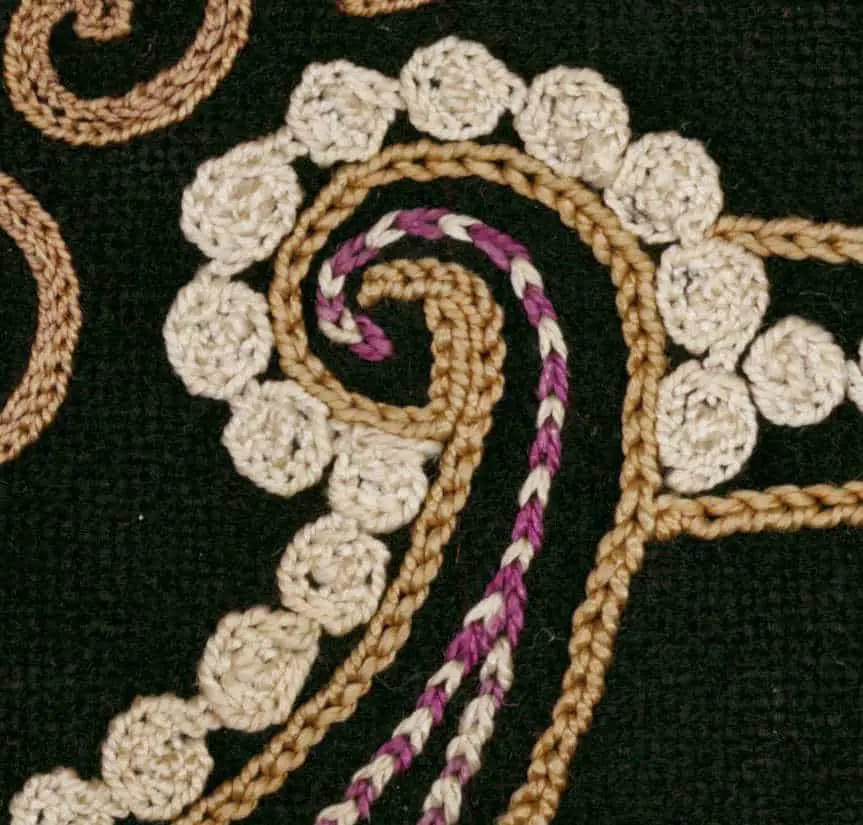
The composition is centered around a prominent central medallion, from which multicolored flowers, intertwined vines, and elaborate scrollwork emanate to fill the field. The intricate patterns are executed in colored wool embroidery, primarily using the chain stitch (golab-duzi) technique applied with a metal crochet hook. The panel is framed by a sophisticated border system, including a 7-inch main border and a 5-inch guard border, both featuring dense floral and medallion motifs. While the textile is in very good condition, it exhibits slight moth damage and a few minor, age-appropriate repairs.

Payment Options: We primarily accept PayPal for all transactions. Credit and debit cards are not accepted. If you prefer to pay by personal check instead of PayPal, please note this preference in the "Additional comments" field when placing your order.Ordering Process
To receive your PayPal invoice, simply fill out the form.
Shipping Details: We ship all orders to the address associated with your PayPal payment. Please ensure your PayPal shipping address is current and accurate.A phone number is required during checkout, as our shipping carrier may need to contact you regarding delivery questions.Shipping RatesUnited States and Canada: $20International destinations (air mail): $40
