Copyright © 2026 Yorke Antique Textiles
.avif)

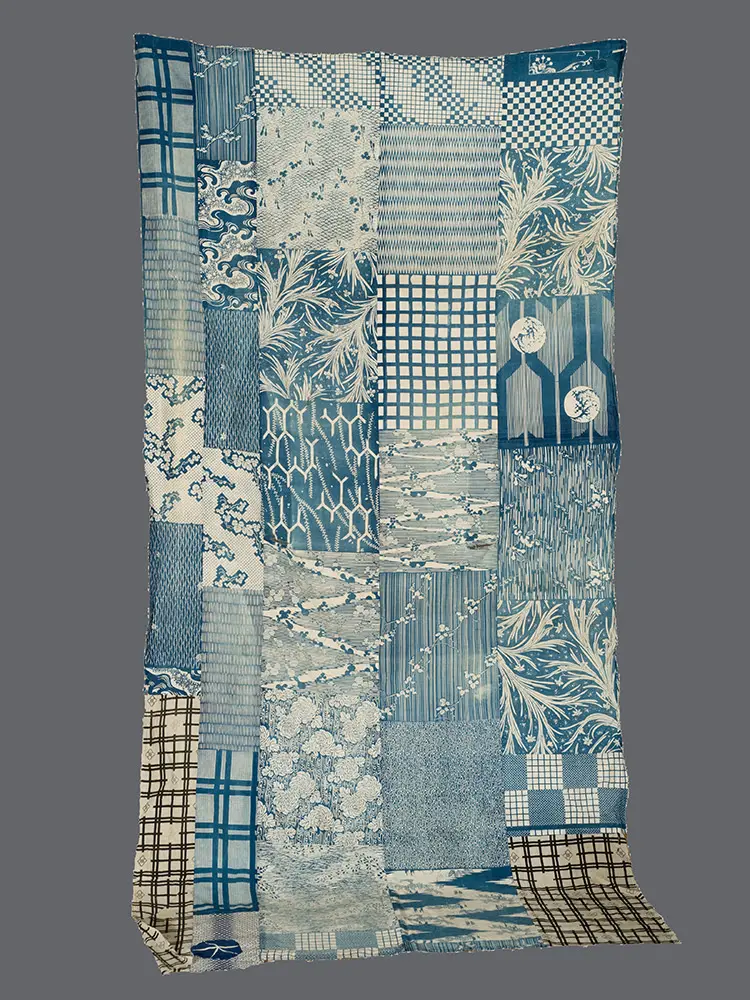
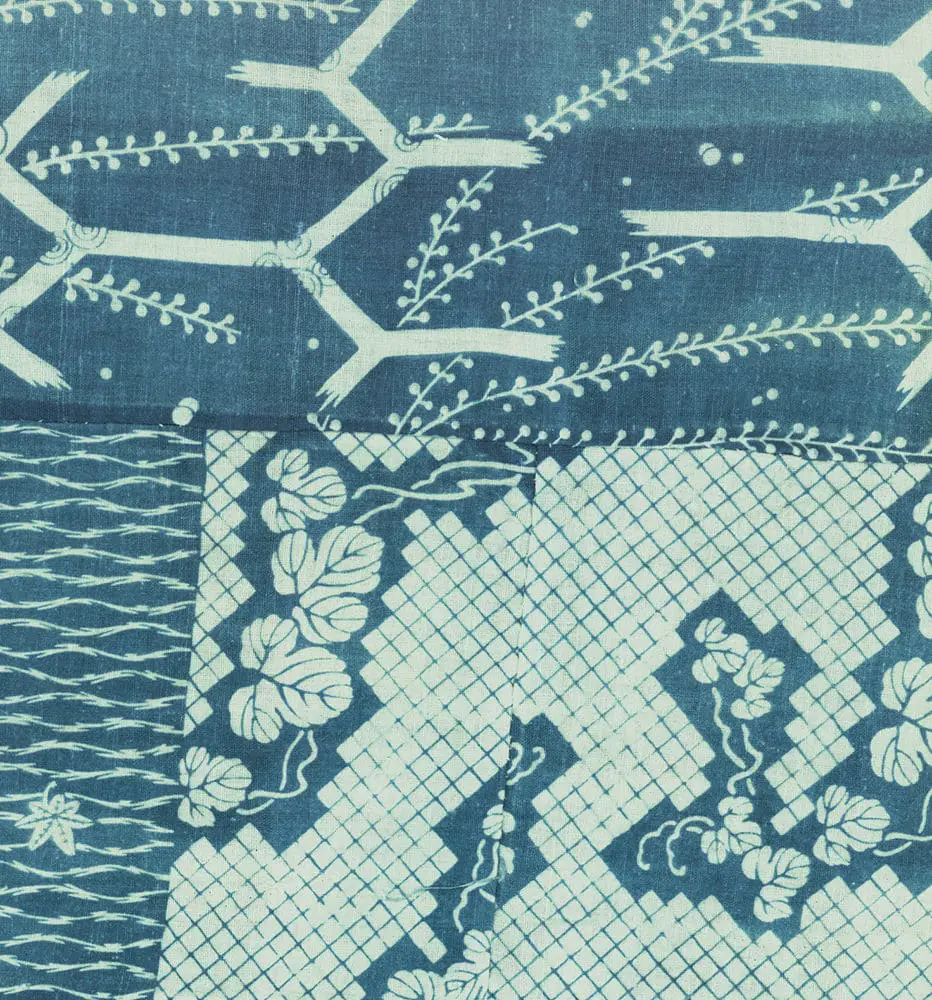
This expansive cotton futon cover, dating to the Meiji period (1868–1912), is a remarkable example of ranru (rag) textile art. Measuring 51 inches in width and 103 inches in length (130 cm x 262 cm), the cover is constructed from five long vertical panels. Each panel is composed of various indigo-dyed fabric segments, originally sourced from yukata (summer kimono) sample bolts, featuring a diverse array of traditional Japanese patterns including checks, florals, and geometric lattices.
The ranru style reflects the historical Japanese practice of "mottainai" (too good to waste), where every scrap of fabric was salvaged, patched, and reinforced over generations. Typical of such utilitarian textiles, this cover bears authentic signs of its past life, including several repaired holes and two unobtrusive 6-inch slits that add to its rustic, historical character. The deep indigo dyes vary in shade from pale sky blue to midnight navy, creating a complex visual rhythm across the massive surface.

Payment Options: We primarily accept PayPal for all transactions. Credit and debit cards are not accepted. If you prefer to pay by personal check instead of PayPal, please note this preference in the "Additional comments" field when placing your order.Ordering Process
To receive your PayPal invoice, simply fill out the form.
Shipping Details: We ship all orders to the address associated with your PayPal payment. Please ensure your PayPal shipping address is current and accurate.A phone number is required during checkout, as our shipping carrier may need to contact you regarding delivery questions.Shipping RatesUnited States and Canada: $20International destinations (air mail): $40
