Copyright © 2026 Yorke Antique Textiles
.avif)

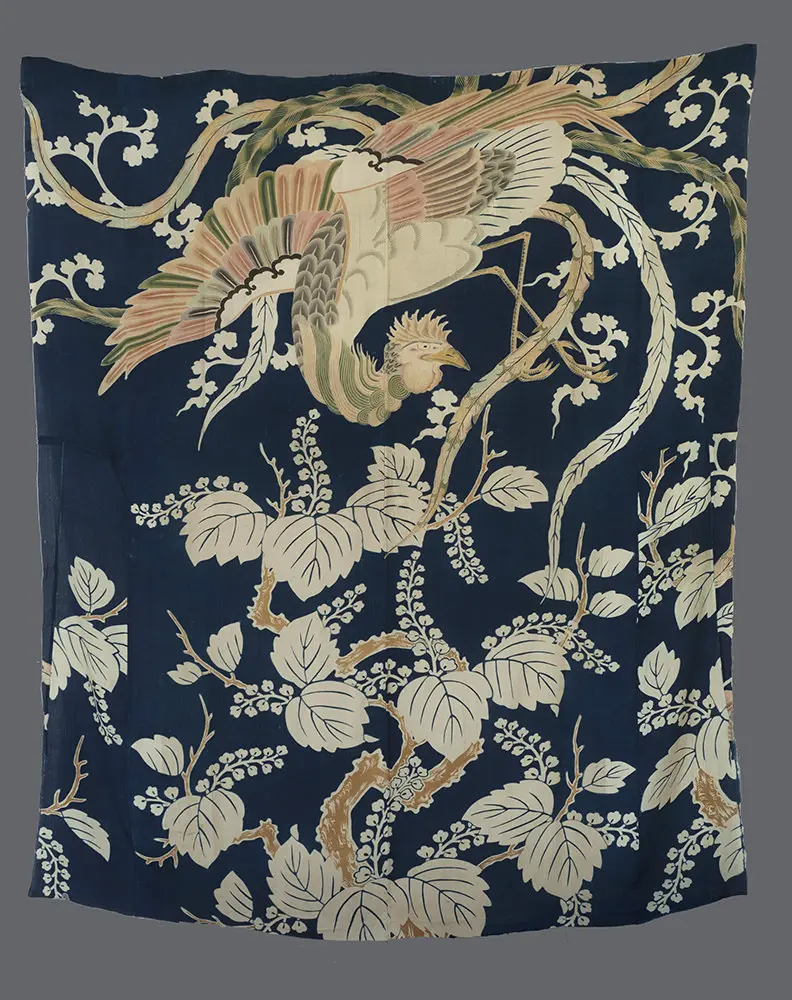

This monumental uchishiki (altar offering cloth), dating to the late Edo period (1840–1868), possesses a profound ritual history. Measuring 66.9 inches in length by 57.4 inches in width (170 cm x 146 cm), the textile began its life as a ceremonial futonji (sleeping blanket cover) used in matrimonial celebrations. It was later repurposed as a sacred offering cloth dedicated to departed ancestors.
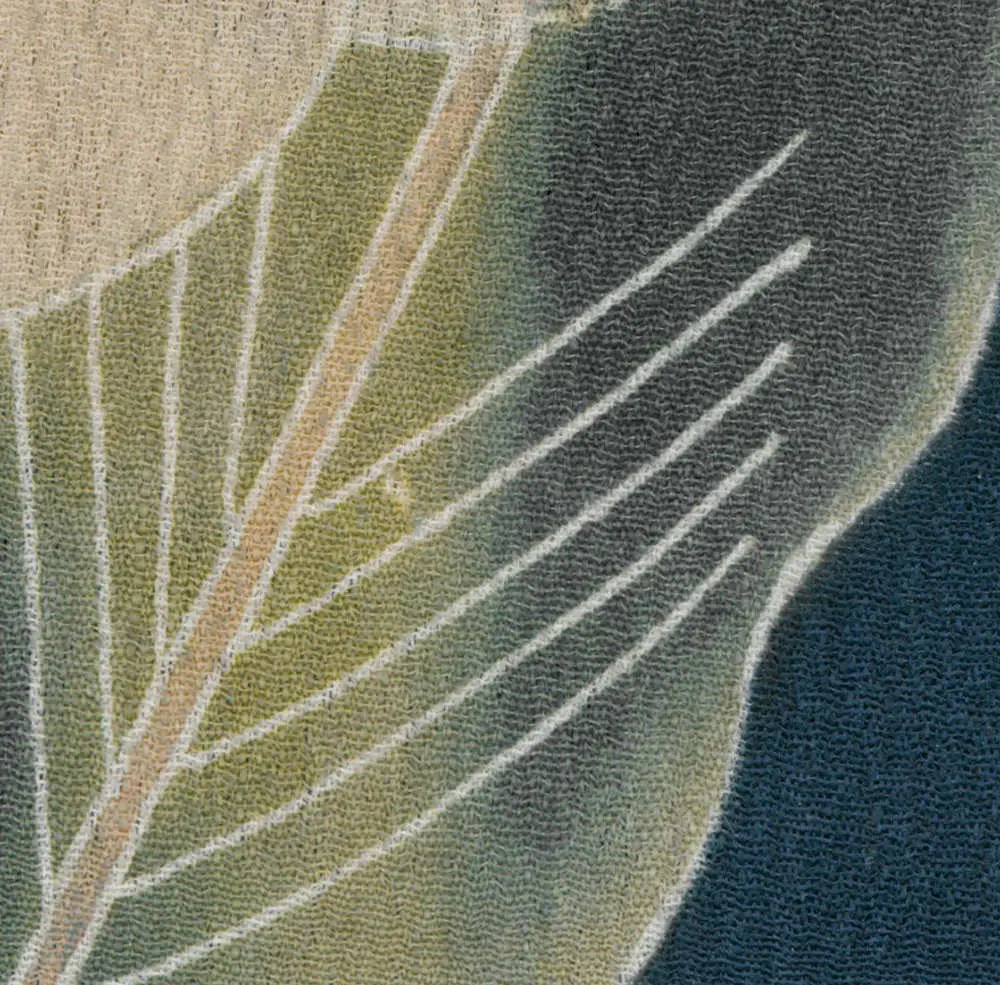
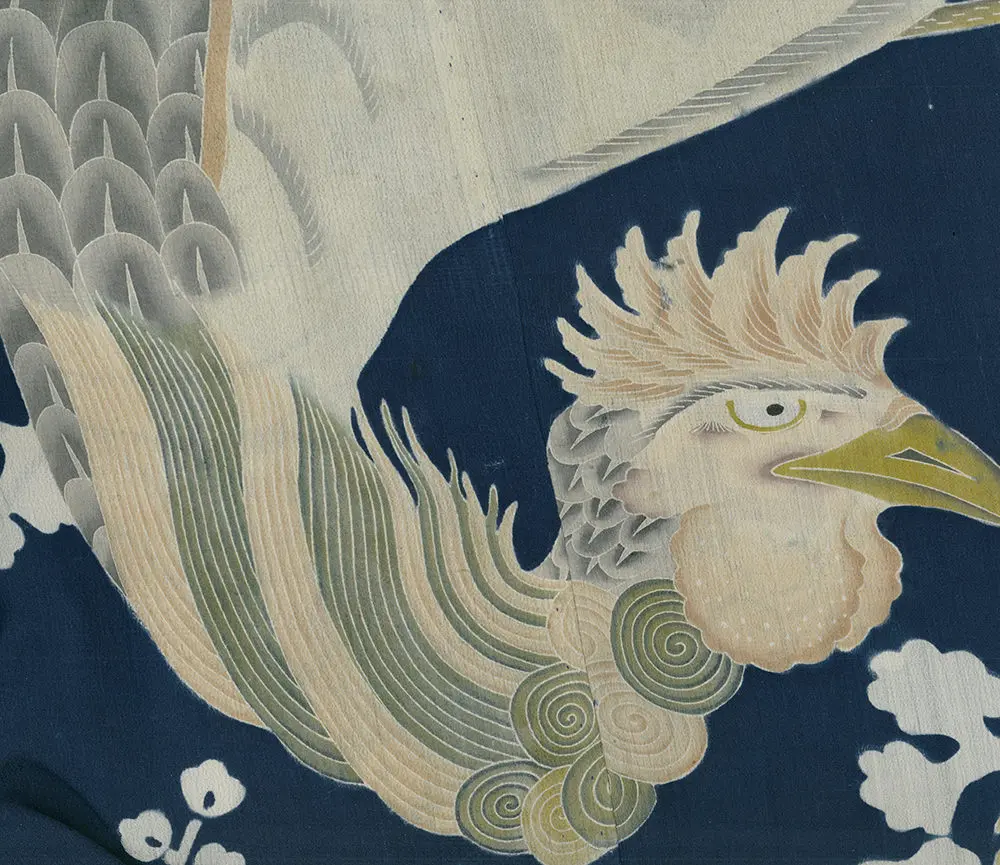
The panel is crafted from fine chirimen (crepe) silk and features a striking indigo ground decorated with a large paulownia (kiri) and phoenix motif. This design was rendered using the tsutsugaki technique, a traditional resist-dyeing method where paste is applied through a paper cone to create bold, hand-drawn patterns. In Japanese mythology, the phoenix is said to alight only upon the branches of the paulownia tree, making this combination a premier symbol of imperial authority, virtue, and auspicious beginnings. The resist-dyed areas remain a crisp white against the saturated indigo, with subtle hand-painted accents in soft pink and sage green adding life to the phoenix's plumage.
This artwork is featured on pages 58-59 of Ceremonial Textiles of Japan, 18th to 20th Centuries. This book, published by Yorke Antique Textiles, can be previewed or purchased on our website here.

Payment Options: We primarily accept PayPal for all transactions. Credit and debit cards are not accepted. If you prefer to pay by personal check instead of PayPal, please note this preference in the "Additional comments" field when placing your order.Ordering Process
To receive your PayPal invoice, simply fill out the form.
Shipping Details: We ship all orders to the address associated with your PayPal payment. Please ensure your PayPal shipping address is current and accurate.A phone number is required during checkout, as our shipping carrier may need to contact you regarding delivery questions.Shipping RatesUnited States and Canada: $20International destinations (air mail): $40
