Copyright © 2026 Yorke Antique Textiles
.avif)

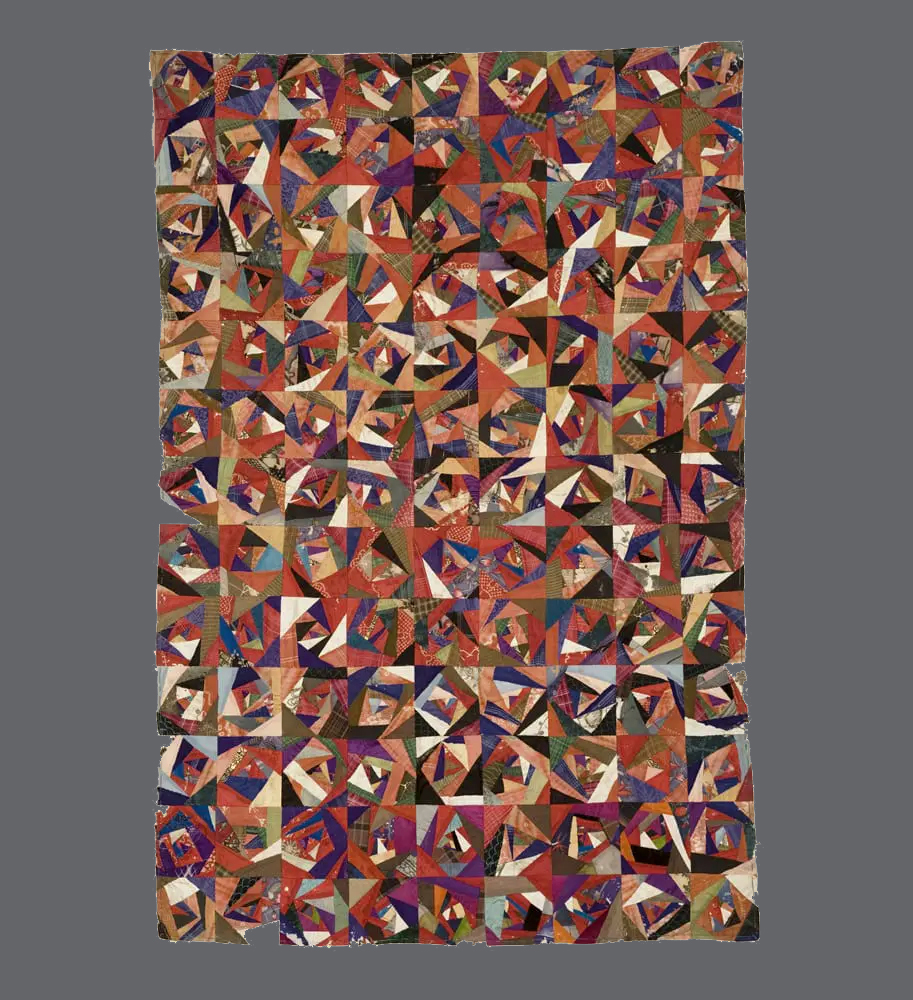
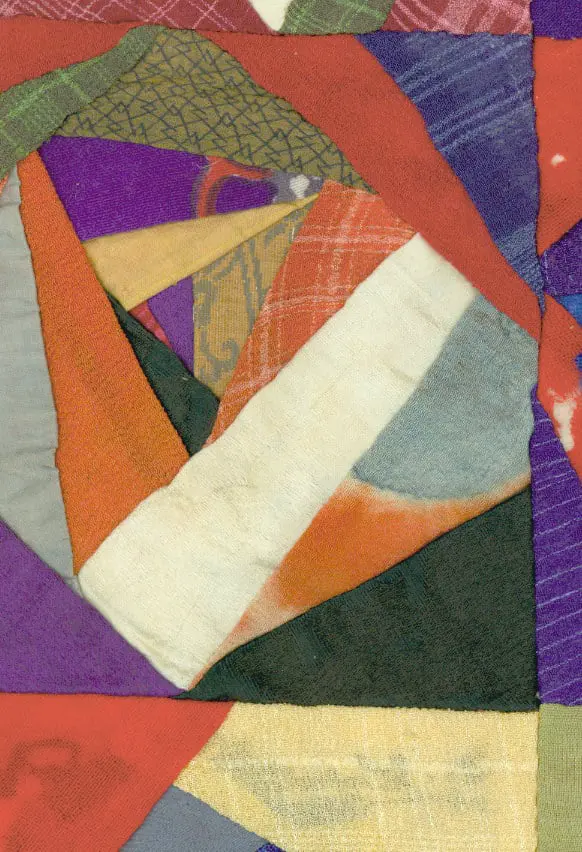
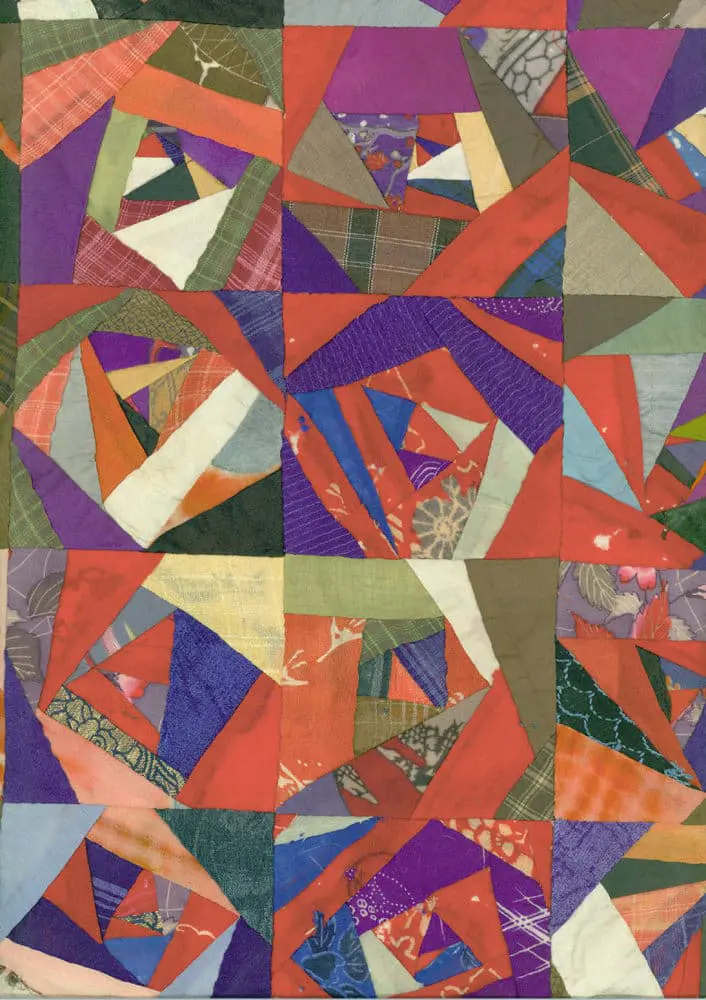
This unique uchishiki (Buddhist altar cloth), dating from the late Edo to early Meiji period (1840–1880), is a remarkable example of traditional Japanese patchwork and resourcefulness. Measuring 40 inches by 59 inches (101.5 cm x 150 cm), the textile is meticulously assembled from a diverse array of silk and wool remnants salvaged from previous garments. Each small, triangular or rectangular piece features distinct patterns, textures, and colors—including deep reds, purples, ochres, and indigo—creating a vibrant, kaleidoscopic field of geometric forms.
This patchwork style, often referred to as yosegi, echoes the Buddhist philosophy of funzo-e, where garments were traditionally made from discarded rags to symbolize humility and the rejection of worldly vanity. The complex composition is supported by a sturdy cotton lining, which has helped preserve the structural integrity of the many joined seams over time. While the piece exhibits overall wear and fraying typical of its significant age and ritual use within a temple setting, it remains in good condition and serves as a soulful testament to the history of the textiles it incorporates.
This artwork is featured on pages 64-67 of Ceremonial Textiles of Japan, 18th to 20th Centuries. This book, published by Yorke Antique Textiles, can be previewed or purchased on our website here.

Payment Options: We primarily accept PayPal for all transactions. Credit and debit cards are not accepted. If you prefer to pay by personal check instead of PayPal, please note this preference in the "Additional comments" field when placing your order.Ordering Process
To receive your PayPal invoice, simply fill out the form.
Shipping Details: We ship all orders to the address associated with your PayPal payment. Please ensure your PayPal shipping address is current and accurate.A phone number is required during checkout, as our shipping carrier may need to contact you regarding delivery questions.Shipping RatesUnited States and Canada: $20International destinations (air mail): $40
