Copyright © 2026 Yorke Antique Textiles
.avif)

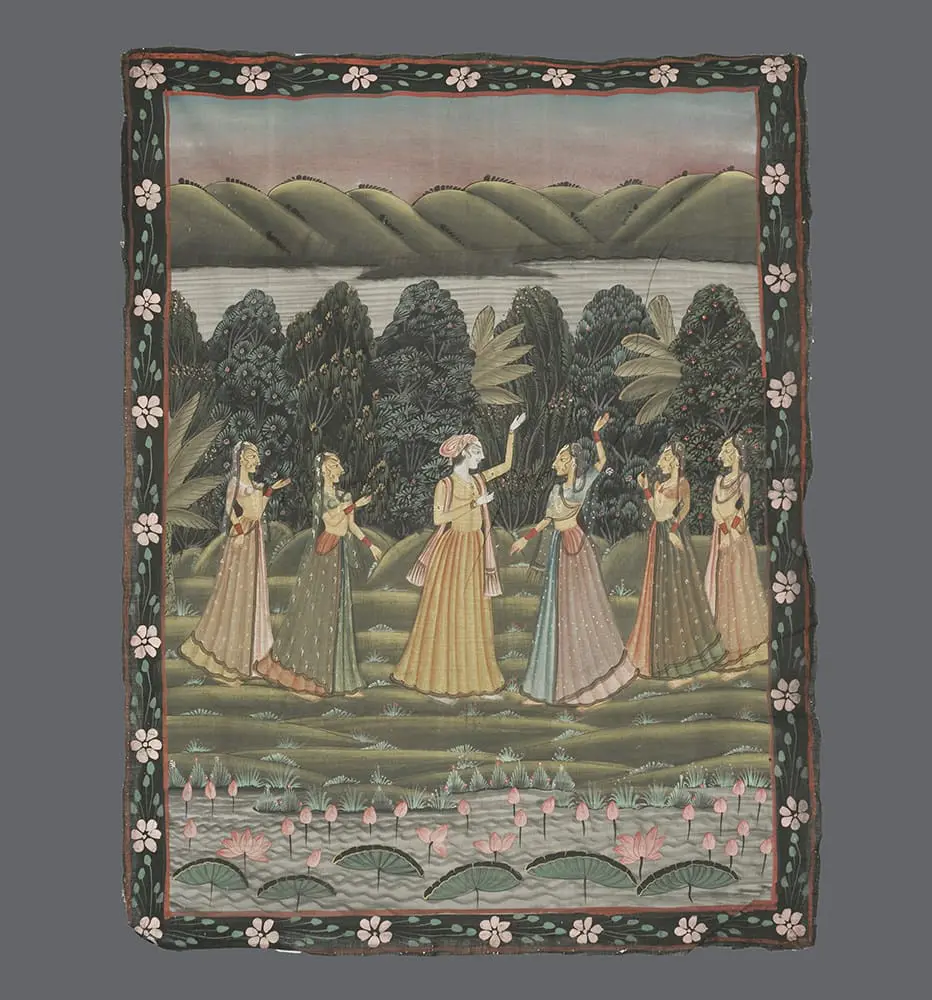

This significant religious textile originates from India and dates to the late 19th or early 20th century, specifically 1875–1925. Measuring 49 inches by 37 inches (124 cm x 94 cm), the artwork is a pichvai, a traditional temple hanging used by the Vaishnava sect to depict scenes related to Srinathji, a manifestation of Lord Krishna. Painted on fine cotton, this piece illustrates a transition from purely ritualistic use to a secular market during the 20th century.
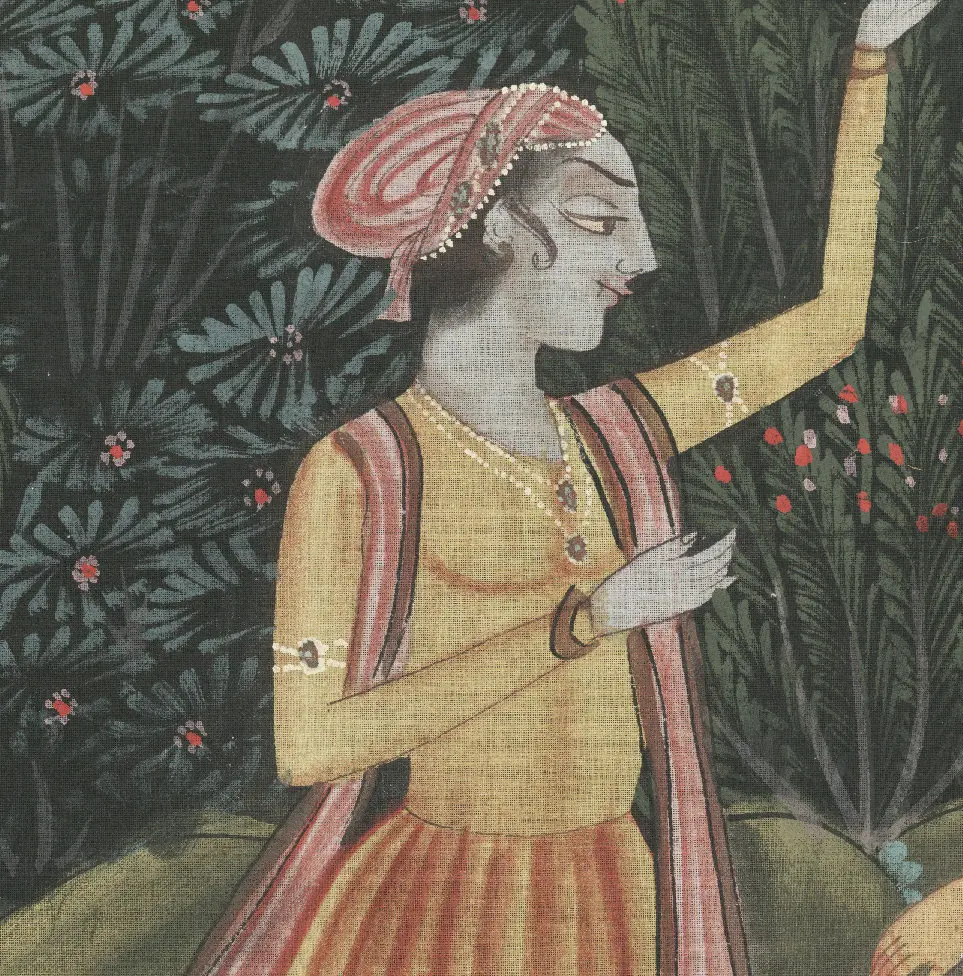
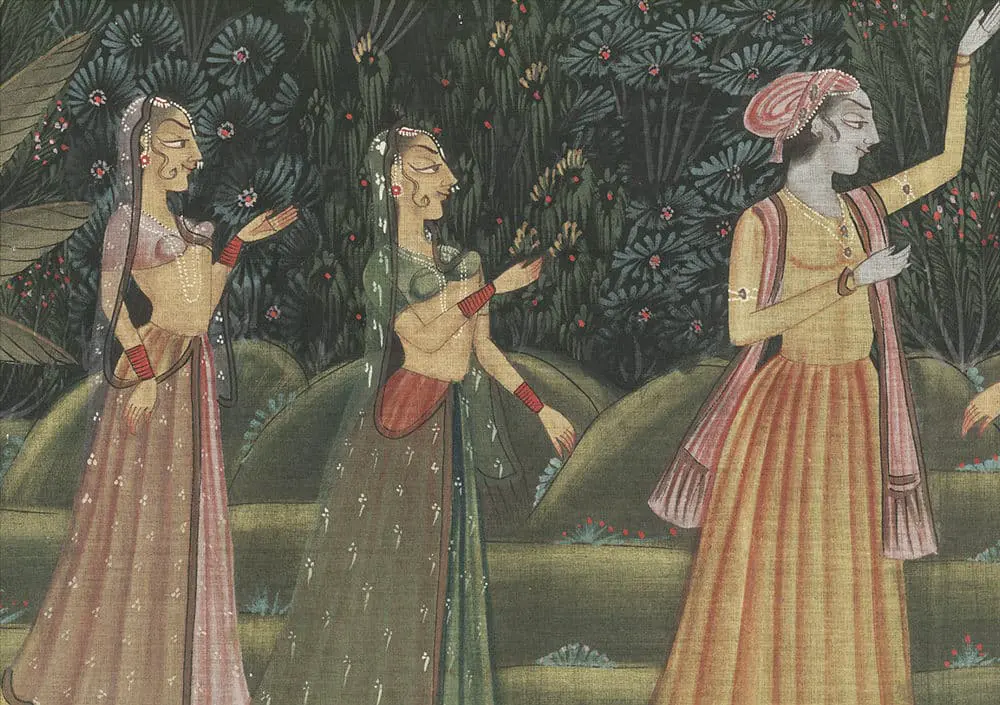
The central composition features Lord Krishna, identifiable by his pale, luminous complexion and yellow dhoti, dancing with five gopis (milkmaids) in a lush, verdant landscape. The figures are arranged in a rhythmic row before a dense forest of dark green trees and broad-leaved plants. In the foreground, a serene pond is filled with pink lotus blossoms and large green pads. The background depicts a series of rolling, grassy hills under a soft lavender and gray sky, while the entire scene is enclosed within a dark border featuring a delicate white floral vine.

Payment Options: We primarily accept PayPal for all transactions. Credit and debit cards are not accepted. If you prefer to pay by personal check instead of PayPal, please note this preference in the "Additional comments" field when placing your order.Ordering Process
To receive your PayPal invoice, simply fill out the form.
Shipping Details: We ship all orders to the address associated with your PayPal payment. Please ensure your PayPal shipping address is current and accurate.A phone number is required during checkout, as our shipping carrier may need to contact you regarding delivery questions.Shipping RatesUnited States and Canada: $20International destinations (air mail): $40
