Copyright © 2026 Yorke Antique Textiles
.avif)

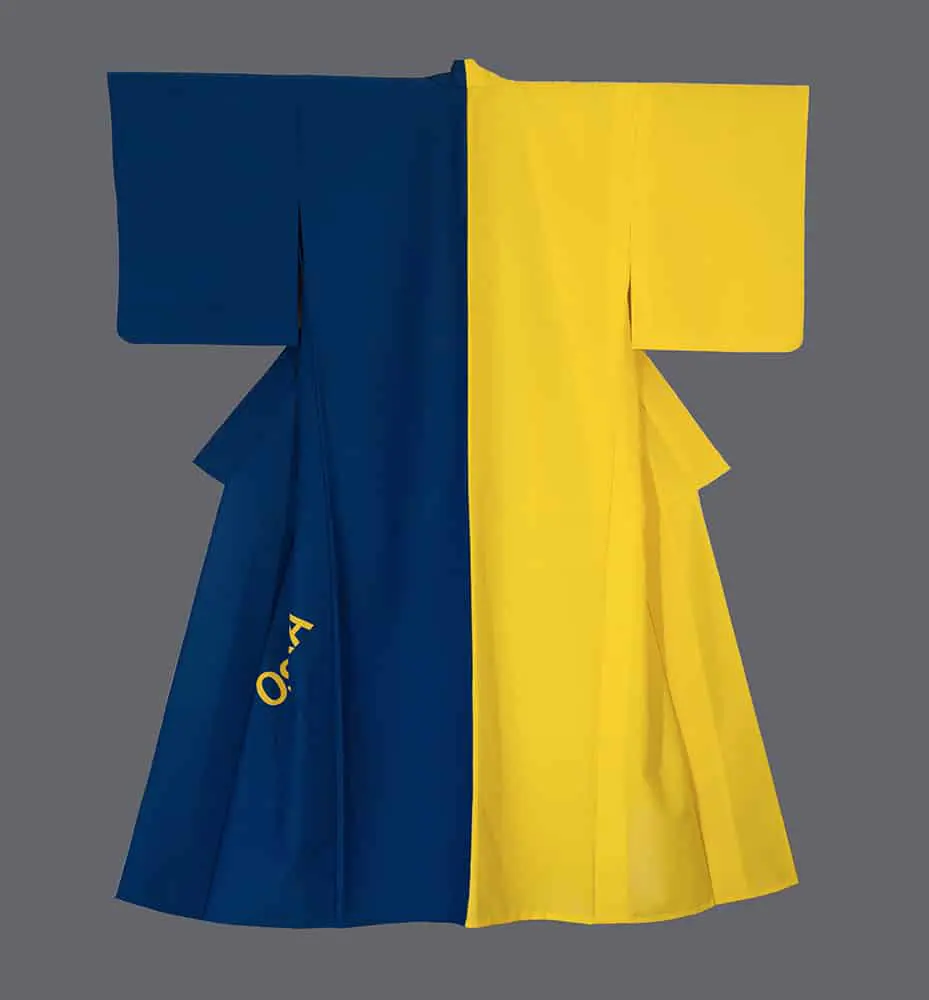
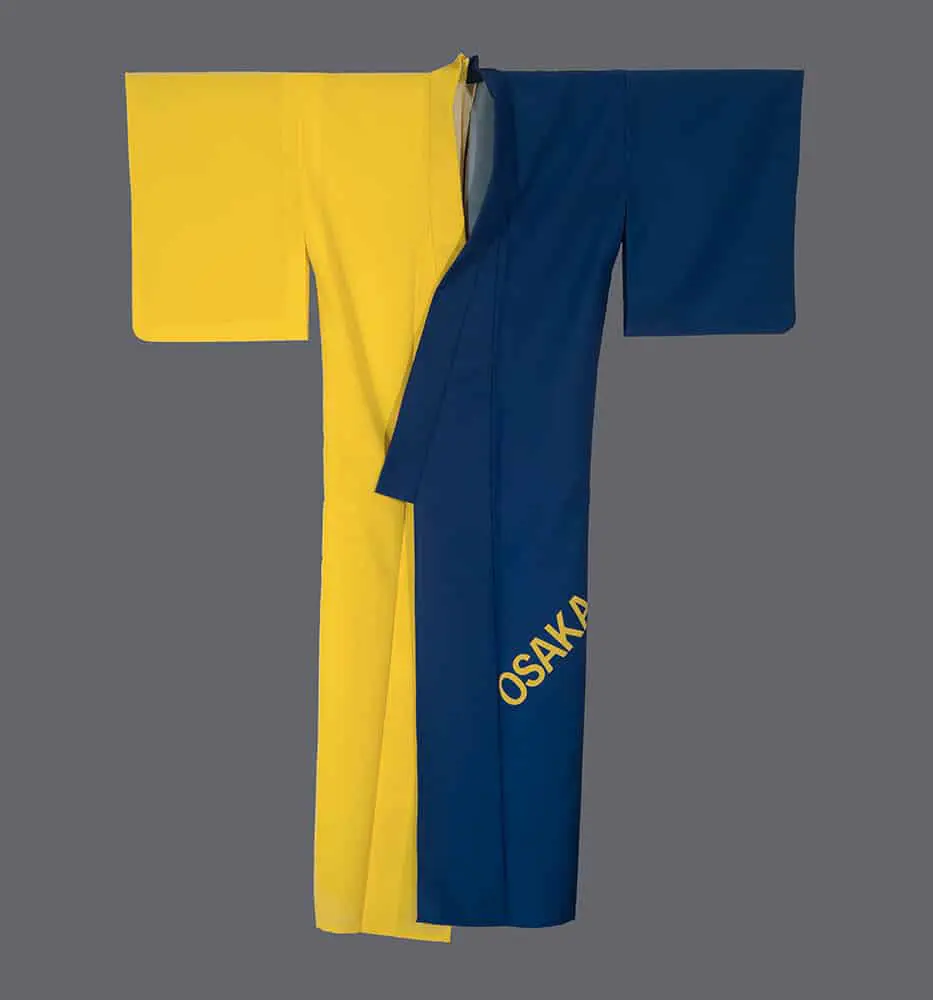
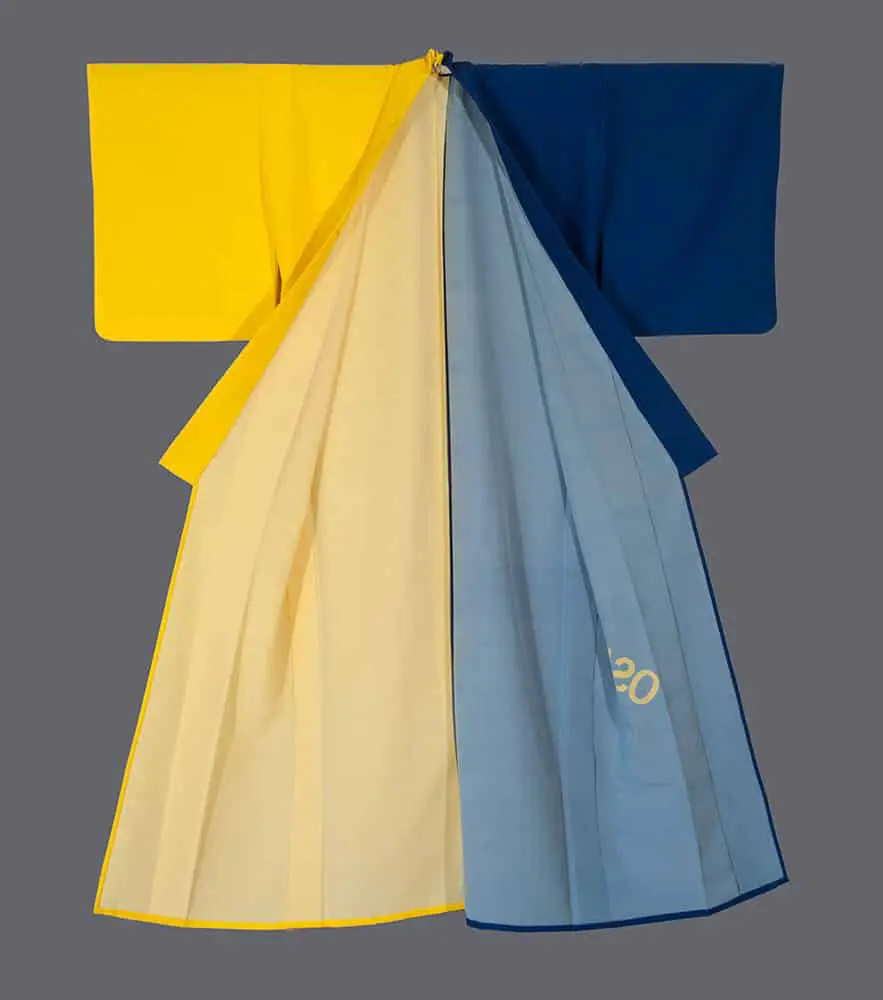
This late 20th-century kimono represents a bold departure from traditional Japanese textile aesthetics, embracing a strikingly modern, graphic sensibility. The garment is constructed from synthetic fiber, reflecting the widespread adoption of man-made textiles in postwar Japan for their durability, affordability, and ease of care.
The design employs dramatic vertical color-blocking, dividing the kimono precisely down the center seam into two contrasting halves: deep indigo blue on one side and vibrant canary yellow on the other. This stark bisection creates a visually arresting composition that reads almost like a flag or corporate identity rather than a traditional garment. The word "Osaka" appears in yellow characters on the blue portion, suggesting this kimono may have served as a promotional garment, festival wear, or uniform associated with Japan's second-largest city—a commercial and cultural hub known for its bold, exuberant character.
The color combination itself carries meaning: blue and yellow together create maximum visual contrast and energy, appropriate for Osaka's reputation as a lively, merchant-class city with a distinctive local pride. Such graphic kimonos emerged during Japan's postwar economic boom and into the bubble economy era, when traditional garment forms were reimagined for contemporary purposes including advertising, team identification, and pop culture expression. This piece exemplifies how the kimono silhouette—while maintaining its fundamental T-shaped construction—proved remarkably adaptable as a canvas for modern graphic design, bridging centuries of textile tradition with late 20th-century visual culture.
It's in very good condition and measures 50 inches (127 cm) from sleeve-end to sleeve-end, with a height of 62 inches (157 cm).

Payment Options: We primarily accept PayPal for all transactions. Credit and debit cards are not accepted. If you prefer to pay by personal check instead of PayPal, please note this preference in the "Additional comments" field when placing your order.Ordering Process
To receive your PayPal invoice, simply fill out the form.
Shipping Details: We ship all orders to the address associated with your PayPal payment. Please ensure your PayPal shipping address is current and accurate.A phone number is required during checkout, as our shipping carrier may need to contact you regarding delivery questions.Shipping RatesUnited States and Canada: $20International destinations (air mail): $40
