Copyright © 2026 Yorke Antique Textiles
.avif)

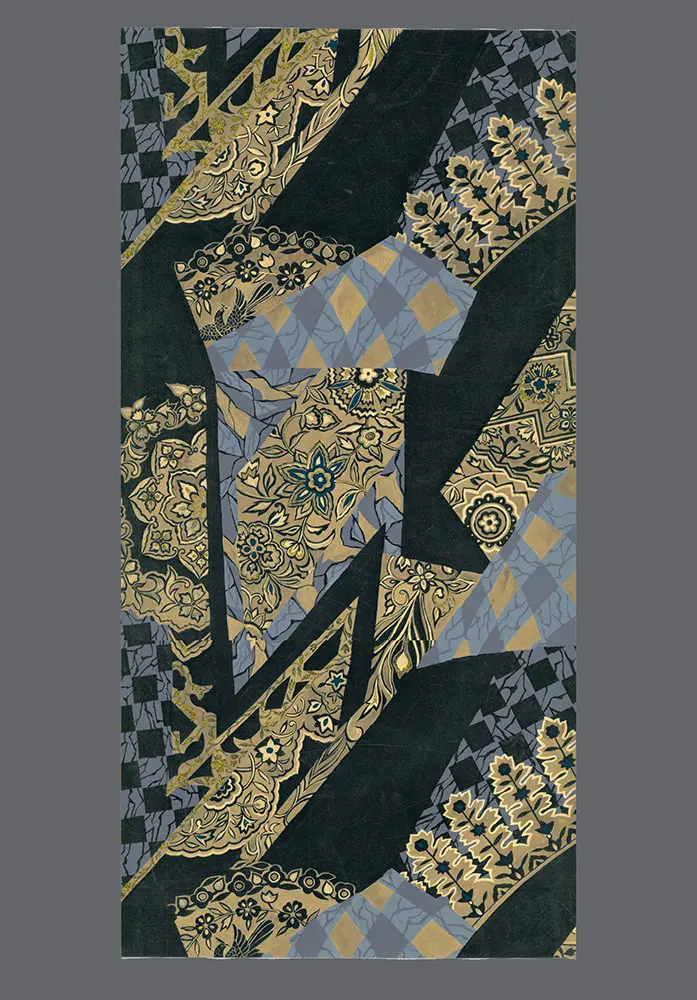
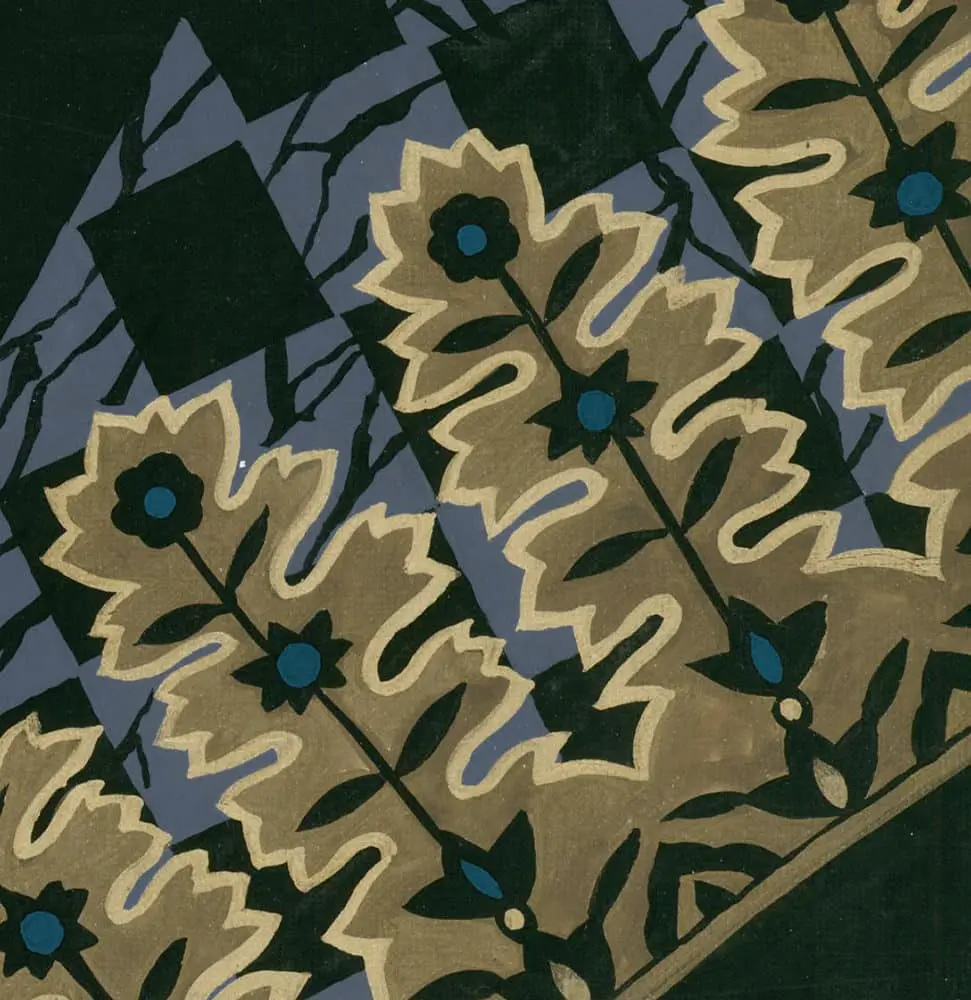
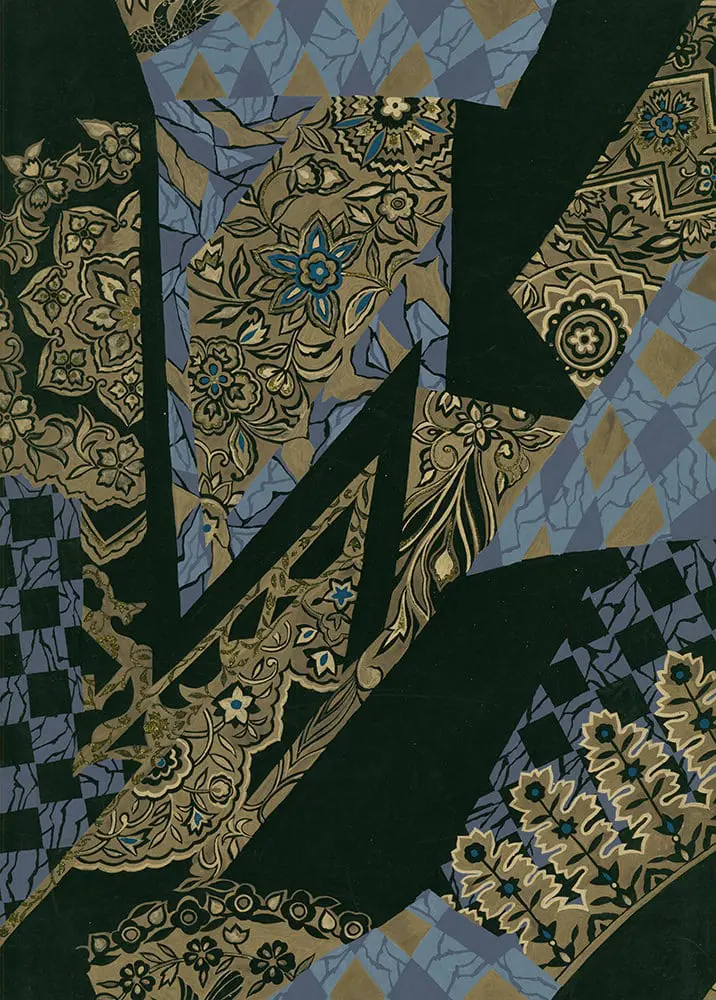
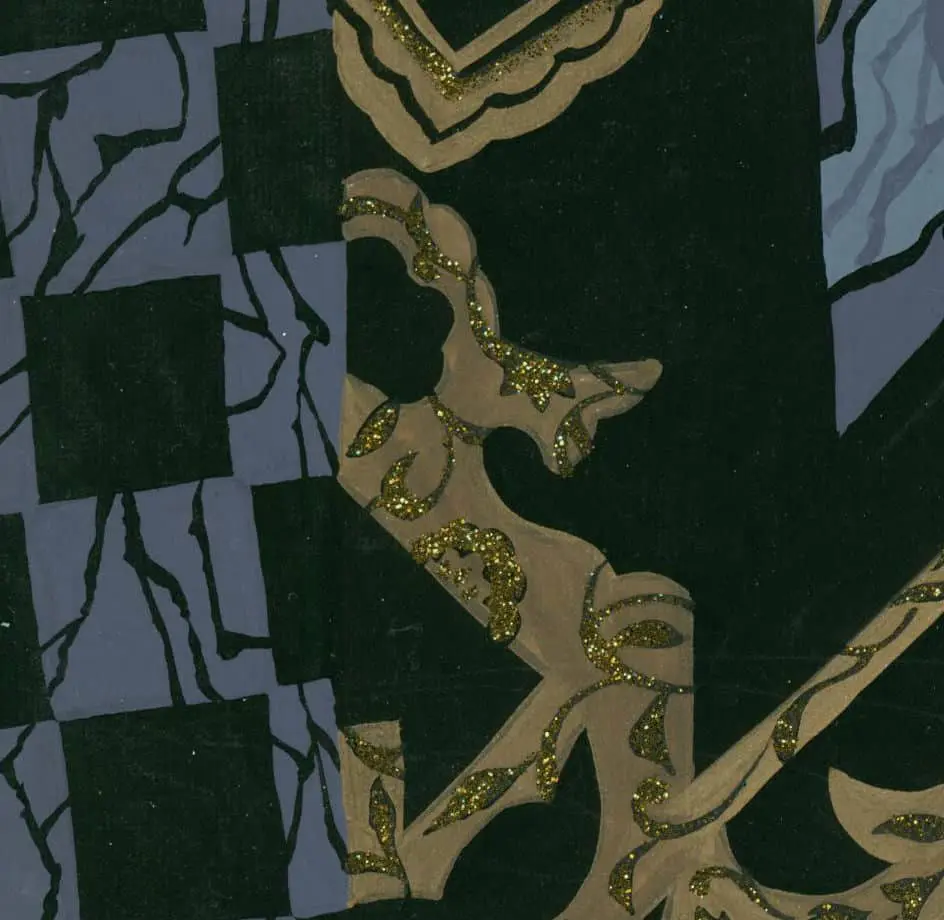

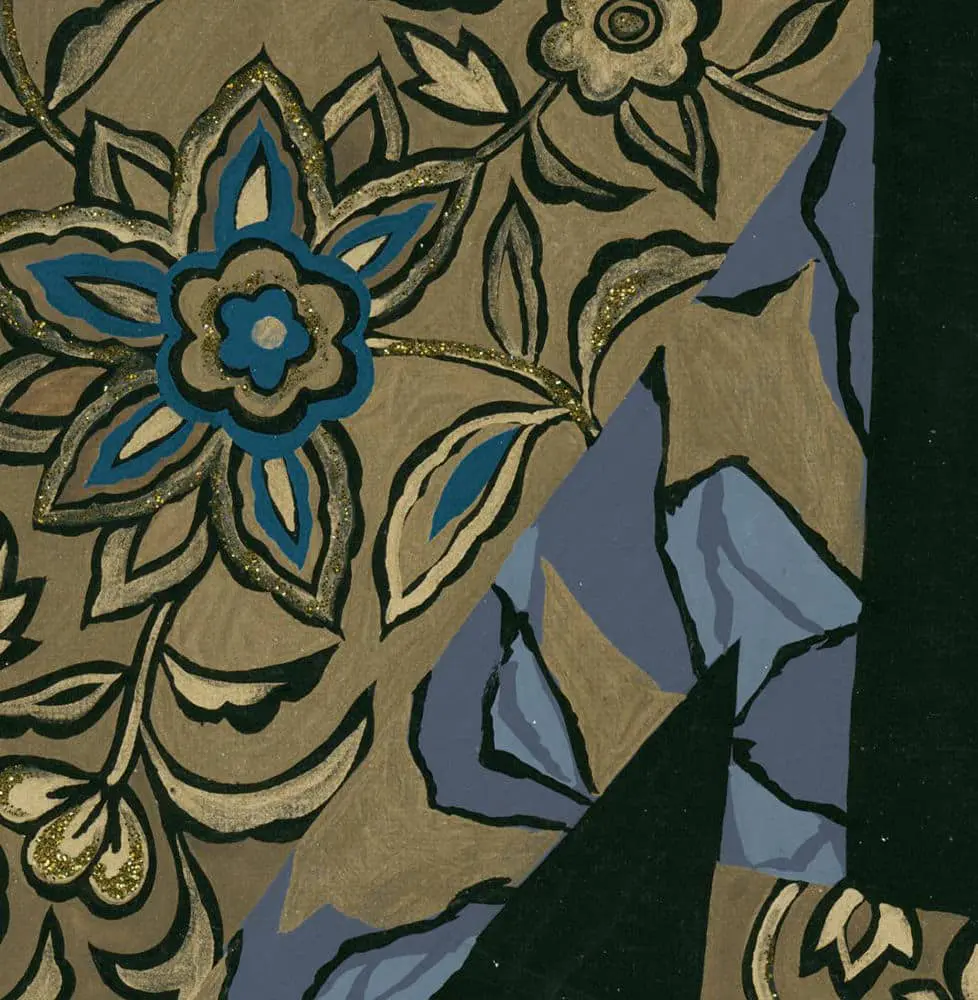
This sophisticated hand-painted artwork is an original and unique creation from Japan, dating to the Mid-Showa period (1950–1970). Measuring 12 inches by 21 inches (30 cm x 53 cm), this distinctive piece was skillfully crafted on relatively thick paper by a seasoned artisan from Kyoto’s renowned Nishijin district. It served as a high-fidelity foundational blueprint or technical prototype for the intricate woven patterns of an obi, the traditional sash worn with a kimono. The artwork remains in very good condition, showcasing a dynamic "patchwork" or yosegi aesthetic that blends traditional motifs with sharp, mid-century modern geometry.
The composition is set against a deep, matte black ground, which provides a bold contrast for a series of fragmented, overlapping panels. These panels feature a diverse array of patterns, including blue and gold diamond-checkered fields, scalloped lace-like borders filled with floral scrolls, and dense, golden botanical medallions. The artist has utilized shimmering metallic-toned paints and precise, ink-black linework to define the intricate floral details and the sharp, angular intersections of the various panels. This rhythmic arrangement of disparate textures and shapes creates a sense of profound visual depth, perfectly designed to remain engaging as the obi is wrapped and knotted.

Payment Options: We primarily accept PayPal for all transactions. Credit and debit cards are not accepted. If you prefer to pay by personal check instead of PayPal, please note this preference in the "Additional comments" field when placing your order.Ordering Process
To receive your PayPal invoice, simply fill out the form.
Shipping Details: We ship all orders to the address associated with your PayPal payment. Please ensure your PayPal shipping address is current and accurate.A phone number is required during checkout, as our shipping carrier may need to contact you regarding delivery questions.Shipping RatesUnited States and Canada: $20International destinations (air mail): $40
