Copyright © 2026 Yorke Antique Textiles
.avif)

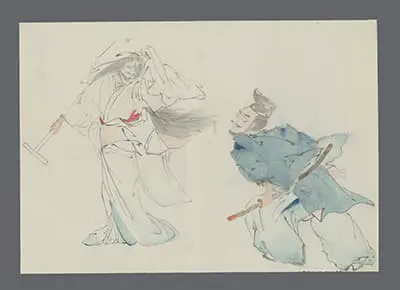
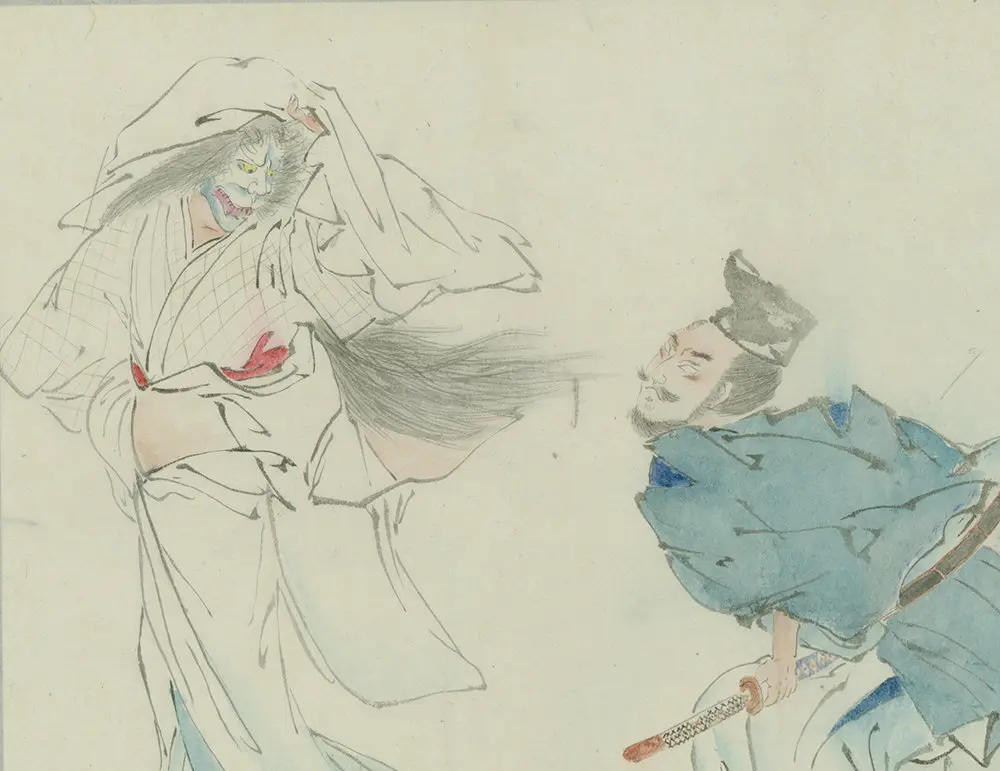
This expressive hand-painted drawing is an original hinagata (kimono design template) from Japan, dating to the Meiji period (1868–1912). Executed on traditional washi paper in Shizuoka prefecture, this piece served as a vital dyeing sample for kimono silk artisans, providing a visual blueprint for complex figurative work. The artwork measures 10 inches by 15 inches (25 cm x 38 cm) and remains in excellent condition, showcasing the fluid, calligraphic brushwork characteristic of the late 19th-century Kyōsai school of painting.
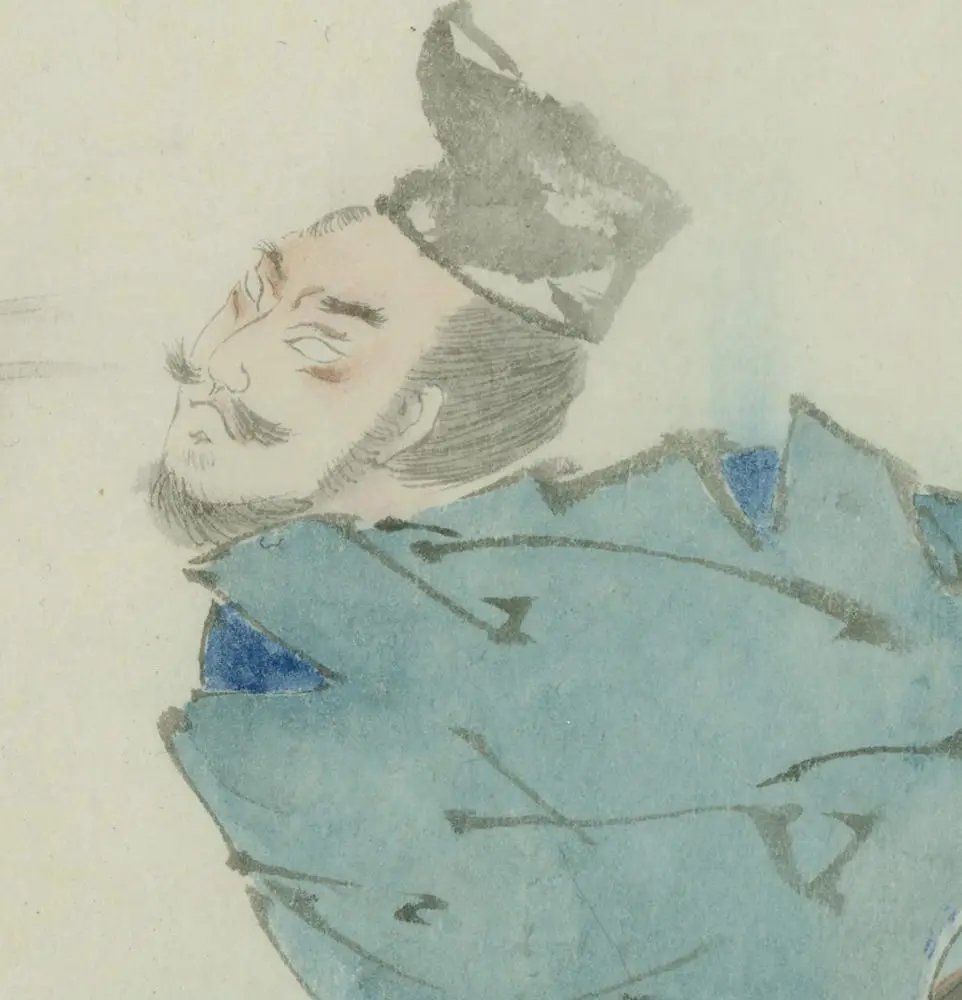
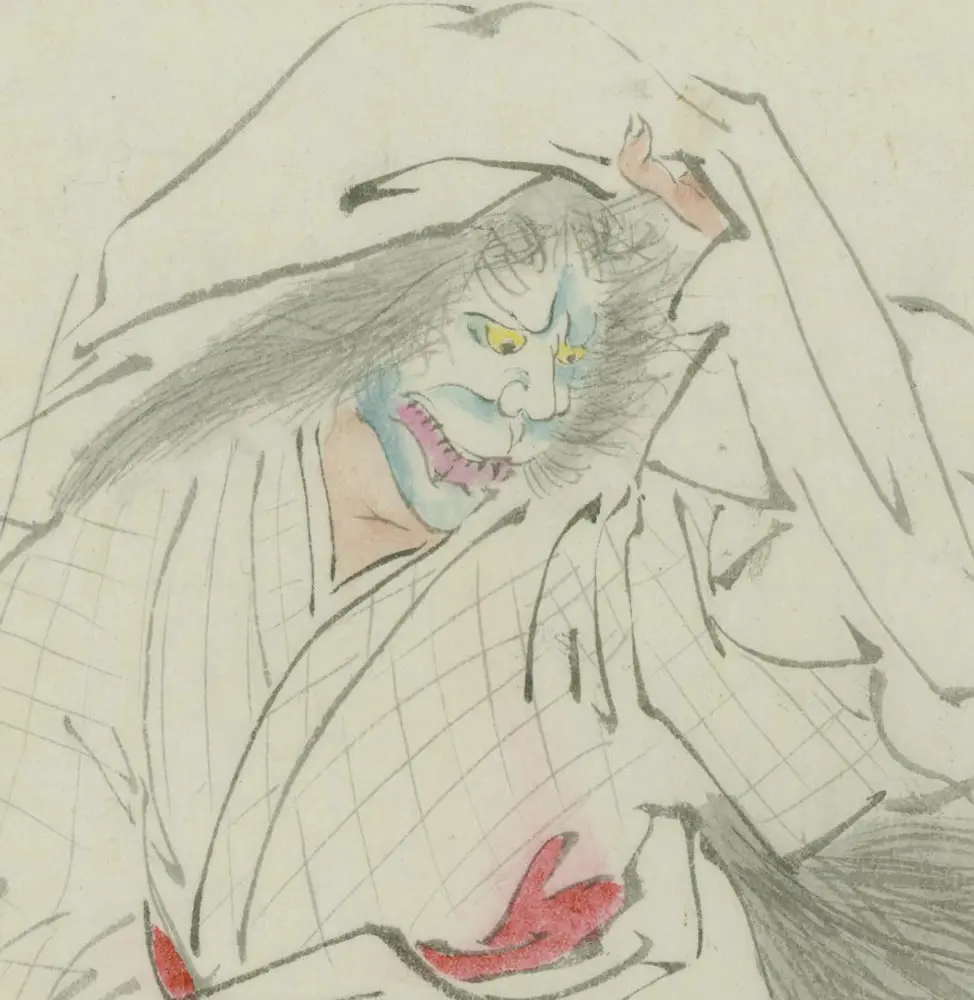
The composition depicts two figures from Noh or Kabuki theatre, rendered with a sense of dramatic, suspended movement. On the left, a ghostly female figure, possibly a yūrei or a character from a supernatural play, is dressed in flowing white robes with a striking red obi accent. Her long, dark hair sweeps across her face as she holds a small ritualistic tool. To the right, a male figure—likely a samurai or a high-ranking official—is captured in a dynamic crouch, dressed in voluminous indigo-blue hakama and carrying a katana. The artist used light washes of watercolor and sharp ink outlines to define the characters, leaving much of the washi paper blank to emphasize the theatrical tension between the two subjects.

Payment Options: We primarily accept PayPal for all transactions. Credit and debit cards are not accepted. If you prefer to pay by personal check instead of PayPal, please note this preference in the "Additional comments" field when placing your order.Ordering Process
To receive your PayPal invoice, simply fill out the form.
Shipping Details: We ship all orders to the address associated with your PayPal payment. Please ensure your PayPal shipping address is current and accurate.A phone number is required during checkout, as our shipping carrier may need to contact you regarding delivery questions.Shipping RatesUnited States and Canada: $20International destinations (air mail): $40
