Copyright © 2026 Yorke Antique Textiles
.avif)


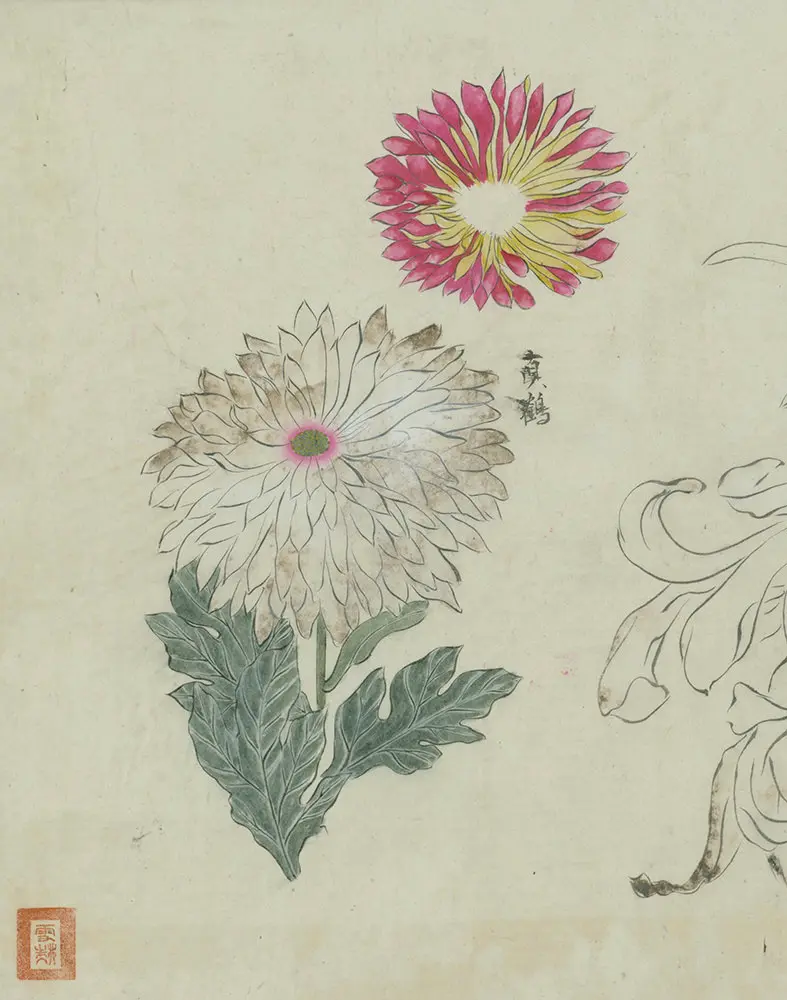
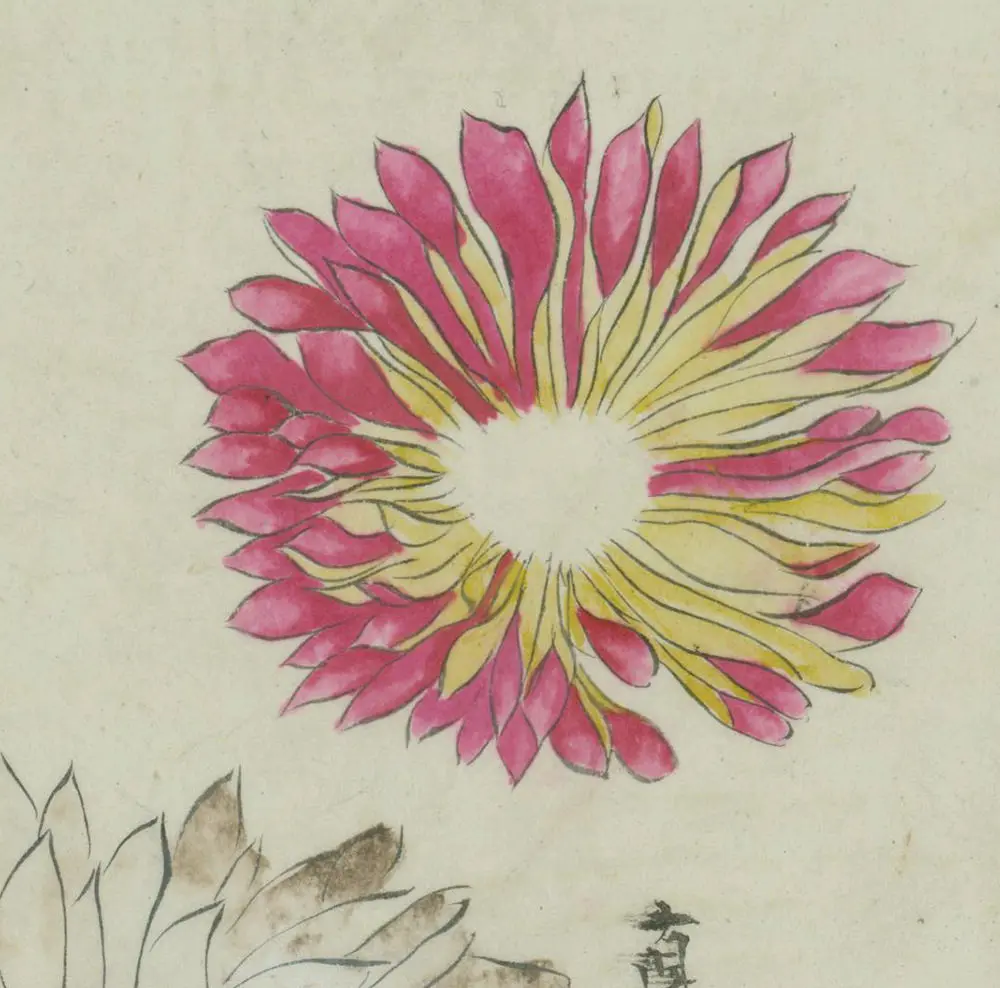
This exquisite hand-painted artwork is an original hinagata drawing from Japan, dating to the Meiji period (1868–1912). Originating from Shizuoka prefecture, this piece was meticulously crafted on traditional Japanese washi paper to serve as a technical dyeing sample for kimono silk dyers. Measuring approximately 10 inches by 15 inches (25 cm x 38 cm), the drawing remains in excellent condition and showcases the remarkable botanical precision and aesthetic variety of Meiji-era textile artists.
The composition is a detailed study of the chrysanthemum (kiku), Japan's national flower and a symbol of longevity and the imperial family. The page features four distinct renderings of the flower, showcasing different varieties and stages of bloom. On the left, a fully realized chrysanthemum is depicted with soft cream petals and a vibrant pink center, supported by deep green, serrated leaves. Above it, a smaller, striking blossom is rendered in bold magenta with yellow highlights. The right side of the page features larger, more complex "spider" chrysanthemums with elongated, curling petals; one is a delicate line drawing, while the other includes subtle ink washes to suggest volume. Elegant Japanese calligraphy and a small red artist's seal flank the floral studies, likely denoting the specific variety or workshop archive.

Payment Options: We primarily accept PayPal for all transactions. Credit and debit cards are not accepted. If you prefer to pay by personal check instead of PayPal, please note this preference in the "Additional comments" field when placing your order.Ordering Process
To receive your PayPal invoice, simply fill out the form.
Shipping Details: We ship all orders to the address associated with your PayPal payment. Please ensure your PayPal shipping address is current and accurate.A phone number is required during checkout, as our shipping carrier may need to contact you regarding delivery questions.Shipping RatesUnited States and Canada: $20International destinations (air mail): $40
