Copyright © 2026 Yorke Antique Textiles
.avif)

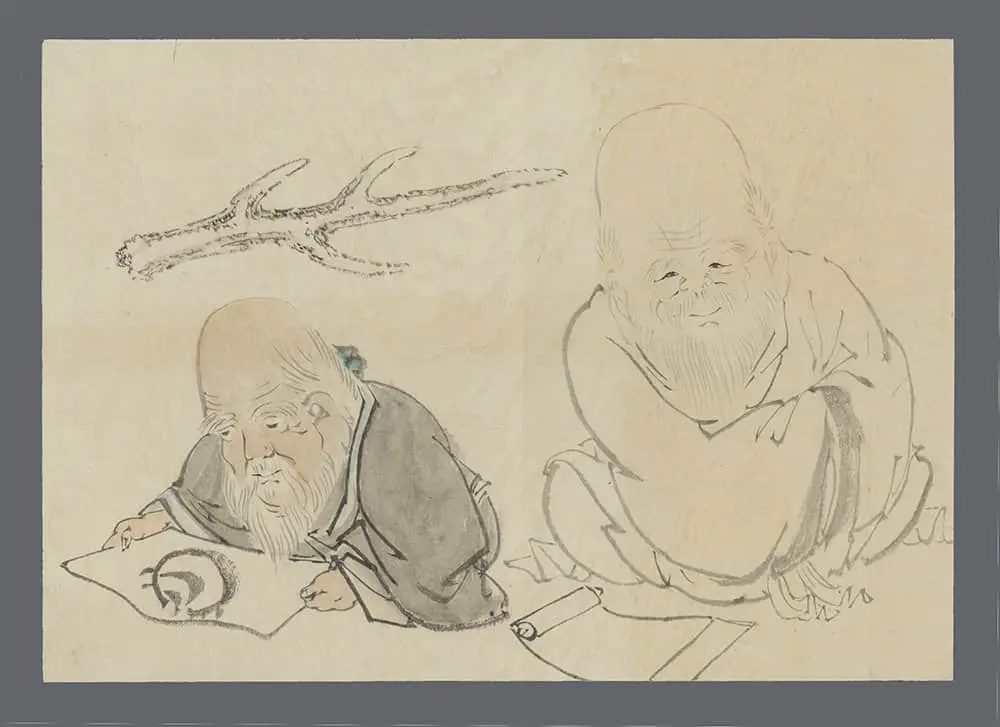
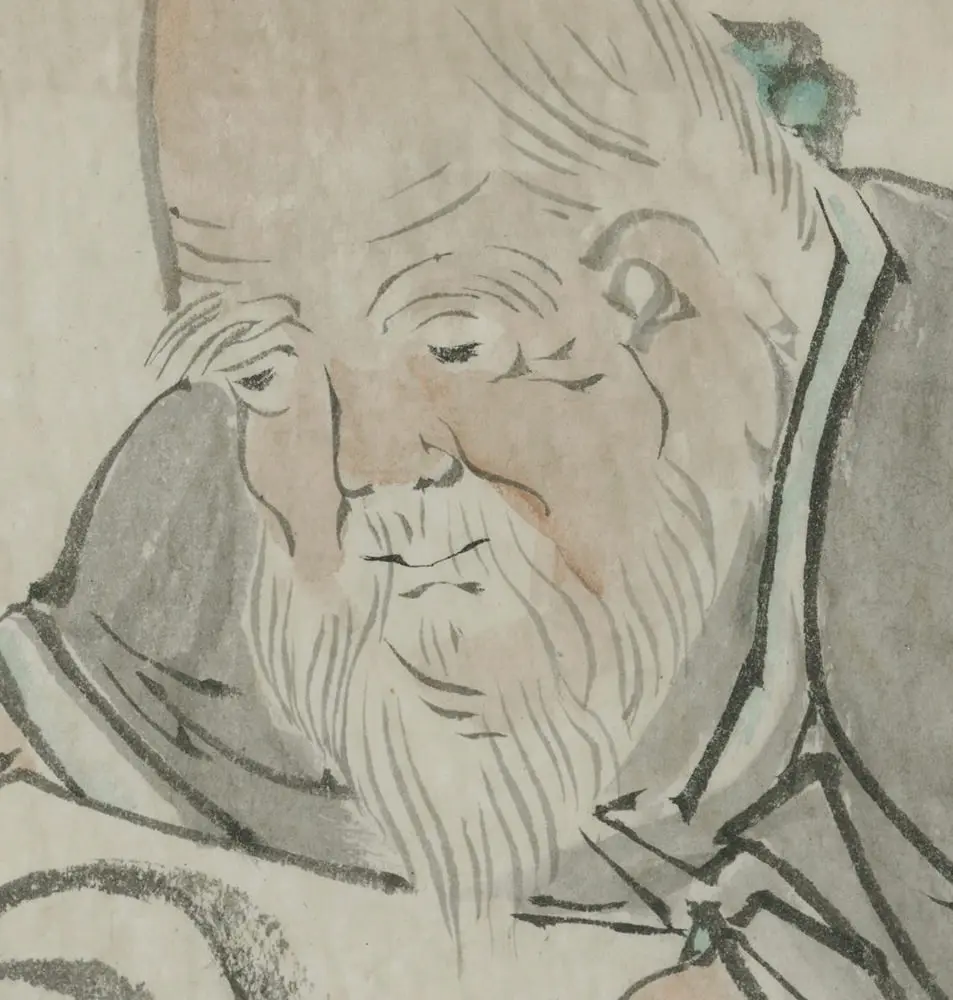
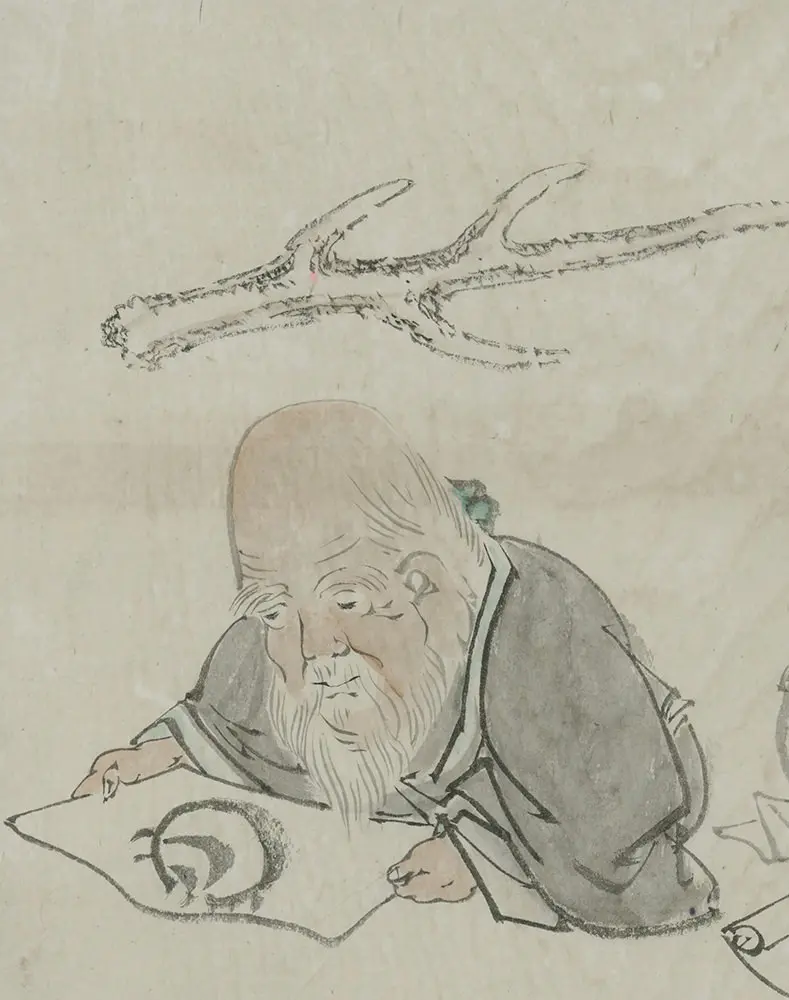
This fascinating hand-painted artwork is an original hinagata drawing from Japan, dating to the Meiji period (1868–1912). Originating from Shizuoka prefecture, this piece was meticulously crafted on traditional Japanese washi paper to serve as a technical dyeing sample for kimono silk dyers. Measuring approximately 10 inches by 15 inches (25 cm x 38 cm), the drawing remains in excellent condition and showcases the narrative and figurative artistry often employed in high-end men's kimono or formal garment linings.
The composition features two character studies of a venerable sage or scholar, possibly representing a figure from classical folklore. On the left, the figure is shown hunched over a piece of paper, focused intently on a circular ink drawing he has just created. To the right, the same figure—or a companion—sits with a serene expression and crossed arms, overlooking an open scroll. Both figures are characterized by high, rounded foreheads and flowing white beards, rendered with expressive ink outlines and soft grey and tan washes. Floating above them is a single, gnarled branch, perhaps a piece of plum wood or coral, which adds a touch of scholarly "literati" symbolism to the scene.

Payment Options: We primarily accept PayPal for all transactions. Credit and debit cards are not accepted. If you prefer to pay by personal check instead of PayPal, please note this preference in the "Additional comments" field when placing your order.Ordering Process
To receive your PayPal invoice, simply fill out the form.
Shipping Details: We ship all orders to the address associated with your PayPal payment. Please ensure your PayPal shipping address is current and accurate.A phone number is required during checkout, as our shipping carrier may need to contact you regarding delivery questions.Shipping RatesUnited States and Canada: $20International destinations (air mail): $40
