Copyright © 2026 Yorke Antique Textiles
.avif)

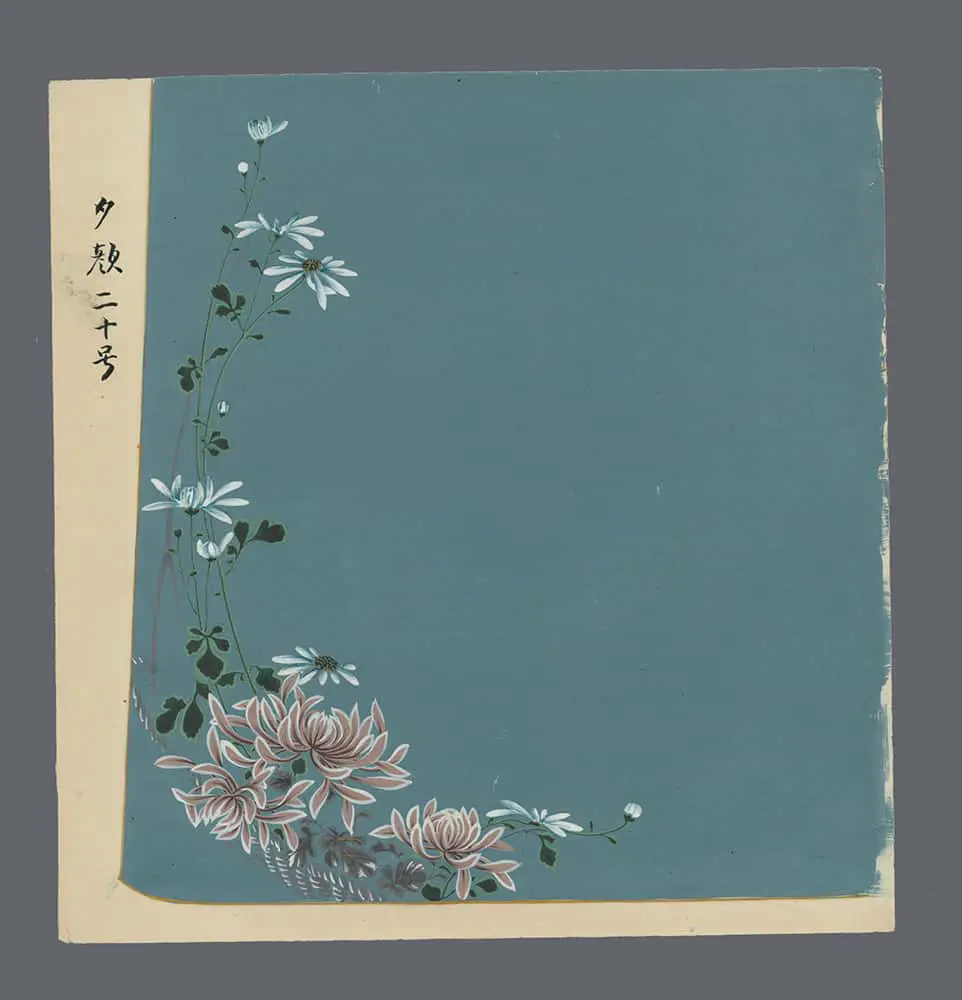
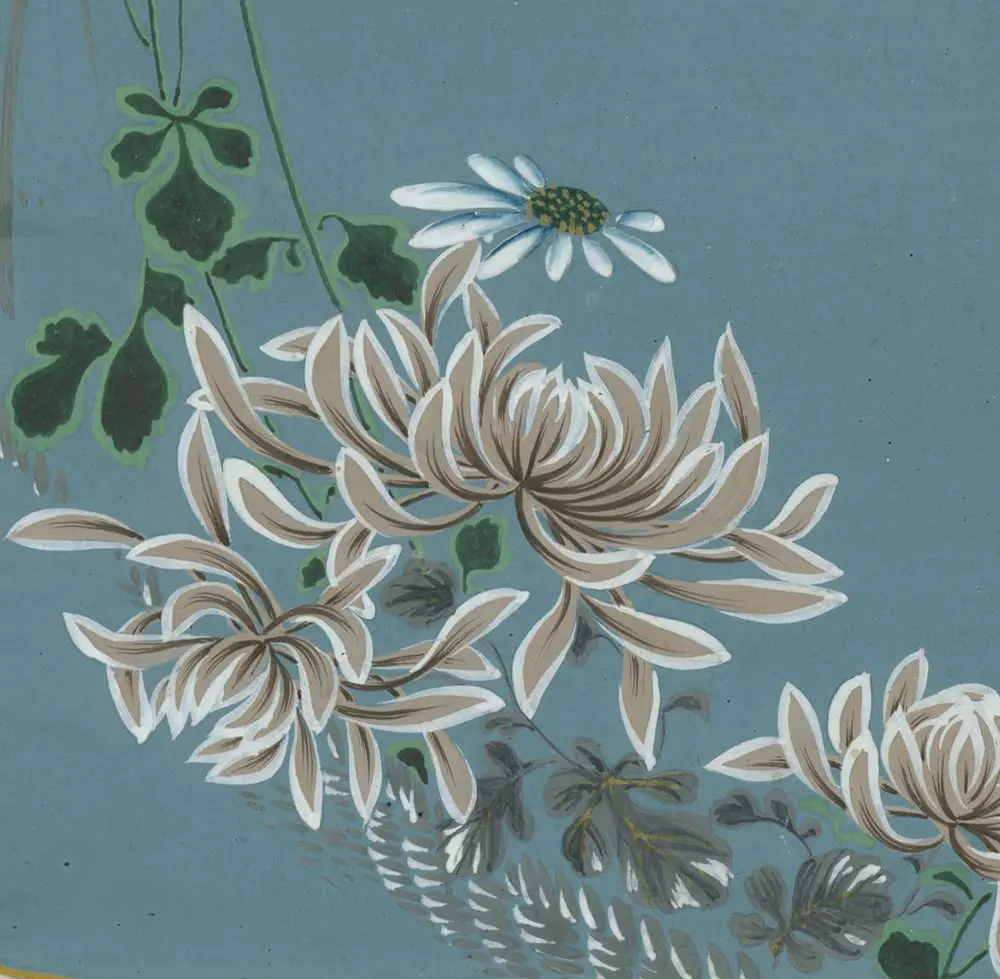
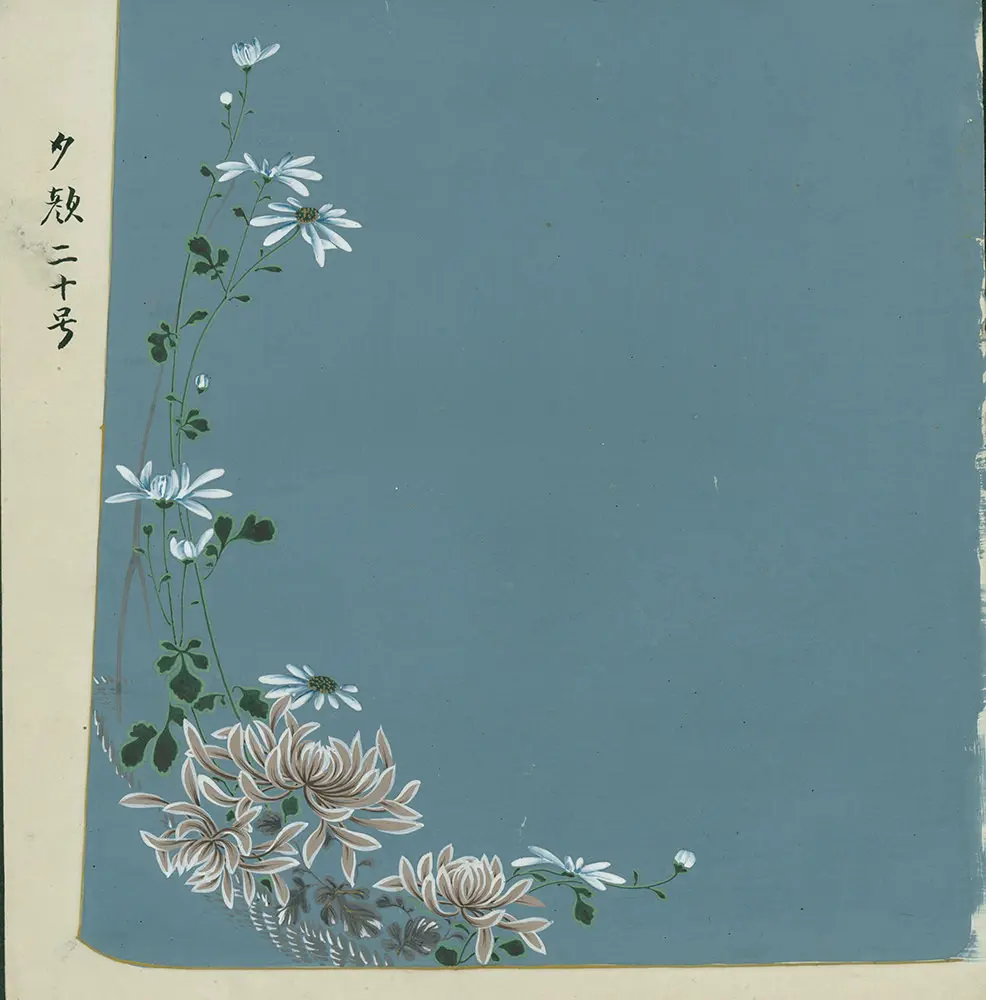
This elegant hand-painted artwork is an original hinagata drawing from Japan, dating to the Meiji period (1868–1912). Originally crafted in Shizuoka prefecture, this piece served as a vital dyeing sample for kimono silk dyers, professional artisans who held the crucial responsibility of translating artistic visions into wearable textile patterns. Measuring approximately 10 inches by 11 inches (25 cm x 28 cm), the drawing is executed on traditional Japanese paper and remains in very good condition, preserving the vivid pigments and delicate linework characteristic of late 19th-century design.
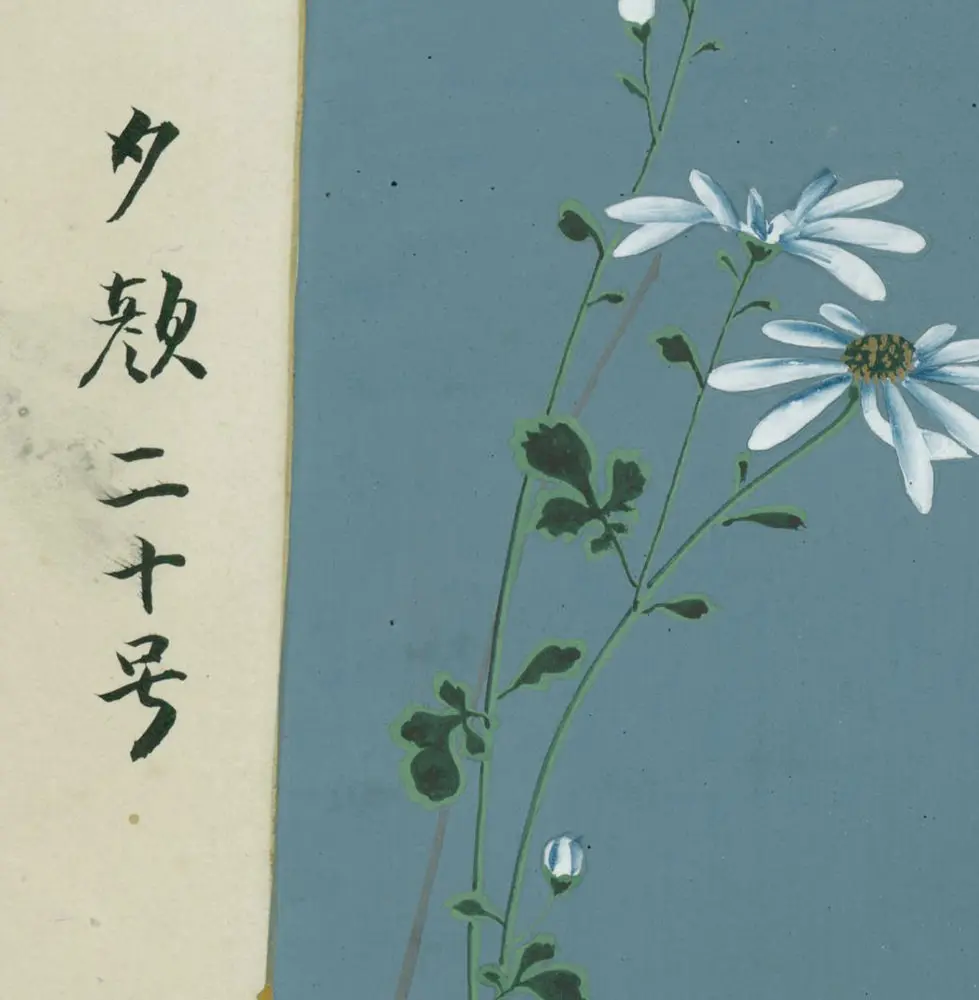
The composition features a graceful, arching arrangement of chrysanthemums (kiku) and slender wildflowers set against a serene, teal-blue ground. In the lower-left corner, large blossoms are rendered in a sophisticated dusty rose with white tipping, while a delicate vine of white, daisy-like wildflowers ascends toward the top left. The design utilizes a classic asymmetrical "L-shaped" layout, leaving the majority of the teal field as open negative space to evoke a sense of autumnal air and light. On the left-hand margin, a cream-colored mounting strip contains vertical Japanese calligraphy, likely acting as a reference for the dyer's archive or pattern identification.

Payment Options: We primarily accept PayPal for all transactions. Credit and debit cards are not accepted. If you prefer to pay by personal check instead of PayPal, please note this preference in the "Additional comments" field when placing your order.Ordering Process
To receive your PayPal invoice, simply fill out the form.
Shipping Details: We ship all orders to the address associated with your PayPal payment. Please ensure your PayPal shipping address is current and accurate.A phone number is required during checkout, as our shipping carrier may need to contact you regarding delivery questions.Shipping RatesUnited States and Canada: $20International destinations (air mail): $40
