Copyright © 2026 Yorke Antique Textiles
.avif)

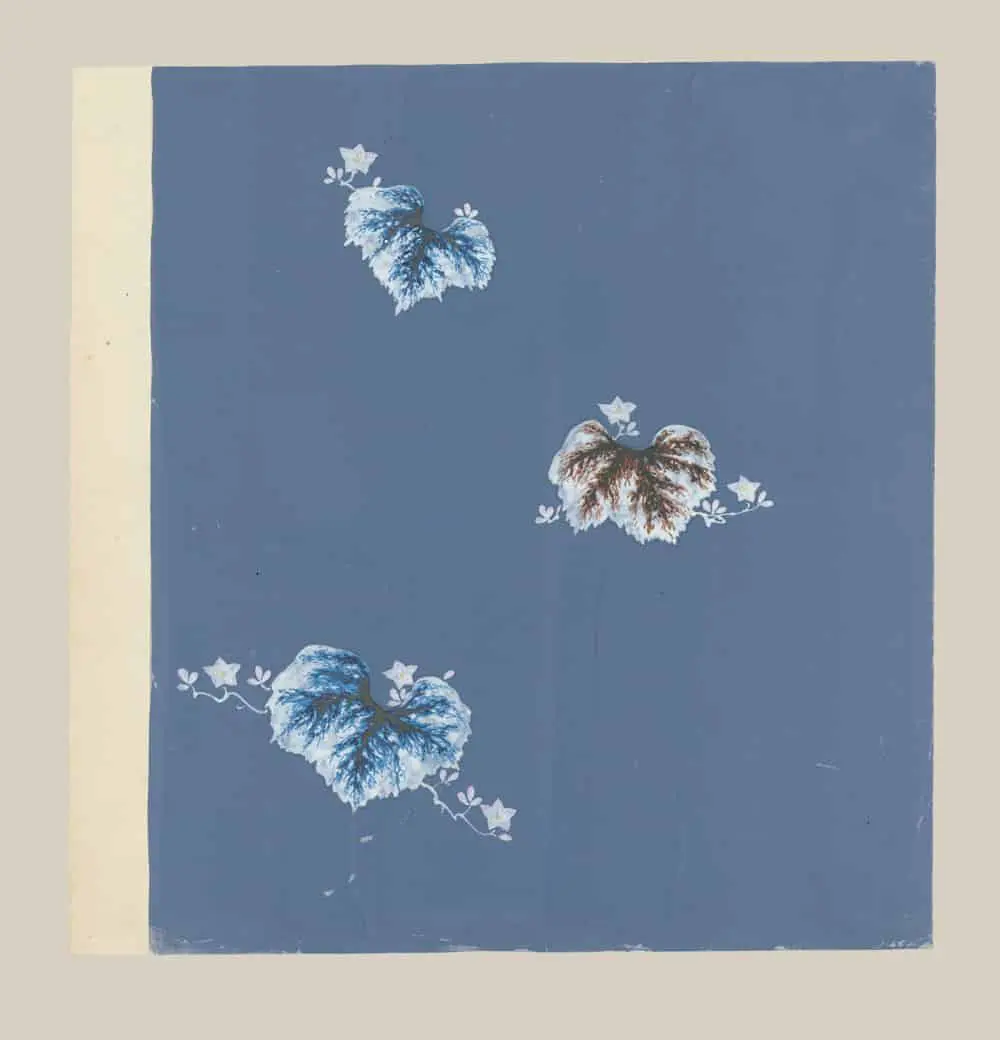
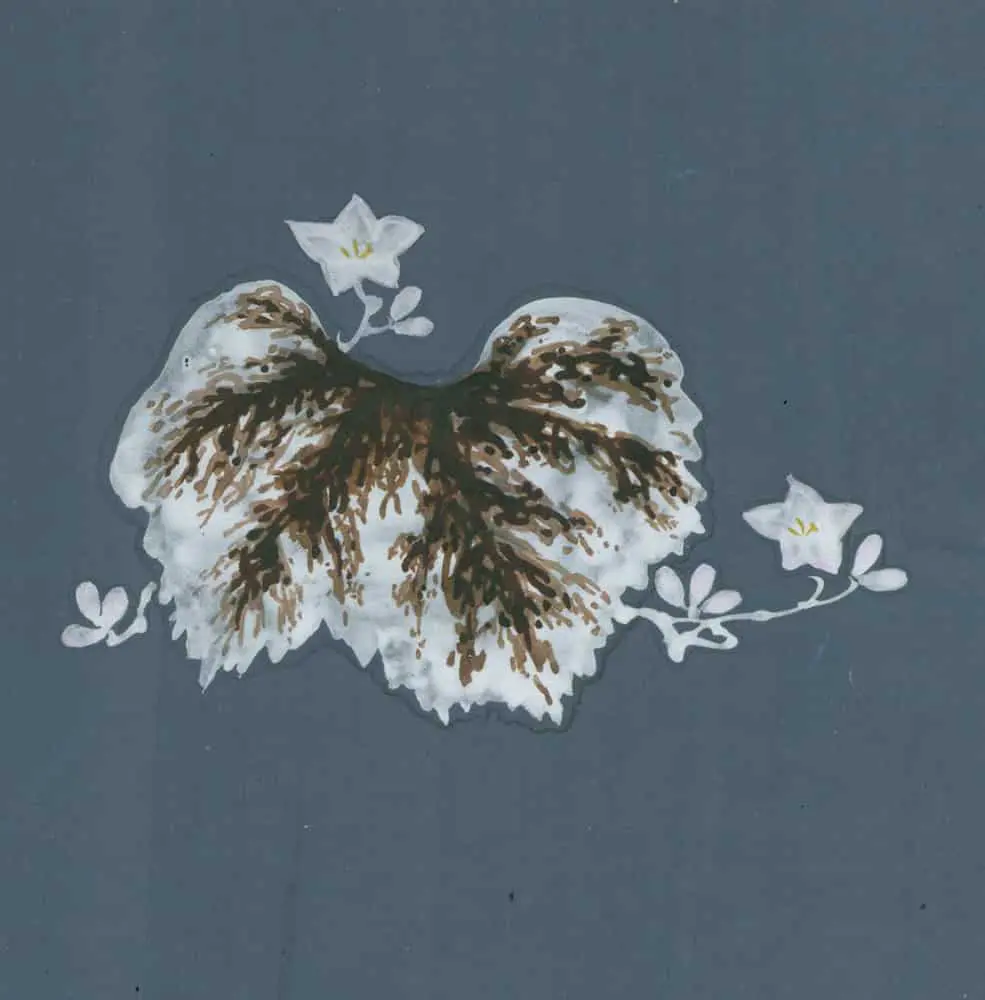
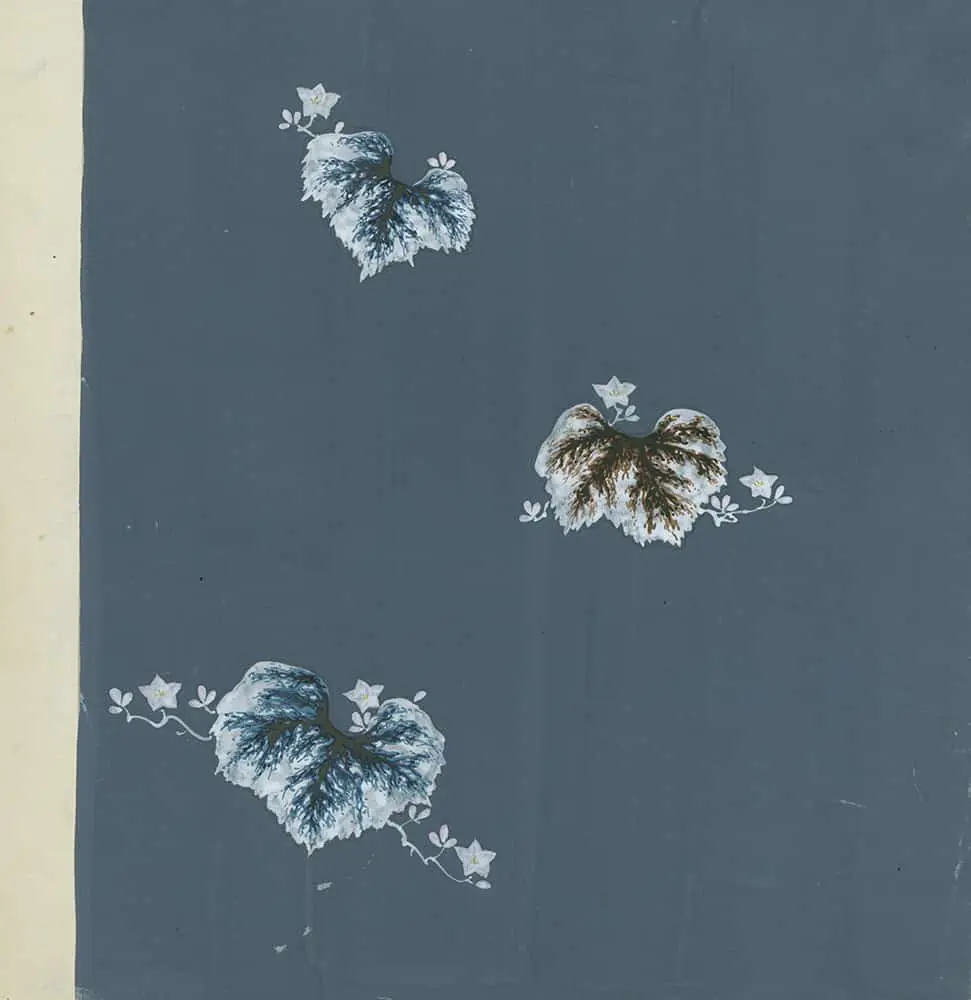

This elegant hand-painted artwork is an original hinagata drawing from Japan, dating to the Meiji period (1868–1912). Originally crafted in Shizuoka prefecture, this piece served as a vital dyeing sample for kimono silk dyers, professional artisans who held the crucial responsibility of translating artistic visions into wearable textile patterns. Measuring approximately 10 inches by 11 inches (25 cm x 28 cm), the drawing is executed on traditional Japanese paper and remains in very good condition, showcasing the sophisticated botanical observation of the era.
The composition features two horizontal bands of trailing vines and bean pods set against a rich, dark mahogany-brown ground. The trifoliate leaves are rendered with a delicate "shading" technique, transitioning from a pale seafoam green to a soft dusty rose. Interspersed among the foliage are elongated bean pods, some partially open to reveal bright golden-yellow beans inside. The vines are depicted with thin, graceful white lines that provide a crisp rhythmic structure to the organic forms. This specific motif, likely representing the ajisai or a similar climbing legume, was intended to showcase the dyer's mastery over fine detail and complex color blending.

Payment Options: We primarily accept PayPal for all transactions. Credit and debit cards are not accepted. If you prefer to pay by personal check instead of PayPal, please note this preference in the "Additional comments" field when placing your order.Ordering Process
To receive your PayPal invoice, simply fill out the form.
Shipping Details: We ship all orders to the address associated with your PayPal payment. Please ensure your PayPal shipping address is current and accurate.A phone number is required during checkout, as our shipping carrier may need to contact you regarding delivery questions.Shipping RatesUnited States and Canada: $20International destinations (air mail): $40
