Copyright © 2026 Yorke Antique Textiles
.avif)

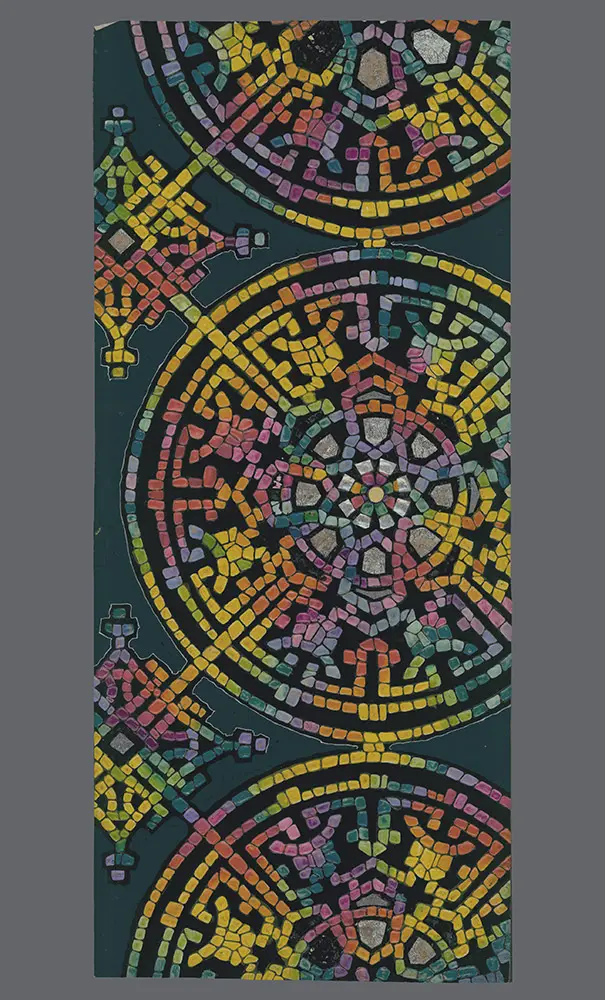
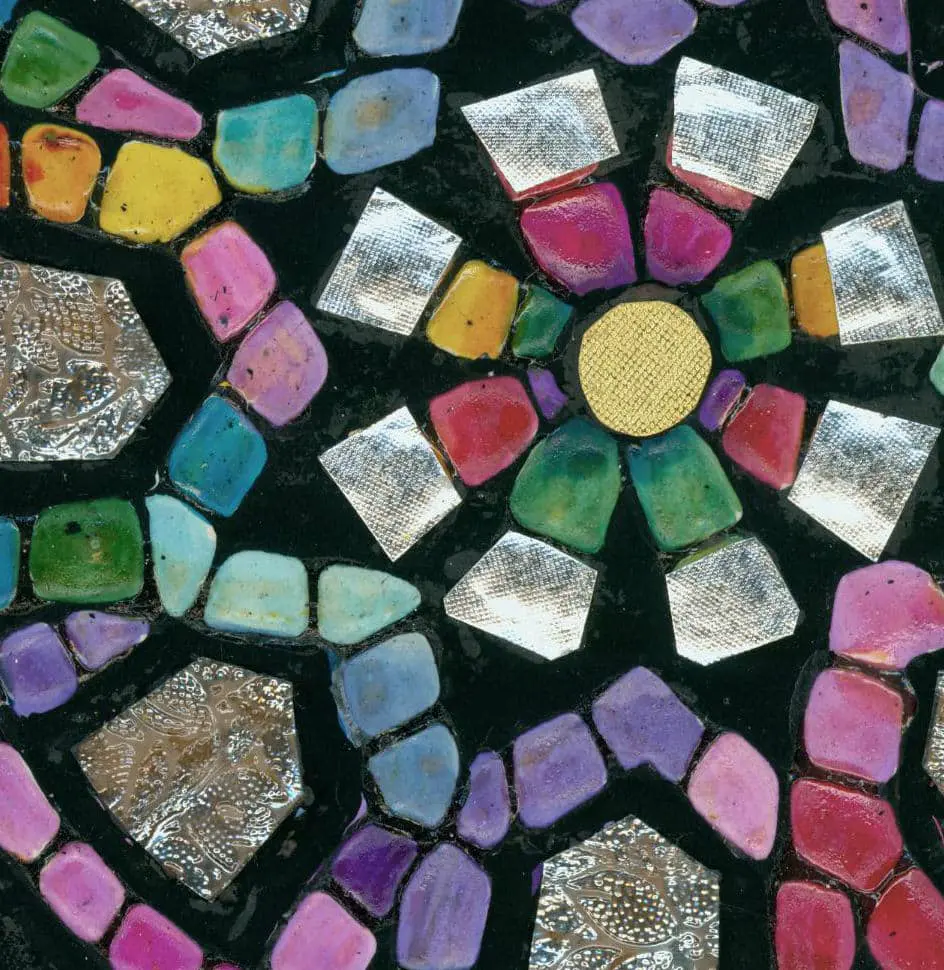
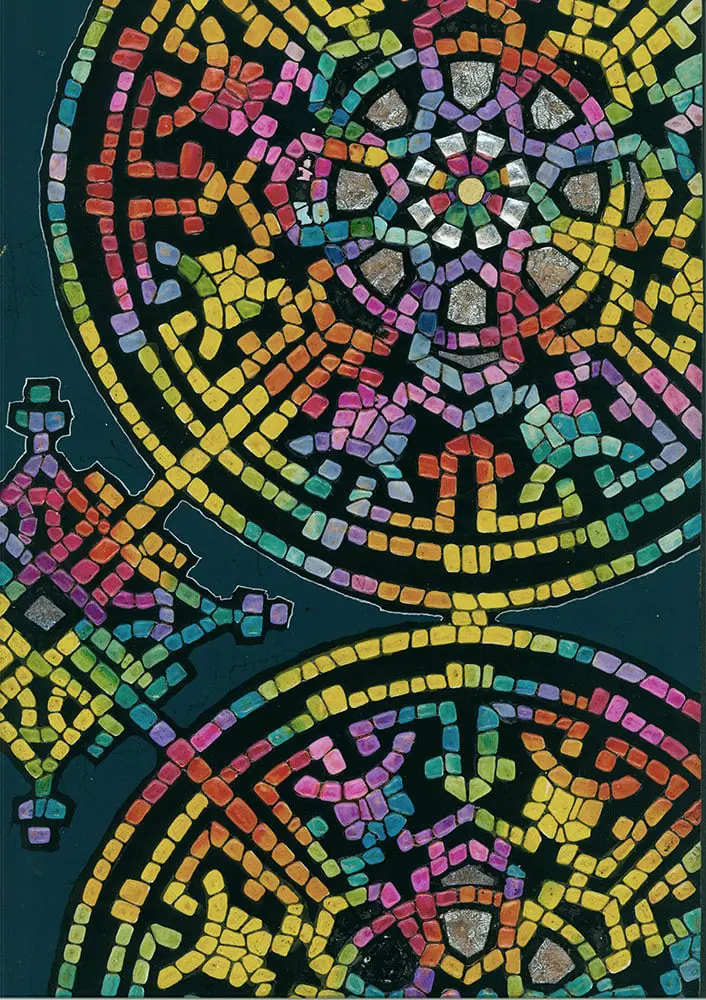
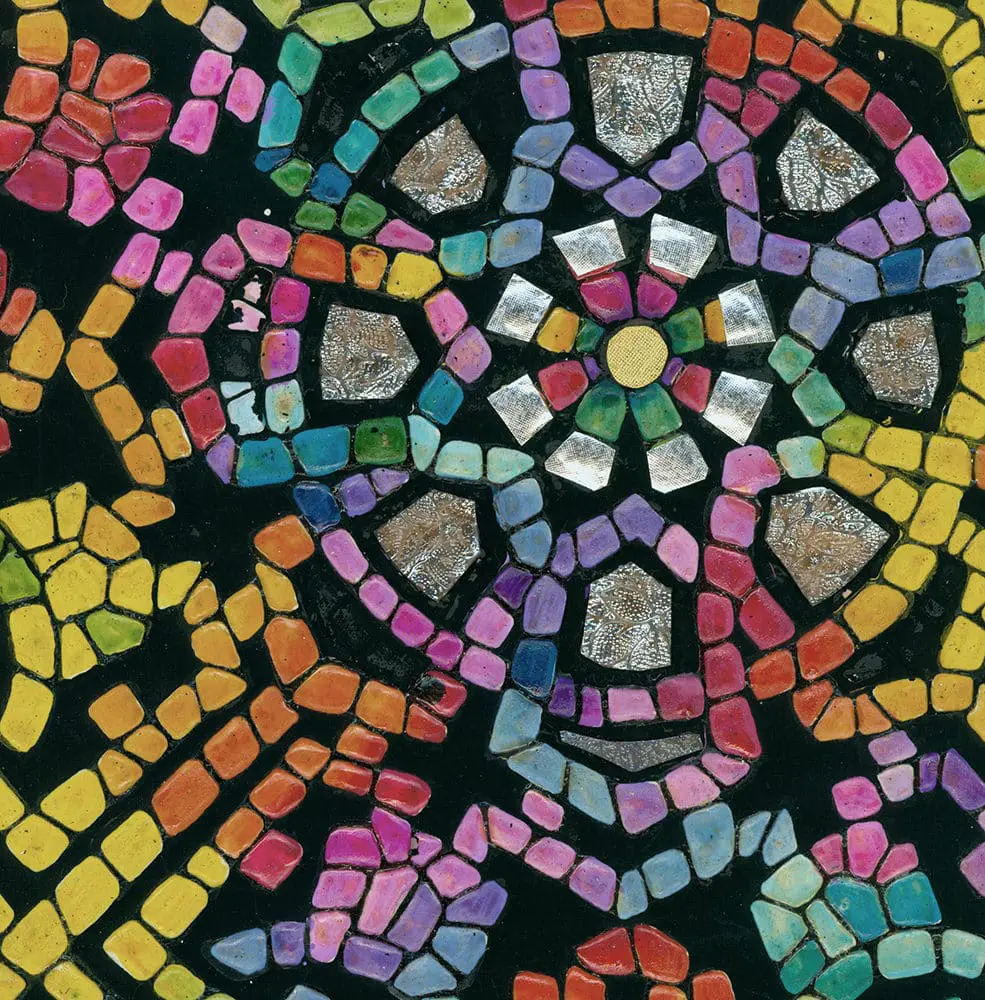
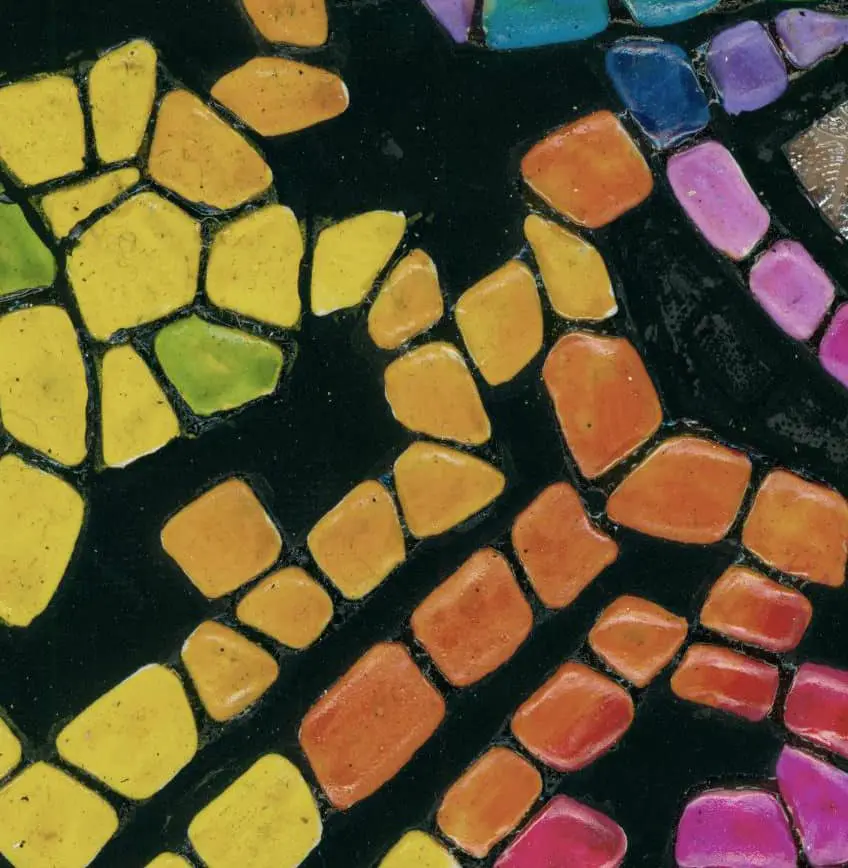
This striking and highly textured hand-painted artwork is an original creation from Japan, dating to the Mid-Showa period (1945–1965). Measuring 12 inches by 27 inches (30 cm x 69 cm), this piece was crafted by a skilled artist in Kyoto’s renowned Nishijin district using paint and metal appliques on thick paper. The artwork remains in very good condition, although it bears the authentic character of its production history with some missing metal appliques; it served as the foundational technical template for a luxury woven obi.
The composition is a bold, geometric departure from traditional floral motifs, featuring large-scale mosaic-style medallions set against a deep teal-blue ground. Each circular medallion is constructed from a vibrant "tesserae" of individual painted blocks in a kaleidoscopic array of pinks, yellows, purples, and greens, all outlined in heavy yellow borders. Interspersed between the primary circles are smaller, diamond-shaped starbursts. The inclusion of silver-toned metal appliques within the central geometry provides a tactile and reflective guide for the Nishijin weaver, indicating where shimmering metallic threads would be integrated into the final silk textile.

Payment Options: We primarily accept PayPal for all transactions. Credit and debit cards are not accepted. If you prefer to pay by personal check instead of PayPal, please note this preference in the "Additional comments" field when placing your order.Ordering Process
To receive your PayPal invoice, simply fill out the form.
Shipping Details: We ship all orders to the address associated with your PayPal payment. Please ensure your PayPal shipping address is current and accurate.A phone number is required during checkout, as our shipping carrier may need to contact you regarding delivery questions.Shipping RatesUnited States and Canada: $20International destinations (air mail): $40
