Copyright © 2026 Yorke Antique Textiles
.avif)

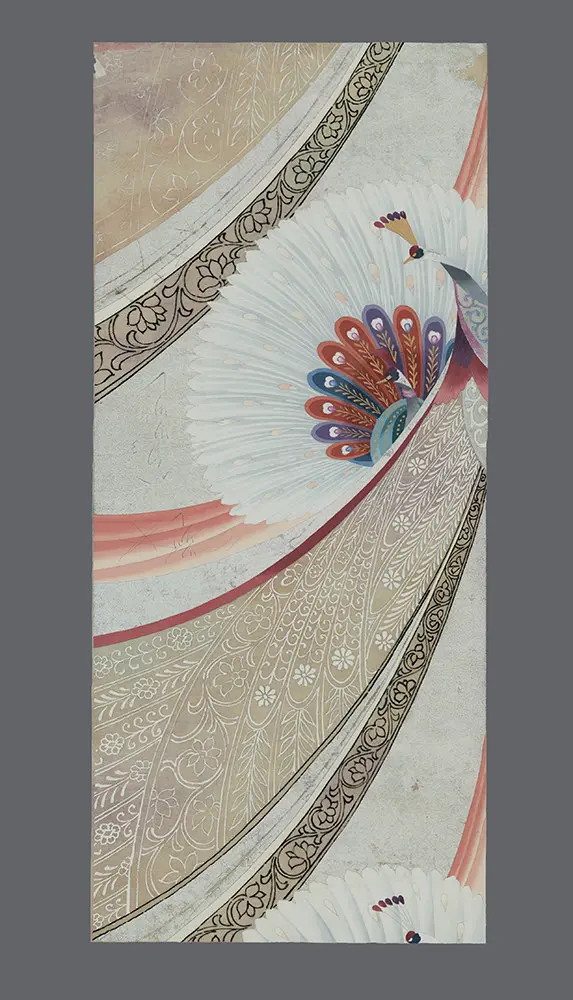
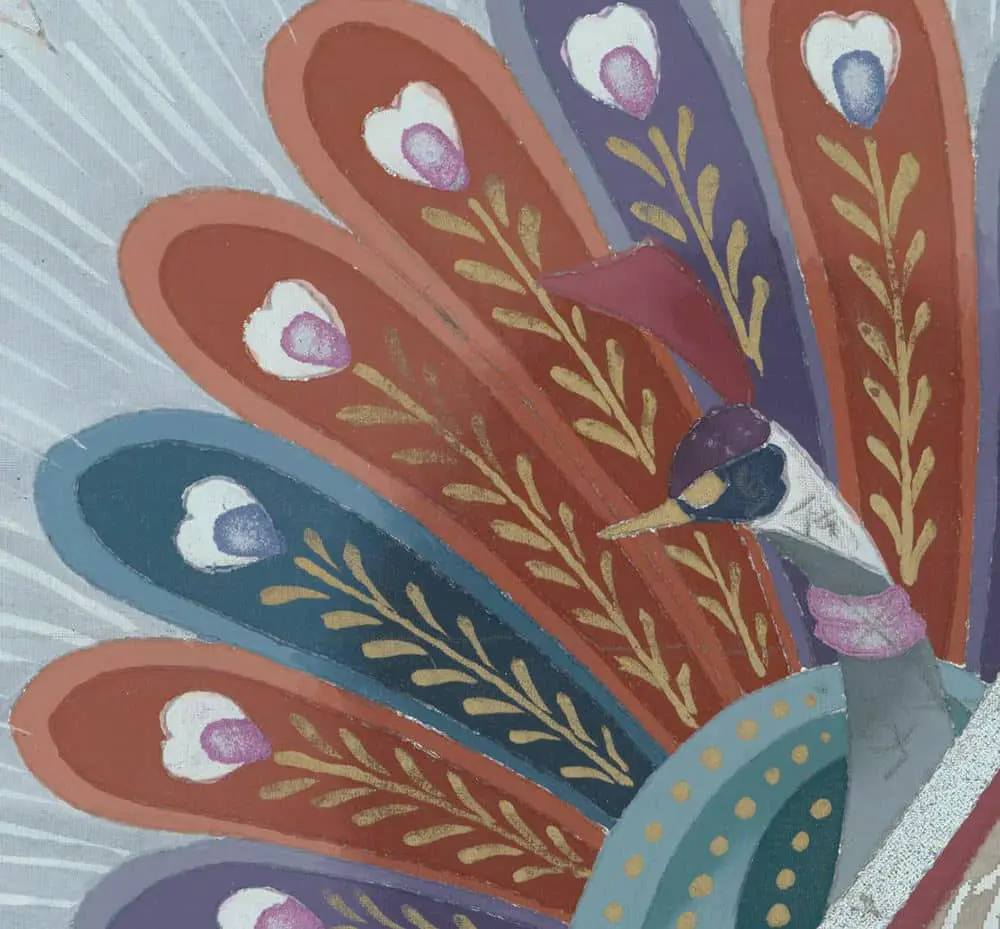
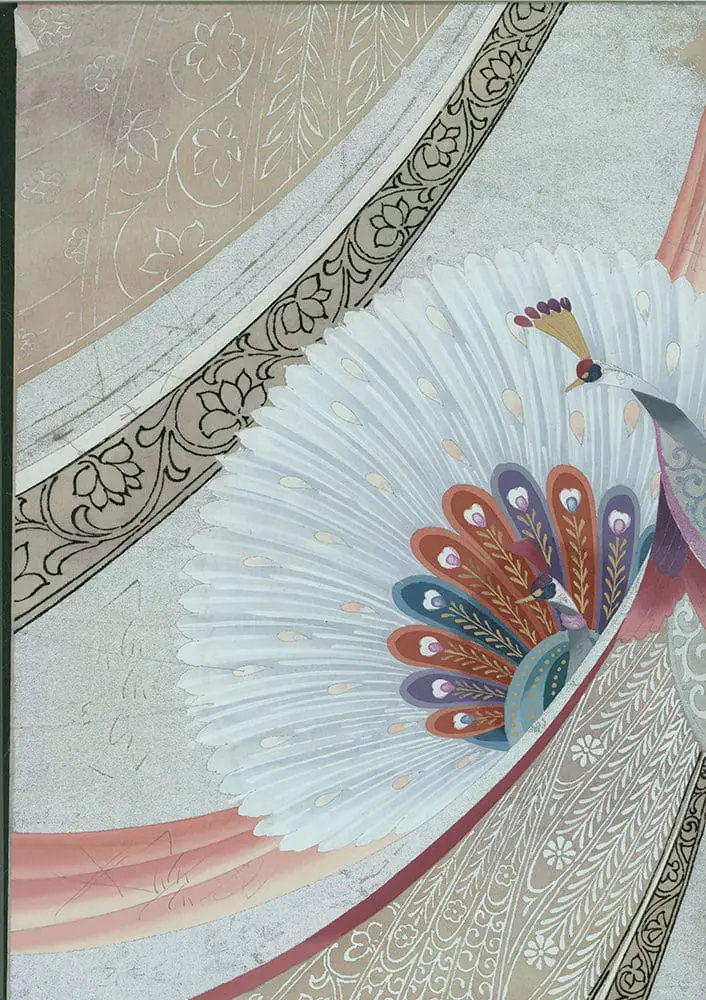
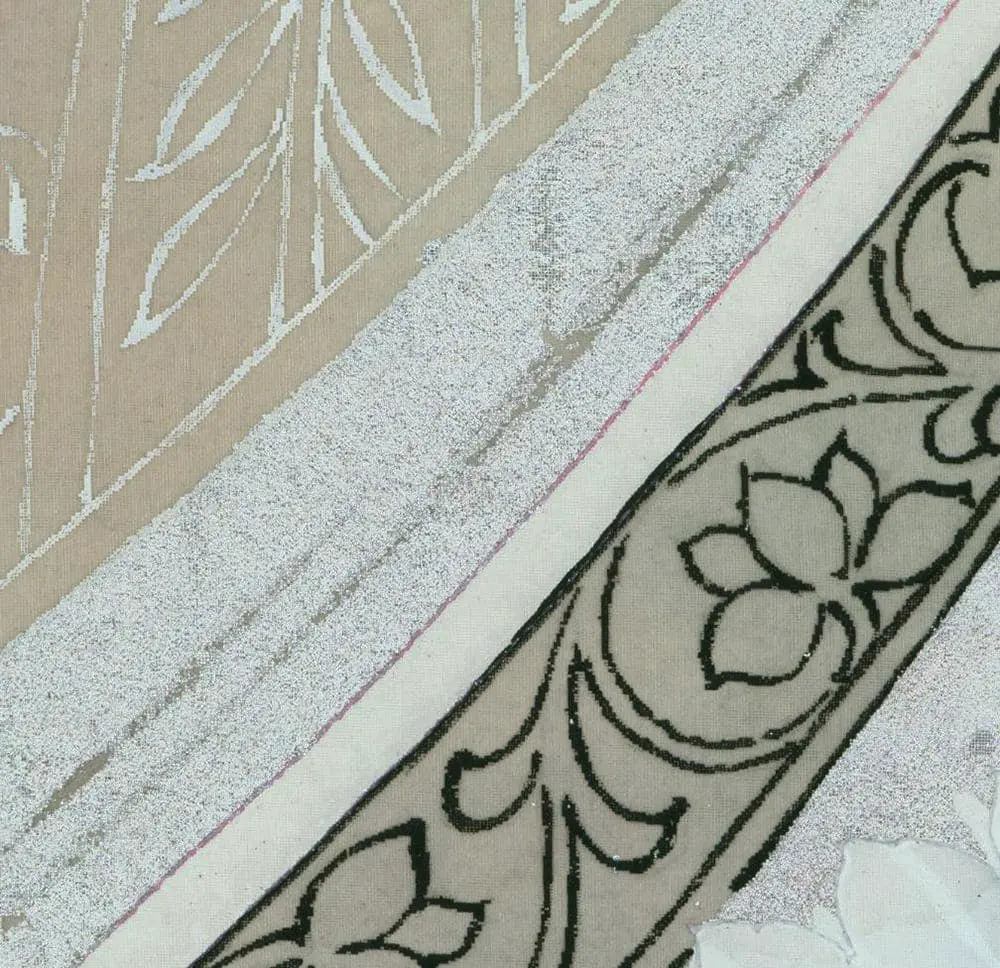
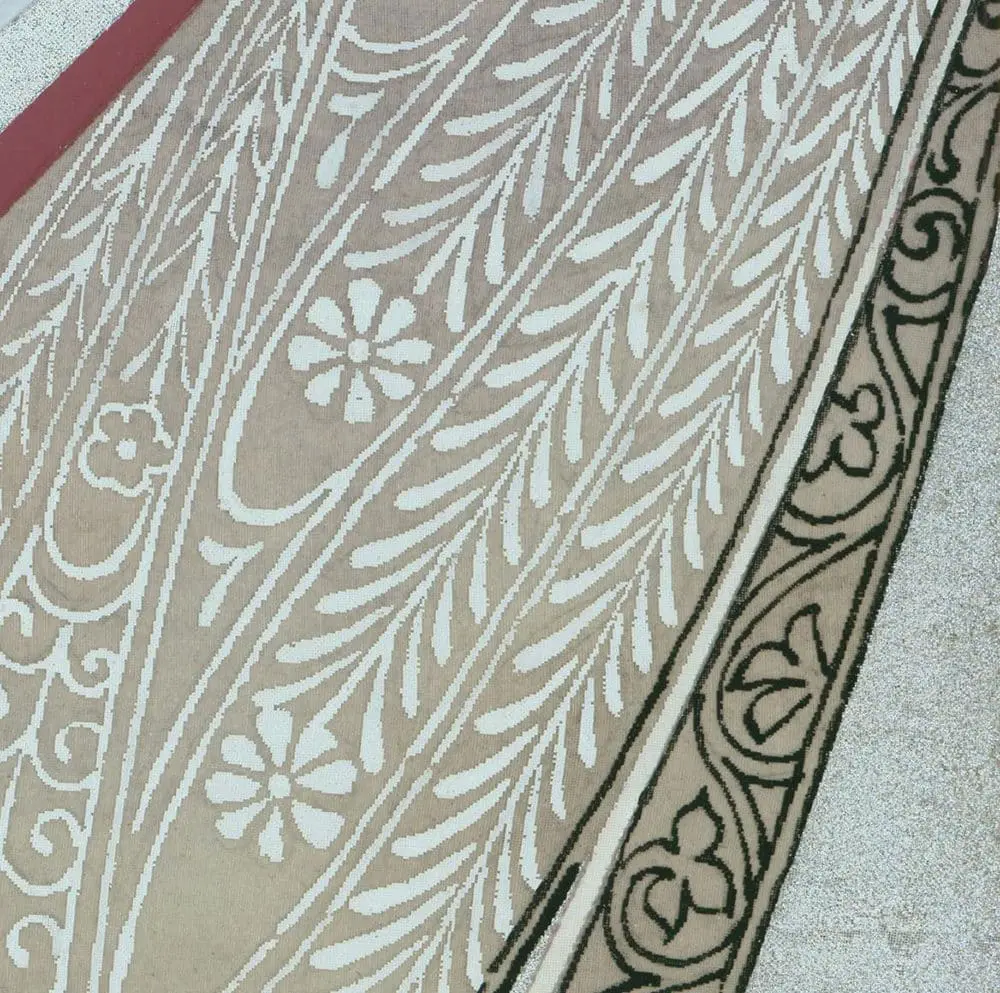
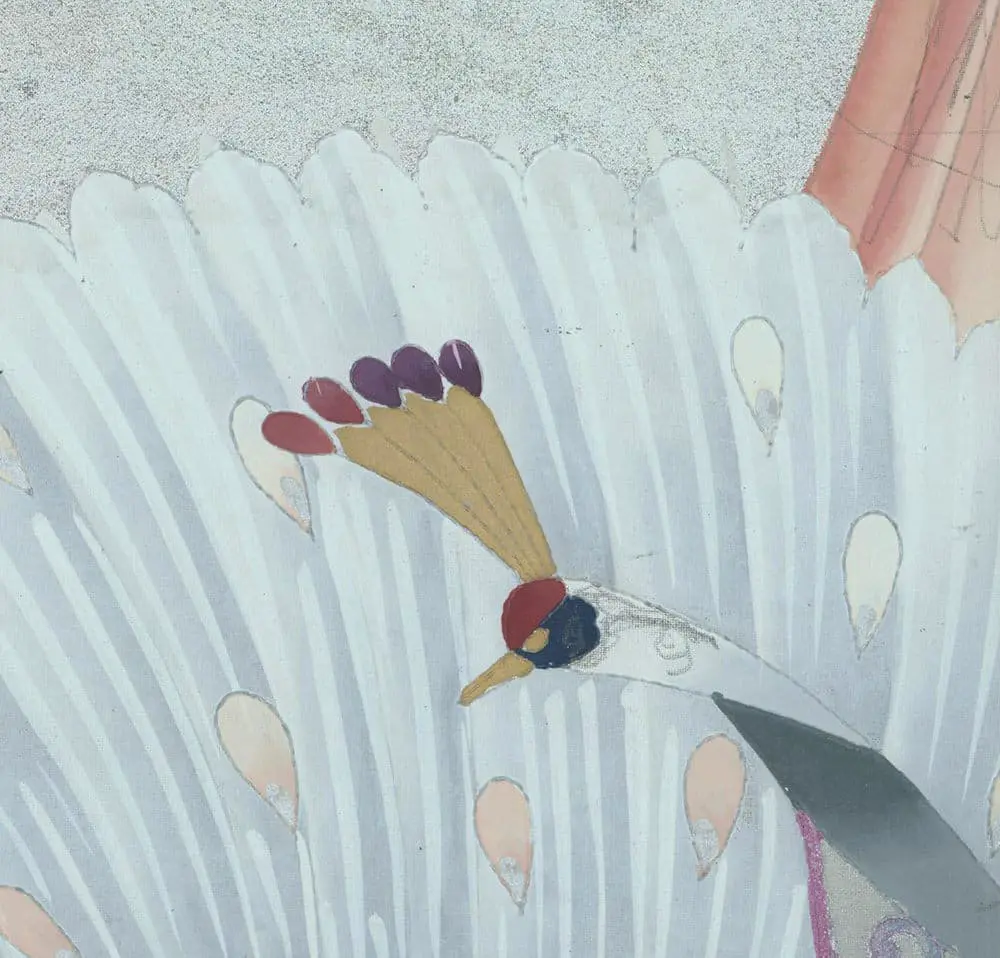
This magnificent hand-painted artwork is an original design from Japan, dating to the Mid-Showa period (1945–1965). Originating from a professional studio in the renowned Nishijin district of Kyoto, this piece was rendered on thick paper to serve as a high-fidelity blueprint for a woven obi. Measuring 12 inches by 25 inches (30 cm x 64 cm), the artwork remains in very good condition, showcasing the opulent and complex weaving patterns for which Kyoto’s textile district is famous.
The composition features a large, stylized peacock with an expansive, fan-like white tail. The bird's primary plumage is detailed with a brilliant spectrum of colors, including vibrant orange, deep blue, and purple "eyes" on the feathers, while the body is adorned with intricate scrolling patterns. Sweeping across the frame are elegant, curved bands of karakusa (arabesque) and floral vine motifs. These bands are filled with dense, minute patterns of white blossoms and golden-tan foliage, contrasted by a bold black border containing stylized lotus or floral scrolls. The background is a soft, textured silver-grey, providing a luminous stage for the dramatic avian and botanical forms.

Payment Options: We primarily accept PayPal for all transactions. Credit and debit cards are not accepted. If you prefer to pay by personal check instead of PayPal, please note this preference in the "Additional comments" field when placing your order.Ordering Process
To receive your PayPal invoice, simply fill out the form.
Shipping Details: We ship all orders to the address associated with your PayPal payment. Please ensure your PayPal shipping address is current and accurate.A phone number is required during checkout, as our shipping carrier may need to contact you regarding delivery questions.Shipping RatesUnited States and Canada: $20International destinations (air mail): $40
