Copyright © 2026 Yorke Antique Textiles
.avif)

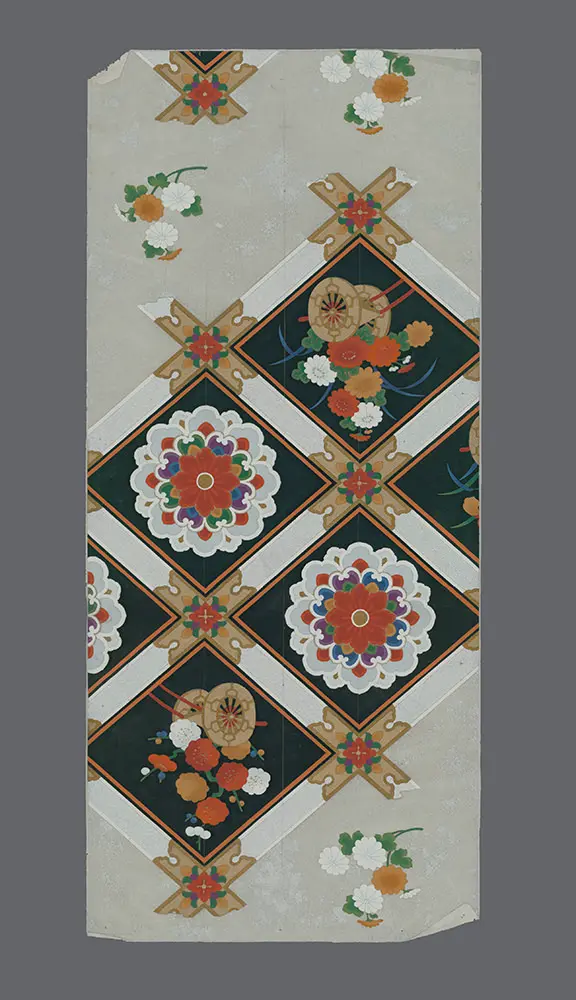


This striking hand-painted artwork is an original textile design from Japan, dating to the Mid-Showa period (1945–1965). Originating from a professional studio in Kyoto's renowned Nishijin district, this piece was rendered on thick paper to serve as a high-fidelity blueprint for a woven obi. Measuring 12 inches by 25 inches (30 cm x 64 cm), the artwork remains in very good condition and exemplifies the bold, structured aesthetic used for formal celebratory garments in post-war Japan.
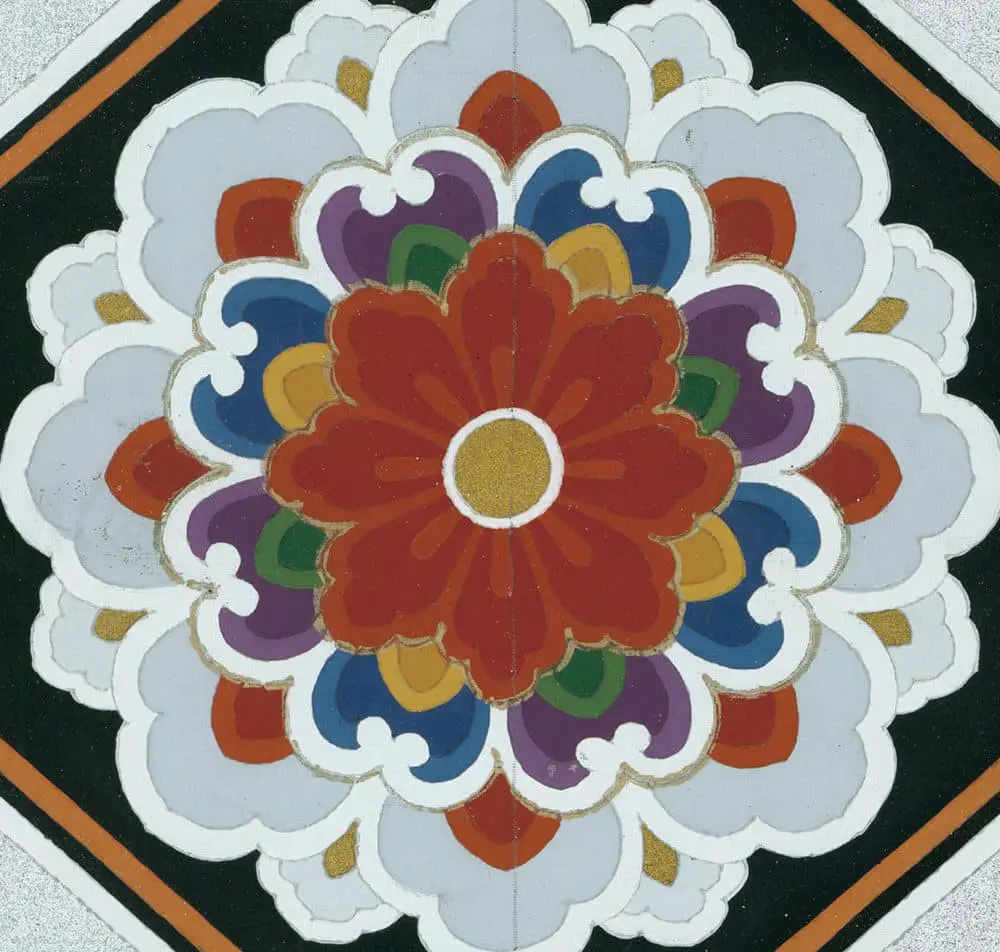
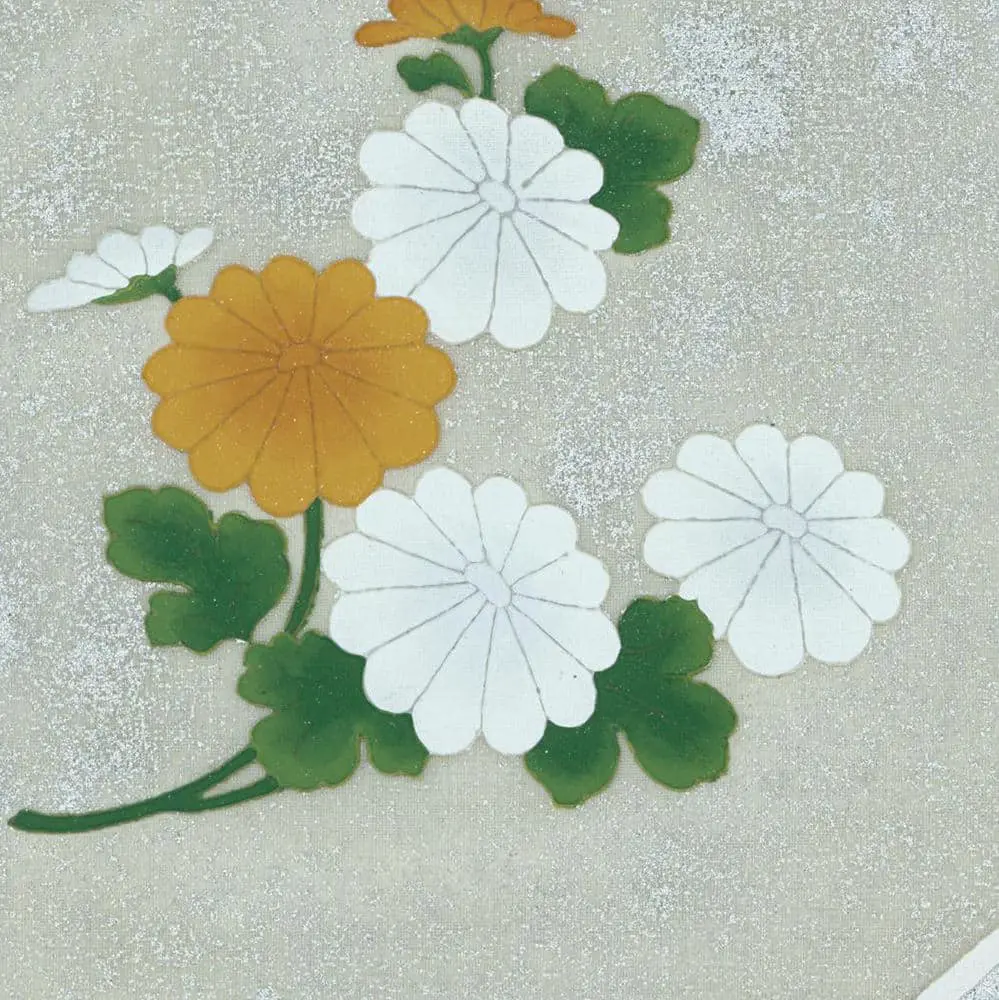
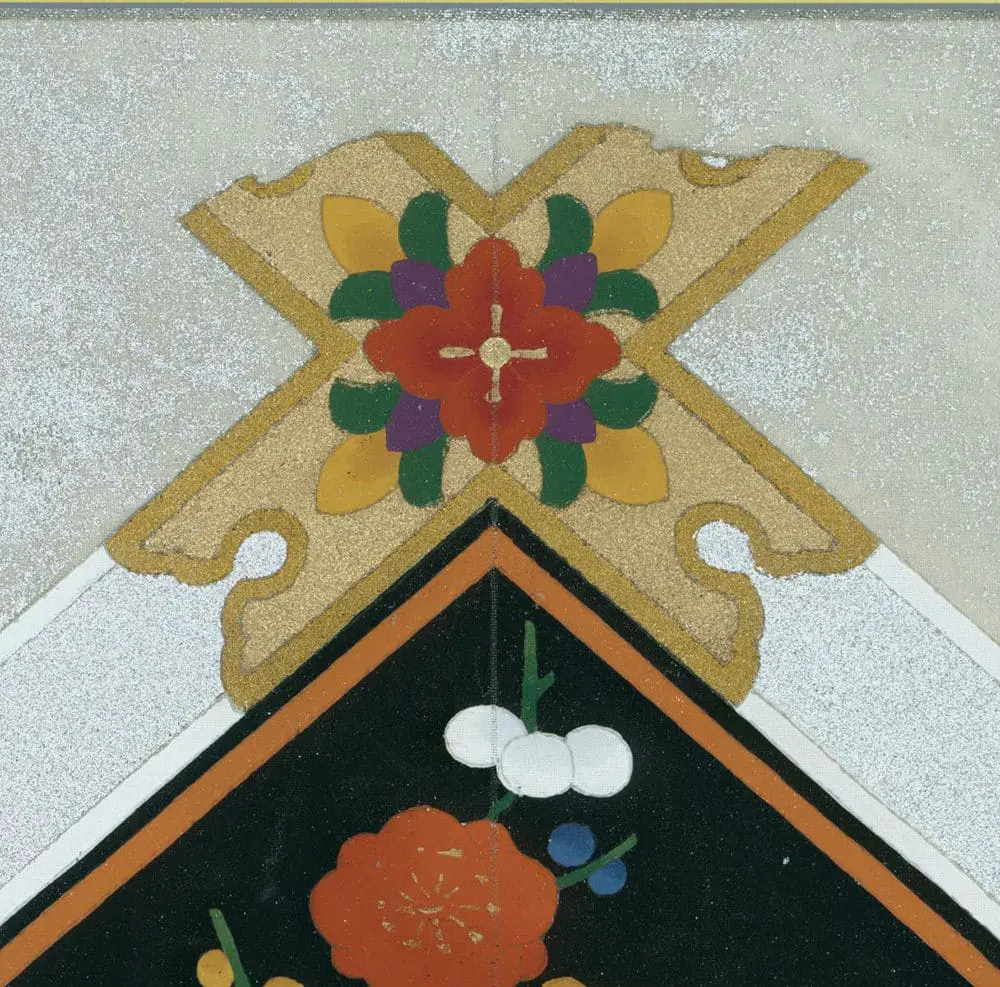
The composition features a series of large, diagonal diamond frames (hishi) set against a subtle, textured cream-grey ground. The interior of each diamond is finished in a deep midnight-green, providing a high-contrast backdrop for two alternating motifs: elaborate, multi-layered floral medallions in red, white, and purple, and smaller vignettes of orange and white chrysanthemums paired with golden drum-like symbols. The intersections of the primary diamond grid are anchored by golden, cross-like architectural braces (kumi-mono), which add a sense of regal weight to the design. Scattered loosely in the negative space are delicate clusters of smaller white and orange blossoms, balancing the rigidity of the central geometric pattern.

Payment Options: We primarily accept PayPal for all transactions. Credit and debit cards are not accepted. If you prefer to pay by personal check instead of PayPal, please note this preference in the "Additional comments" field when placing your order.Ordering Process
To receive your PayPal invoice, simply fill out the form.
Shipping Details: We ship all orders to the address associated with your PayPal payment. Please ensure your PayPal shipping address is current and accurate.A phone number is required during checkout, as our shipping carrier may need to contact you regarding delivery questions.Shipping RatesUnited States and Canada: $20International destinations (air mail): $40
