Copyright © 2026 Yorke Antique Textiles
.avif)

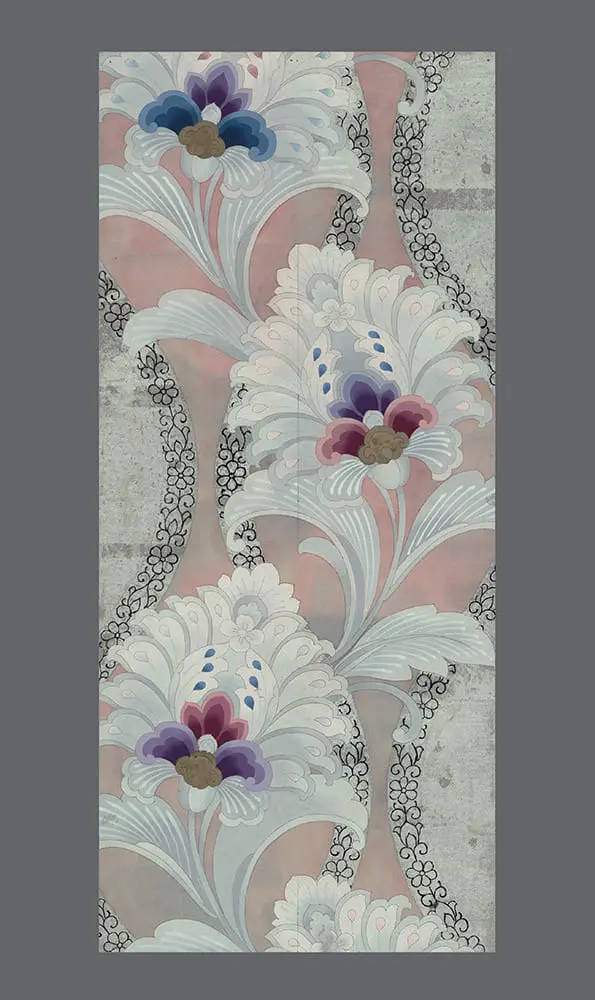
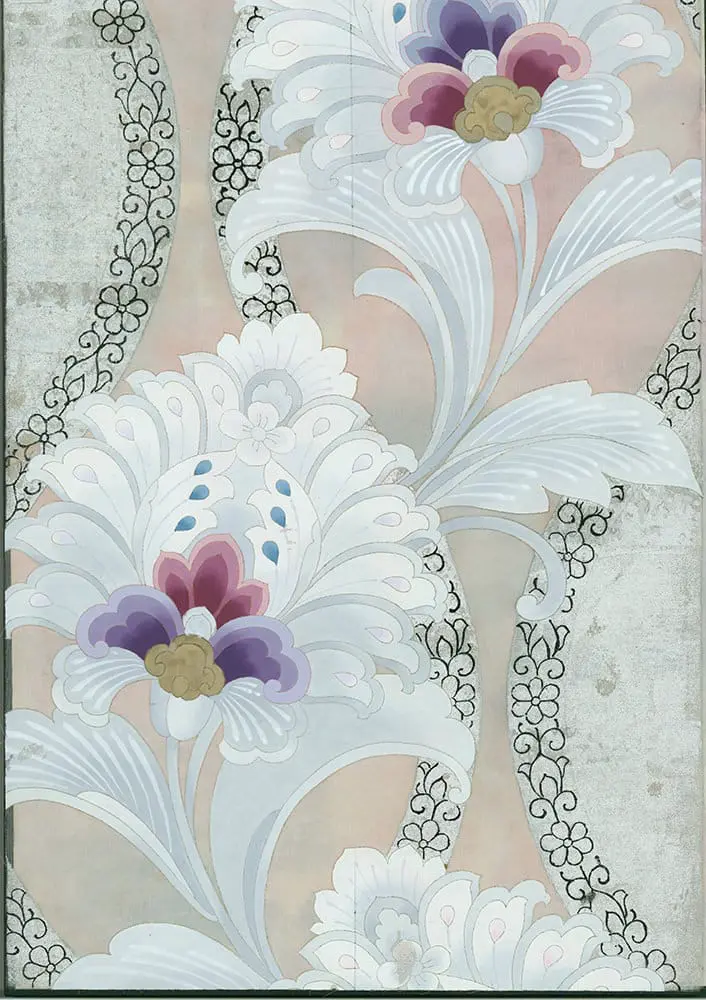
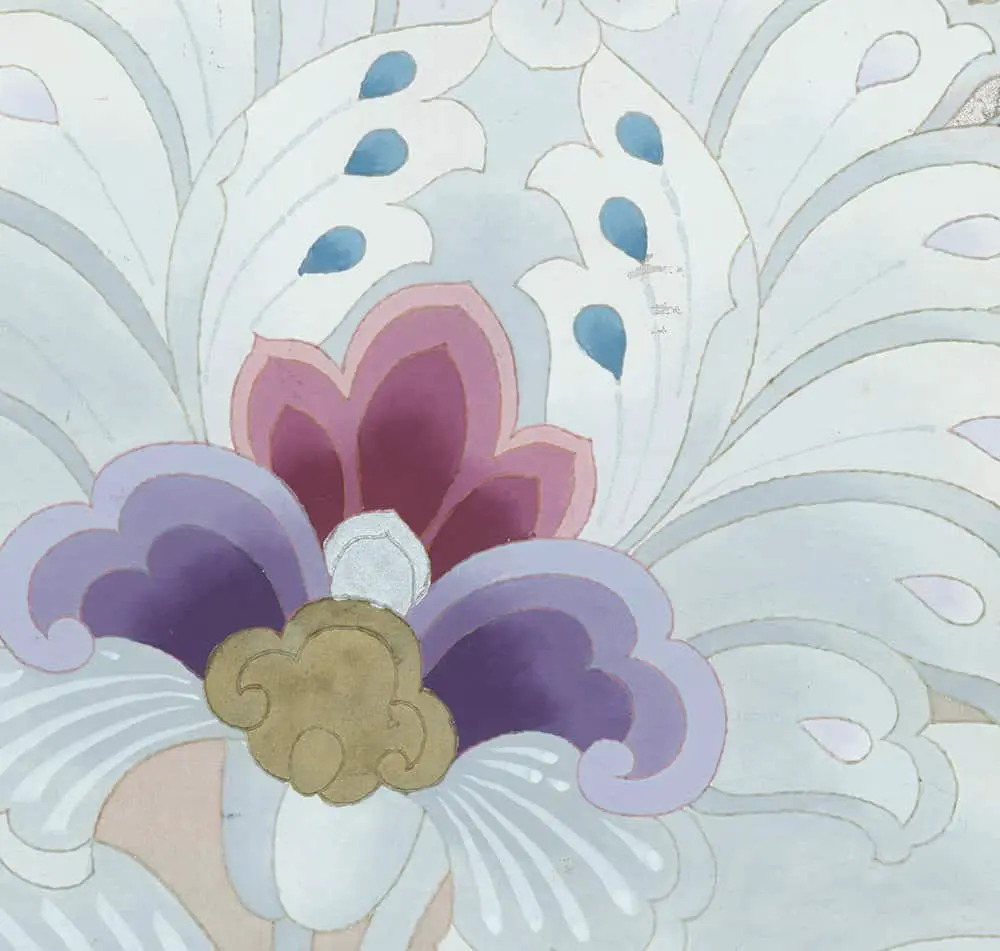
This elegant hand-painted artwork is an original and unique creation from Japan, dating to the Mid-Showa period (1945–1965). Crafted by a skilled artist in the world-renowned Nishijin district of Kyoto, this piece consists of paint on fabric lined with paper. It was specifically designed as a high-fidelity blueprint for transposing its intricate motifs onto a woven obi, the wide traditional belt worn with a kimono. While the piece shows some discoloring reflected in its price, it remains a vibrant example of the textile arts from Kyoto's historic weaving center.
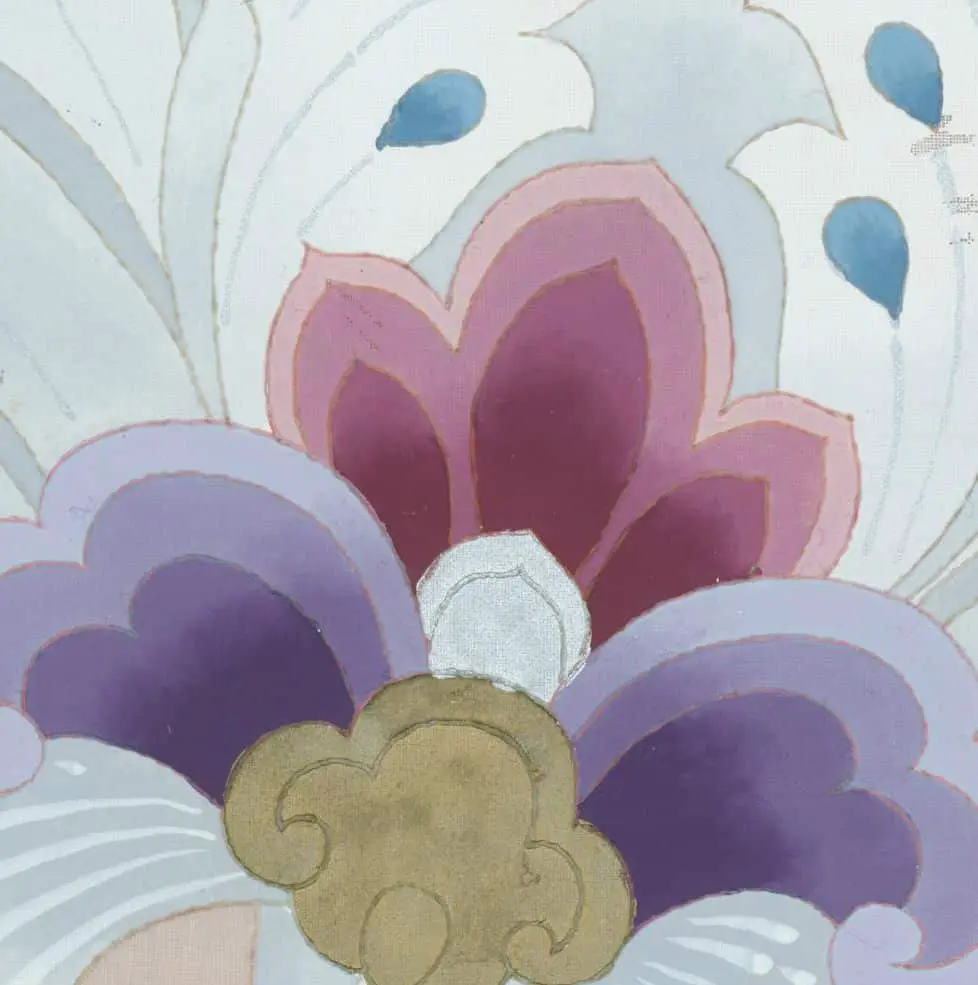
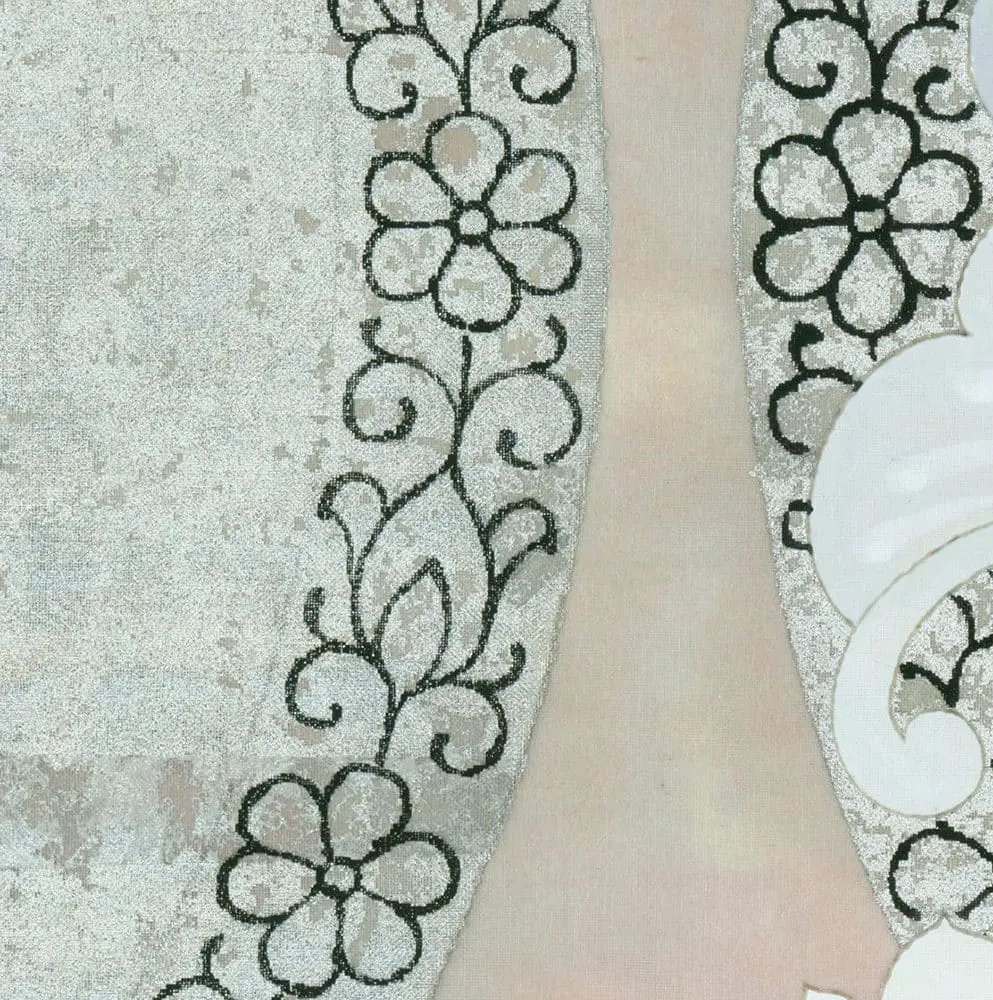
The composition features a vertical, undulating arrangement of large, stylized peony-like blossoms that evoke a sense of mid-century grandeur. These flowers are rendered in a sophisticated palette of creamy white, soft lavender, and deep plum, with warm golden-brown centers. The background is split between a delicate blush-pink field and a textured silver-grey ground that mimics the appearance of metallic leaf or woven silk. Ornate, scalloped borders in black ink, filled with miniature floral "karakusa" (scrolling vine) patterns, frame the central blooms and guide the eye along the rhythmic, curving path of the design.

Payment Options: We primarily accept PayPal for all transactions. Credit and debit cards are not accepted. If you prefer to pay by personal check instead of PayPal, please note this preference in the "Additional comments" field when placing your order.Ordering Process
To receive your PayPal invoice, simply fill out the form.
Shipping Details: We ship all orders to the address associated with your PayPal payment. Please ensure your PayPal shipping address is current and accurate.A phone number is required during checkout, as our shipping carrier may need to contact you regarding delivery questions.Shipping RatesUnited States and Canada: $20International destinations (air mail): $40
