Copyright © 2026 Yorke Antique Textiles
.avif)


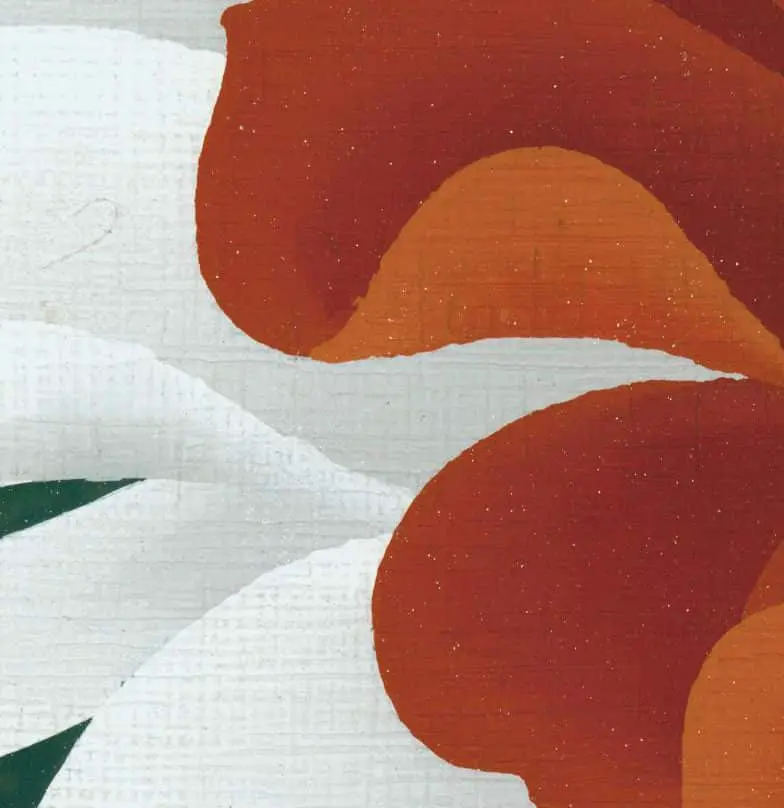
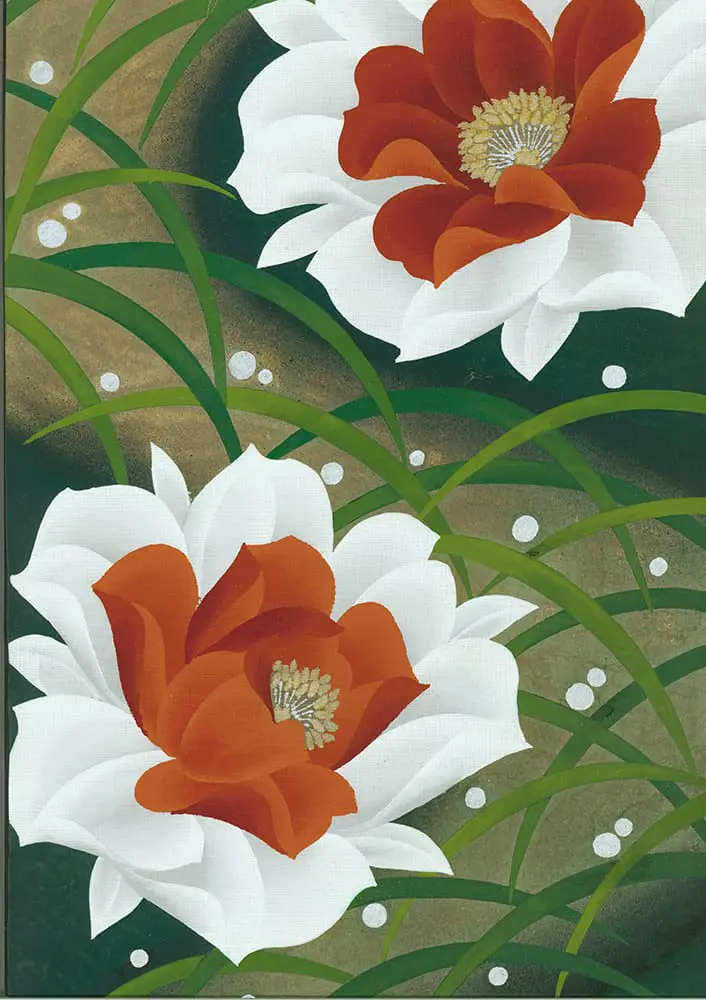
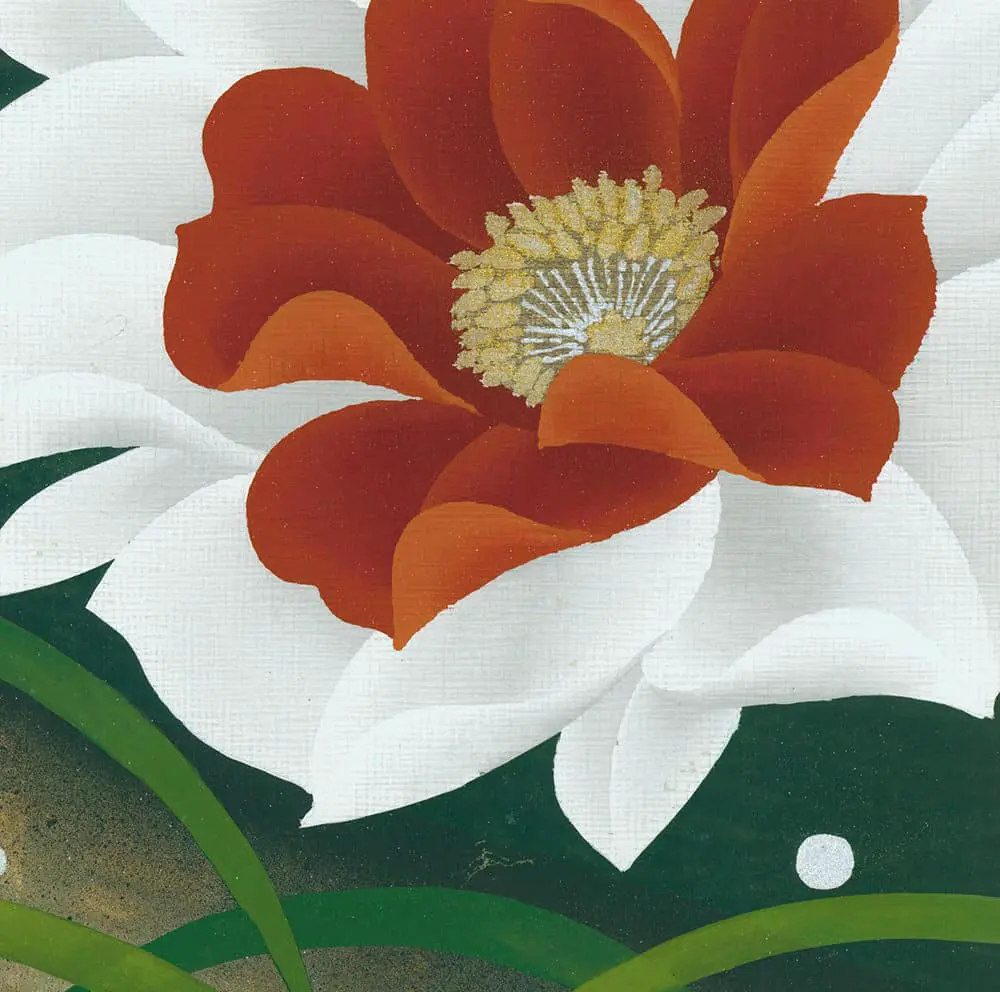
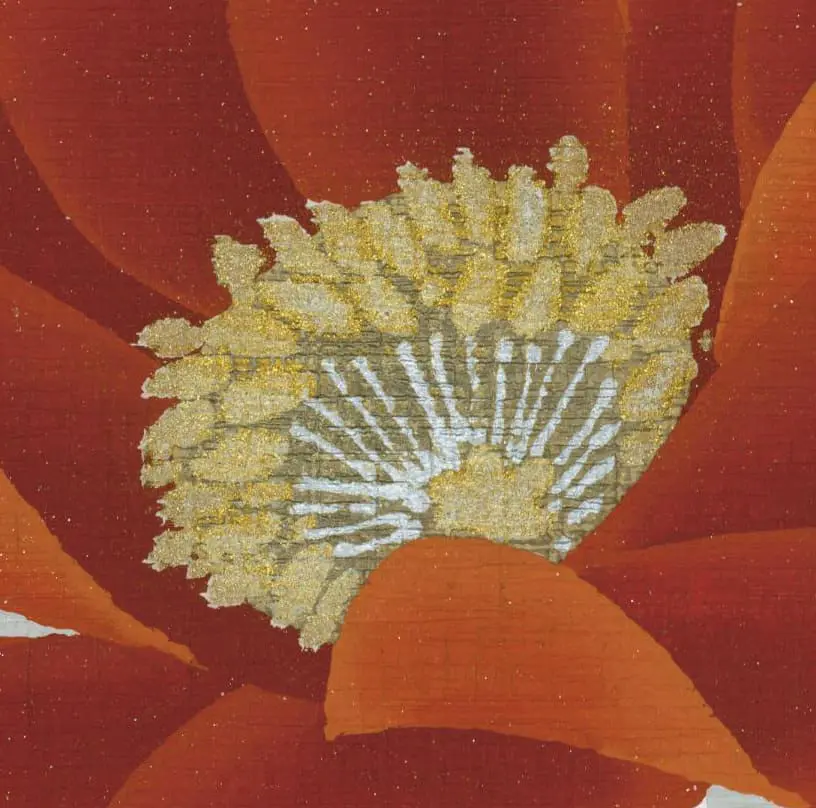
This striking hand-painted artwork is an original and distinctive creation from Japan, dating to the Mid-Showa period (1945–1965). Measuring 12 inches by 23 inches (30 cm x 58 cm), this piece was masterfully crafted by a talented artist in Kyoto’s renowned Nishijin district using paint and layered painted appliques on thick paper. The artwork remains in very good condition and served as the primary design inspiration for a high-end woven obi.
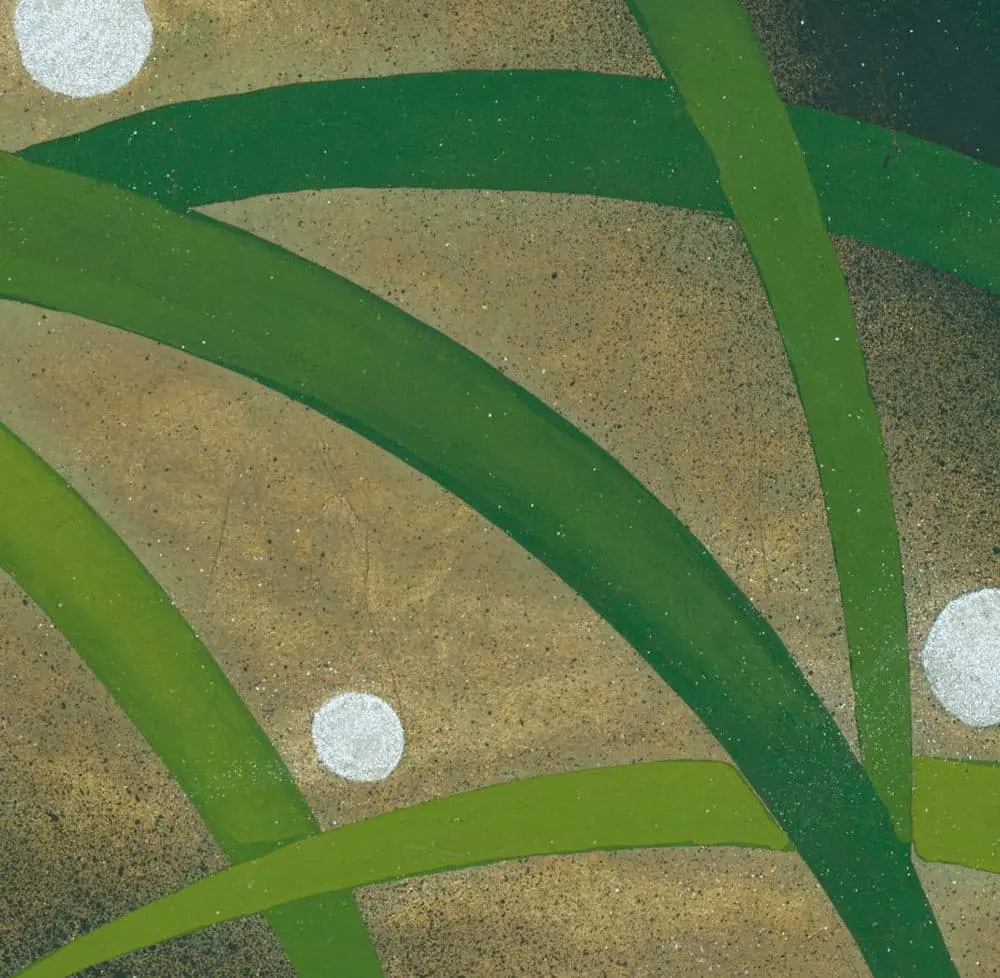
The composition features two large, vibrant narcissus (daffodil) blossoms that dominate the vertical field. Each flower is rendered with crisp, white outer petals and a deep, saturated orange-red trumpet-like center, showcasing a bold graphic quality typical of mid-century Japanese textile arts. The blossoms are set against a background of dynamic, swirling green blades and a dark, mossy-green ground. Scattered across the scene are small, white stippled dots that resemble air bubbles or water droplets, adding a sense of aquatic movement to the floral display. The use of physical appliques provides the necessary structural detail for a weaver to translate these clean lines into a dense, tactile silk weave.

Payment Options: We primarily accept PayPal for all transactions. Credit and debit cards are not accepted. If you prefer to pay by personal check instead of PayPal, please note this preference in the "Additional comments" field when placing your order.Ordering Process
To receive your PayPal invoice, simply fill out the form.
Shipping Details: We ship all orders to the address associated with your PayPal payment. Please ensure your PayPal shipping address is current and accurate.A phone number is required during checkout, as our shipping carrier may need to contact you regarding delivery questions.Shipping RatesUnited States and Canada: $20International destinations (air mail): $40
