Copyright © 2026 Yorke Antique Textiles
.avif)

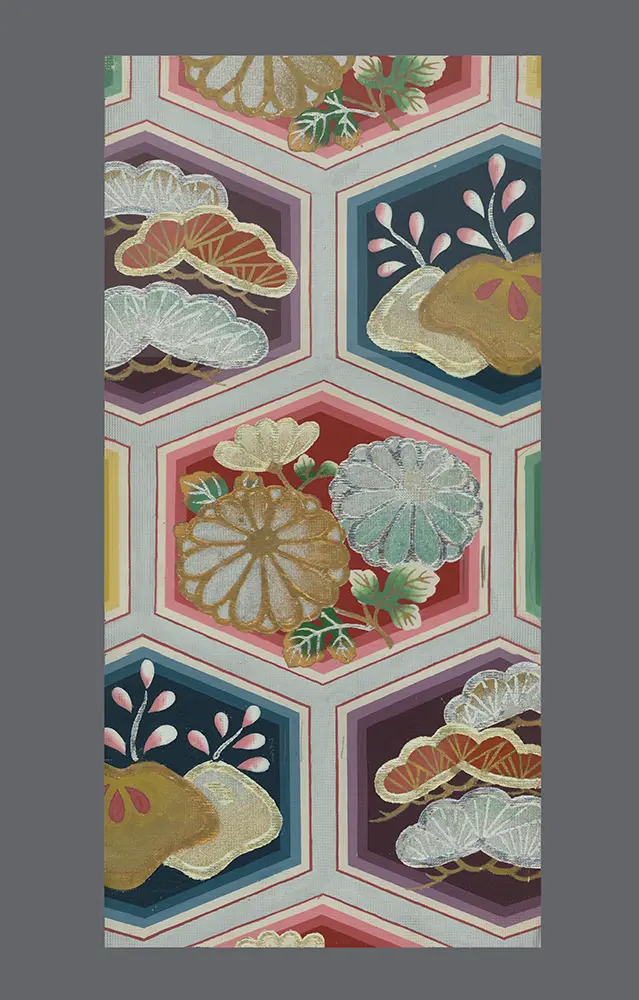
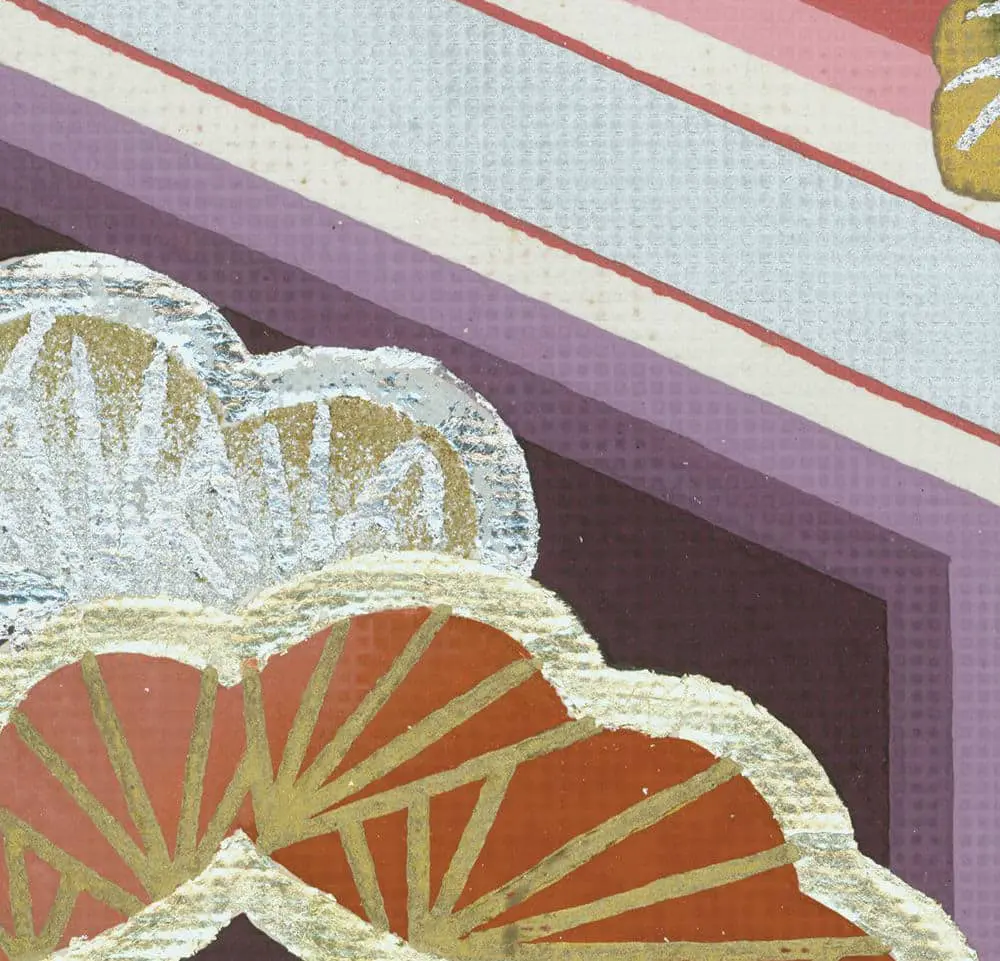
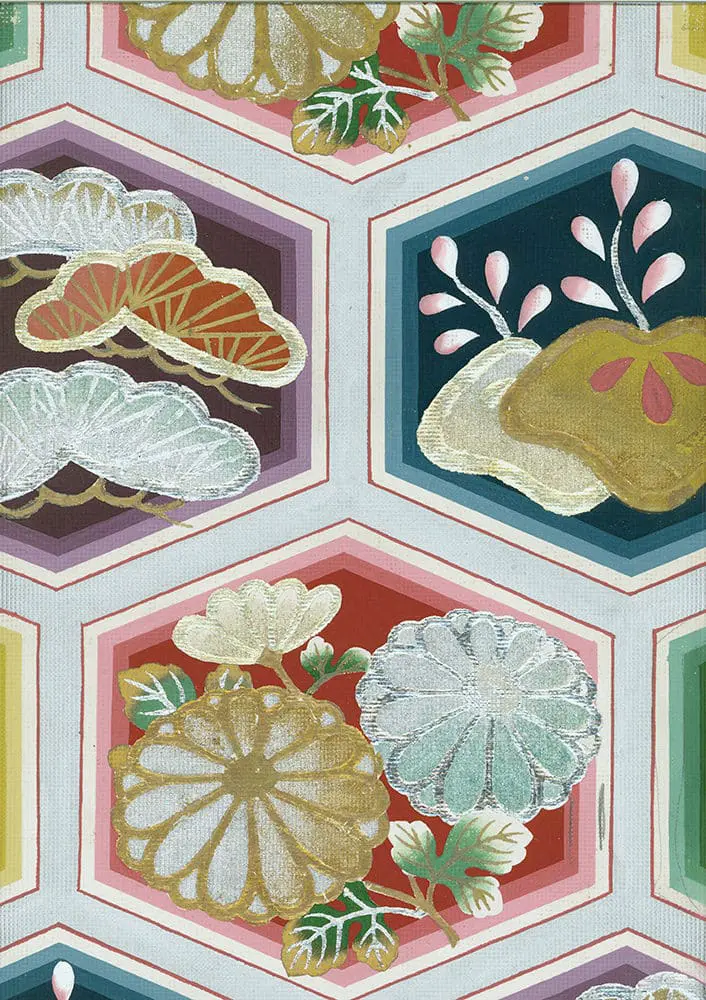
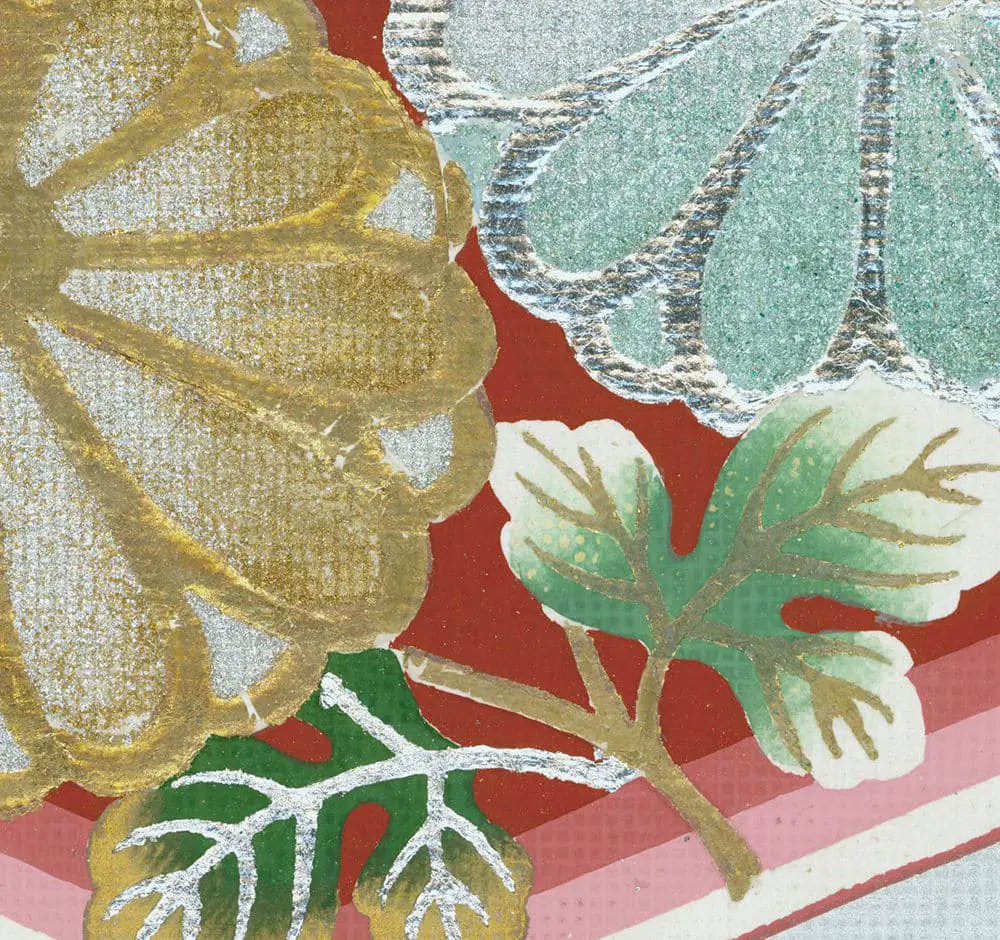
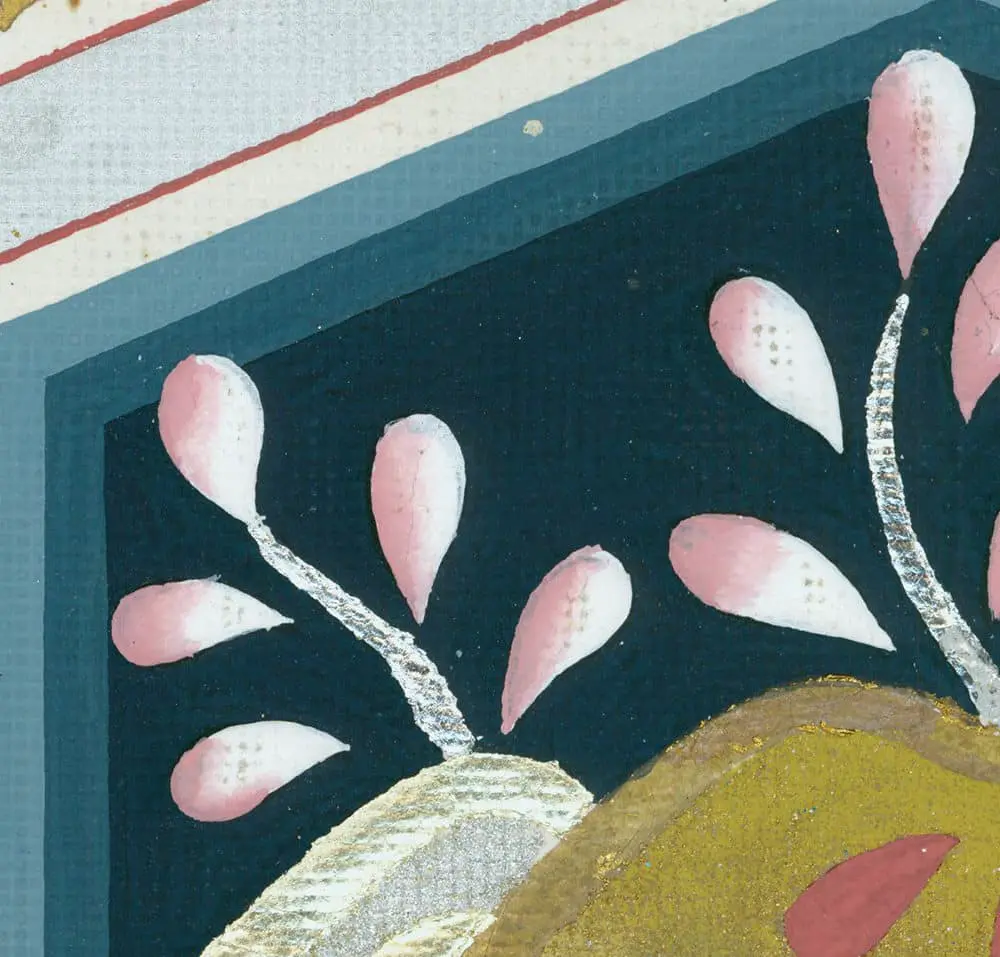
This sophisticated hand-painted artwork is an original and distinctive creation from Japan, dating to the Mid-Showa period (1945–1965). Measuring 12 inches by 25 inches (30 cm x 64 cm), this unique piece was produced by a skilled artist in Kyoto's renowned Nishijin district, the historic center of luxury Japanese textile weaving. Composed of paint on fabric and lined with paper, the work served as the master blueprint for a woven obi, the wide traditional belt worn with a kimono. The artwork remains in very good condition, showcasing a structured and symbolic composition known as Kikkō (tortoise shell) patterns.
The composition is defined by a series of interlocking hexagonal frames, each containing a unique seasonal or auspicious motif. Within these vibrant borders—rendered in shades of crimson, indigo, and violet—are stylized chrysanthemums (kiku), pine (matsu) branches, and delicate floral buds. The artist has utilized shimmering gold and silver-toned paints to define the petals and needles, mimicking the metallic threads (haku) that would be used in the final weaving process. The background is a clean, neutral grey-white, which allows the rich, jewel-toned hexagons and the metallic accents to stand out with architectural precision.

Payment Options: We primarily accept PayPal for all transactions. Credit and debit cards are not accepted. If you prefer to pay by personal check instead of PayPal, please note this preference in the "Additional comments" field when placing your order.Ordering Process
To receive your PayPal invoice, simply fill out the form.
Shipping Details: We ship all orders to the address associated with your PayPal payment. Please ensure your PayPal shipping address is current and accurate.A phone number is required during checkout, as our shipping carrier may need to contact you regarding delivery questions.Shipping RatesUnited States and Canada: $20International destinations (air mail): $40
