Copyright © 2026 Yorke Antique Textiles
.avif)

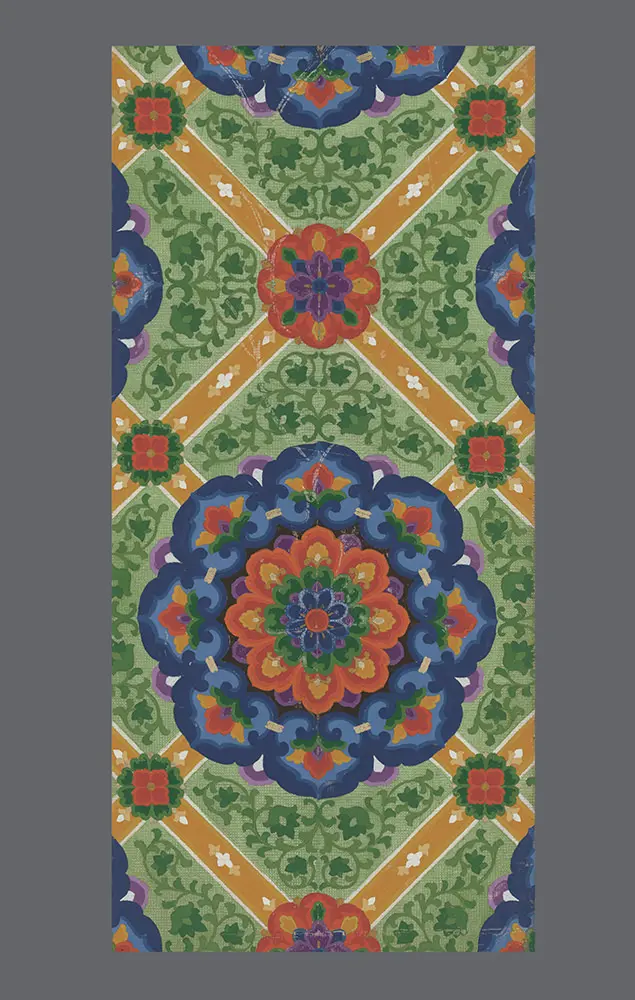
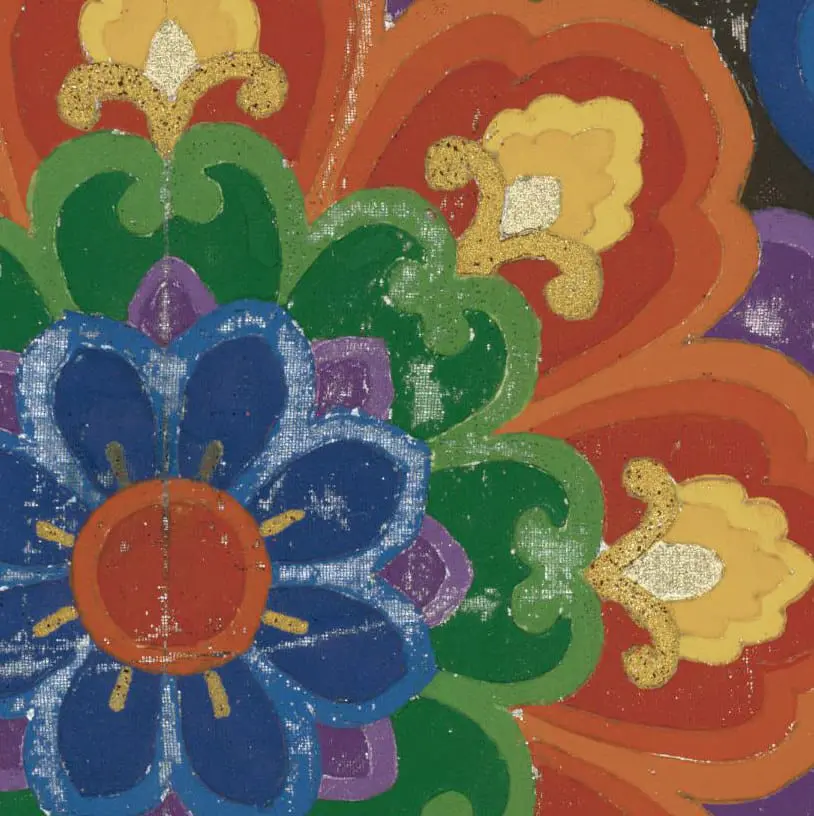
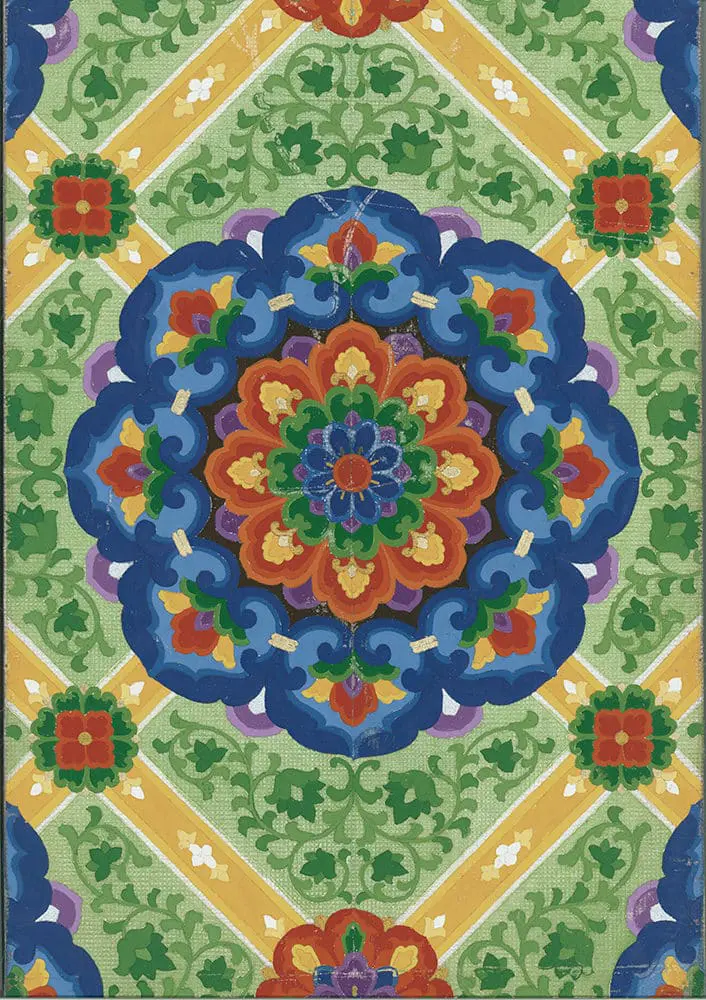
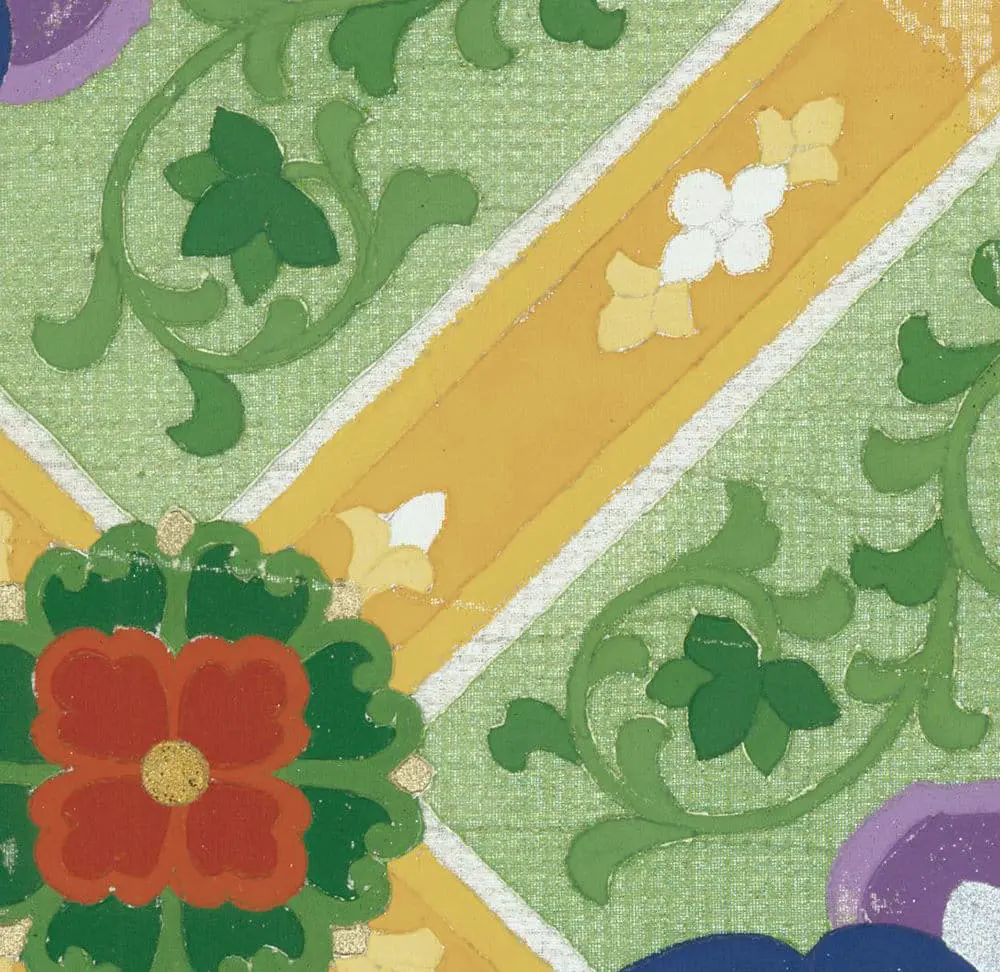
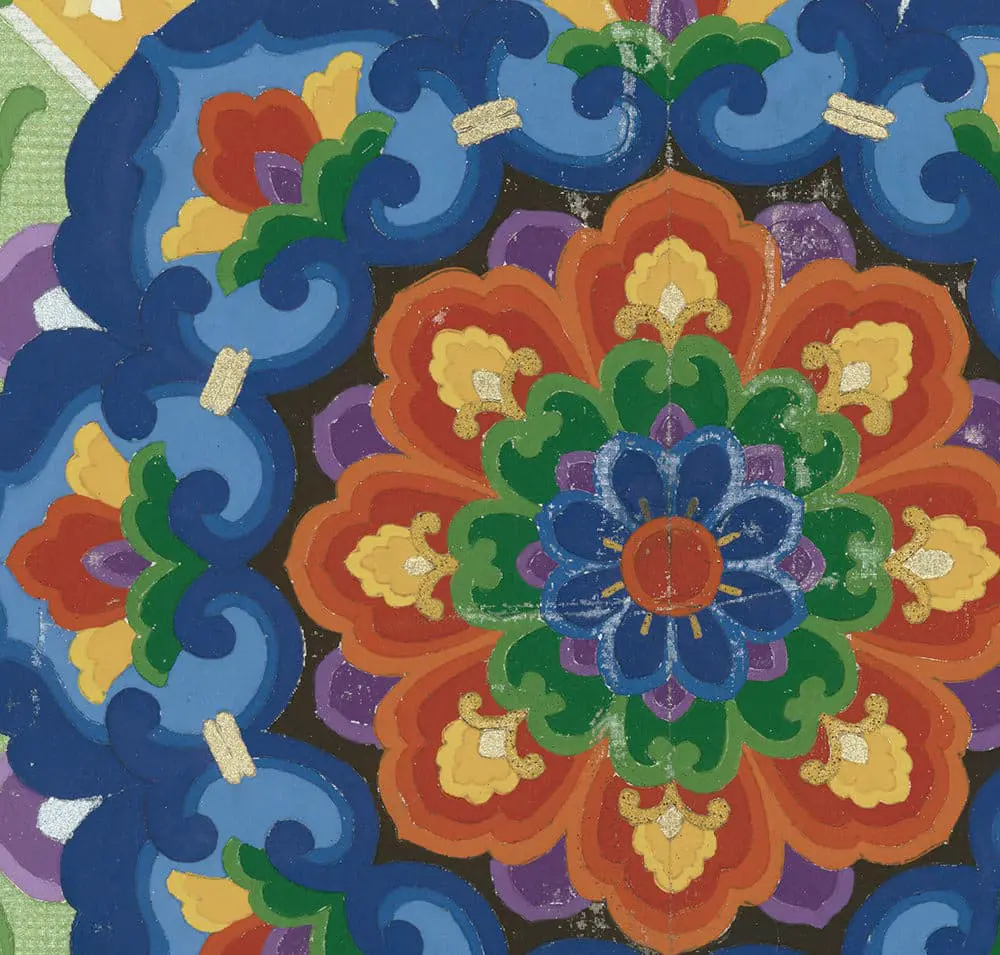
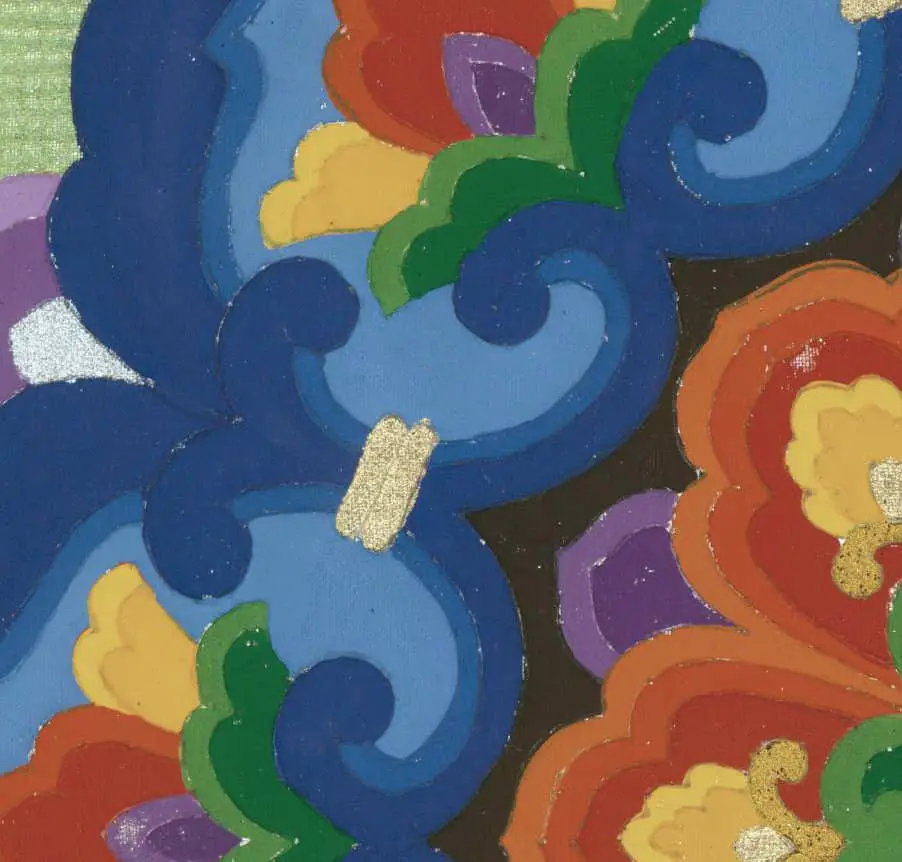
This vibrant hand-painted artwork is an original and distinctive creation from Japan, dating to the Mid-Showa period (1945–1965). Measuring 12 inches by 25 inches (30 cm x 64 cm), this piece was masterfully crafted by a Japanese artist in Kyoto’s renowned Nishijin district using paint on fabric with a paper lining. The artwork remains in very good condition and served as the technical design inspiration for a high-end woven obi.
The composition features a series of large, kaleidoscopic floral medallions (karabana) arranged in a rhythmic, repeating pattern. The central medallion is a complex mandala of layered petals in deep indigo, vermilion, and forest green, centered with a golden-yellow core. These primary motifs are connected by a geometric lattice of ochre-yellow diagonal bands, which create diamond-shaped fields populated by delicate green scrolling vines (karakusa). Smaller, four-petaled floral crests anchor the intersections of the lattice, completing a design that reflects the formal symmetry of classical Nara-period textiles reimagined through a mid-century lens.

Payment Options: We primarily accept PayPal for all transactions. Credit and debit cards are not accepted. If you prefer to pay by personal check instead of PayPal, please note this preference in the "Additional comments" field when placing your order.Ordering Process
To receive your PayPal invoice, simply fill out the form.
Shipping Details: We ship all orders to the address associated with your PayPal payment. Please ensure your PayPal shipping address is current and accurate.A phone number is required during checkout, as our shipping carrier may need to contact you regarding delivery questions.Shipping RatesUnited States and Canada: $20International destinations (air mail): $40
