Copyright © 2026 Yorke Antique Textiles
.avif)

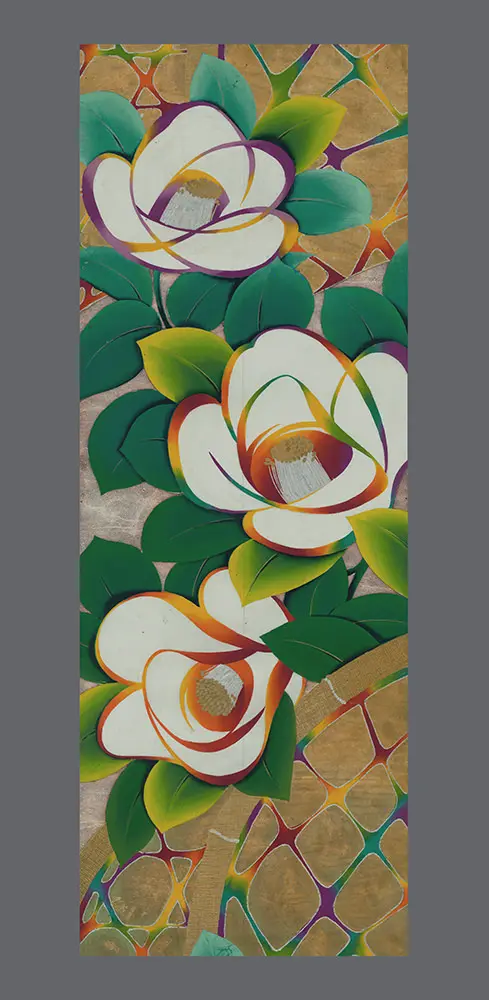
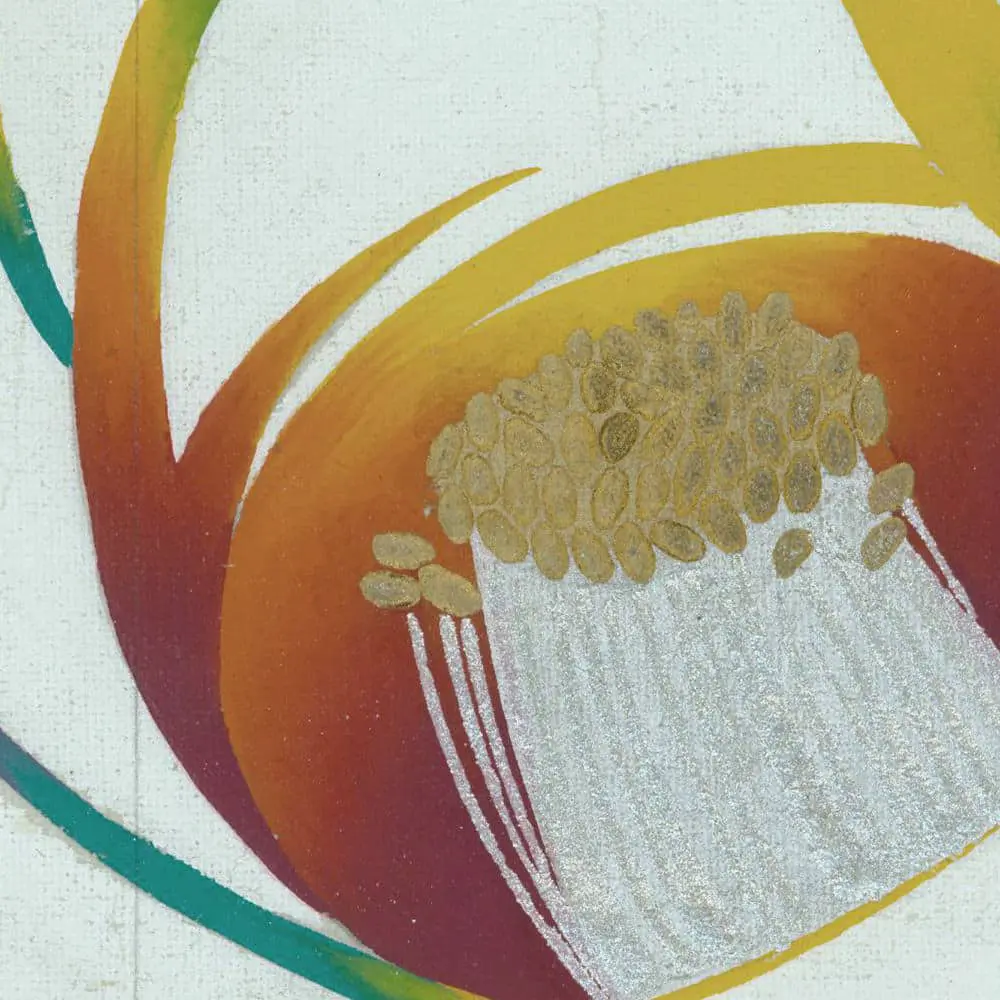
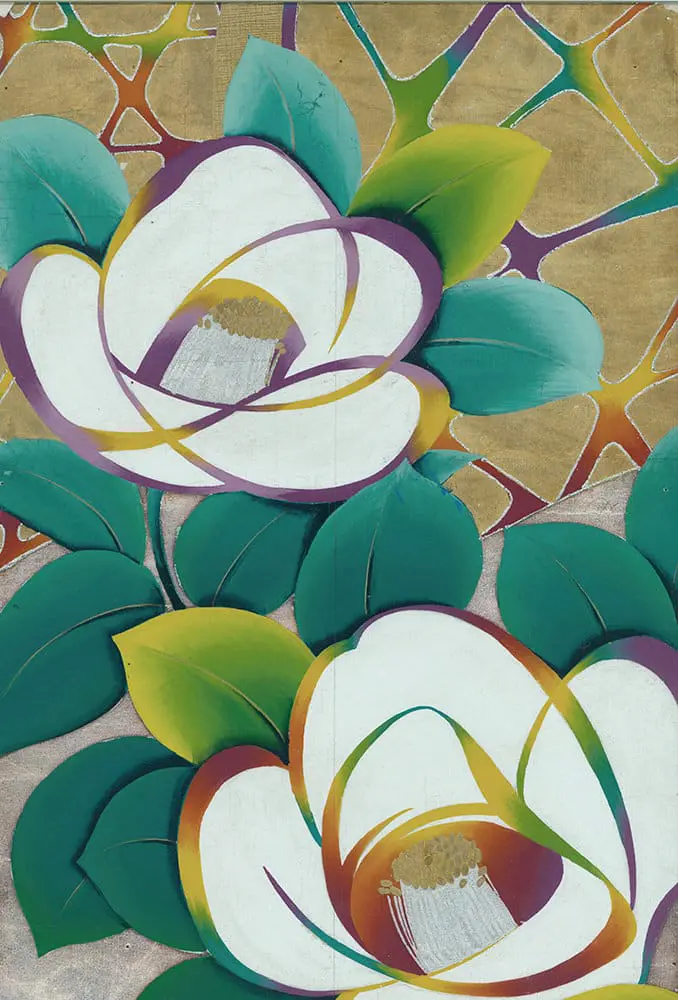
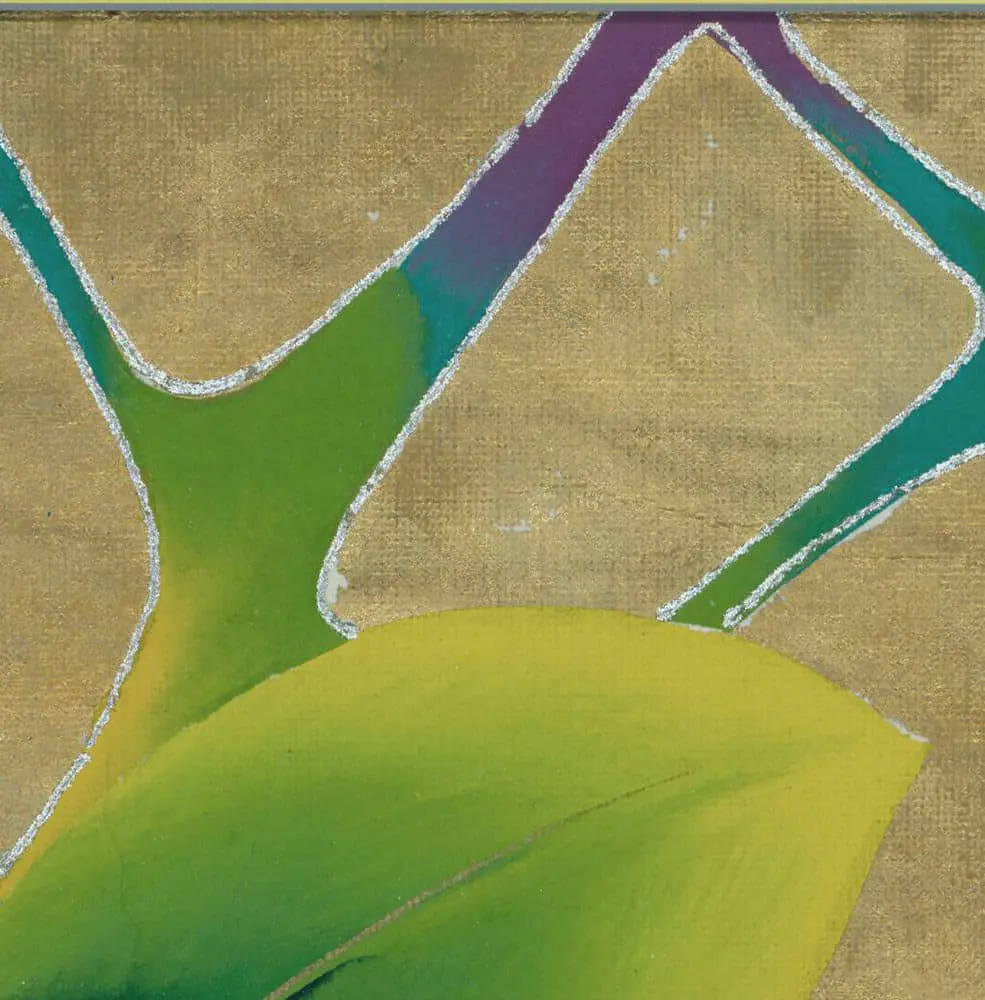
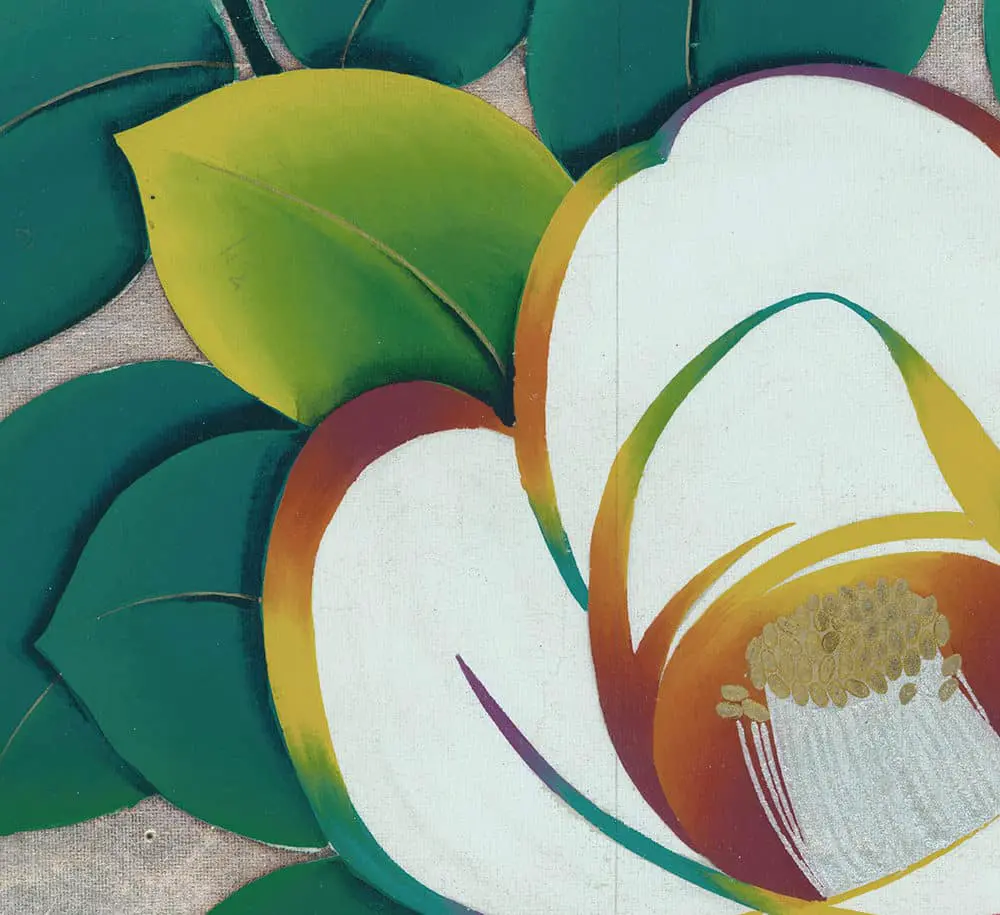

This bold and painterly artwork is an original creation from Japan, dating to the Mid-Showa period (1945–1965). Measuring 12 inches by 33 inches (30 cm x 84 cm), this piece was skillfully crafted by a Japanese artist in Kyoto’s renowned Nishijin district using paint on thick paper. The artwork remains in very good condition and served as the primary design inspiration for a high-end woven obi.
The composition features a vertical spray of three large camellias (tsubaki) rendered with a modern, graphic sensibility. The blossoms are predominantly white, but their petals are dramatically defined by "rainbow" outlines that transition from deep violet to fiery orange and golden yellow. Thick, vibrant green leaves with lime-colored highlights surround the blooms, adding a sense of lush vitality. This organic floral arrangement is set against a unique background of a golden-tan lattice pattern, where the intersections are punctuated by multi-colored, star-like points. The combination of traditional botanical motifs with such a stylized, high-contrast color palette reflects the technical and aesthetic innovation of post-war Kyoto textile design.

Payment Options: We primarily accept PayPal for all transactions. Credit and debit cards are not accepted. If you prefer to pay by personal check instead of PayPal, please note this preference in the "Additional comments" field when placing your order.Ordering Process
To receive your PayPal invoice, simply fill out the form.
Shipping Details: We ship all orders to the address associated with your PayPal payment. Please ensure your PayPal shipping address is current and accurate.A phone number is required during checkout, as our shipping carrier may need to contact you regarding delivery questions.Shipping RatesUnited States and Canada: $20International destinations (air mail): $40
