Copyright © 2026 Yorke Antique Textiles
.avif)


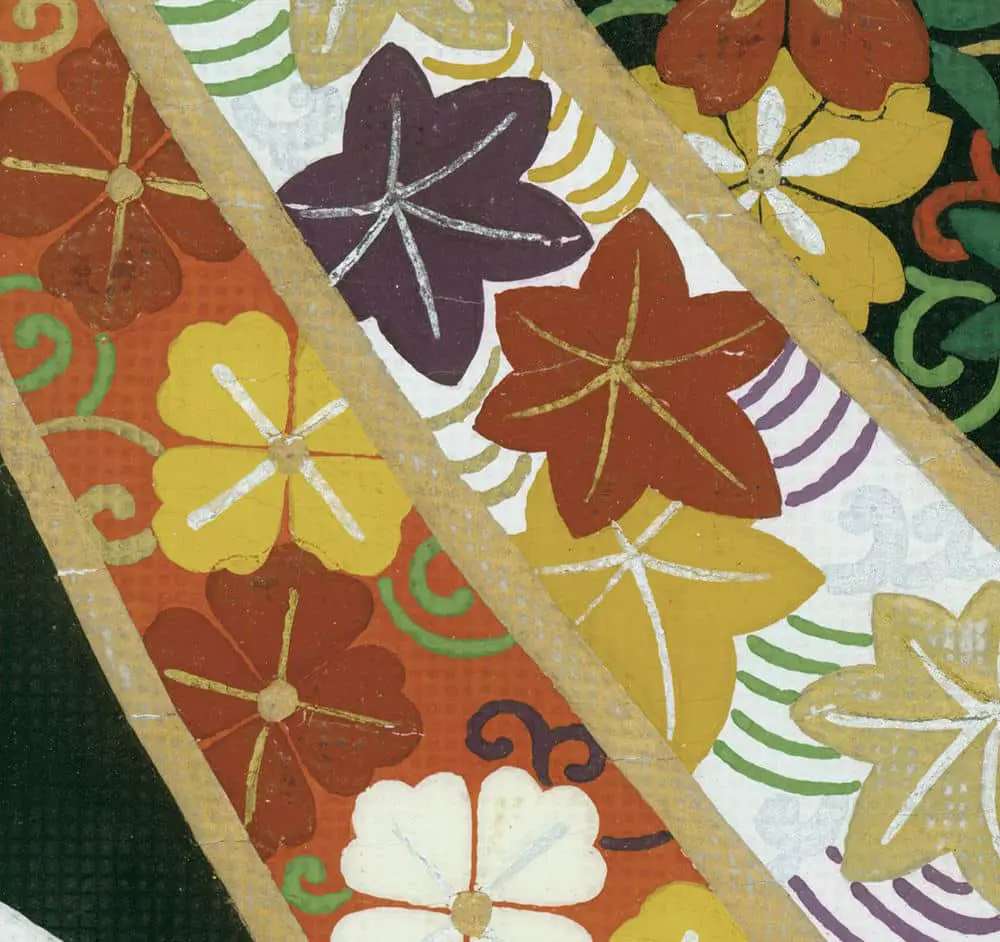
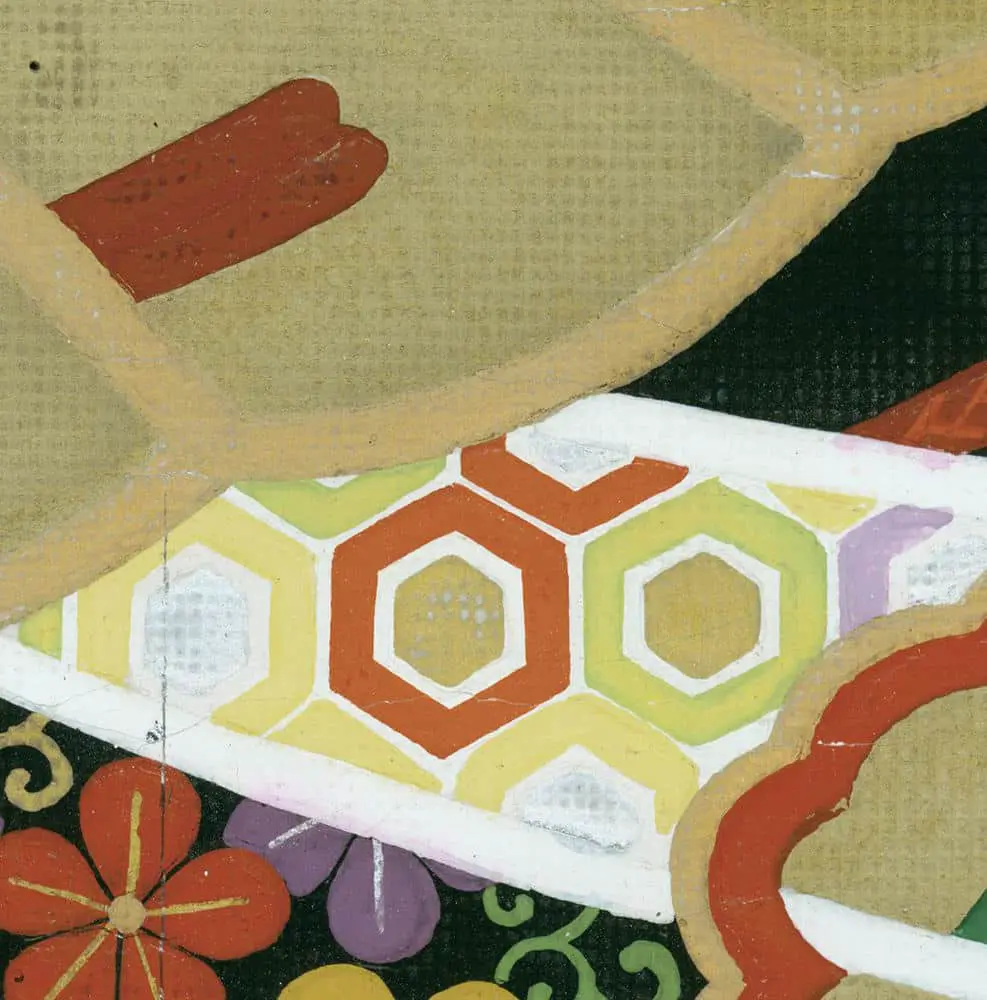
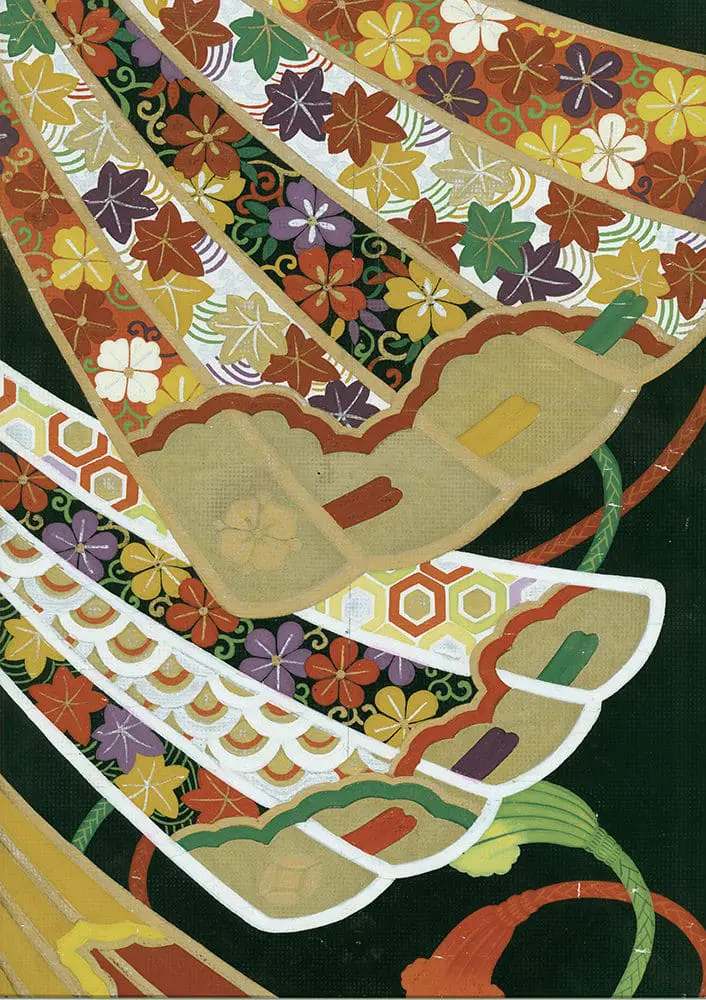
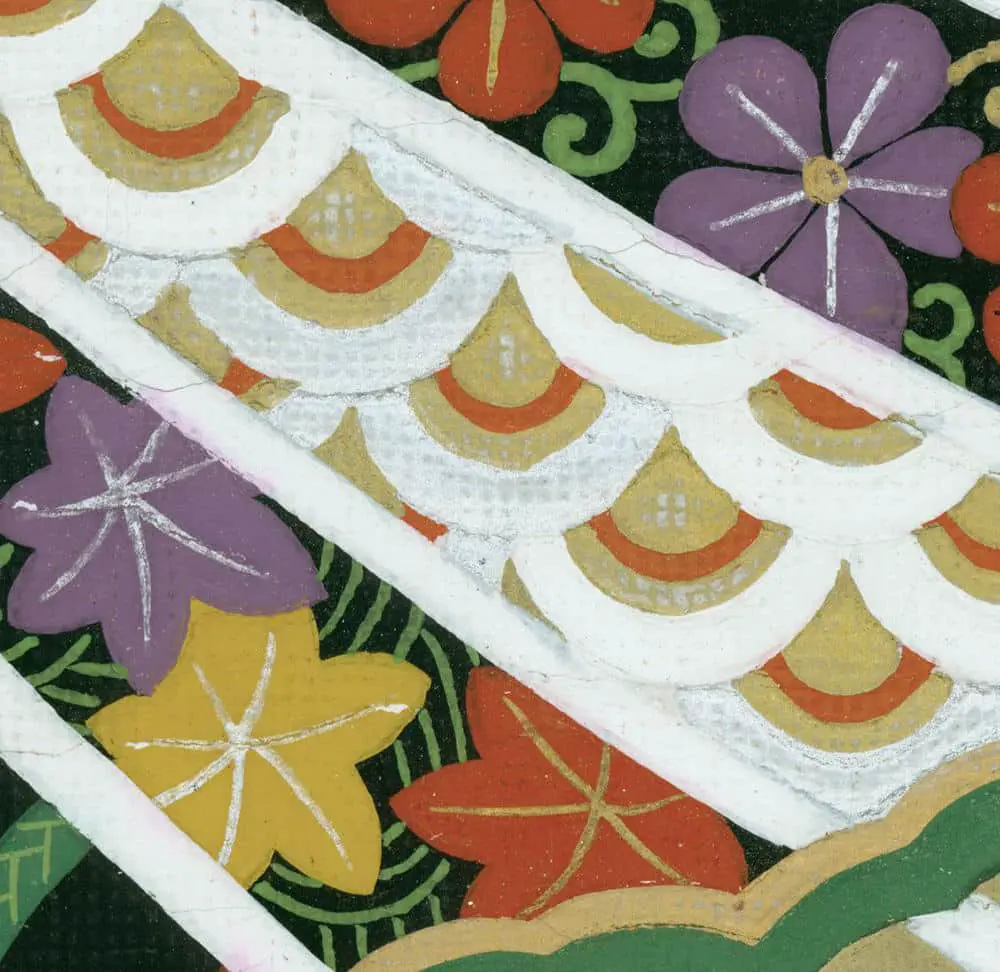
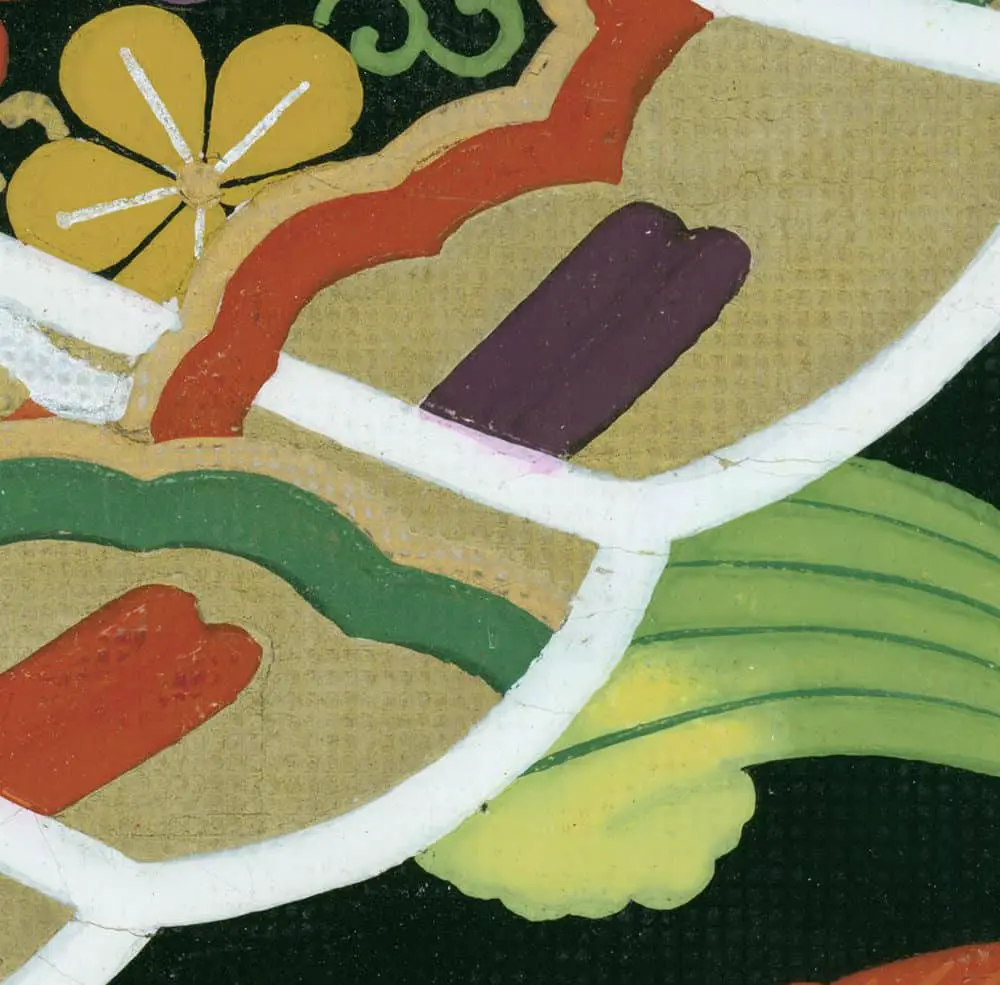
This striking hand-painted artwork is an original and unique creation from Japan, dating to the Mid-Showa period (1945–1965). Measuring 12 inches by 30 inches (30 cm x 76 cm), this distinctive piece was crafted by a talented artist in Kyoto's renowned Nishijin district, the historical center of high-end textile weaving. Painted on thick paper, the work served as a technical template for a woven obi, the wide traditional belt worn with a kimono. While the piece exhibits some minor paint cracking due to its age and the thickness of the pigments, it remains in very good condition and serves as a vital record of mid-century textile innovation.
The composition features a series of overlapping folding fans (sensu) that create a sense of dramatic, rhythmic movement across a deep forest-green ground. Each fan is a canvas in itself, densely packed with seasonal motifs including autumnal maple leaves (momiji), cherry blossoms (sakura), and geometric shippo (seven treasures) patterns. The palette is a rich tapestry of rust-orange, violet, ochre, and pale teal, accented with crisp white scalloped edges that give the fans a tiered, architectural appearance. Long, slender orange tassels or floral buds sweep through the background, unifying the layered fans into a single, cohesive visual flow.

Payment Options: We primarily accept PayPal for all transactions. Credit and debit cards are not accepted. If you prefer to pay by personal check instead of PayPal, please note this preference in the "Additional comments" field when placing your order.Ordering Process
To receive your PayPal invoice, simply fill out the form.
Shipping Details: We ship all orders to the address associated with your PayPal payment. Please ensure your PayPal shipping address is current and accurate.A phone number is required during checkout, as our shipping carrier may need to contact you regarding delivery questions.Shipping RatesUnited States and Canada: $20International destinations (air mail): $40
