Copyright © 2026 Yorke Antique Textiles
.avif)


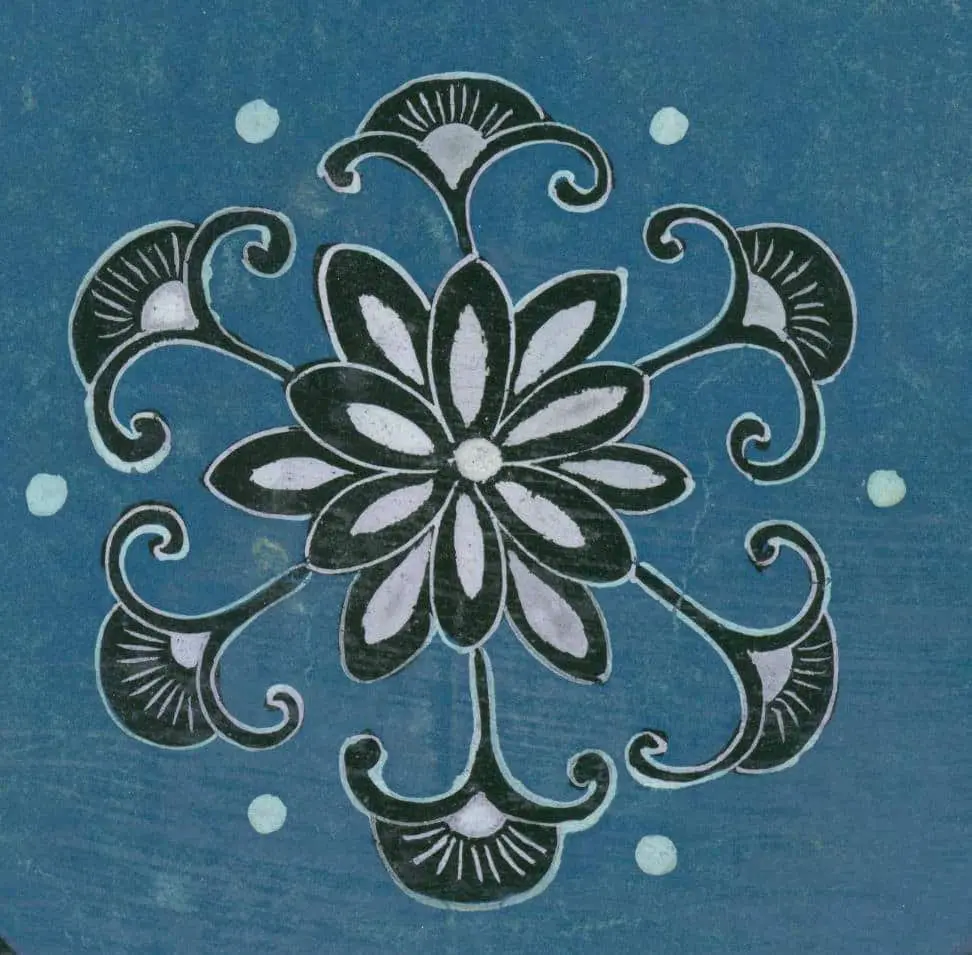


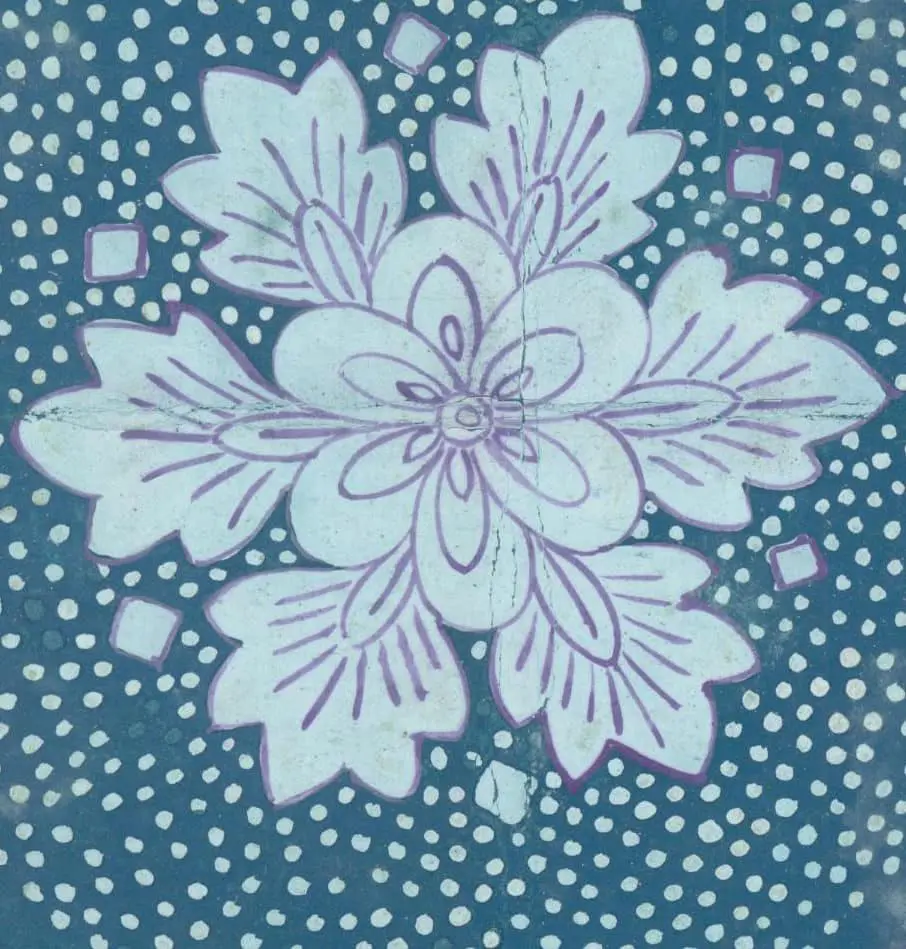

This striking hand-painted watercolor is an original and distinctive artwork from Japan, dating to the Late Taisho to Early Showa period (1920–1940). Measuring 22 inches by 18 inches (56 cm x 46 cm), this piece was meticulously crafted to serve as a high-fidelity design for yūzen resist-dye work on a silk kimono. The artwork remains in very good condition, showcasing a transition from classical floral aesthetics toward the bold, structured geometric patterns that gained popularity during Japan's early 20th-century modernization.
The composition features a rhythmic, repeating layout of large octagonal medallions set against a secondary grid of checkered diamond bands. The color palette is dominated by sophisticated shades of indigo blue, slate grey, and deep violet, accented by fine white stippling that creates a textured, "shibori-like" effect within the octagons. Each medallion contains a stylized, four-pointed floral motif resembling a clematis or a hybrid heraldic crest, rendered with sharp, calligraphic precision. The intricate black-and-white checkered borders suggest a technical complexity intended to be translated into the precise resist-pasting and hand-dyeing steps of the yūzen process.
This artwork is featured on page 162 of Art Kimono: Aesthetic Revelations of Japan, 1905-1960. This book, published by Yorke Antique Textiles, can be previewed or purchased on our website here.

Payment Options: We primarily accept PayPal for all transactions. Credit and debit cards are not accepted. If you prefer to pay by personal check instead of PayPal, please note this preference in the "Additional comments" field when placing your order.Ordering Process
To receive your PayPal invoice, simply fill out the form.
Shipping Details: We ship all orders to the address associated with your PayPal payment. Please ensure your PayPal shipping address is current and accurate.A phone number is required during checkout, as our shipping carrier may need to contact you regarding delivery questions.Shipping RatesUnited States and Canada: $20International destinations (air mail): $40
