Copyright © 2026 Yorke Antique Textiles
.avif)


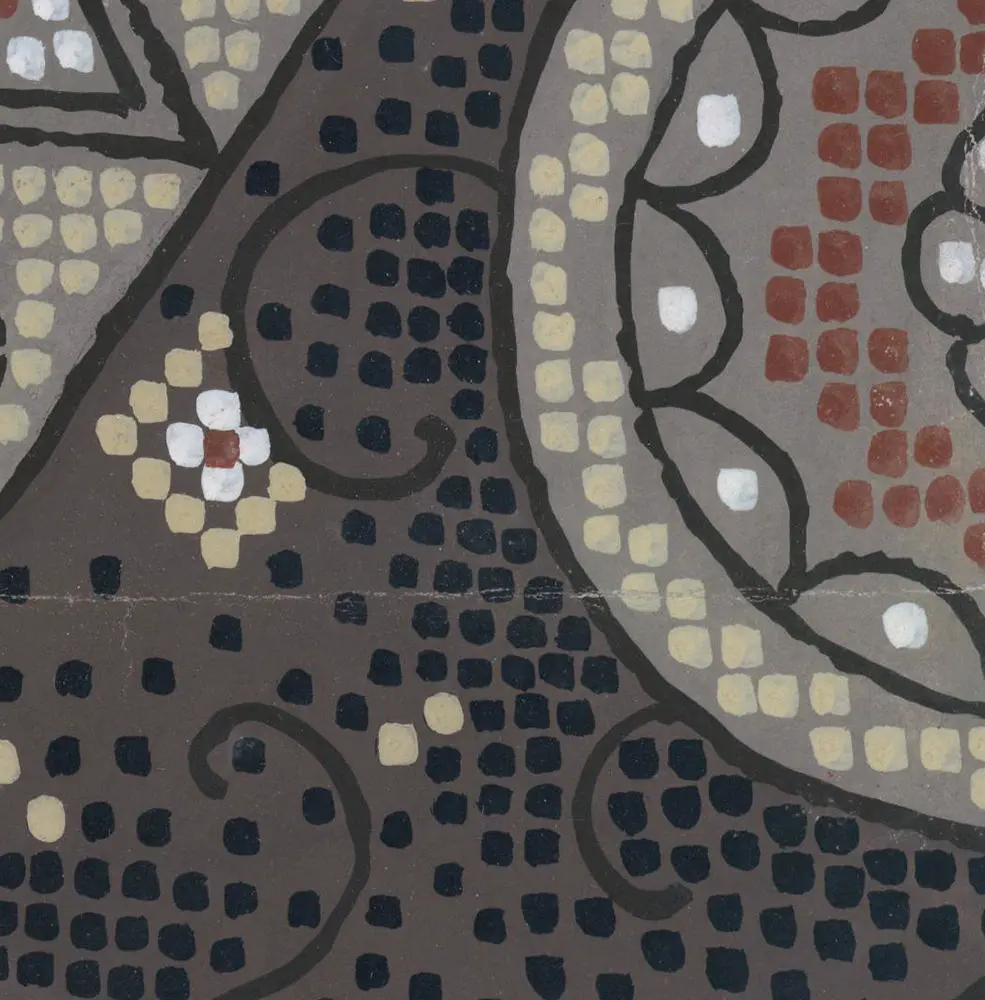
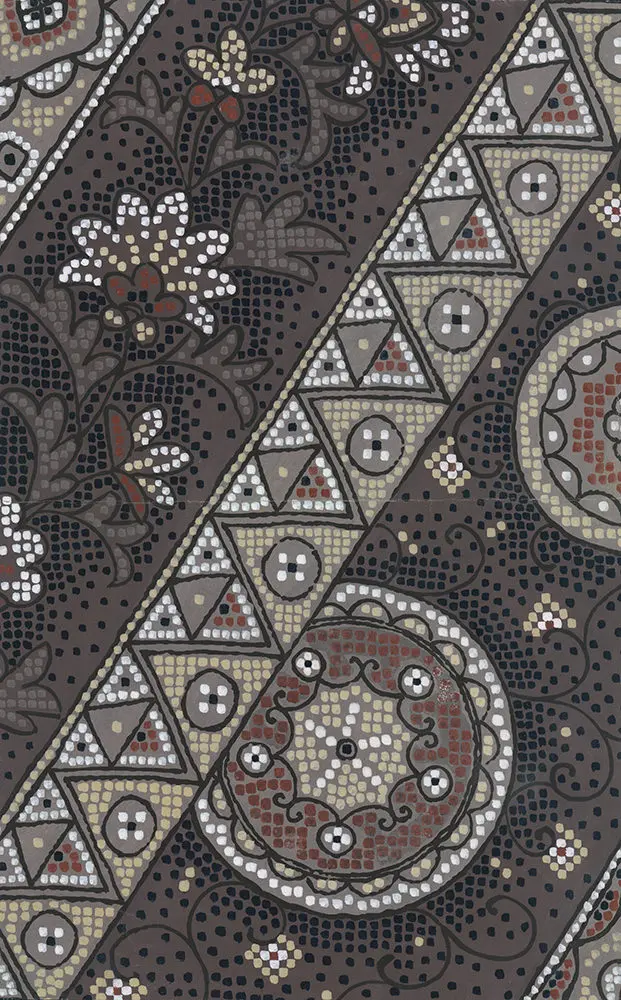
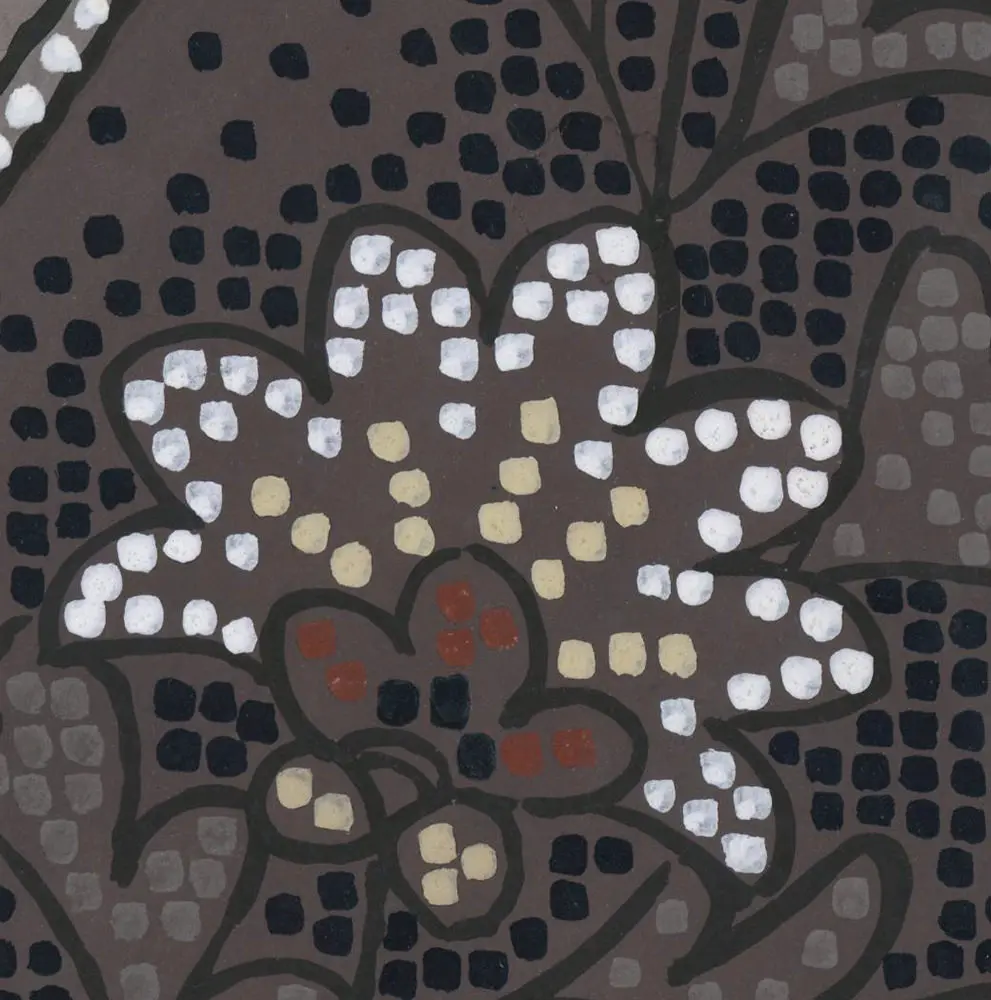
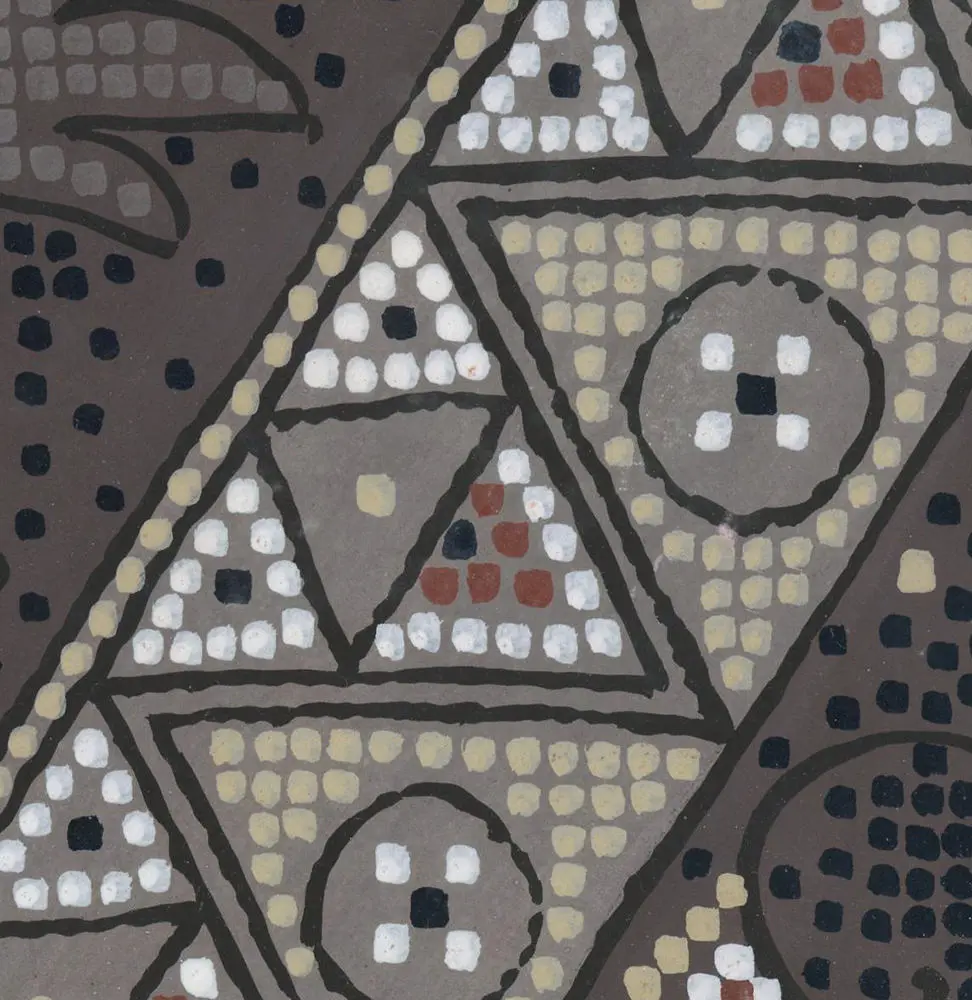
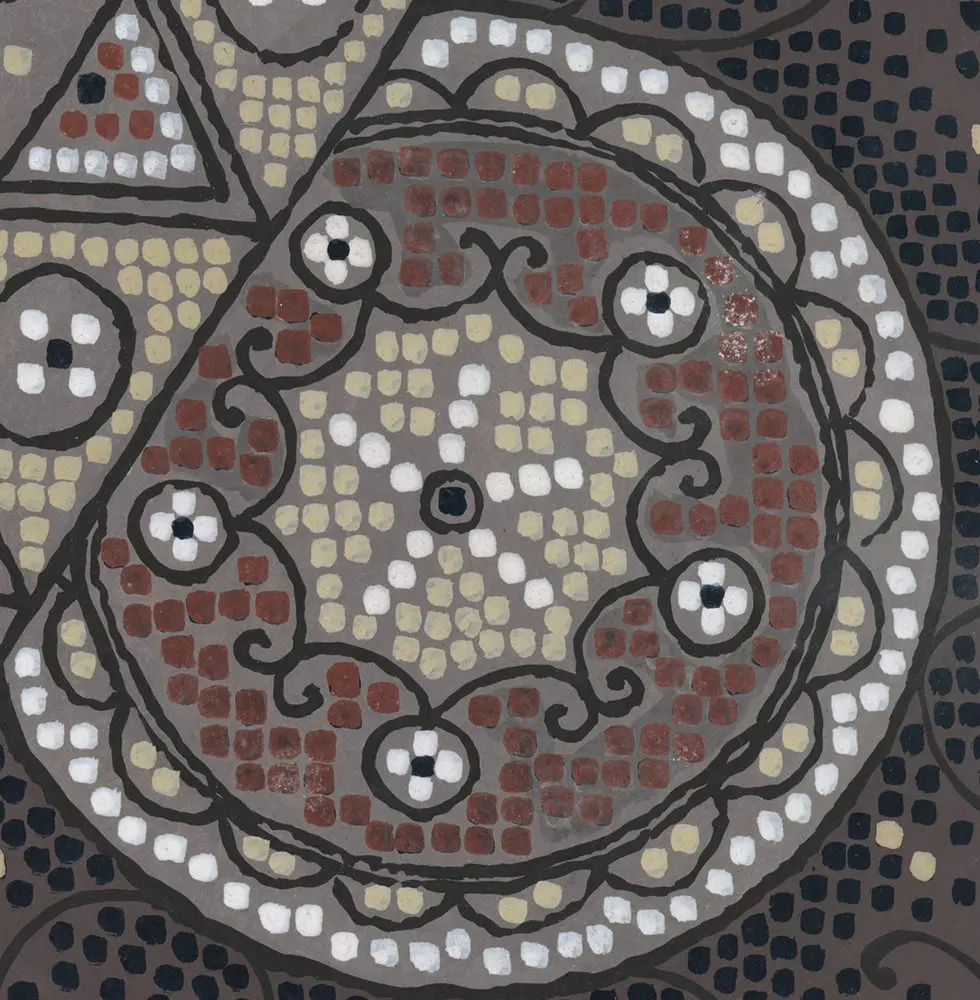

This intricate hand-painted watercolor is a unique original creation from Japan, dating to the Late Taisho to Early Showa period (1920–1940). Measuring 22 inches by 18 inches (56 cm x 46 cm), this artwork was meticulously designed to serve as a high-fidelity blueprint for yuzen resist-dye work on a silk kimono. The piece remains in very good condition, showcasing a sophisticated "pointillist" technique that mimics the complex appearance of woven or embroidered textures.
The composition is a masterful dense pattern of geometric and floral motifs rendered in a muted, earthy palette of charcoal, taupe, and terracotta. It features a prominent diagonal band filled with repeating triangular and circular geometric shapes, which bisects the frame. Above and below this band, the artist has placed large circular medallions and sprawling floral sprays, all created using a minute stippling or "mosaic" effect of tiny square and round dots. Delicate, scrolling karakusa (arabesque) vines wind through the background, connecting the various decorative elements and reflecting the refined, experimental aesthetic of pre-war Japanese textile art.
This artwork is featured on page 162 of Art Kimono: Aesthetic Revelations of Japan, 1905-1960. This book, published by Yorke Antique Textiles, can be previewed or purchased on our website here.

Payment Options: We primarily accept PayPal for all transactions. Credit and debit cards are not accepted. If you prefer to pay by personal check instead of PayPal, please note this preference in the "Additional comments" field when placing your order.Ordering Process
To receive your PayPal invoice, simply fill out the form.
Shipping Details: We ship all orders to the address associated with your PayPal payment. Please ensure your PayPal shipping address is current and accurate.A phone number is required during checkout, as our shipping carrier may need to contact you regarding delivery questions.Shipping RatesUnited States and Canada: $20International destinations (air mail): $40
