Copyright © 2026 Yorke Antique Textiles
.avif)

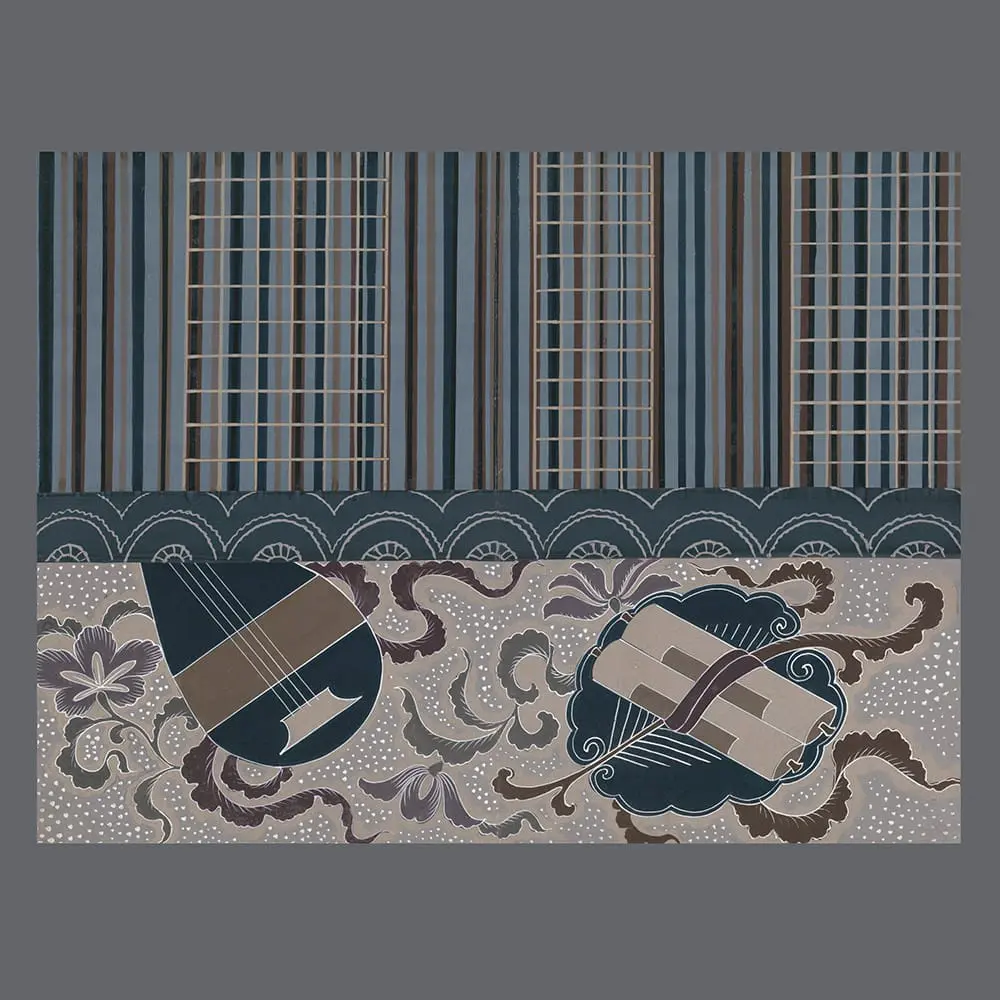
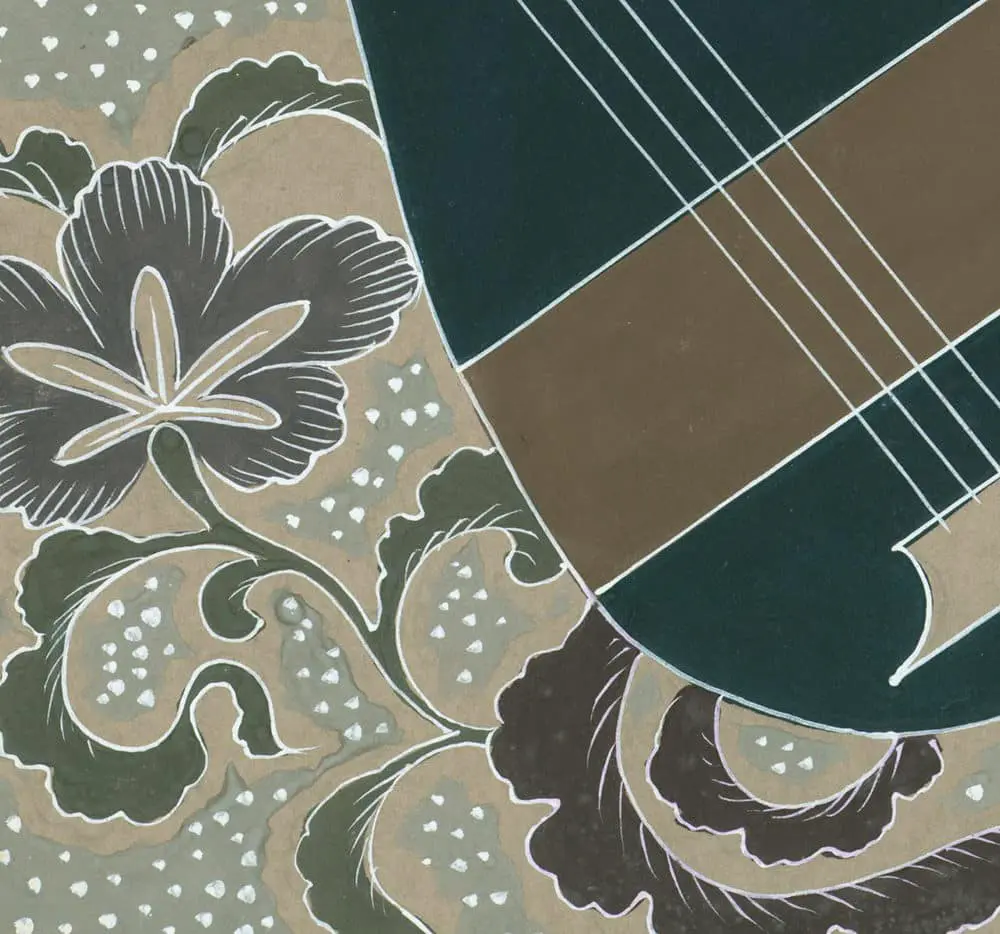
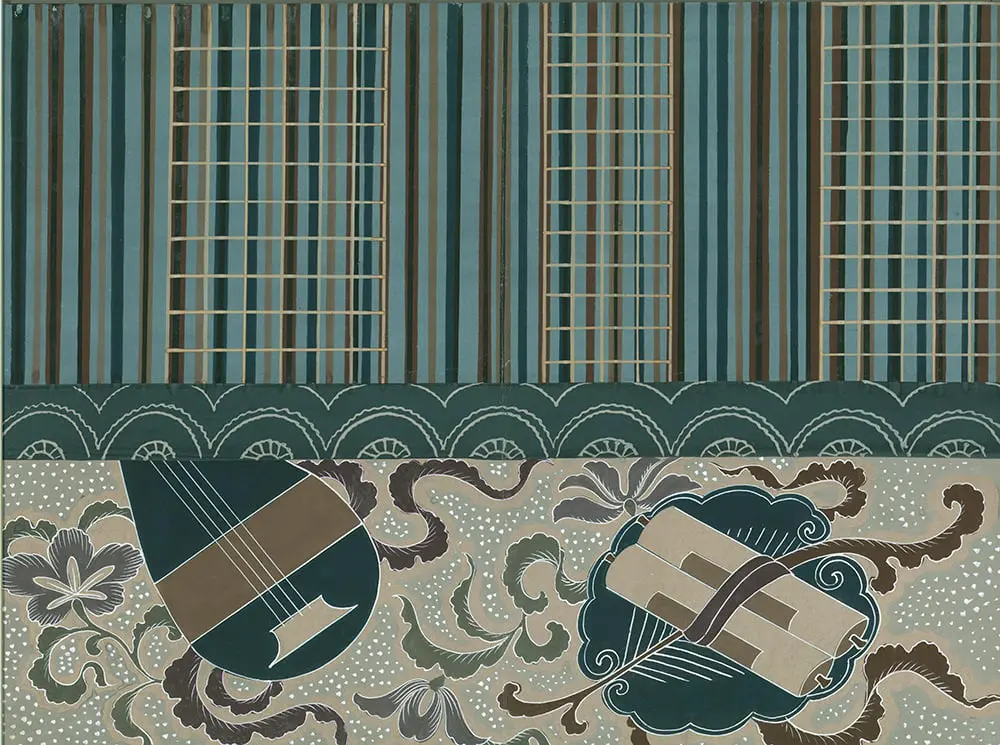
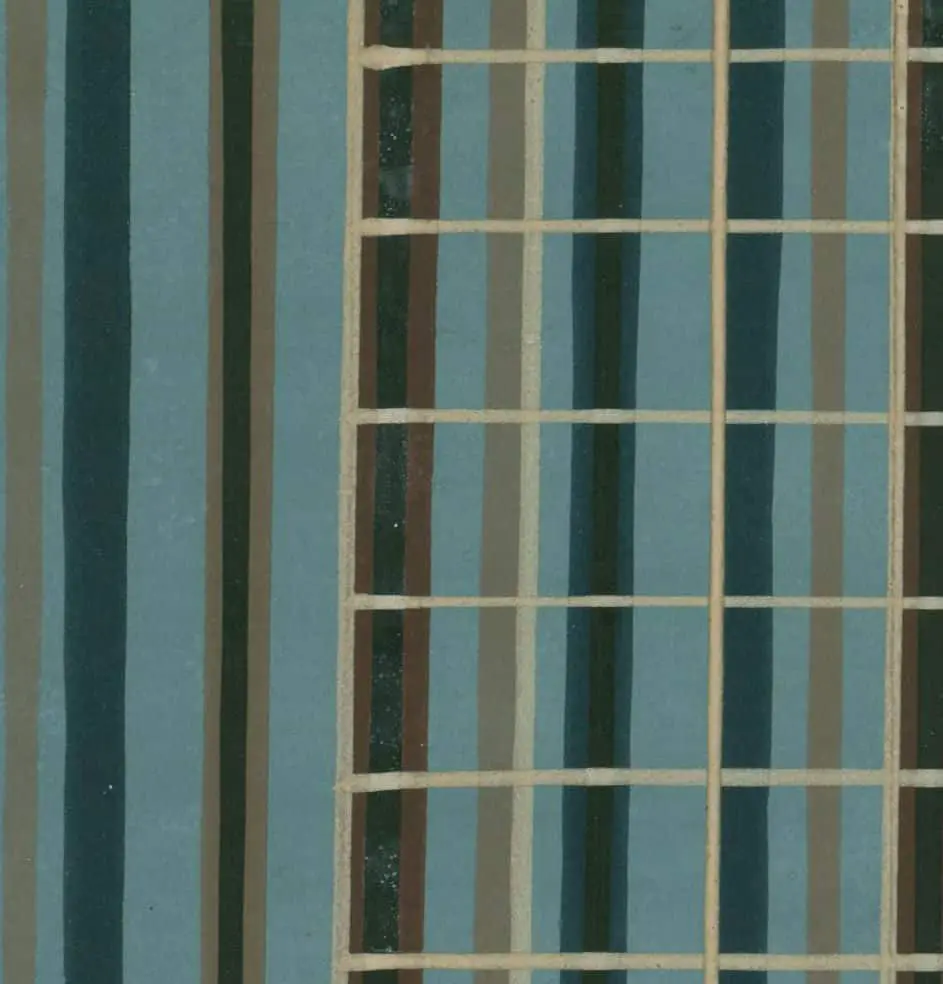

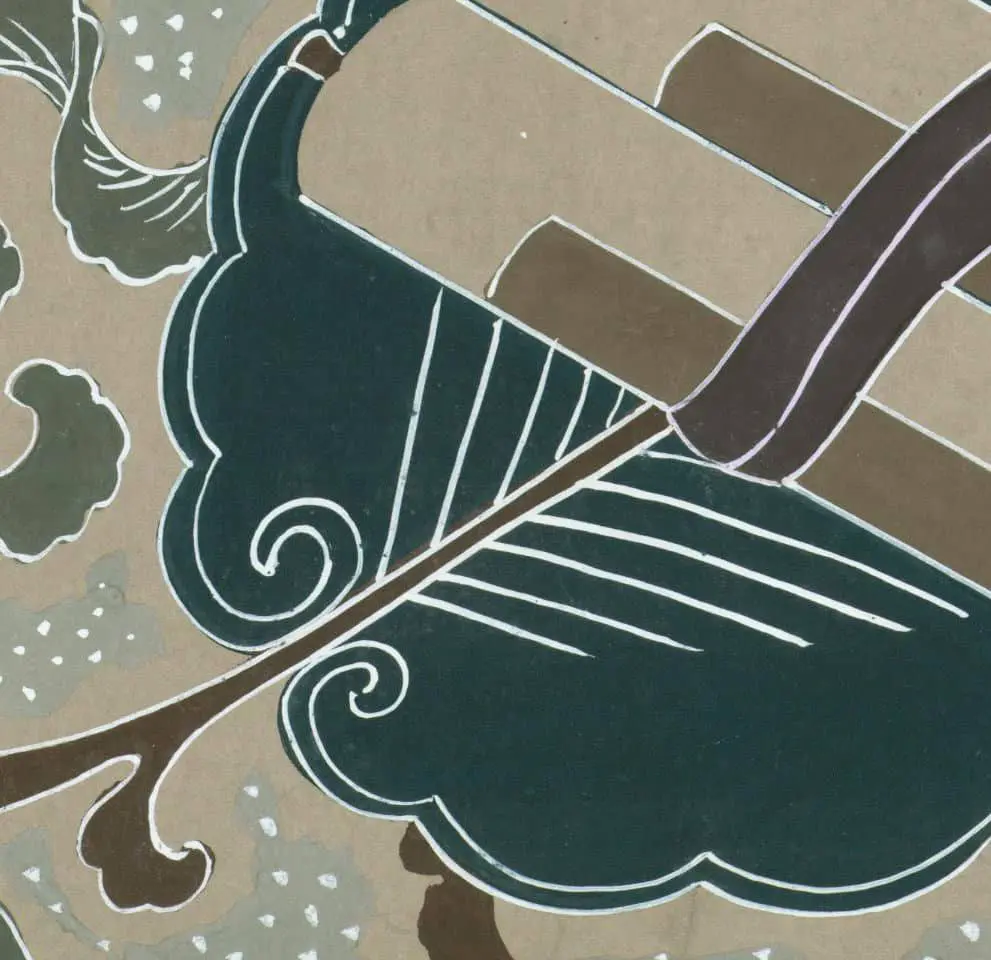
This striking hand-painted watercolor is a unique original creation from Japan, dating to the Late Taisho to Early Showa period (1920–1940). Measuring 25 inches by 10 inches (64 cm x 25 cm), this piece was meticulously designed as a technical blueprint for yuzen resist-dye work on a silk kimono. The artwork remains in very good condition, showcasing a sophisticated composition that divides the visual field into distinct thematic zones, reflecting the structured elegance of high-end textile workshops.
The composition features a fascinating juxtaposition of rigid geometric patterns and fluid organic forms. The upper section is dominated by a series of vertical blue and brown stripes, overlaid with golden rectangular grids that mimic architectural screens or lattice-work. A wave-like border of scalloped navy blue separates this from the lower section, which contains traditional cultural motifs including a biwa (Japanese lute) and a tied scroll. These instruments are set against a background of swirling acanthus-style vines and white stippling, all rendered in a refined palette of slate blue, charcoal, and warm taupe.
This artwork is featured on page 162 of Art Kimono: Aesthetic Revelations of Japan, 1905-1960. This book, published by Yorke Antique Textiles, can be previewed or purchased on our website here.

Payment Options: We primarily accept PayPal for all transactions. Credit and debit cards are not accepted. If you prefer to pay by personal check instead of PayPal, please note this preference in the "Additional comments" field when placing your order.Ordering Process
To receive your PayPal invoice, simply fill out the form.
Shipping Details: We ship all orders to the address associated with your PayPal payment. Please ensure your PayPal shipping address is current and accurate.A phone number is required during checkout, as our shipping carrier may need to contact you regarding delivery questions.Shipping RatesUnited States and Canada: $20International destinations (air mail): $40
