Copyright © 2026 Yorke Antique Textiles
.avif)

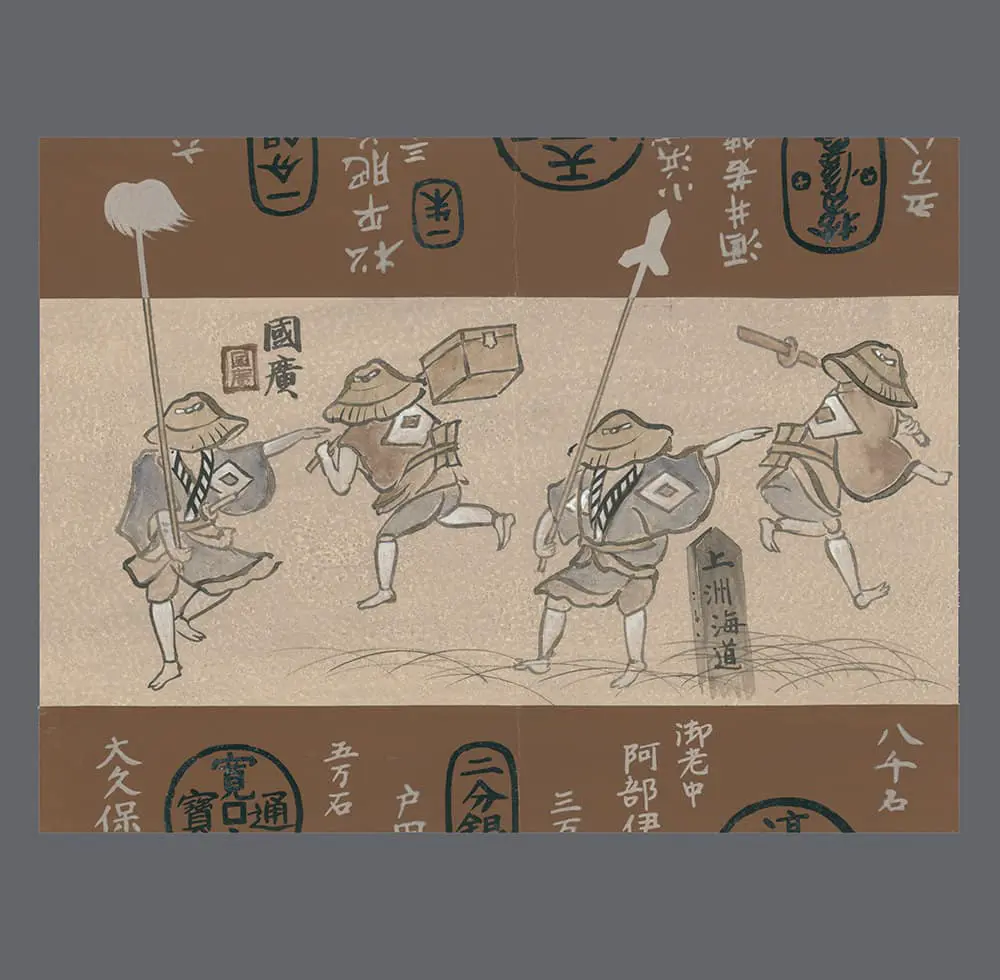
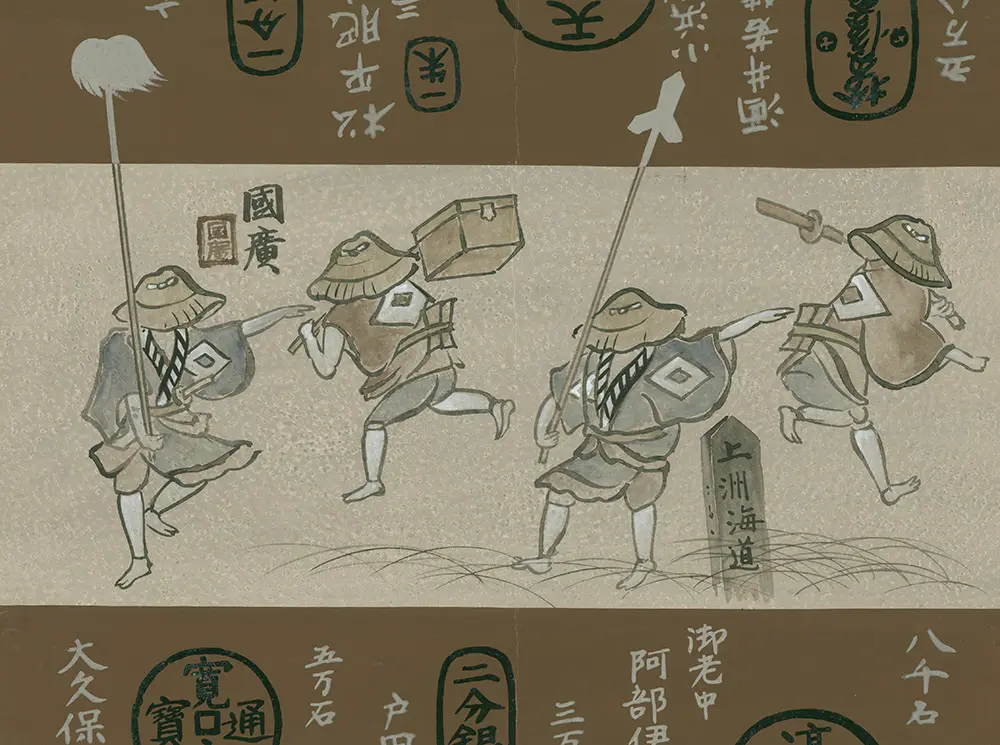

This narrative hand-painted watercolor is an original and distinct artwork from Japan, dating to the Late Taisho to Early Showa period (1920–1940). Measuring 16 inches by 12 inches (41 cm x 30 cm), this piece was specifically crafted by a Japanese artist to serve as a high-fidelity technical blueprint for yuzen resist-dye work on a silk kimono. The artwork remains in very good condition, showcasing a rare and whimsical "story-book" style that translates historical Edo-period genre painting into a mid-century textile format.
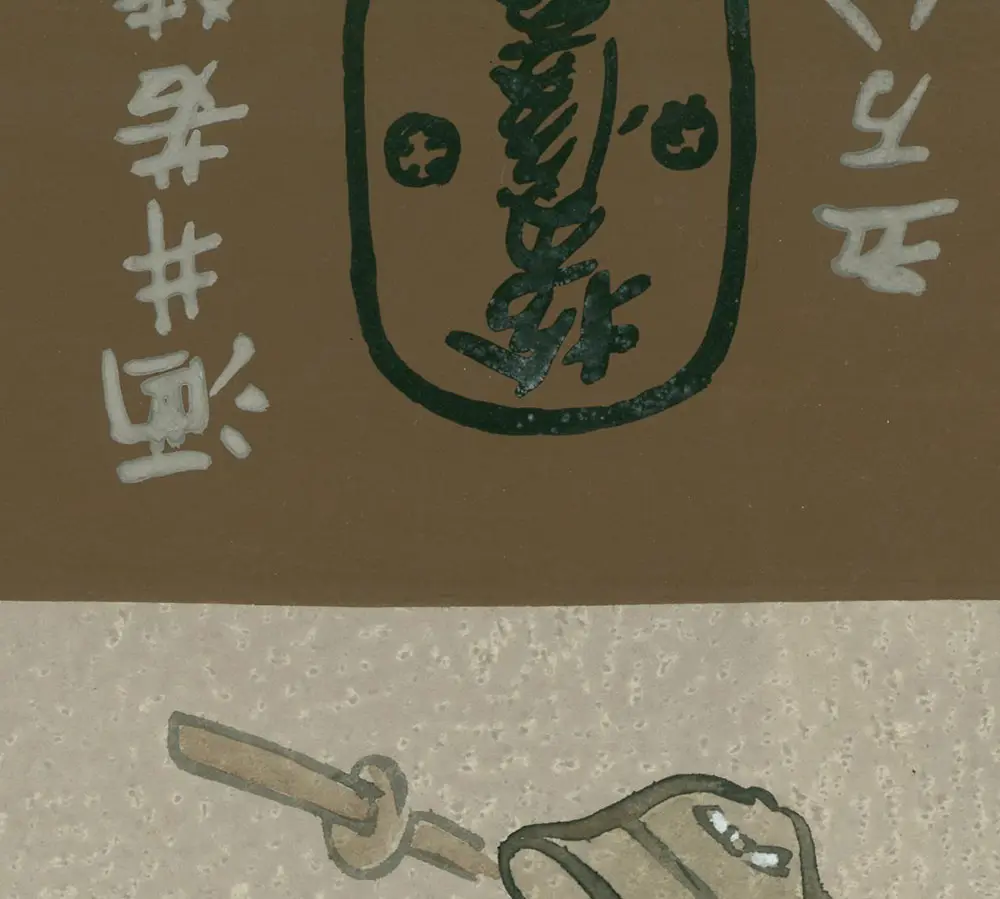
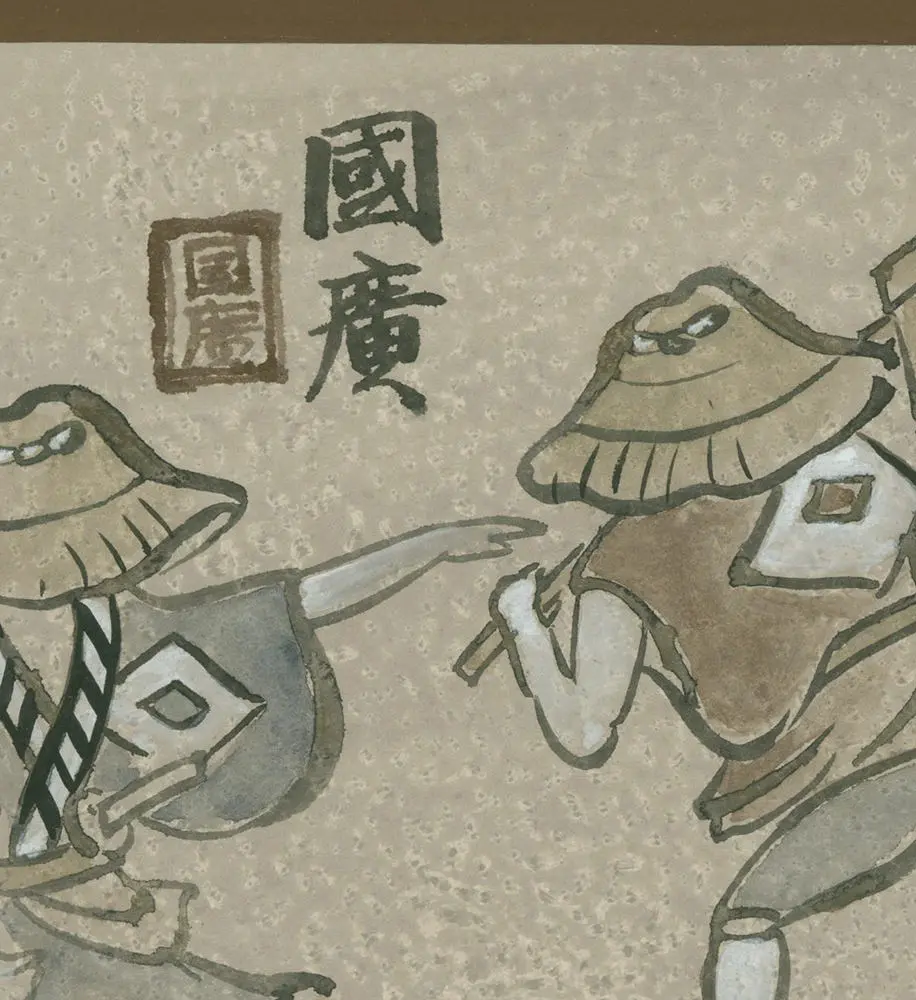
The composition is arranged in a horizontal band against a warm sandy-beige ground, depicting four stylized figures in a daimyo procession (sankin kotai) traveling along the Joshu Kaido (indicated by the wooden road marker). The figures are rendered with expressive, calligraphic linework, dressed in traditional travel attire including straw hats and indigo-blue garments. One attendant carries a tall ceremonial pole topped with a white plume, while another balances a traveling chest over his shoulder. The central scene is framed by dark ochre borders featuring bold black seals and calligraphy, mimicking the appearance of antique scrolls or historic currency.

Payment Options: We primarily accept PayPal for all transactions. Credit and debit cards are not accepted. If you prefer to pay by personal check instead of PayPal, please note this preference in the "Additional comments" field when placing your order.Ordering Process
To receive your PayPal invoice, simply fill out the form.
Shipping Details: We ship all orders to the address associated with your PayPal payment. Please ensure your PayPal shipping address is current and accurate.A phone number is required during checkout, as our shipping carrier may need to contact you regarding delivery questions.Shipping RatesUnited States and Canada: $20International destinations (air mail): $40
