Copyright © 2026 Yorke Antique Textiles
.avif)

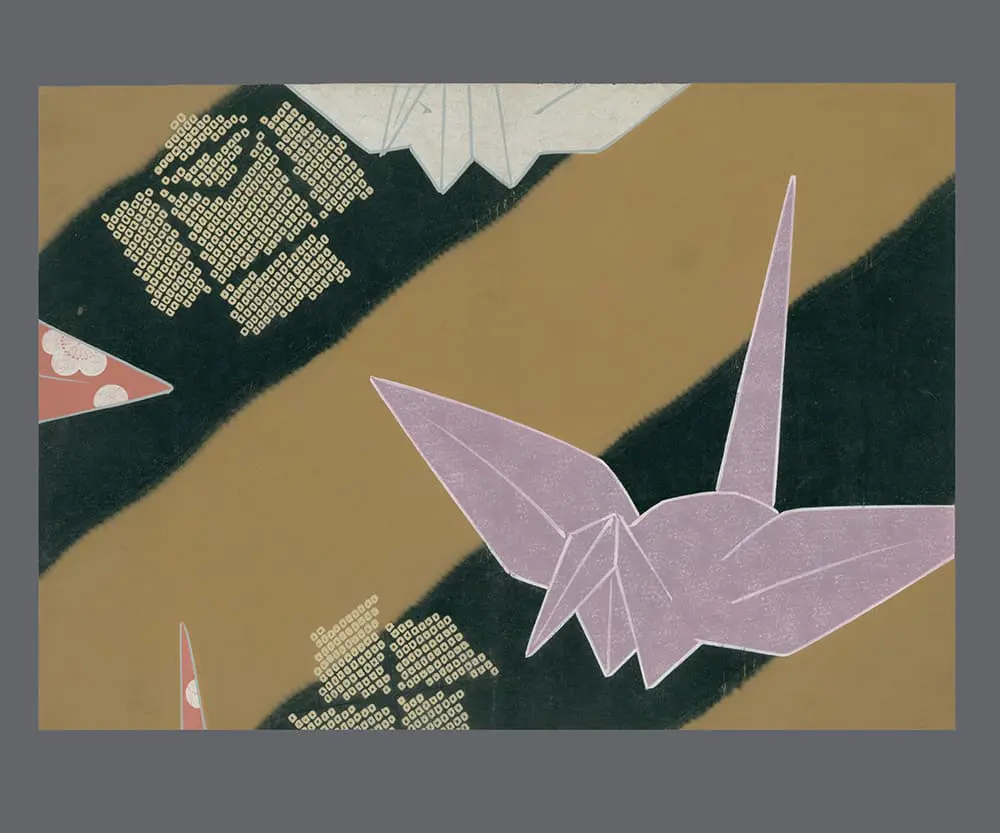
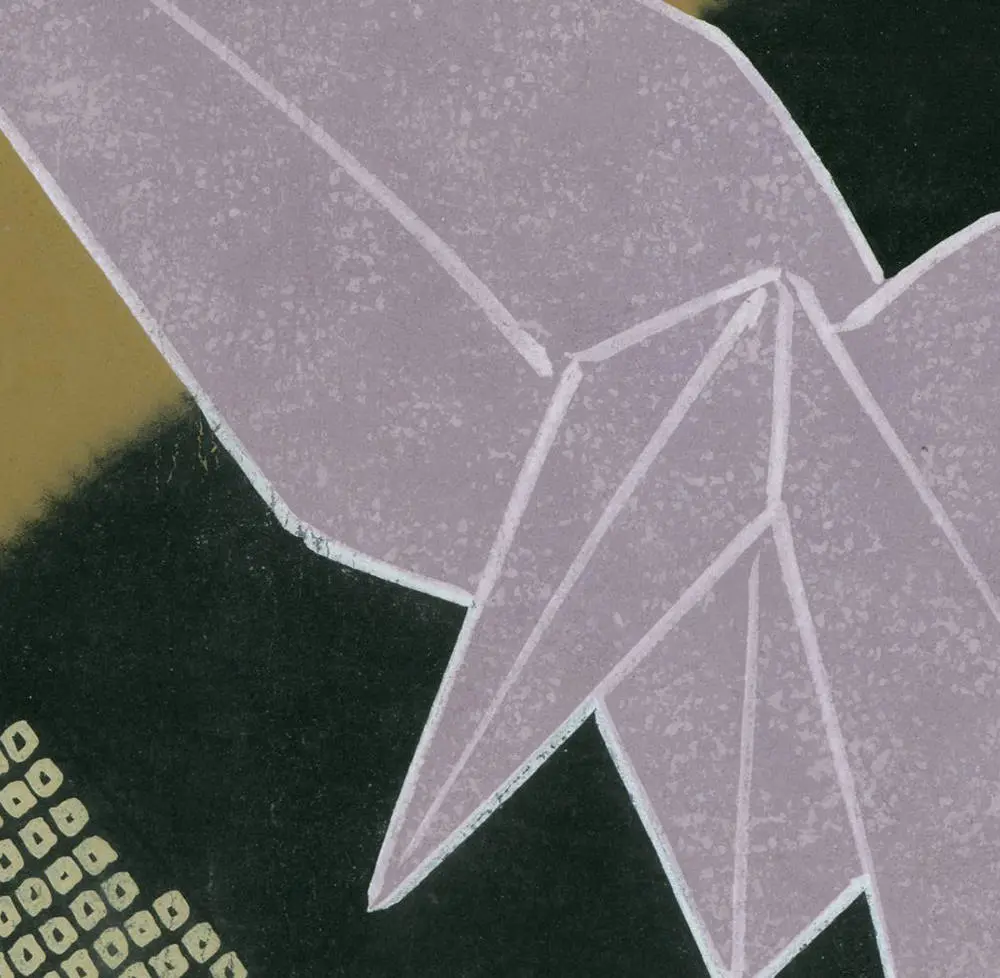
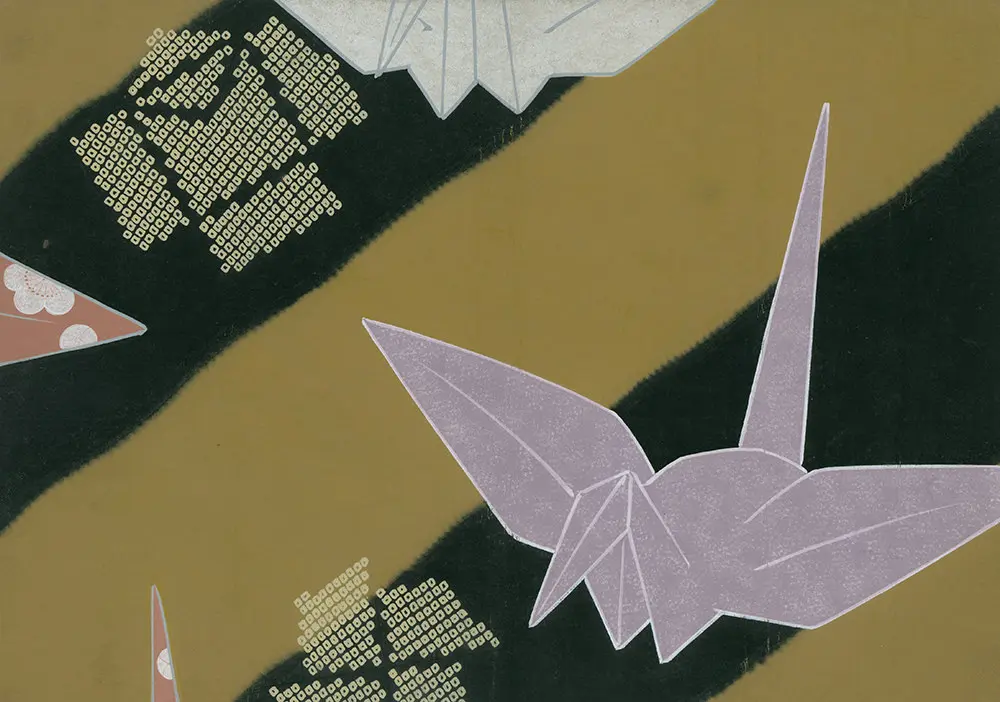
This striking hand-painted watercolor is an original and distinct artwork from Japan, dating to the Late Taisho to Early Showa period (1920–1940). Measuring 11 inches by 16 inches (28 cm x 41 cm), this piece was specifically crafted by a Japanese artist to serve as a high-fidelity blueprint for yuzen resist-dye work on a silk kimono. The artwork remains in very good condition, showcasing a bold, graphic sensibility that emerged during this era as traditional motifs were reimagined through modern design lenses.
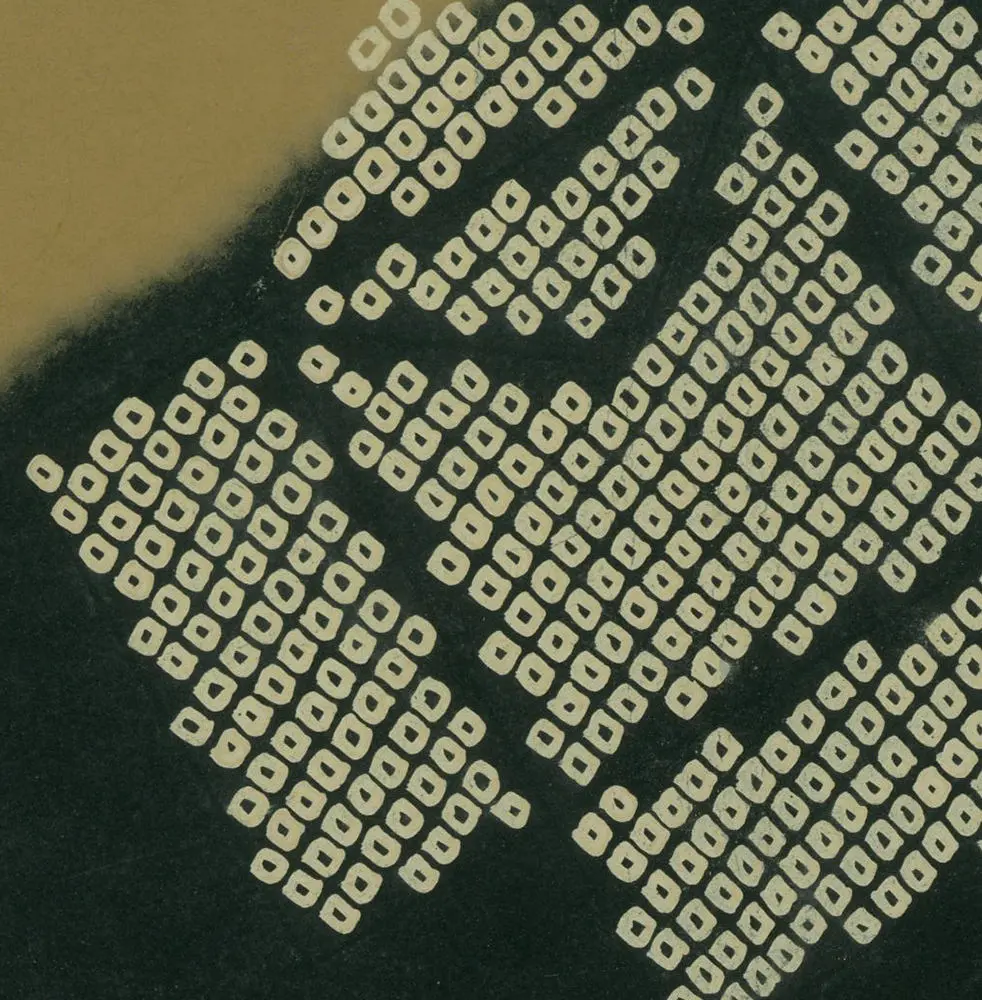
The composition is dominated by a large, stylized origami crane (orizuru) rendered in a delicate lavender-purple with crisp white outlines. This central figure is set against a dynamic background of diagonal bands in deep forest green and warm ochre-gold. Within the dark green bands, the artist has included white geometric clusters that mimic the look of kanoko (dappled) tie-dyeing, a labor-intensive technique often simulated in yuzen painting. A small, triangular fragment of a red floral pattern peaks in from the left edge, adding a sharp point of contrast to the broader fields of color and emphasizing the rhythmic, angular energy of the piece.

Payment Options: We primarily accept PayPal for all transactions. Credit and debit cards are not accepted. If you prefer to pay by personal check instead of PayPal, please note this preference in the "Additional comments" field when placing your order.Ordering Process
To receive your PayPal invoice, simply fill out the form.
Shipping Details: We ship all orders to the address associated with your PayPal payment. Please ensure your PayPal shipping address is current and accurate.A phone number is required during checkout, as our shipping carrier may need to contact you regarding delivery questions.Shipping RatesUnited States and Canada: $20International destinations (air mail): $40
