Copyright © 2026 Yorke Antique Textiles
.avif)

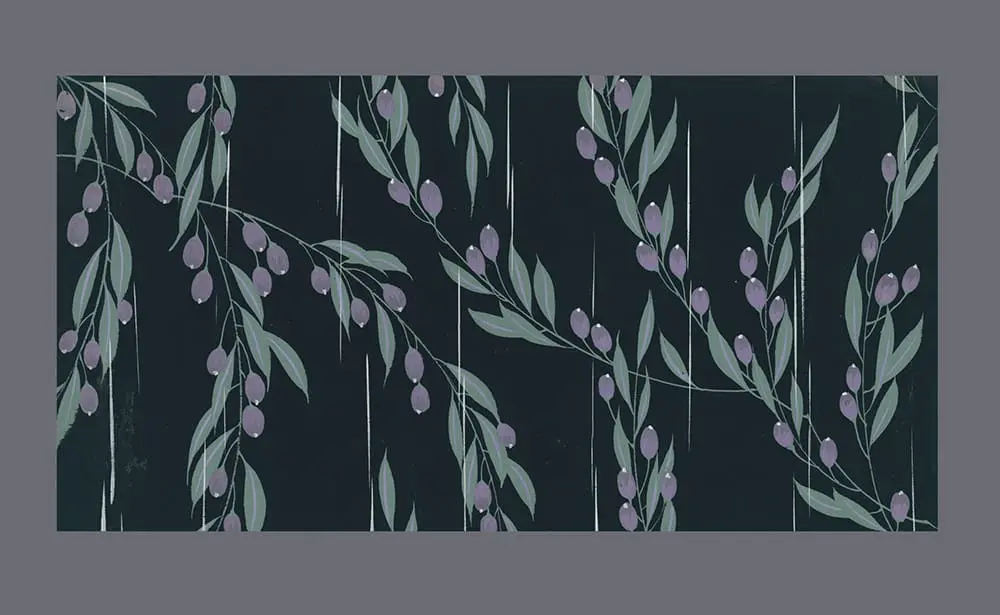
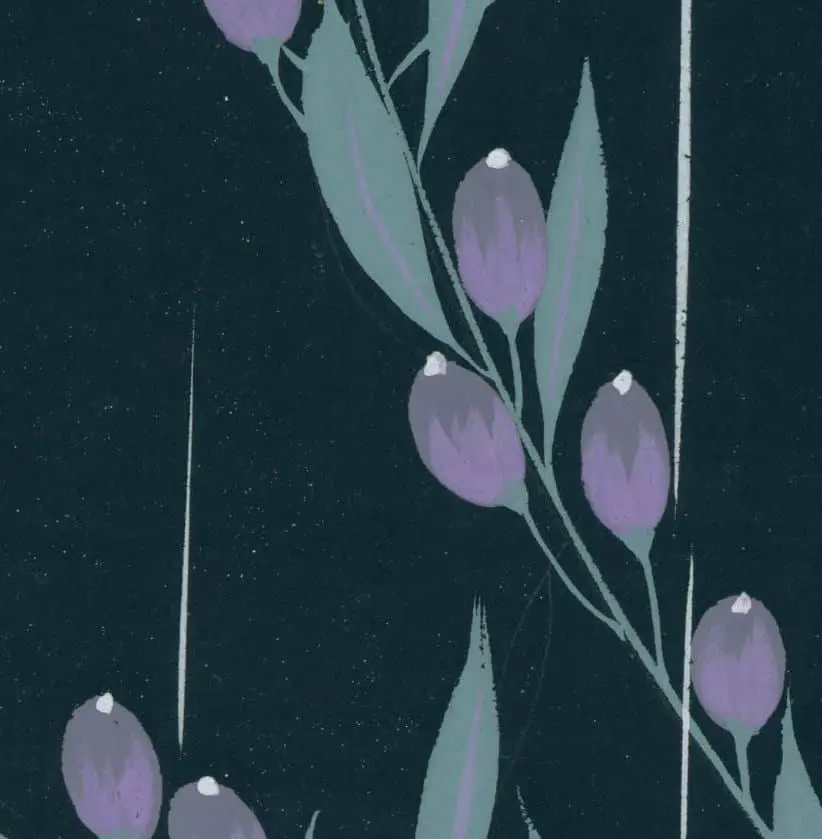
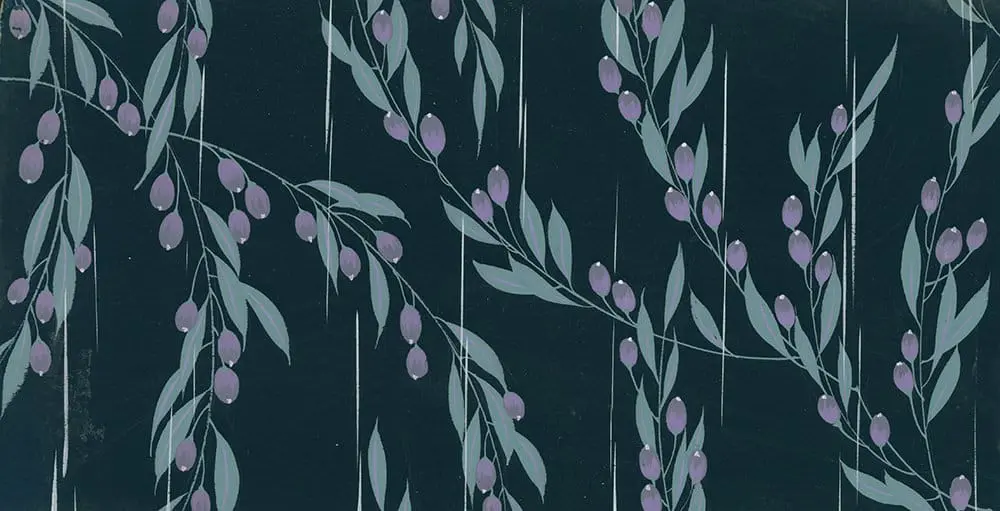
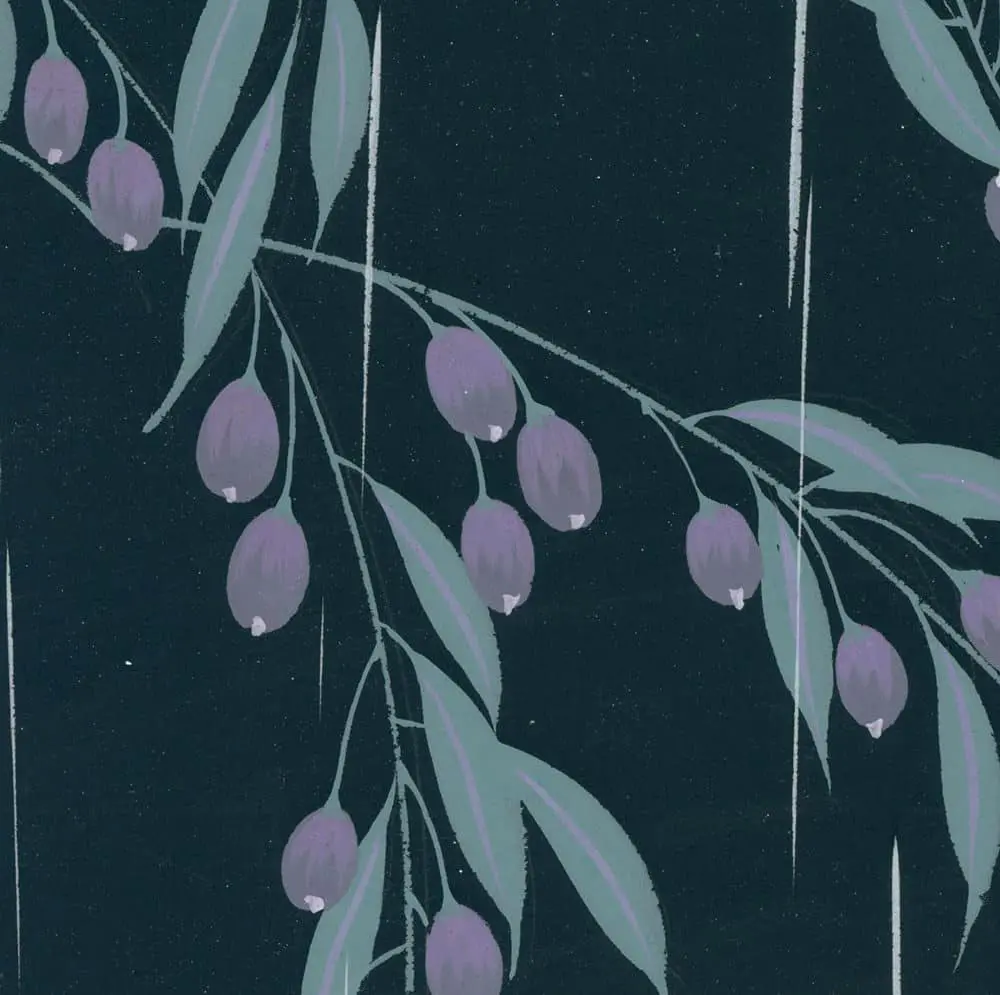
This striking hand-painted watercolor is an original and distinctive artwork from Japan, dating to the late Taisho to early Showa period (1920–1940). Created by a professional textile artist, this piece served as a precise design template for the yuzen resist-dyeing technique, a method celebrated for its ability to produce painterly, multi-colored imagery on silk kimono. Measuring 9 inches by 17 inches (23 cm x 43 cm), the work remains in very good condition, showcasing a bold, modern aesthetic that defines the transitional design era of the early 20th century.
The composition features a rhythmic arrangement of weeping willow branches heavy with dark, plum-colored berries or buds. Set against a deep, midnight-black ground, the elongated, sage-green leaves arch gracefully across the frame, connected by fluid, winding stems. Vertical white lines of varying lengths are interspersed throughout the design, cleverly suggesting a gentle, falling rain or a misty atmosphere. This linear element provides a sharp, graphic contrast to the organic curves of the willow, a characteristic of the burgeoning Art Deco influence on Japanese textiles during this period.

Payment Options: We primarily accept PayPal for all transactions. Credit and debit cards are not accepted. If you prefer to pay by personal check instead of PayPal, please note this preference in the "Additional comments" field when placing your order.Ordering Process
To receive your PayPal invoice, simply fill out the form.
Shipping Details: We ship all orders to the address associated with your PayPal payment. Please ensure your PayPal shipping address is current and accurate.A phone number is required during checkout, as our shipping carrier may need to contact you regarding delivery questions.Shipping RatesUnited States and Canada: $20International destinations (air mail): $40
