Copyright © 2026 Yorke Antique Textiles
.avif)

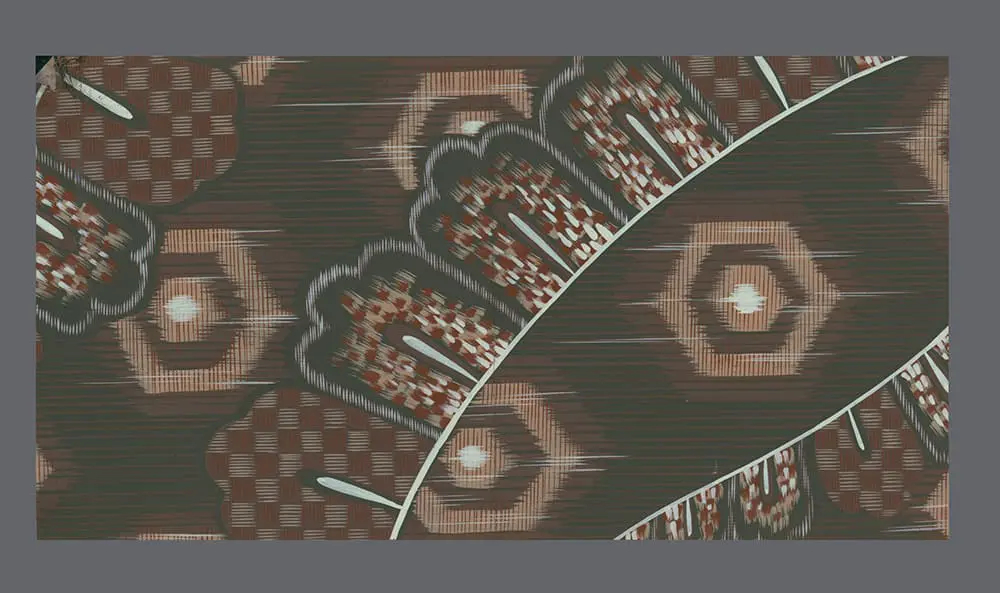
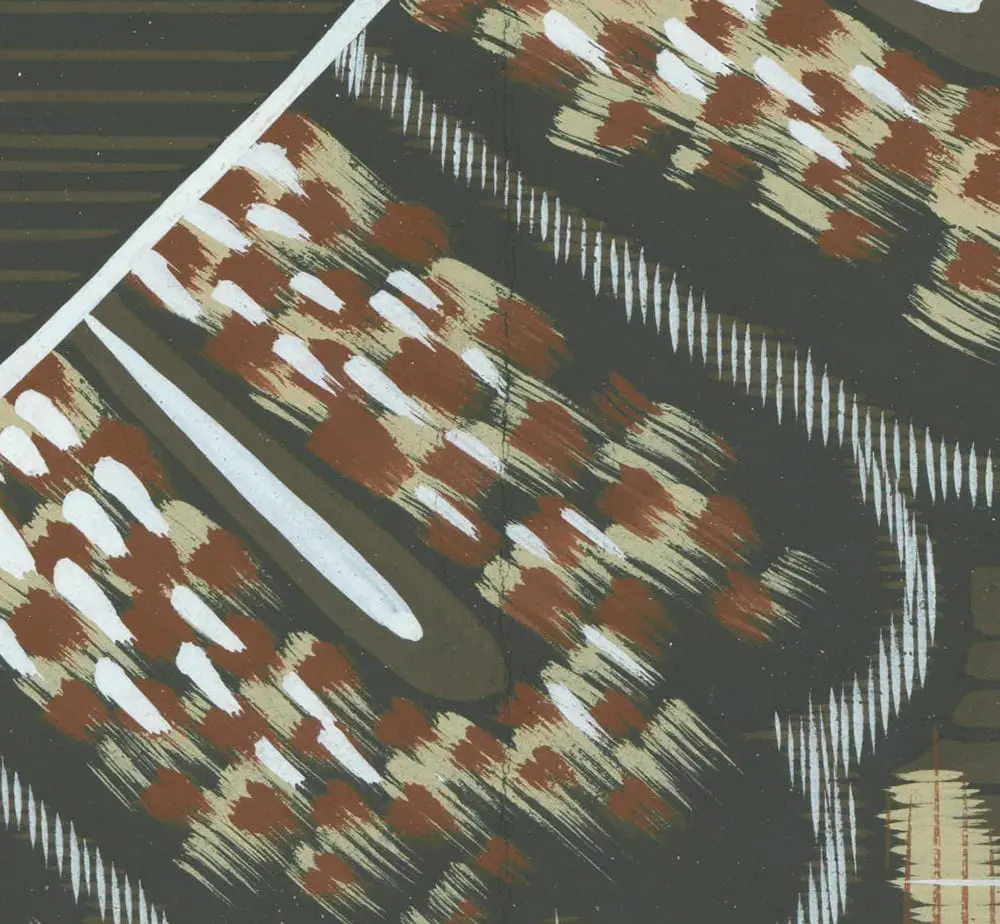
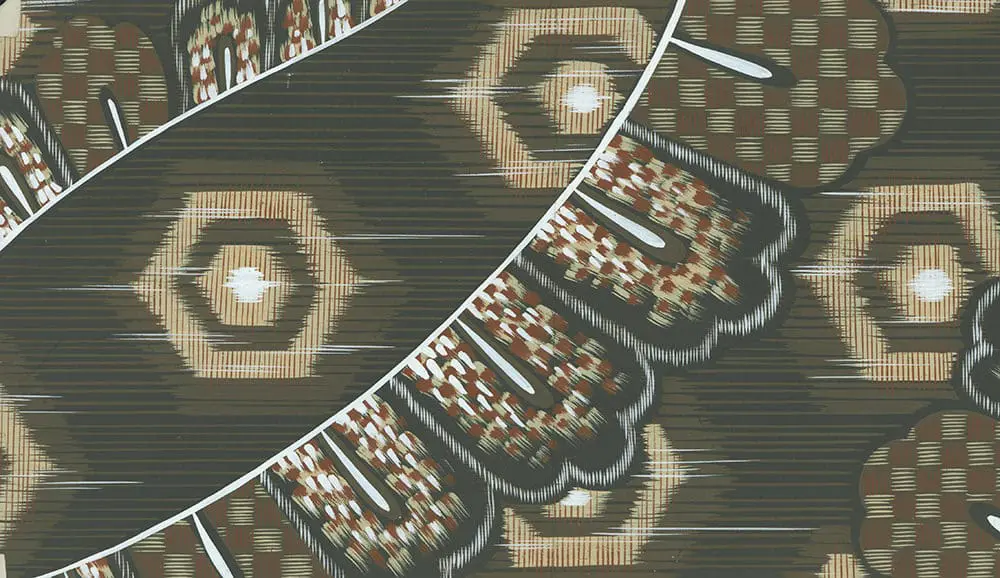
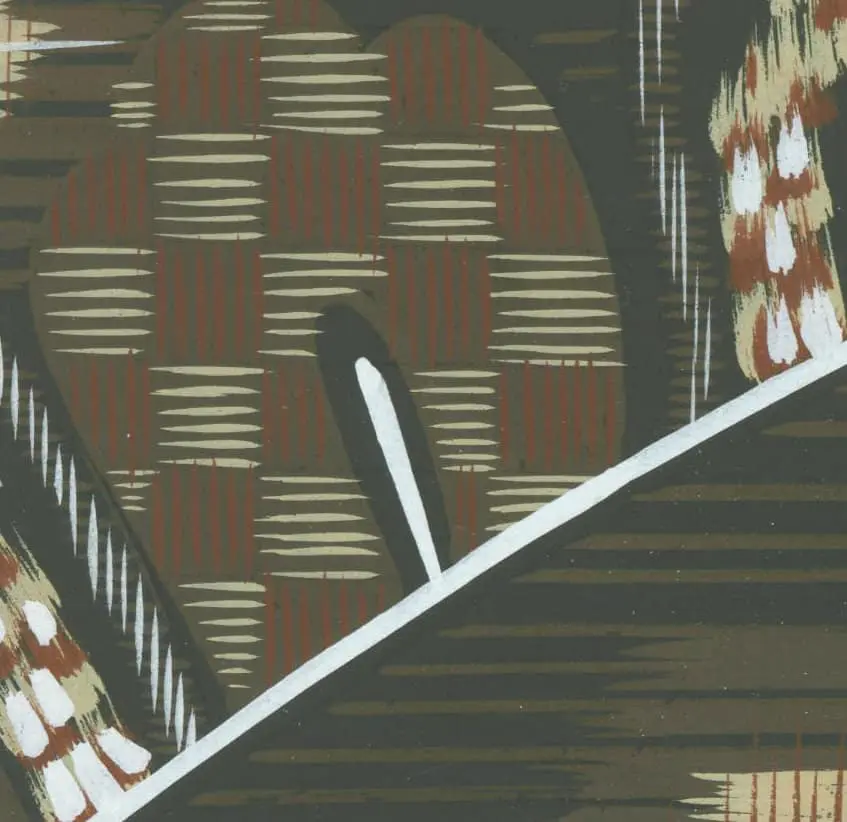
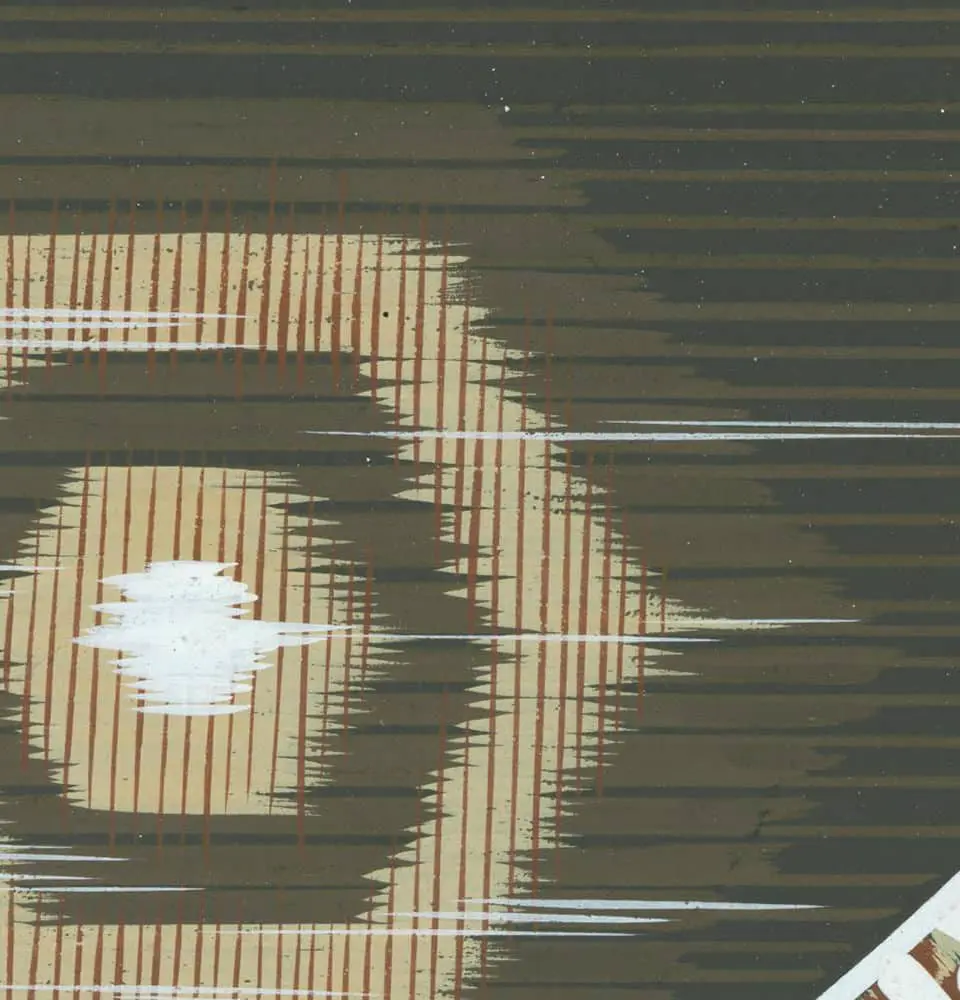
This striking hand-painted watercolor is an original and distinctive artwork from Japan, dating to the late Taisho to early Showa period (1920–1940). Created by a professional textile artist, this piece served as a precise design template for the yuzen resist-dyeing technique, intended to mimic the fashionable "kasuri" or blurred-effect look of popular Meisen silk textiles. Measuring 9 inches by 17 inches (23 cm x 43 cm), the work remains in very good condition, showcasing the avant-garde geometric sensibilities that defined the Art Deco movement in pre-war Japanese fashion.
The composition is a sophisticated arrangement of abstract motifs set against a deep chocolate-brown ground. The design is dominated by large, scalloped forms resembling stylized flower petals or clouds, filled with a dense "cross-hatch" pattern in white, ochre, and brick red. Interspersed among these are sharp hexagonal shapes with glowing white centers, adding a structured architectural rhythm to the piece. The most distinctive feature is the use of fine horizontal "striae" or "noise" lines across the entire image, a deliberate artistic choice to simulate the texture of woven ikat threads. A bold diagonal band cuts across the frame, creating a sense of dynamic movement essential for a garment intended to wrap around the human body.

Payment Options: We primarily accept PayPal for all transactions. Credit and debit cards are not accepted. If you prefer to pay by personal check instead of PayPal, please note this preference in the "Additional comments" field when placing your order.Ordering Process
To receive your PayPal invoice, simply fill out the form.
Shipping Details: We ship all orders to the address associated with your PayPal payment. Please ensure your PayPal shipping address is current and accurate.A phone number is required during checkout, as our shipping carrier may need to contact you regarding delivery questions.Shipping RatesUnited States and Canada: $20International destinations (air mail): $40
