Copyright © 2026 Yorke Antique Textiles
.avif)

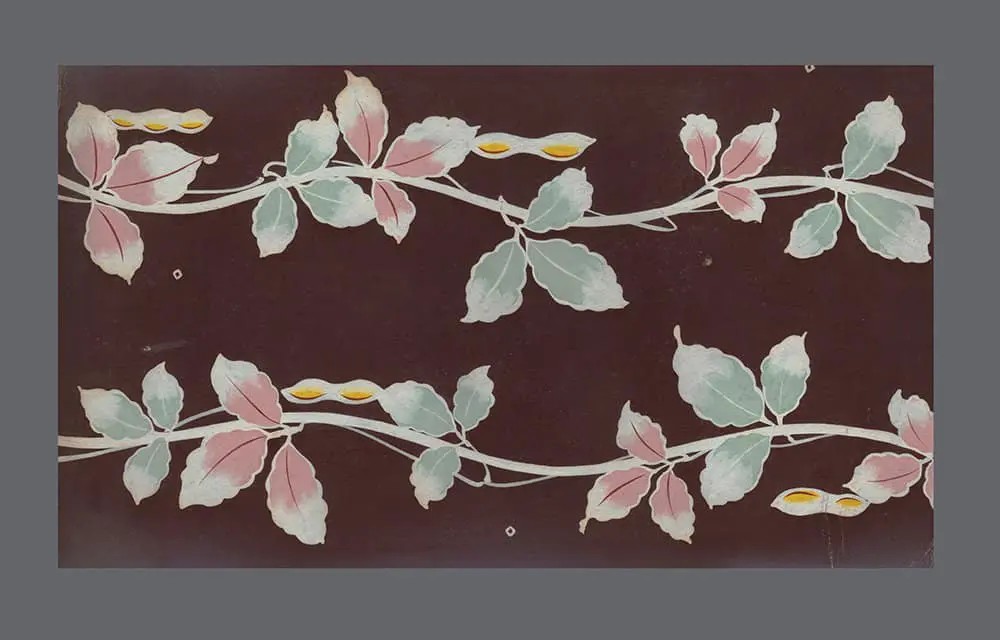
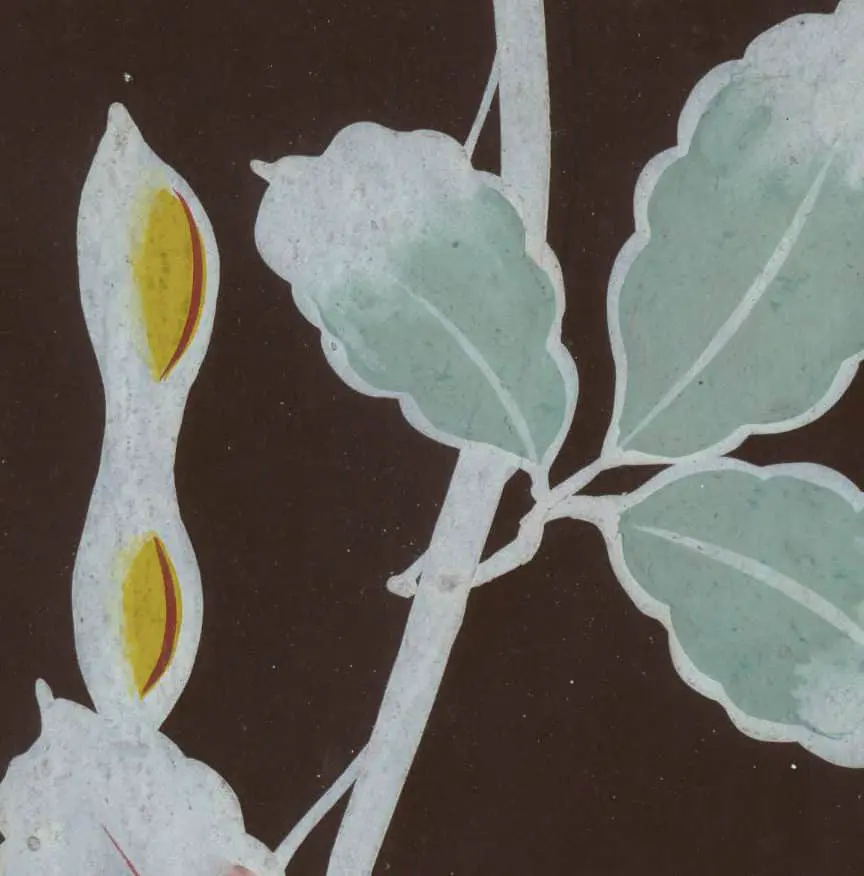
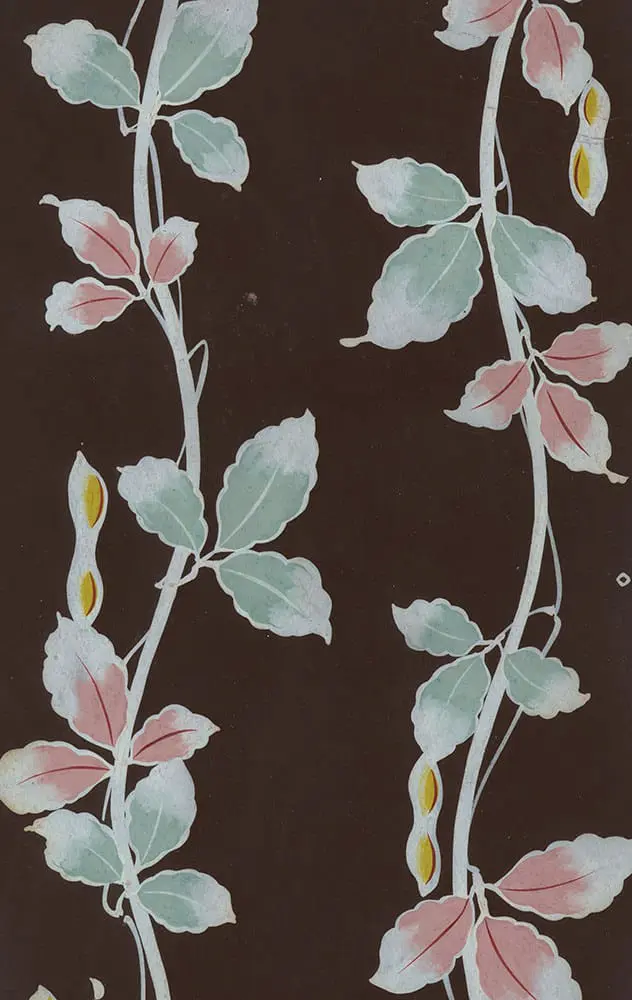
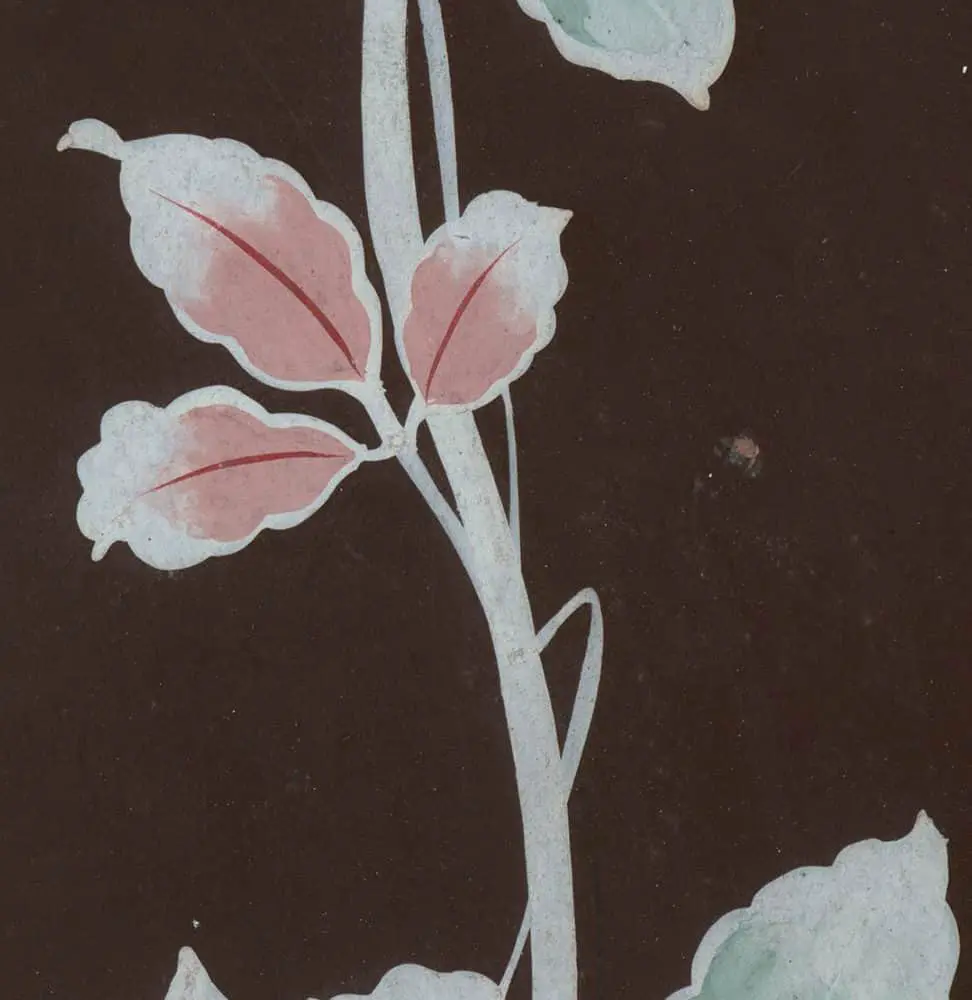
This elegant hand-painted watercolor is an original and distinctive artwork from Japan, dating to the late Taisho to early Showa period (1920–1940). Created by a professional textile artist, this piece served as a precise design template for the yuzen resist-dyeing technique, a method celebrated for its ability to produce painterly, multi-colored imagery on silk kimono. Measuring 9 inches by 17 inches (23 cm x 43 cm), the work remains in very good condition, showcasing a sophisticated botanical aesthetic that balances traditional nature motifs with a modern, structured layout.
The composition features two parallel, horizontal trailing vines set against a deep, velvety maroon ground. The leaves are rendered with delicate gradations of color, shifting from soft sage green to a gentle rose pink, capturing a sense of seasonal transition. Interspersed along the undulating white stems are stylized seed pods that have burst open to reveal bright golden-yellow beans. Each element is defined by crisp, white resist lines—a technical requirement for the yuzen artisan to prevent colors from bleeding during the dyeing process. Small, scattered diamond-shaped accents provide a subtle geometric rhythm to the rich background.

Payment Options: We primarily accept PayPal for all transactions. Credit and debit cards are not accepted. If you prefer to pay by personal check instead of PayPal, please note this preference in the "Additional comments" field when placing your order.Ordering Process
To receive your PayPal invoice, simply fill out the form.
Shipping Details: We ship all orders to the address associated with your PayPal payment. Please ensure your PayPal shipping address is current and accurate.A phone number is required during checkout, as our shipping carrier may need to contact you regarding delivery questions.Shipping RatesUnited States and Canada: $20International destinations (air mail): $40
